تمت ترجمة هذا النص بواسطة الذكاء الاصطناعي وقد يحتوي على أخطاء.
تخطي إلى المحتوى

الأبحاث والتعليقات

اقرأ الأبحاث والتحليلات والتعليقات المتعمقة من زملاء وخبراء معهد الشرق الأوسط عن الشرق الأوسط. 

Trump’s South Caucasus Peacemaking Is His Most Successful, but It Remains Unfinished
  • تعليق
  • Trump’s South Caucasus Peacemaking Is His Most Successful, but It Remains Unfinished

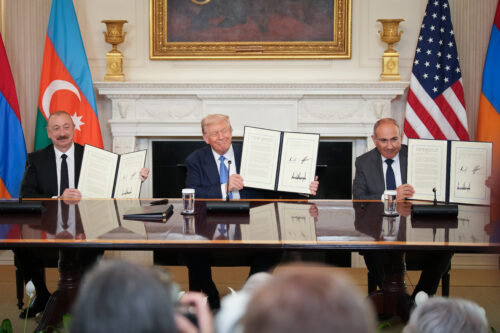
    Of all the fronts in President Trump’s peacemaking agenda, the South Caucasus has delivered the most concrete results. The August 2025 Washington Declaration, signed between Armenia and Azerbaijan and witnessed by Trump, marked an important step toward peace in the region. The two sides initialed a peace agreement and advanced plans to unblock regional connectivity, including through the establishment of the Trump Route for International Peace and Prosperity (TRIPP), which would connect Azerbaijan to its Nakhijevan exclave through southern Armenia. Implementation of TRIPP has since made notable progress, but construction has yet to start. A breakthrough on those two tracks would, in turn, unlock Armenia–Türkiye normalization, transforming a long-fractured region into an area of trade and interdependence.
    The Iran War Was Always About Regime Change
  • تعليق
  • The Iran War Was Always About Regime Change

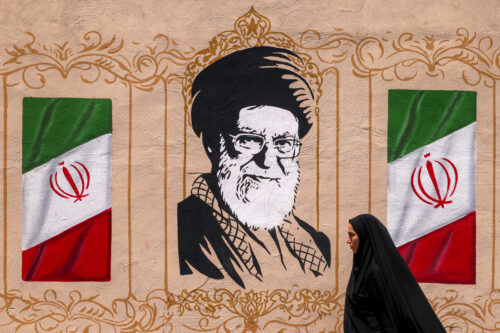
    Wars don’t just end. They get interpreted, reinterpreted, and turned into strategic doctrine. That is what happened after the Iran-Iraq War of the 1980s, a conflict that saw the United States back Tehran’s Iraqi adversaries. The war taught Tehran three lessons it never unlearned: that Washington wants the Islamic Republic gone, that Iran stands essentially alone in the world, and that it cannot survive a direct, overt fight with the U.S. and Israel.

    Iran’s New War Cabinet Is Really an Old One
  • التحليل
  • Iran’s New War Cabinet Is Really an Old One

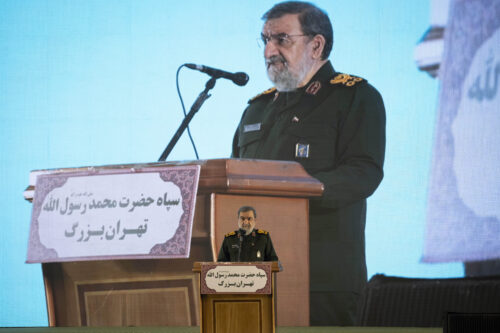
    Within 48 hours this week, Iran filled six of the most important posts in its battered military and security establishment. Read together with the biographies and mandates behind them, the appointments show how Tehran is drawing lessons from successive wars and preparing for a prolonged period of insecurity, without proving it has abandoned negotiation.

    Additional Research & Commentary

    معلومات أساسية

    Israeli Settlements in the West Bank
  • معلومات أساسية
  • Israeli Settlements in the West Bank

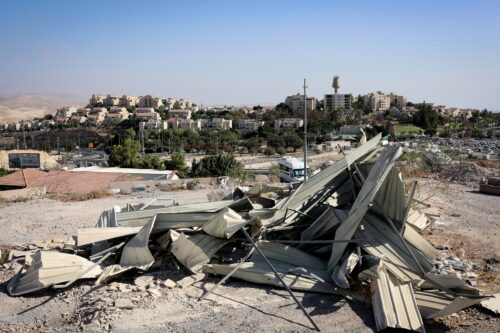
    Since 1967, Israeli settlements in the West Bank have been a contested feature of the Israeli-Palestinian conflict. The ultimate disposition of the settlements and ongoing activity related to their growth have repeatedly defied agreement in negotiations over a resolution to the conflict.

    June 9, 2026

    The Houthis
  • معلومات أساسية
  • The Houthis

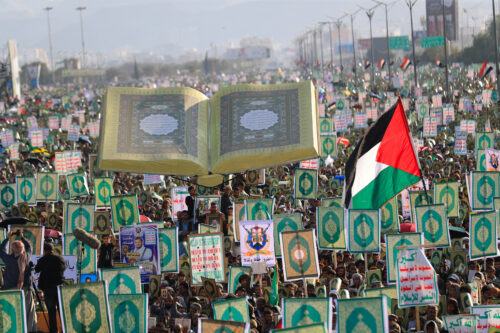
    The Houthis are a political-military faction and Zaydi religious movement founded in northwestern Yemen in the 1980s. A key member of Iran’s Axis of Resistance with links to other militant organizations in the Arabian Peninsula and the Horn of Africa, the group has continued to pose a threat to Western interests on a global scale.

    May 15, 2026

    The India-Middle East-Europe Economic Corridor
  • معلومات أساسية
  • The India-Middle East-Europe Economic Corridor

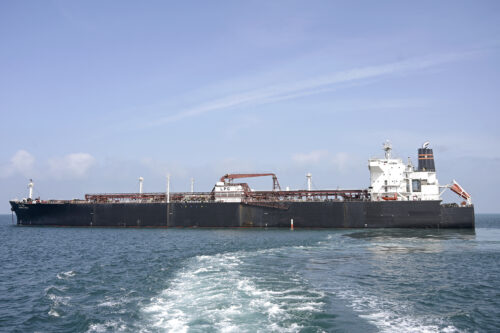
    The India-Middle East-Europe Economic Corridor (IMEC) is a proposed multinational infrastructure initiative aimed at upgrading connectivity between the three regions through integrated trade, energy, and digital networks. Announced at the G20 summit in New Delhi in September 2023, IMEC is envisioned partially as a counterweight to China’s international infrastructure project, the Belt and Road Initiative.

    June 3, 2026

    Turkish Foreign Policy
  • معلومات أساسية
  • Turkish Foreign Policy

    After a decade of post-Arab Spring isolation, Turkey’s leaders have recognized that their ambition to position the country as an agenda-setter on the world stage requires active engagement in all directions. President Recep Tayyip Erdoğan’s consolidation of executive authority has centralized foreign policy decision-making and tied it to his domestic political priorities, transforming the country’s revisionist approach to one shaped primarily by personal and pragmatic interests.

    April 23, 2026

    المدونات الصوتية

    التركيز على الشرق الأوسط

    البودكاست الأسبوعي الرائد لمعهد الشرق الأوسط حول السياسة الخارجية الأمريكية والقضايا السياسية والاجتماعية المعاصرة في الشرق الأوسط.

    إزالة الحافة من الشرق الأوسط

    براين كاتوليس، زميل أول في معهد الشرق الأوسط كاتوليس يشارك الأصدقاء والزملاء وخبراء السياسة في محادثات غير رسمية حول أهم الأحداث في الشرق الأوسط. 

    إعادة التفكير في الديمقراطية

    زميل أول في معهد الشرق الأوسط غونول تول تستضيف كبار العلماء وقادة الفكر حول اتجاهات الديمقراطية العالمية وحالة النظام الدولي الليبرالي. 

    تصفية حسب
    8783 Results
    Iran’s Regular Army: Its History and Capacities
    معهد الشرق الأوسط
  • التحليل
  • Iran’s Regular Army: Its History and Capacities

    Along with Egypt and Turkey, Iran is one of the most populous countries in the Middle East. Aware of its strategic significance and millennium-long civilization, Iranian leaders have always aspired to assume a leadership role on regional and international issues and pursued an assertive policy to reach their country’s potential. This ambitious strategy requires, among other things, strong military forces.

    November 15, 2011

    The Artesh: Iran’s Marginalized and Under-Armed Conventional Military
    معهد الشرق الأوسط
  • التحليل
  • The Artesh: Iran’s Marginalized and Under-Armed Conventional Military

    Originally posted November, 2011

    Ravaged, intimidated, and gutted to the core in a series of purges after the 1979 Revolution, the remnant of the Shah’s military, renamed the Army of the Islamic Republic of Iran, known generally in Persian as the Artesh, put itself together as best as it could to face invading Iraqi forces at the beginning of the Iran-Iraq war.

    November 15, 2011

    The Artesh: From the War with Iraq until Today
    معهد الشرق الأوسط
  • التحليل
  • The Artesh: From the War with Iraq until Today

    Iran’s conventional military forces — ground, air, and naval — once stood tall as the best armed military forces in the Middle East aside from those of Israel.  The United States lavished the most sophisticated military hardware on the Shah, who was willing and able to tap his financial resources from Iran’s oil wealth to buy modern conventional arms.  The Shah had the ambition, the financial means, and the political-military backing of the United States to turn Iran into the Persian Gulf’s most formidable military power.  

    November 15, 2011

    A United States Marine's View of the Artesh and IRGC
    معهد الشرق الأوسط
  • التحليل
  • A United States Marine's View of the Artesh and IRGC

    United States military forces use standard procedures for planning operations against other militaries.  These procedures differentiate between different branches, or units, of an opposing force depending on their capabilities and limitations.  This article presents one such analysis of the Iranian Military, where there are vast differences between the Islamic Revolutionary Guard Corps (IRGC)and the Artesh, or the regular Iranian armed forces.  The article then draws parallels to the planning for Operation Iraqi Freedom that led to the defeat of the Iraqi Republican Guard and regular Iraqi

    November 15, 2011

    Sanctioning Iran's Military-Industrial Complex
    معهد الشرق الأوسط
  • التحليل
  • Sanctioning Iran's Military-Industrial Complex

    As the United States and its allies have tightened sanctions on Iran, they have sought in particular to isolate the Islamic Revolutionary Guard Corps, the regime’s most aggressive institution. The IRGC, known in Persian as the Pasdaran, fields its own army, navy, and air force, and dominate a large and increasing share of Iran’s national economy.

    November 15, 2011

    The Politics of Iran's Regular Army
    معهد الشرق الأوسط
  • التحليل
  • The Politics of Iran's Regular Army

    Iran’s regular military, the Artesh, receives virtually no attention from international media or scholars on Iran. By contrast, its political rival, the Islamic Revolutionary Guard Corps (IRGC, also known in Persian as the Pasdaran), is scrutinized constantly by analysts for its visible, high-profile role in Iran’s political system, its economic resources and corporate activities, and its role as a spearhead of Iran’s regional policies.

    November 15, 2011

    Introduction to The Artesh: Iran's Marginalized Regular Military
    معهد الشرق الأوسط
  • التحليل
  • Introduction to The Artesh: Iran's Marginalized Regular Military

    As the US-Iran showdown continues, among Western analysts there is an infinite desire for more data and analysis relating to the workings of the Islamic Republic. From a US standpoint, a better understanding of the various organs and players in the Iranian regime setup is imperative as Washington weighs its options and sets out to formulate its policies.

    November 15, 2011

    The New Dynamics of Egypt's Elections
    معهد الشرق الأوسط
  • التحليل
  • The New Dynamics of Egypt's Elections

    This Opinion first appeared in the Huffington Post on November 11, 2011

    On November 28th, millions of Egyptians will finally breathe a deep sigh of relief as they gather at the polls to vote in the first phase of parliamentary elections following the ousting of the Mubarak regime.

    November 11, 2011

    Center for Turkish Studies Second Annual Conference on Turkey
  • Video
  • Center for Turkish Studies Second Annual Conference on Turkey

    The 2011 Second Annual Conference on Turkey, entitled “Change Within and Beyond and Borders: Turkey’s Domestic and Foreign Policy Agenda,” was organized by the Center for Turkish Studies at the Middle East Institute on June 23rd, 2011 at the University Club. As the Conference coincided with recent important developments in Turkey, especially the general elections, about 300 participants from think tanks, universities, U.S. and foreign government officials as well as private sectors attended the Conference.

    October 31, 2011

    Libya: A Costly Victory
    معهد الشرق الأوسط
  • التحليل
  • Libya: A Costly Victory

    This Commentary was first published as an op-ed in Politico on October 21, 2011

    Defense Secretary Leon Panetta asserted recently that critics of the Libyan mission “have been proven wrong.” Now, with the death of dictator Muammar Qadhafi, the secretary’s view is supported by the overwhelming majority of Washington’s foreign policy establishment.

    October 21, 2011

    Troubled Triangle: The US, Turkey, and Israel in the New Middle East
  • Video
  • Troubled Triangle: The US, Turkey, and Israel in the New Middle East

    The trilateral relationship between Turkey, Israel and the United States has deteriorated in recent years as Israel's and Turkey's foreign policy goals in the Middle East continue to diverge. Despite repeated attempts, the United States has failed to reconcile these two important regional allies since the divisive Mavi Marmara incident in May 2010. MEI and The Stimson Center held a discussion of this critical yet troubled trilateral relationship in a time of unprecedented change in the Middle East featuring Prof. William B. Quandt, Edward R.

    October 18, 2011

    The East Moves West
    معهد الشرق الأوسط
  • Video
  • The East Moves West

    The Middle East Institute is proud to host Geoffrey Kemp, an expert in US policy in the greater Middle East, for a discussion of his new book The East Moves West: India, China, and Asia's Growing Presence in the Middle East. Professor Kemp will be discussing the manner in which the Asian presence in the Middle East is growing because of the economic outreach of India, China, Japan, South Korea and other Asian countries. He will also address the place of American military power in this new regional alignment.

    October 13, 2011

    Hezbollah in the Wake of the Arab Spring
    معهد الشرق الأوسط
  • Podcast
  • Hezbollah in the Wake of the Arab Spring

    Join MEI Scholar and Levant expert Randa Slim for a discussion about Hezbollah and its reaction to shifting regional dynamics in the wake of the Arab Spring. Although Lebanon has not experienced the same levels of unrest as its neighbors, Hezbollah is not immune from the regional instability resulting from the revolutions roiling the Middle East. Currently, Hezbollah is the principal orchestrator of a new governing coalition in Lebanon that is rife with internal divisions.

    October 11, 2011

    Hezbollah in the Wake of the Arab Spring
  • Video
  • Hezbollah in the Wake of the Arab Spring

    MEI scholar Randa Slim led a discussion about Hezbollah and its reaction to shifting regional dynamics in the wake of the Arab Spring. Although Lebanon has not experienced the same levels of unrest as its neighbors, Hezbollah is not immune from the regional instability resulting from the revolutions roiling the Middle East. Hezbollah is currently the principal orchestrator of a new governing coalition that is rife with internal divisions.

    October 11, 2011

    September 2011: Syria
  • التحليل
  • September 2011: Syria

    Amidst ongoing violence against protestors in Syria, Hande Ayan of the Center for Turkish Studies discusses the uneasy diplomatic relationship between Turkey and Syria and Turkey’s role in the political situation there. The September 2011 Bulletin also introduces MEI scholars Philip Frayne, who speaks on his Foreign Service career and offers his insights on how the US can support democratic transitions in the Middle East, and Randa Slim, who is interviewed on her experience in post-conflict reconciliation.

    October 7, 2011

    اقرأ مجلة الشرق الأوسط

    تُعد المجلة الرئيسية لمعهد الشرق الأوسط أقدم مطبوعة محكّمة مكرّسة لدراسة الشرق الأوسط الحديث، وتغطي المجلة الرئيسية في المعهد السياسة والمجتمع والثقافة في المنطقة.