When news broke Friday night that Israel had launched its largest-ever military strike on Iran, a group of diplomats, administration officials, journalists and think tankers had just sat down for dinner at one of the best restaurants in Washington, hosted by a prominent ambassador.
Word arrived the way it usually does with breaking news these days – someone glanced down at their smartphone and saw reports of the retaliatory strike we had all been expecting: Israel had responded to an attack by Iran earlier this month. Tehran had said its strike on Oct. 1 was payback for Israel’s assassinations of Hezbollah chief Hassan Nasrallah, Hamas political leader Ismail Haniyeh and Iranian military commander Abbas Nilforoushan.
A small buzz passed from table to table, as foreign policymakers and experts pulled out their devices to check details. Then, as quickly as the news arrived, the moment passed. Most of the crowd turned back to their appetizers and dinner conversation. If this is the attention span for major world events among Washington’s foreign policy and political elite, imagine what it is in the rest of America.
With less than a week to go before Election Day, Vice President Kamala Harris and former President Donald Trump are crisscrossing swing states to make closing arguments focused on domestic issues: the economy, abortion, immigration and American democracy.
Continue Reading on US News & World Report
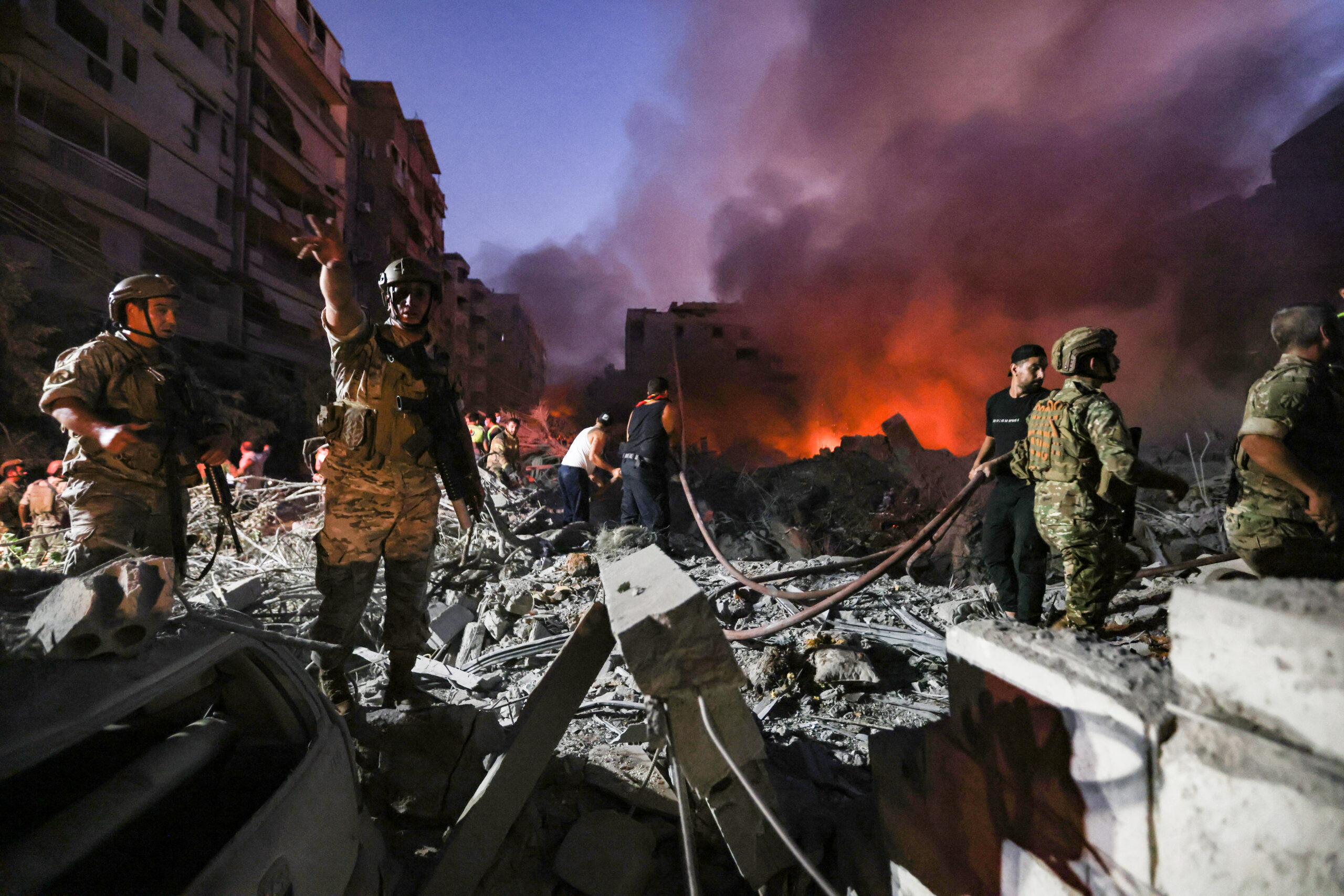
Photo by IBRAHIM AMRO/AFP via Getty Images
The Middle East Institute (MEI) is an independent, non-partisan, not-for-profit, educational organization. It does not engage in advocacy and its scholars’ opinions are their own. MEI welcomes financial donations, but retains sole editorial control over its work and its publications reflect only the authors’ views. For a listing of MEI donors, please click here.