
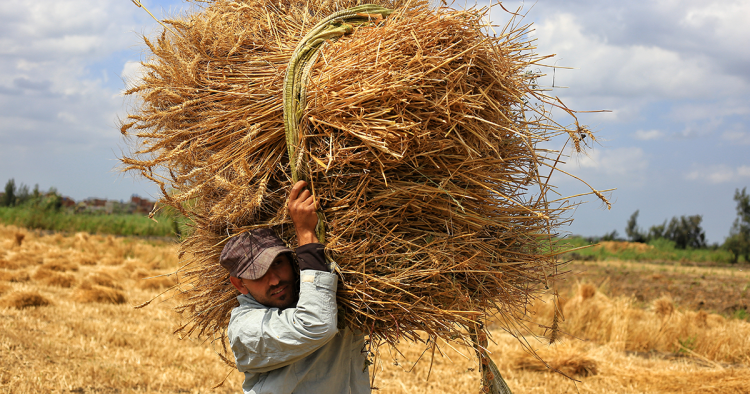
Georgia’s near total reliance on imported Russian wheat forms an extremely dangerous vulnerability that compromises both its food security and sovereignty. Fifteen years after the 2008 Russia-Georgia war, Tbilisi finds itself depending on Russia for over 90 percent of its wheat supply amidst a growing global shortage. In 2022, NATO reiterated its commitment to Georgia, pledging to help build Georgia’s resilience and uphold its political independence. As Georgia strives to loosen Moscow’s strategic stranglehold by finding alternative import sources and increasing domestic wheat production, it faces challenges that require trade and technical assistance that a coordinated effort by the U.S., Turkey and other NATO members can provide.
Continue reading on the CACI Analyst
Photo by Mahmoud Elkhwas/NurPhoto via Getty Images
The Middle East Institute (MEI) is an independent, non-partisan, not-for-profit, educational organization. It does not engage in advocacy and its scholars’ opinions are their own. MEI welcomes financial donations, but retains sole editorial control over its work and its publications reflect only the authors’ views. For a listing of MEI donors, please click here.
Jordan’s Economy Weathers Iran War’s Shocks and Finds New Opportunities