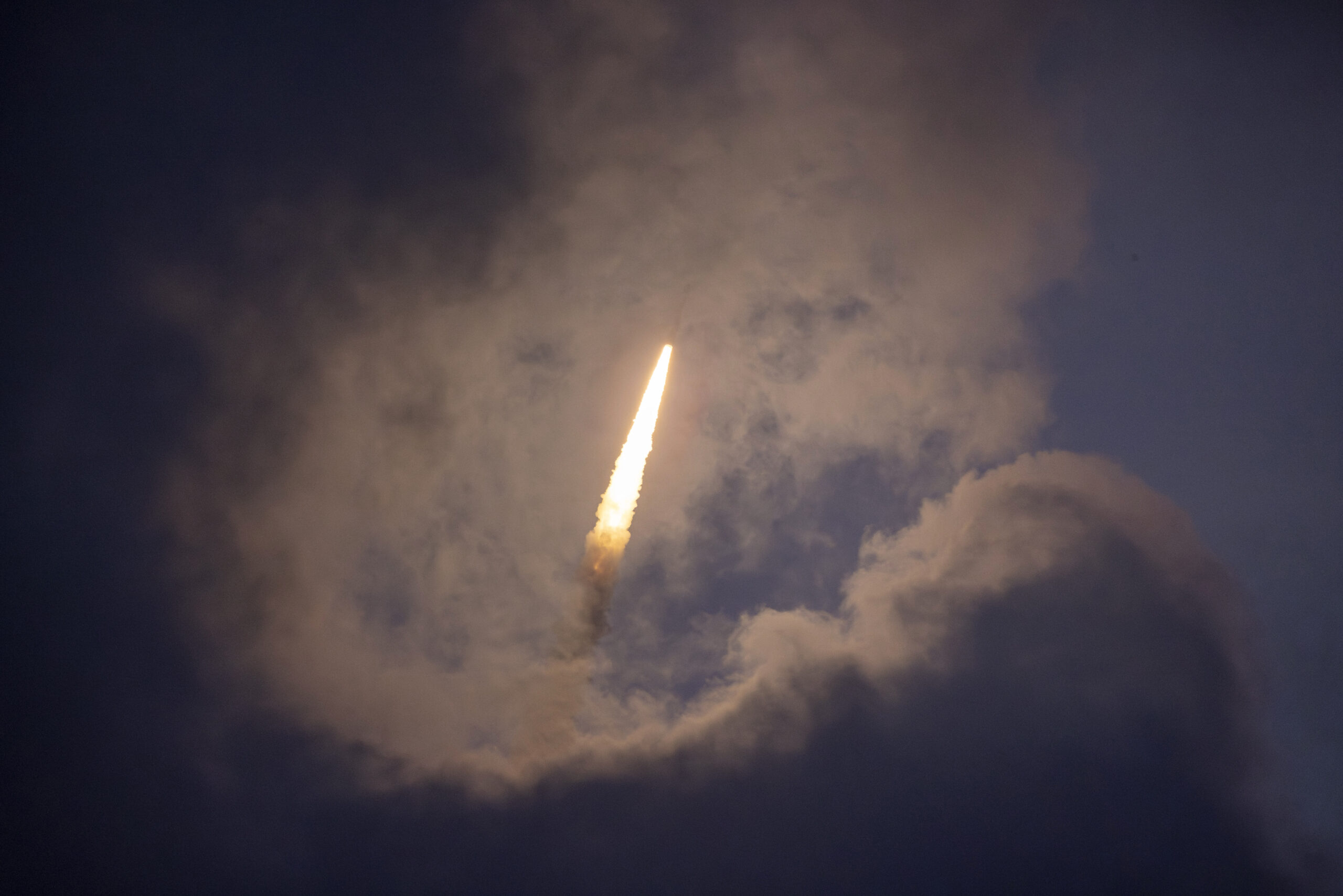
On Christmas Day 2021, an Ariane V rocket launched from French Guiana carrying the James Webb Space Telescope (JWST), a $10 billion project over two decades in the making. Twenty-seven minutes after takeoff, the telescope separated from the rocket and deployed its solar array. The launch was “perfect.”
The successful launch was a milestone for the European Space Agency (ESA), which partnered with NASA and the Canadian Space Agency. But for Europe, it also represented something more tangible. In return for the launch, NASA granted ESA 15% of Webb’s observation time, allowing Europe to contribute to the search for the origins of the universe and life on exoplanets.
Photo credit: RONAN LIETAR/AFP via Getty Images
The Middle East Institute (MEI) is an independent, non-partisan, not-for-profit, educational organization. It does not engage in advocacy and its scholars’ opinions are their own. MEI welcomes financial donations, but retains sole editorial control over its work and its publications reflect only the authors’ views. For a listing of MEI donors, please click here.


Deadlock in Gaza and the West Bank at a Breaking Point

MINURSO’s Future: What the Security Council’s Choice May Reveal