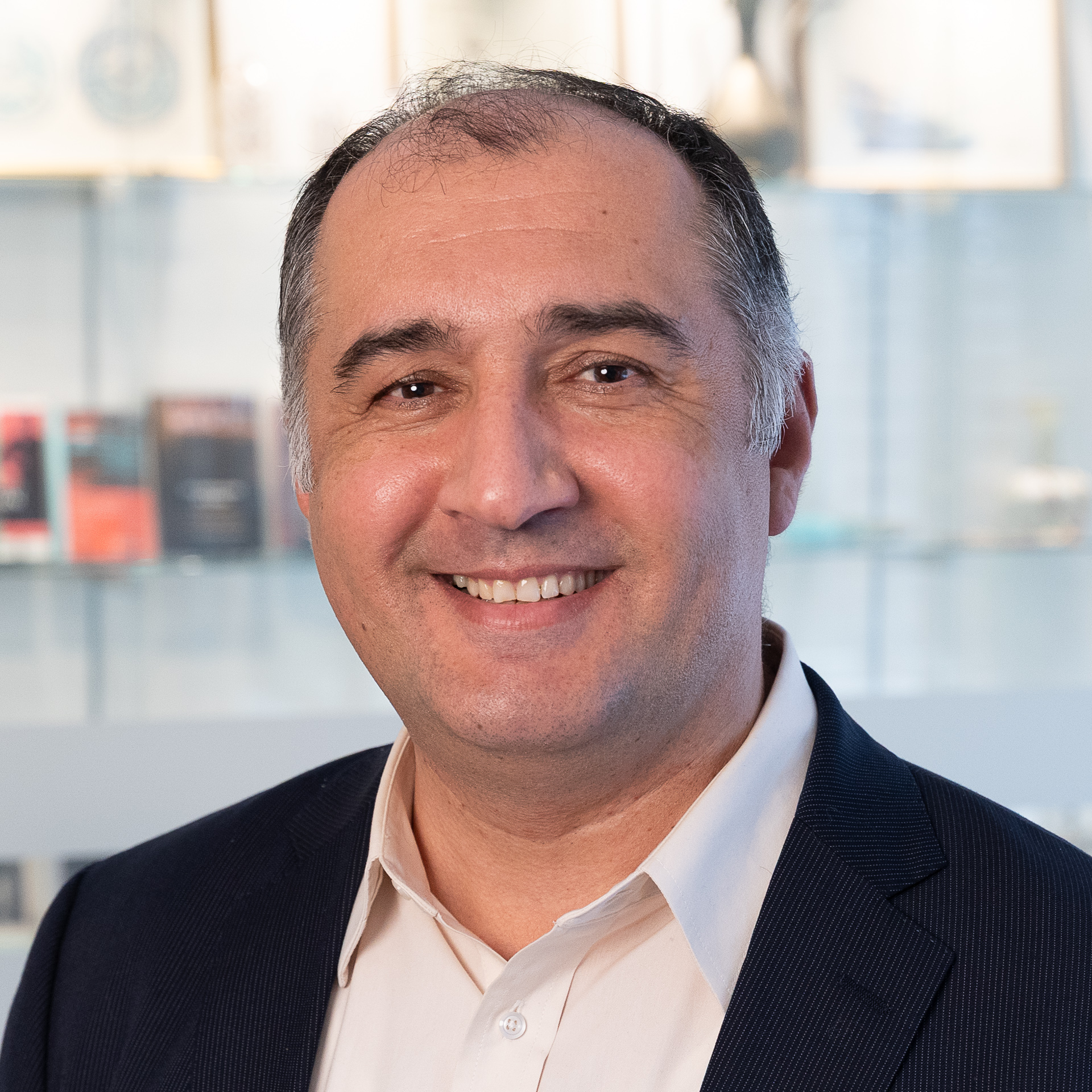
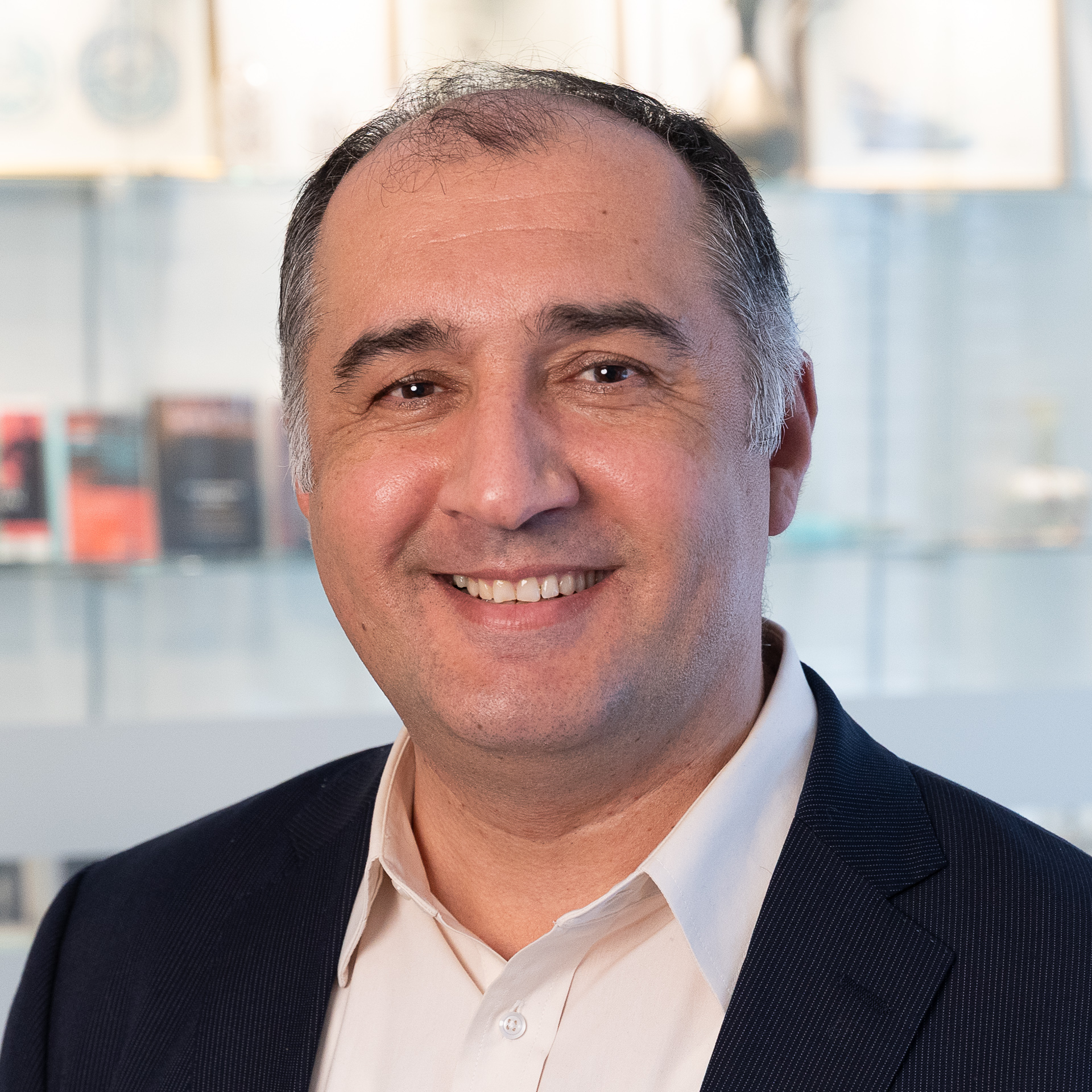
Alex Vatanka is a Senior Fellow at the Middle East Institute. He specializes in Middle Eastern regional security affairs with a particular focus on Iran. He was formerly a Senior Analyst at Jane’s Information Group in London. Alex is also a Senior Fellow in Middle East Studies at the US Air Force Special Operations School (USAFSOS) at Hurlburt Field and teaches as an Adjunct Professor at DISAS at Wright-Patterson Air Force Base. He has testified before the US Congress and lectured widely for both governmental and commercial audiences, including the US Departments of State and Defense, US intelligence agencies, and a list of international corporations.
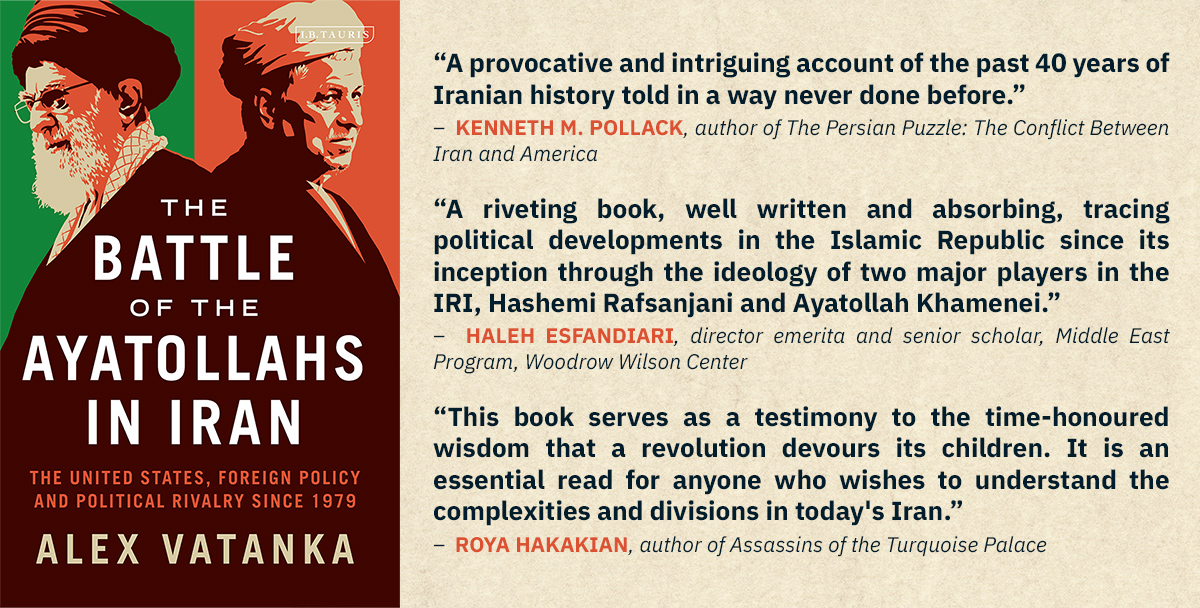
Born in Tehran, he holds a BA in Political Science (Sheffield University, UK), and an MA in International Relations (Essex University, UK), and is fluent in Farsi and Danish. He is the author of two books: The Battle of the Ayatollahs in Iran: The United States, Foreign Policy and Political Rivalry Since 1979 (2021) and Iran and Pakistan: Security, Diplomacy, and American Influence (2015).
He has also written chapters for a number of books, including Authoritarianism Goes Global (2016); Handbook on Contemporary Pakistan (2017); Russia in the Middle East (2018), Winning the Battle, Losing the War: Addressing the Drivers Fueling Armed Non-state Actors and Extremist Groups (2020); Global, Regional and Local Dynamics in the Yemen Crisis (2020); Routledge Handbook of Counterterrorism and Irregular Warfare Operations (2021); and Understanding New Proxy Wars (2022). He is presently working on his third book, Iran’s Arab Strategy: Defending the Homeland or Exporting Khomeinism?
Education
B.A. in Political Science at Sheffield University; M.A. in International Relations at Essex University
Languages
Farsi, Danish
Countries of Expertise
Iran
Issues of Expertise
Iran domestic and foreign affairs, Iranian military and security forces, Iran-US relations, Political Islam in Middle East
Even if negotiating with Trump is impossible—and Iran’s Supreme Leader Ali Khamenei has said it is—the leadership in Tehran can still look at his presidency as an opportunity to prepare the ground to talk to his successor.
In this week’s Monday Briefing, MEI experts Alex Vatanka, Marvin G. Weinbaum, and Charles Lister provide analysis on recent and upcoming events including Iran’s decision to sell its oil in the private sector, the prime minister of Pakistan’s search for foreign aid, and the Syrian summit in Istanbul.
In this week’s Monday Briefing, MEI experts Jonathan M. Winer, Robert S. Ford, and Alex Vatanka provide analysis on recent and upcoming events including political turmoil in Libya, the meeting between Turkey and Russia to discuss the fate of Idlib province, and Iran’s attempts to forge new relationships to offset U.S. sanctions.
On Tuesday, President Hassan Rouhani appeared in front of Iran’s parliament to defend his government’s economic record. He faced a tough crowd. The body had already removed his economy minister, Masoud Karbasian, on Sunday. And before that, it had canned his labor minister, Ali Rabiei. Both were ousted on charges amounting to incompetence.
Trump’s unconvincing "hearts and minds" strategy on Iran
In the span of one week, President Donald Trump both warned Iran’s leaders of a calamitous response to any belligerence from Tehran and offered Tehran a “real” nuclear deal if they come back to the negotiation table. It is just the latest example of the Trump administration’s disjointed Iran policy.
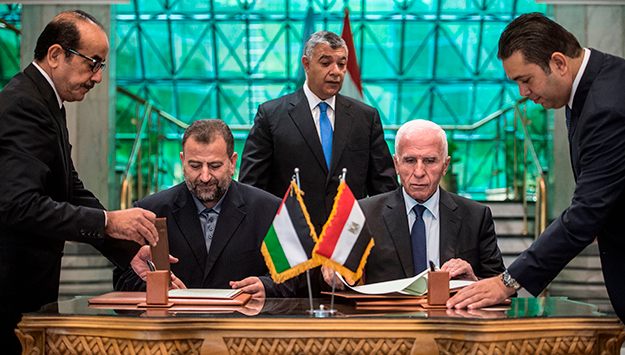
In this week’s Monday Briefing, MEI experts provide analysis on Fatah-Hamas reconciliation talks in Cairo, possible cooperation between the Syrian Democratic Council and the Assad regime, the protests in Iraq, the U.S.’s lifting of restrictions on aid to Egypt, and Imran Khan’s victory in the Pakistani elections.
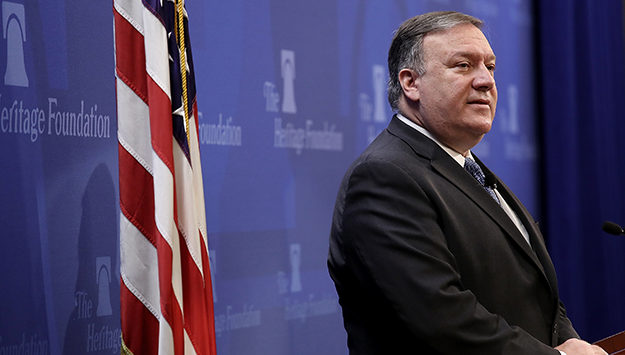
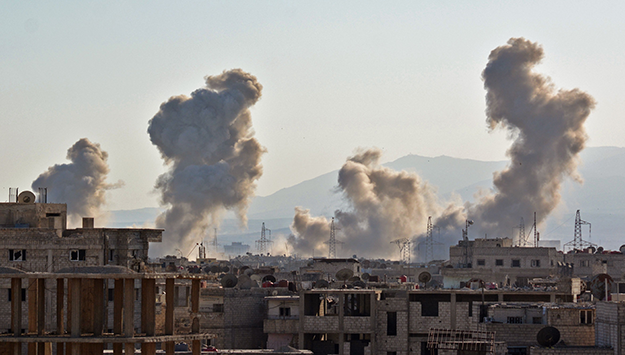
In this week’s Monday Briefing, MEI experts provide analysis on Secretary Pompeo’s speech on Iran, Erdogan’s decision to lift Turkey’s state of emergency, the cease-fire in Gaza, Iran’s continued threat in Syria, Trump’s tweets on Iran, and Vice President Dostum’s return to Afghanistan.
In this week’s Monday Briefing, MEI experts Charles Lister, Alex Vatanka, Randa Slim, and Marvin G. Weinbaum provide analysis on the US’s silence amid the Assad regime’s expansion, the Iranian president’s trip to Europe, the uptick in violence after Iraq’s elections, and the upcoming Pakistani parliamentary elections.
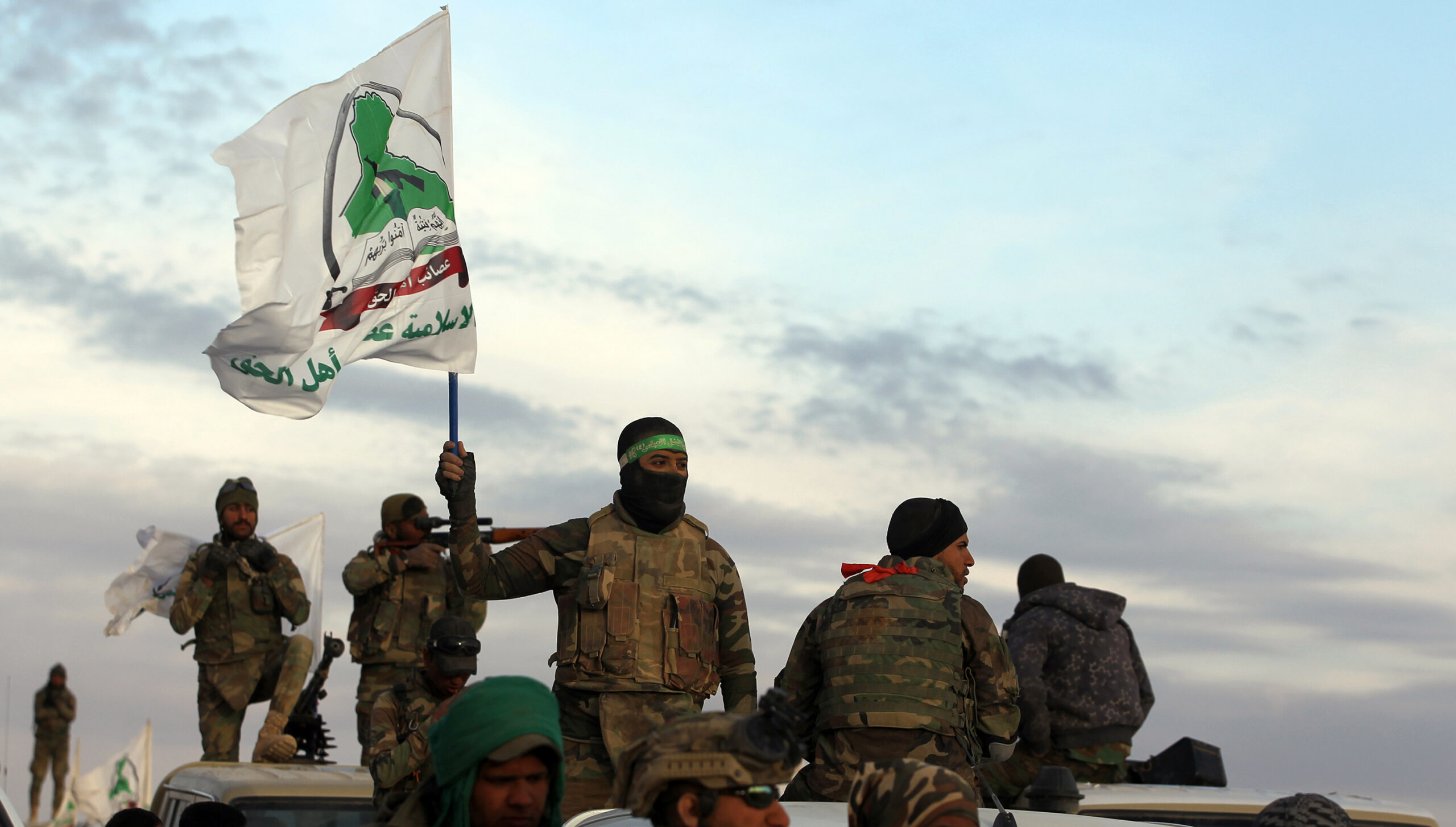
Since its 1979 revolution, the Islamic Republic of Iran has incited violent, radical, and often sectarian nonstate groups across the Middle East to serve as proxies in its military campaigns to influence regional and international politics. This “proxy model” has become increasingly salient since the U.S. invasion of Iraq in 2003 and more recently in Iraq and Syria, and is now Iran’s primary tool for advancing its regional intersts.
As international companies leave Iran under U.S. pressure, the Iranian government is scrambling to salvage as much foreign investment as possible. The top leadership in Tehran believes the solution is to engage with Russia, China, and the “east” to replace the West’s hesitant commitment to the Iranian market. But this eastward approach is a pipe dream, and there is plenty of history to prove it.
Europe has little wiggle room to keep Iran deal alive | Monday Briefing
In this week’s Monday Briefing, MEI experts Ahmad Majidyar, Alex Vatanka, Jean-François Seznec, Gerald Feierstein, Marvin G. Weinbaum, Gonul Tol, and Randa Slim provide analysis on recent and upcoming events including Europe’s scramble to salvage the Iran nuclear deal following the U.S. withdrawal, Iran’s response to Russia’s call for all foreign forces to leave Syria, a meeting by Saudi Arabia, the UAE and Russia to discuss the impact of new U.S. sanctions on Iran, the arrest of women’s rights activists in Saudi Arabia, new political tensions in Pakistan, a push in the U.S.
Trump’s Jerusalem decision destabilizing West Bank and Gaza | Monday Briefing
In this week’s Monday Briefing, MEI experts Nathan Stock, Alex Vatanka, Ruba Husari, and Gonul Tol provide analysis on recent and upcoming events including the fallout from President Trump’s decision to recognize Jerusalem as Israel’s capital, Iran’s diplomatic efforts with Europe to keep the nuclear deal alive, how Iran’s other trading partners are responding to U.S. warnings of sanctions, and Britain’s efforts to cultivate closer ties with Turkey.
Special briefing: The far-reaching impacts of Trump's withdrawal from the Iran nuclear deal
In this special briefing, MEI experts Bilal Y. Saab, Alex Vatanka, Randa Slim, Ahmad Majidyar, Gerald Feierstein, Gonul Tol, and Marvin G. Weinbaum discuss President Trump’s announcement that the United States will withdraw from the Iran nuclear deal and its ramifications for the region.
Trump's goal in Iran is regime change | Monday Briefing
In this week’s Monday Briefing, MEI experts Alex Vatanka, Randa Slim, and Randa Slim provide analysis on recent and upcoming events including President Trump’s decision on whether to withdraw from the Iran nuclear deal, what this weekend’s election results in Lebanon indicate about Hezbollah’s standing in the country, and expectations for the outcome of Iraq’s elections on May 12.