This individual is a guest contributor. MEI is not able to assist with contact requests.
Attiya Ahmad is Georgetown University’s 2009-10 Center for International and Regional Studies Post-Doctoral Fellow. She recently completed her PhD in Cultural Anthropology at Duke University. Dr. Ahmad’s work brings together scholarship on Islamic studies, globalization, diaspora and migration studies, economic anthropology, and political economy.
I am a documentary filmmaker of Iraqi origin and have lived in London for a long time. I worked for many years as a film editor on documentaries and dramas and was working toward my ultimate goal, which is to make a fiction feature film, when the first Gulf War erupted in 1991.
The word “creativity” has many connotations. A creative person is always expected to produce something new and even revolutionary, which makes creativity an unpredictable process. I sometimes feel creativity pouring into my efforts as a filmmaker. Yet, other times I feel that I can no longer come up with fresh ideas, leading me to doubt my talent and even to reconsider my career in the film industry. Nevertheless, filmmaking remains fascinating work and continues to be my passion.
I was born in Damascus in 1975. My father is an engineer and a music lover. He used to listen to Jazz and Rock music and play as a drummer in a band. I grew up with 1960s and 1970s tunes. My mother, however, is a Sociology and Child Psychology graduate — a real intellectual who appreciates literature and arts. She is also a determined woman with a strong personality, high principles, and immense affection for me and my two younger brothers. I have always felt that our house was full of love, caring, and freedom.
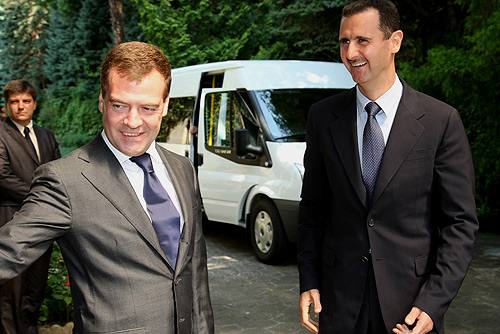
The Russian government, like its counterparts in the West, the Middle East, and elsewhere, was caught off guard by the outburst of Arab uprisings beginning in January 2011 that swept away long-ruling authoritarian regimes in Tunisia, Egypt, Libya, and (it appears) Yemen, and have threatened to topple those in Bahrain and Syria. The response of the Russian government to these events has, like that of Western governments, often been confused and inconsistent. Just as Western governments have done, Moscow has sought to protect its interests in the region.
Israeli-Palestinian Peace: A Special Regime Option for the Old City of Jerusalem
Jerusalem will probably be the toughest issue in any future Israeli-Palestinian peace negotiations. The other three core issues – borders/settlements, security, and Palestinian refugees – will also be very difficult, but Jerusalem is at a different level. Jews, Muslims, and Christians worldwide have strong attachment to the city and its many holy sites. For Israelis and Palestinians, Jerusalem is the focal point of national, cultural, and religious identities and aspirations. Their conflicting claims are based on long history and narratives that do not accommodate the other.
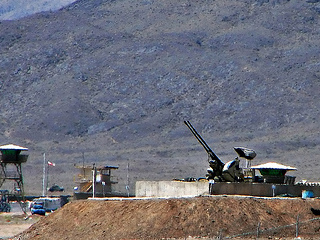
Let us assume that nobody will bomb Iran’s nuclear facilities, at least for quite a while. There is no Iranian nuclear test in the offing. Until now, the inspections of the International Atomic Energy Agency (IAEA) have uncovered no diversion of declared stocks of uranium for use in a nuclear explosive device. Of course, clandestine activities could always take place in some remote stretch of the vast Iranian territory, unknown to the inspectors of the Vienna Agency.
A View From the Gulf: A Discussion of Gulf Politics and Security
The Middle East Institute is proud to host Gulf Research Center experts Abdulaziz Sager, Mustafa Alani, and Christian Koch for an examination of recent developments in the Gulf in the wake of the Arab Spring. The speakers will address the crises in Yemen and Bahrain, US-Gulf relations and the question of reform in the region.