This individual is a guest contributor. MEI is not able to assist with contact requests.
Attiya Ahmad is Georgetown University’s 2009-10 Center for International and Regional Studies Post-Doctoral Fellow. She recently completed her PhD in Cultural Anthropology at Duke University. Dr. Ahmad’s work brings together scholarship on Islamic studies, globalization, diaspora and migration studies, economic anthropology, and political economy.
The 2001 destruction of the two giant Buddhas in Bamiyan is, by far, the most spectacular attack against the historical and cultural heritage of Afghanistan committed during the country’s recent period of turmoil.
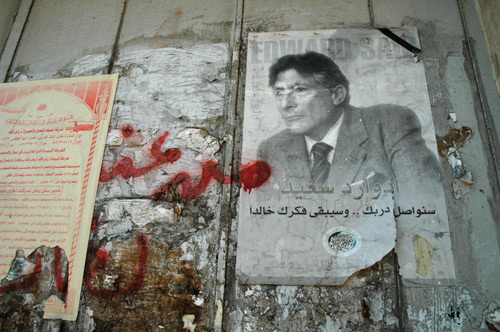
“I think one can say this almost without qualification,” writes Edward Said in Orientalism, as he reiterates some basic facts and moves toward a provisional conclusion (p. 204). Said had just explained that Orientalism is “a positive doctrine.” It is “an influential academic tradition,” as well as “an area of concern” (p. 203). As he implies here, and shows throughout his work, Orientalism is a great number of other things, too. It is the deployment of concepts regarded as always already universal such as race, religion, and fanaticism.
Post-Buffer Afghanistan: A Nation-State Here to Stay?
Originally posted December 2009
Nation-states, like their citizens, have life spans. Some are short. The bumptious Republic of Texas, for instance, lasted only nine years before being absorbed by a larger and even more energetic United States of America. Yugoslavia survived intact for two generations and then fragmented into six parts, seven including Kosovo.