The Latest from Fatima Sadiqi

Democratization and the Changing Role of Civil Society in Indonesia
This essay discusses some of the contradictions and difficulties that Indonesian democracy faces. Focusing on the political zigzag around the law used for the direct election of regional heads, the author demonstrates that it is elite competition rather than the ability of a fragmented civil society that occasioned the triumph of “people power”.
Wealth and Giving in the Arab Region
Two news items sparked debate across the Arab region recently. One reinforced Gulf stereotypes, while the other highlighted a bold out-of-the-box initiative. The first was Saudi King Salman’s official two-day visit to Washington, for which he brought an entourage numerous enough to take over a large Georgetown hotel. The second was Egyptian mega-entrepreneur Naguib Sawiris’ offer to purchase a Mediterranean island and supply it with infrastructure so that Syrian refugees could build new lives there. Both of these men have great wealth at their disposal.
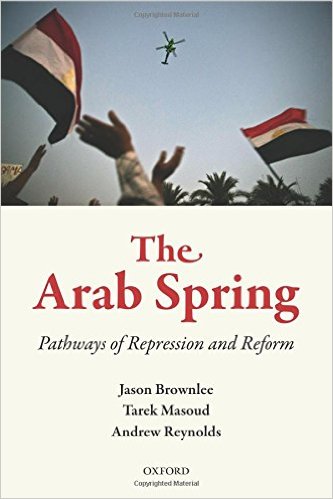
The Arab Spring: Pathways of Repression and Reform
Civil Society, Political Alliance-Building, and Democratization in the Philippines: An Instructive Example for the MENA Region?
If the case of the Philippines is any measure, civil society actors rely on strategic alliances with political elites in order to be able to exert profound political influence, and popular demonstrations led by civil society are dependent on at least tacit military support to succeed. A cursory look at the MENA region shows a rather similar pattern. During the Arab Spring, civilian protests toppled authoritarian regimes only in those countries where the military chose not to crack down, or even sided with the protesters.
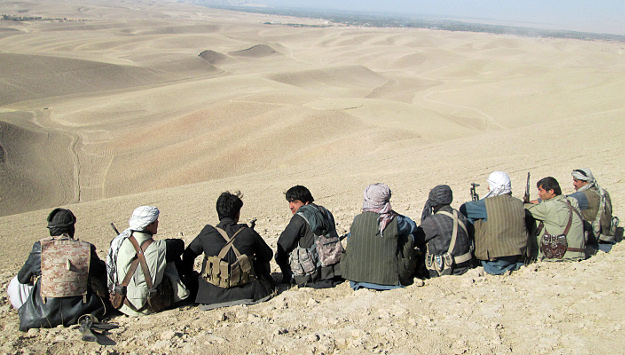
Kunduz and the Future of U.S. Military Engagement in Afghanistan
This article first appeared on NPR’s Parallels blog.
U.S. troops in Afghanistan lowered the flag and boxed up their gear at the end of last year as President Obama declared the formal end to 13 years of U.S. combat operations.
Changing Cairo’s Spaces from the Bottom Up
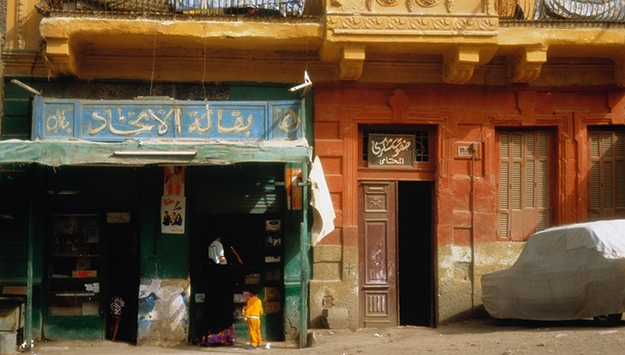
In mid-June, just before Ramadan, the pre-dawn calm of downtown Cairo was shattered by the sound of heavy machinery. The municipality had decided to repair the battered sidewalks, a fairly regular occurrence since shoddy concrete tiles are typically used for the job. Truckloads of sand were deposited at intervals along the main boulevards to be spread as a bed for the new tiles, while much of the rubble from the old ones was left piled by the curbs. To avoid the rough new terrain pedestrians took to the streets with the cars.
The Rise and Fall of Uncivil Society? Salafism in Tunisia After the Fall of Ben Ali
In some ways, the arrival of illiberal movements on the public scene and their ability to propagate their message unhindered is ultimately beneficial to the political growth of society because liberals then have a clear target they can fight rather rely on authoritarianism to sweep problematic debates within society under the carpet through the use of repression. Up to a point, therefore, Salafism in Tunisia helped unify society through strengthening the political system.
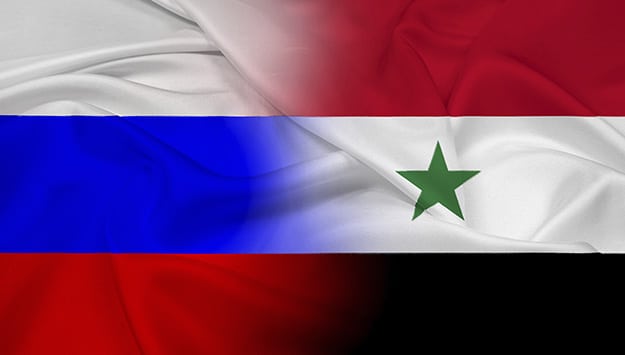
Russia’s New Middle East Great Game
Recent Russian activity in Syria is not about combating the Islamic State, despite Russian claims to the contrary. Though actively fighting ISIS and thus propagating its long-stated goal of keeping Assad in power would seem to be the straightforward explanation for Russia’s recent behavior, the fact that Russian strikes are also hitting U.S.-backed, rebel-held areas demonstrates the hollowness of official discourse.
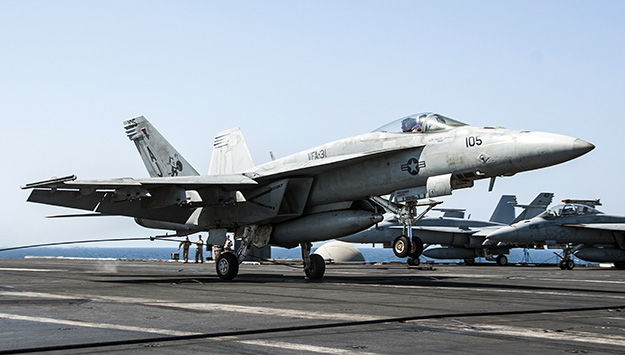
The U.S. Military and Countering ISIS
October 2015 marks the fourteenth month of formal U.S. military engagement in the struggle against the Islamic State (ISIS). The Obama administration was at first reluctant to engage U.S. military power in this struggle but then became more deliberate in its approach. U.S. involvement in the battlegrounds of Iraq and Syria has been evolving especially over the past year. This evolution has been defined and is in many ways limited by a strategy that emphasizes political change in Iraq and a broad coalition of states taking action against ISIS.
The Exploitation of Moral Controversies and the Marginalization of Morocco’s Justice and Charity Association
When a moral controversy arises in Morocco, the two main actors of the official political stage carefully play their specific role. On one side, the Party of Justice and Development (PJD), the party that leads the Moroccan government and as such is accountable to the electorate, reliably endorses the Moroccan majority’s socially conservative attitudes in order to fulfill its electoral mandate. On the other side, the king fully exploits his wider room for maneuver by adopting, according to circumstances, either a progressive stance or a conservative one. While the rhythm of moral controversies sets the tempo of the official political game and shows that Moroccan society is still very much conservative, the largest Islamist opposition group, the Justice and Charity Association, seeks to escape its marginalization within the civil society sphere.
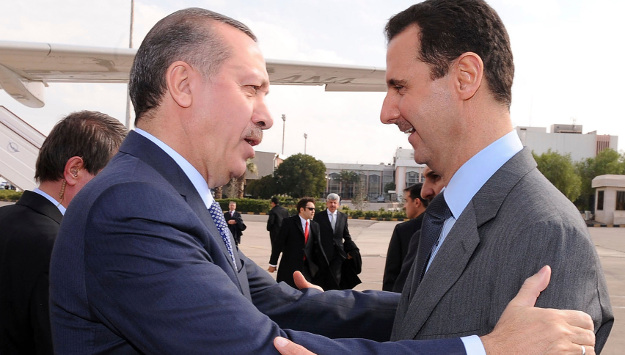
Erdogan Changes His Tune on Assad
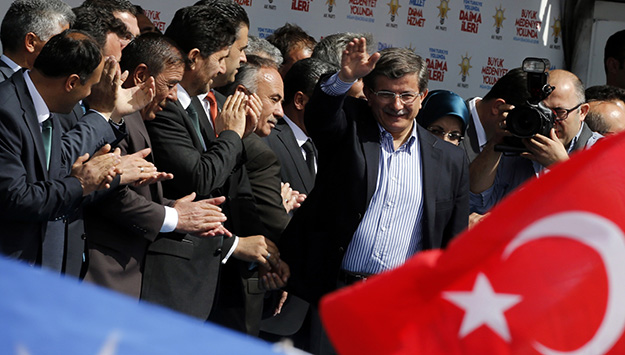
Turkish Prime Minister Ahmet Davutoglu is at the United Nations in New York, making another push for Turkey’s long-standing demand for a safe zone in northern Syria, while President Recep Tayyip Erdogan seems to have realized that it might be a long shot given recent developments.
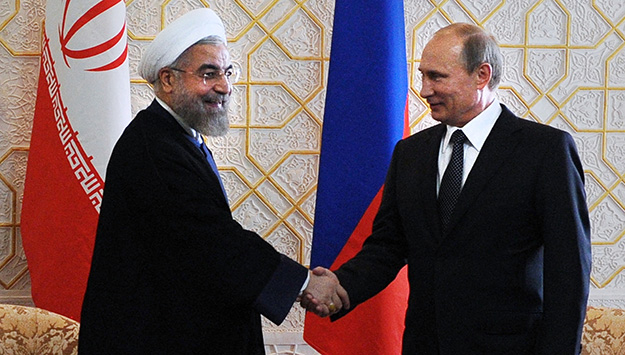
Russia, Iran, and the Syria Test
Russian President Vladimir Putin made waves leading into the UN General Assembly with new military deployments to Syria and an accord with Iran and the Iraqi government, signaling the formation of something like an alternate coalition combating ISIS. The sudden moves serve as a wakeup call not only for the United States and its allies, but also for Iran. The Russian actions are not enough to lead the Iranians to openly second-guess their support for Syria’s President Bashar al-Assad, but they are bound to raise tough questions among officials in Tehran.
The Rise of Turkish Foreign Aid
A recent public opinion poll conducted by Ipsos suggests that the Turkish public is supportive of foreign aid, with around 45 percent of those surveyed indicating that Turkey should spend 3 to 10 percent of its national budget on such assistance. Material and ideological factors rather than moral imperatives play a role in this opinion.



