تمت ترجمة هذا النص بواسطة الذكاء الاصطناعي وقد يحتوي على أخطاء.
تخطي إلى المحتوى

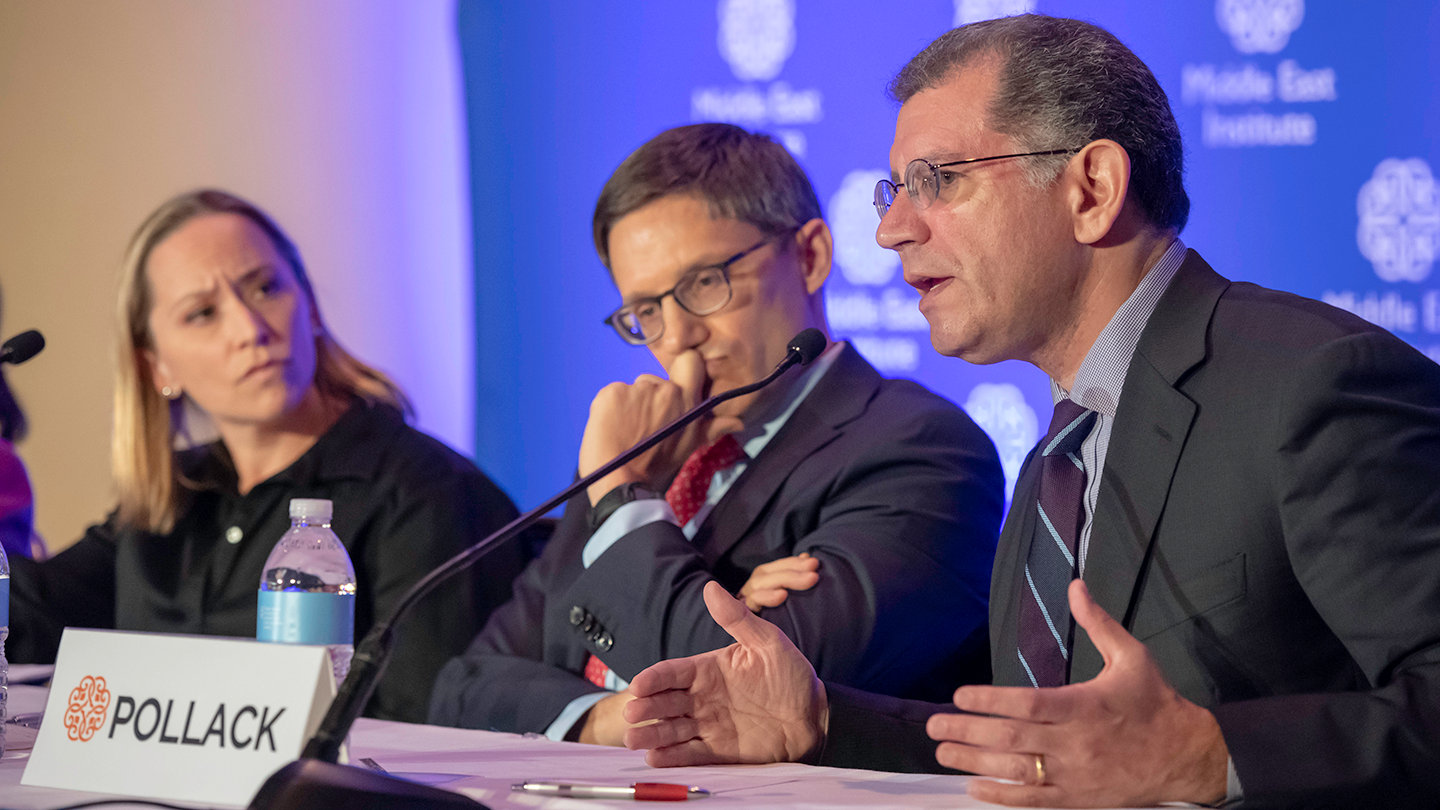
الدكتور كينيث م. بولاك

نائب رئيس السياسات

كينيث م. بولاك

Kenneth M. Pollack, PhD., is Vice President for Policy at the Middle East Institute. Previously he was a senior fellow at the American Enterprise Institute (AEI), where he worked on Middle Eastern political-military affairs, focusing in particular on Iran, Iraq, Saudi Arabia, and the Gulf countries.

Dr. Pollack was also formerly affiliated with the Brookings Institution, where he was a senior fellow at the Saban Center for Middle East Policy. Before that, he was the center’s director and director of research. Dr. Pollack served twice at the National Security Council, first as director for Near East and South Asian affairs and then as director for Persian Gulf affairs. He began his career as a Persian Gulf military analyst at the CIA, where he was the principal author of the CIA’s classified postmortem on Iraqi strategy and military operations during the Persian Gulf War. Among other recognitions, Dr. Pollack was awarded the CIA’s Exceptional Performance Award twice and the Certificate of Distinction for Outstanding Performance of Duty, both for work on the Persian Gulf War.

Dr. Pollack has also worked on long-term issues related to Middle Eastern political and military affairs for the Joint Chiefs of Staff when he was a senior research professor at the Institute for National Security Studies at National Defense University.

Dr. Pollack is the author of 10 books, including “Armies of Sand: The Past, Present, and Future of Arab Military Effectiveness” (Oxford University Press, 2019), a history of Arab armies from the end of World War II to the present, in which he assesses the performance of Arab armed forces and the reason for their difficulties; “Unthinkable: Iran, the Bomb, and American Strategy” (Simon & Schuster, 2013), named one of the “Best Books of 2013” by The Economist and one of the “100 Notable Books of 2013” by The New York Times; “A Path out of the Desert: A Grand Strategy for America in the Middle East” (Random House, 2008), a Washington Post and Foreign Affairs bestseller, which was chosen as one of The Washington Post’s “Best Books of the Year” for 2008 and as an editor’s choice of The New York Times Book Review; “The Persian Puzzle: The Conflict Between Iran and America” (Random House, 2004); and “The Threatening Storm: The Case for Invading Iraq” (Random House, 2002), a New York Times and Washington Post bestseller.

Dr. Pollack is the author of numerous articles and has been published in The Washington Post, The Wall Street Journal, The New York Times, Foreign Affairs, and The Atlantic, among others.

He received a bachelor’s from Yale University and a doctorate in political science from the Massachusetts Institute of Technology.

The Latest from Dr. Kenneth M. Pollack

تصفية حسب
25 Results
How to Raise the Odds of Regime Change in Iran
Photo by Contributor/Getty Images
  • تعليق
  • How to Raise the Odds of Regime Change in Iran

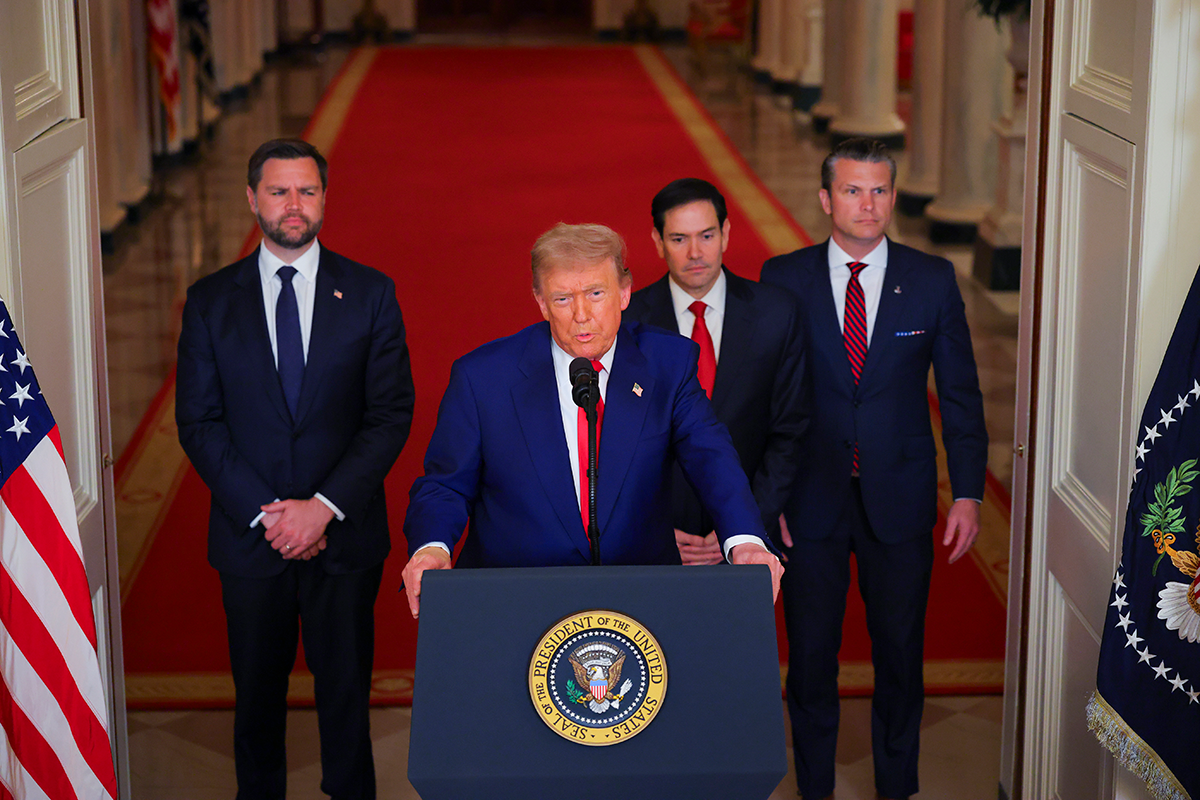
    The decision U.S. President Donald Trump made to attack Iran was a high-stakes gamble. The gamble is not really in the military campaign itself. It is whether a massive air campaign can trigger a popular rebellion that takes down the regime in Tehran. This could pay off brilliantly, but it could also fail miserably.

    Venezuela’s Shadow Over MENA: Perceptions and Precedents
  • Podcast
  • Venezuela’s Shadow Over MENA: Perceptions and Precedents

    MEI Vice President for Policy Ken Pollack joins hosts Alistair Taylor and Matthew Czekaj to explore what the precedent set by the Trump administration’s military capture of Venezuelan President Nicolás Maduro could mean for US policy in the Middle East — particularly in light of ongoing anti-regime protests in Iran. The conversation unpacks the reverberations of Operation Absolute Resolve, Washington’s options for and potential consequences of responding to the Iranian regime’s brutal crackdown, regional perceptions of recent US actions and stated objectives, and broader questions around the direction of the Trump administration’s evolving grand strategy.

    January 15, 2026

    قائمة القراءة الصيفية لعام 2025
    الصورة من تصوير بيدرو فليتاس على Unsplash
  • تعليق
  • قائمة القراءة الصيفية لعام 2025

    مع اقتراب أيام الصيف الحارة في شهر أغسطس، يسعدنا أن نشارككم قائمة مختارة من الكتب الصيفية التي تضم بعضًا من الكتب المفضلة لدى نائب الرئيس لشؤون السياسات كين بولاك عن المنطقة. تغطي القائمة مجموعة متنوعة من الموضوعات المهمة والمثيرة للاهتمام، وتقدم توصيات لأي شخص مهتم بتعميق فهمه للشرق الأوسط.

    الولايات المتحدة تدخل حرب إسرائيل مع إيران — ردود فعل خبراء معهد الشرق الأوسط
    الصورة من تصوير كارلوس باريا - بول/غيتي إيمدجز
  • التحليل
  • الولايات المتحدة تدخل حرب إسرائيل مع إيران — ردود فعل خبراء معهد الشرق الأوسط

    قامت الولايات المتحدة بضرب ثلاث منشآت نووية في إيران مساء يوم 21 يونيو، في خضم الصراع المستمر بين إسرائيل وإيران. يقدم باحثو معهد الشرق الأوسط (MEI) تحليلات في الوقت الفعلي للمساعدة في فهم معنى هذا التصعيد وما قد يحدث بعده.

    The real threat from Iran: Tehran’s most dangerous option for responding to Israel
  • تعليق
  • The real threat from Iran: Tehran’s most dangerous option for responding to Israel

    Last night, the government of Israel decided to roll the dice on a military solution to Iran’s decades-long pursuit of a nuclear weapons capability. Given the remarkable capabilities of the Israel Defense Forces, the operation could do tremendous damage to the Iranian nuclear program. But then comes the hard part.

    Excising the danger of peace in the Middle East
  • تعليق
  • Excising the danger of peace in the Middle East

    The new war between Israel and Hamas has amply illustrated that what Middle Eastern and American officials were claiming was the most peaceful in decades was anything but.

    It was an easy mistake to make: across the region, negotiations were breaking out among hardened foes, countries were scaling back or ending interventions, and everyone seemed to be breathing a collective sigh of relief.

    As is usual in the Middle East, the outbreak of peace is often just a harbinger of war.