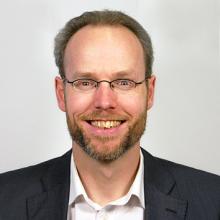
As an applied researcher and consultant, Dr Marc van den Homberg focuses on how humanitarian data and information management can improve preparedness and response to both natural disasters and complex emergencies. Most recently, Marc worked with Dalberg for UN OCHA and Netherlands Ministry of Foreign Affairs on a vision for and the feasibility of an entity to improve the use of data across the humanitarian ecosystem. With Leiden University and The GovLab (New York University) Marc performed a gap analysis on the data policies for UN OCHA’s main ICT systems and processes.
Marc founded within TNO the ICT for Development (ICT4D) team, with which he implemented pro-poor ICT innovations in developing countries through multi-stakeholder projects. He is a technical team member of the NATO HFM 248 Research and Technology Group on Social Media and IT for Disaster and Crisis Response, focusing on social media for humanitarian crises and participated in Trident Juncture’s social media analysis capabilities technical demonstration. Marc has multiple short and medium term field experiences in Africa (Burundi, Burkina Faso, South Africa) and Asia (Bangladesh, India, Nepal, The Philippines and Vietnam). For the Dutch NGO Cordaid, Marc participated in innovative multidisciplinary field-research on the response to Typhoon Haiyan and was an international observer for the Dibrugarh Emergency Management Exercise on invitation by the National Disaster Management Authority of India. He piloted and is working on scaling up with several stakeholders a digitally inclusive people-centered flood early warning system in Bangladesh, collecting and collating data to create actionable information so that the affected communities can protect their lives and livelihoods and responding organizations can take well-informed decisions.
In order to push forward the effectiveness of the interdependent dealing of civilian and military actors with a crisis, Marc initiated a study and pilot into a multi-stage collaboration network for early integration of multiple perspectives on emerging and future crises, tested a comprehensive approach serious game and performed a comparative study on the different ways Dutch actors prepare themselves to interact in a crisis.
In relation to this, Marc is a reserve officer of the Dutch 1 Civil Military Interaction Command and registered interpreter French. He was liaison officer in exercise Common Effort, where sixteen national and international organizations explored their optimal position in the civil-military interaction spectrum and participated during one month in a military assistance exercise in Burkina Faso. Marc is trained by NATO, EU External Action Service and UN OCHA on supporting humanitarian action and civil-military coordination of external crises.
Marc holds the disaster management certificate from the International Federation of Red Cross and Red Crescent Societies, an MBA and a PhD in physics. Marc started his career at the R&D department of the incumbent operator in the Netherlands, KPN, and was for over five years in a management role with TNO, before returning to work in research. Marc has lived and worked in Belgium, Germany and the US and currently lives in France.