This individual is a guest contributor. MEI is not able to assist with contact requests.
Najat El Ouargui is International Project Manager in theater and film C:ntact at the Betty Nansen Theatre, Denmark. She holds an MA in English and Social Studies from the University of Copenhagen, and has worked in various political organizations such as the Danish Centre for Human Rights. She was previously head of public relations at several Danish cultural institutions. Through her current position at C:ntact at the Betty Nansen Theatre, Najat initiates and supervises artistic collaborative projects in the Middle East and Eastern Europe, including projects that target adolescents in conflict-ridden areas.
Cultural Creativity: Catalyst for Social Development
Originally posted July 2010
The term “creativity” is not reserved solely for the art industry. It can be applied to describe a working methodology within various fields, even science. The word “creativity” refers to someone who sees or solves things in a non-traditional manner or who adds a new perspective to well-established ideas, familiar dilemmas, or rigid constructions. Creativity is a central resource in every society because it allows for the development of new visions.
Introduction to The State of the Arts in the Middle East: Volume VI: Creative Arab Women
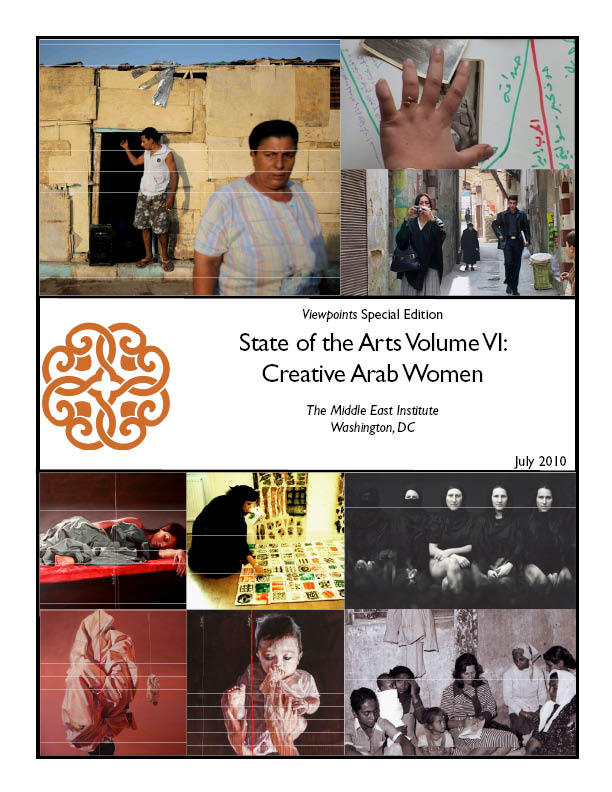
Creative Arab Women is the sixth edition of the MEI Viewpoints series on the State of the Arts in the Middle East. The 14 essays in this collection offer a glimpse into the rich and varied cultural output of Arab women in the region and the diaspora. Partly reminiscences and partly calls to action, they are essays of survival and empowerment that add a deeply personal dimension to the subject of the role of Arab women as cultural producers. MEI is grateful to Dr.