Egypt's Security Challenge: ISIS, Sinai, and the Libyan Border
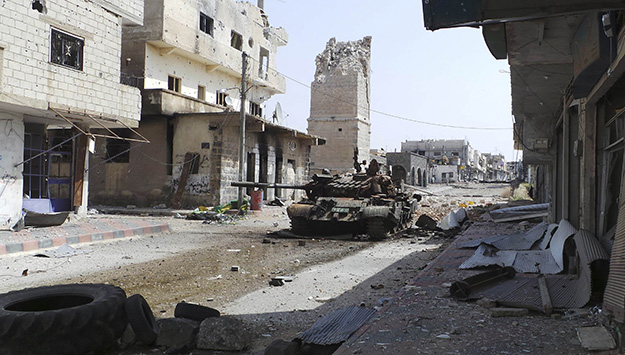
On January 28, 2015, jihadis in Sinai launched multiple, simultaneous attacks against Egyptian security forces in the vicinity of El Arish and the nearby towns of Sheikh Zuweid and Rafah. These attacks occurred only hours after President Abdul-Fattah el-Sisi said that he would die defending the region from terror. “We will never leave Sinai,” Sisi said. “Sinai is ours.
Notice: MEI Delegation Visit to Cairo, February 3-5, 2015
The Middle East Institute sponsored a bipartisan delegation of former high-level U.S. government officials to Cairo in early February. The delegation included Stephen Hadley, former National Security Advisor to President George W. Bush; General Anthony Zinni, former Commander of U.S. Central Command; and Daniel Kurtzer, former Ambassador to Egypt and Israel. They were accompanied by Middle East Institute President Wendy Chamberlin and Vice President Dr. Paul Salem.
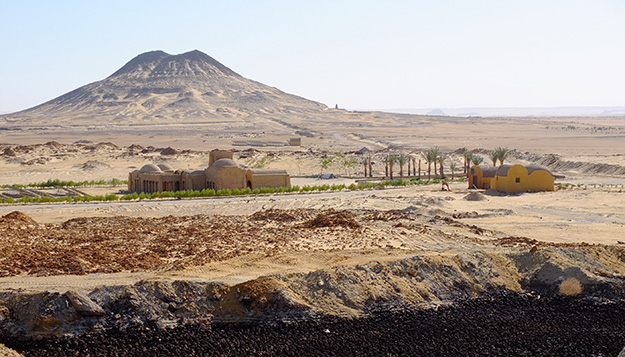
At the Bahariya Oasis 235 miles southwest of Cairo, the mountains of the Western Desert are interrupted by vast circular patterns of greenery. On one of these large farms, in striking contrast to the ancient, wind-shaped sandstone in the background, solar panels stand in neat rows. Here at the center of the largest hyper-arid region on earth, KarmSolar, a three-year-old Egyptian solar energy start-up company, has built its headquarters.
Harm Reduction Responses to Drug Use: Cross-Regional Perspectives
Many people throughout the world continue to use psychoactive drugs despite strong efforts to prevent them from doing so. There is a wide range of adverse medical, public health, and social consequences associated with such use. People Who Inject Drugs (PWID) face, among other things, elevated rates of HIV, viral hepatitis and tuberculosis.
Yemen’s Ansar Allah: Causes and Effects of Its Pursuit of Power
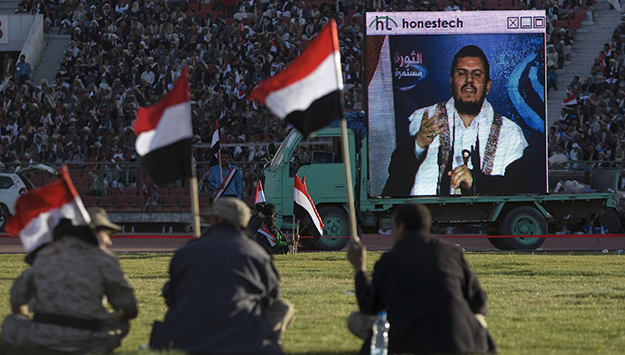
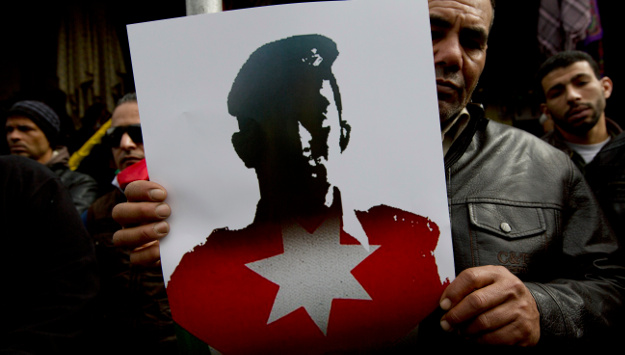
Observers can be excused for confusion over events in Yemen. In late January, Ansar Allah—the group often referred to as Houthis—kidnapped President Abdu Rabbu Mansour Hadi’s chief of staff, sacked the presidential palace, and effectively placed the president and government ministers under house arrest. Ansar Allah’s demands, strangely, were that the president and government stay in power rather than leave.
Sovereignty, the Hezbollah Model, or Dissolution: Managing Factional Forces in Iraq
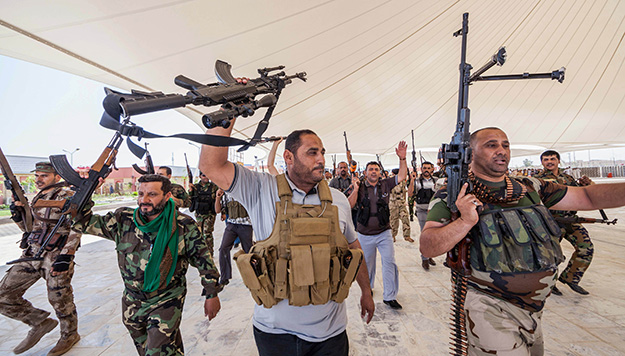
When the Islamic State of Iraq and Syria (ISIS) overran Mosul last June, Grand Ayatollah Ali al-Sistani, the preeminent Shi‘i cleric in Iraq, called for voluntary jihad. The outlook for the central government was bleak. Reports from the battlefronts, as well as threatening statements by ISIS leaders, suggested that the capital Baghdad could also fall to ISIS. The group repeatedly massacred its captives and systematically destroyed important religious and cultural sites.
Drug Use and Harm Reduction in the MENA Region and in Lebanon
Repressive policies that stigmatize and punish drug users have tended to exacerbate social problems rather than mitigate them. In contrast, harm reduction (HR) approaches to drug use have been shown to prevent the spread of blood-borne viruses (such as HIV, HBV, and HCV), thereby lowering morbidity and mortality rates. Over the past 15 years, many HR initiatives have been launched in the MENA region, including Lebanon. However, continued progress in HIV prevention will require more structured and comprehensive HR interventions, adjusted to the needs of local populations.
Save the Date: MEI's 69th Annual Banquet and Conference
Save the Date! The Middle East Institute’s 69th Annual Banquet and Conference November 12-13, 2015 Capital Hilton Hotel 1001 16th St. NW Washington, DC
Watch this space for more information, or call 202-785-1141 ext.213 for details.
Civil Society and Harm Reduction in Thailand – Lessons Not Learned
The Thai government was acclaimed in the 1990s for the bold approaches it supported to reduce HIV transmission among sex workers. Later, the Thai government’s leadership was internationally praised for providing generic antiretroviral treatment (ART) to people living with HIV. Today, global leaders applaud the Thai government’s decision to provide ART to everyone in an effort to prevent transmission, as well as for its decision to take full financial responsibility for HIV programming as of 2017, essentially weaning itself off external donor support. Indeed, there is much to celebrate, and the Thai government’s contributions to leadership and innovation in the area of HIV prevention, treatment, care, and support must be acknowledged—but not blindly.
Analysis of Syrian civil war dynamics tends to draw a sharp contrast between the southern front, referring to the southernmost provinces of Deraa, Quneitra, and Suwayda, and the north. Most observers point to the south, in contrast to the north, as lacking a significant Islamic State (ISIS) presence. How true does this general assessment hold? Are radical or extremist groups much less influential in the south?
The Current State of Harm Reduction Policy in the Middle East
In the late 1980s, Western governments began to adopt drug policies based on the strategy of “harm reduction” (HR), which concentrates on alleviating the negative effects of drug use rather than on reducing its prevalence. This policy shift, largely motivated by the recognition that injection drug use contributes to the spread of HIV/AIDS, soon paid off. Within a decade the countries that had adopted HR as their primary policy had managed to control the injection-related spread of HIV and other blood-borne infections such as hepatitis. The spread of HIV among substance users came almost to a halt in Australia and the Netherlands, which had implemented the strategy vigorously. HR was a victory for not only health systems, which had successfully controlled a viral infection with no known “infectious disease model” solution (that is, a vaccine or effective antiviral treatment), but also for society in that HR forestalled the adoption of ineffective strategies such as segregation, which instead marginalizes drug users and abandons them to their high-risk behaviors.
Looking at Armenian-Iranian Relations Through a Russian Lens
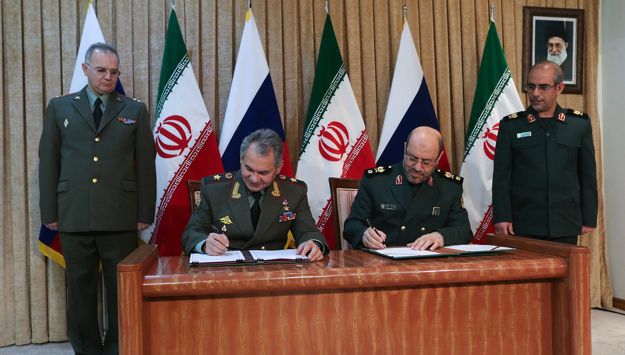
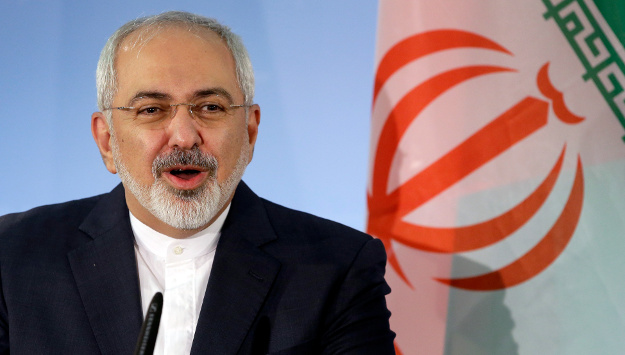
The late January visit to Armenia by Iranian Foreign Minister Javad Zarif got little media attention, but it could have significant ramifications for geopolitics in Eurasia. Specifically, the trip could help Russia gain a trade outlet that softens the blow of Western sanctions.