This text has been translated by AI and may contain errors.
Skip to Content

Priyanka Debnath

This individual is a guest contributor. MEI is not able to assist with contact requests.

The Latest from Priyanka Debnath

Filter by
10201 Results
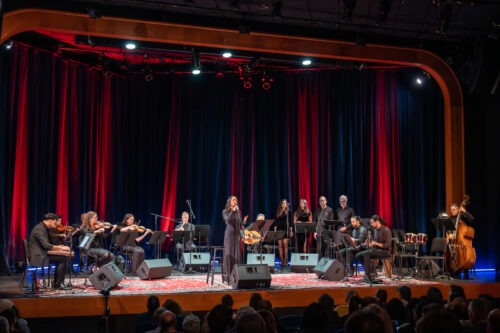
New York Arabic Orchestra at Wolf Trap
  • Arts & Culture
  • New York Arabic Orchestra at Wolf Trap

    Co-produced by the Middle East Institute Arts & Culture Center and Abu Dhabi Festival

    December 4, 2026, 8:00 PM – 9:30 PM

    The Barns at Wolf Trap, 1635 Trap Road Vienna, VA 22182

    Dr. Marwan Muasher: Has the Middle East Really Changed?
  • Podcast
  • Dr. Marwan Muasher: Has the Middle East Really Changed?

    Have October 7 and the Iran war remade the Middle East, or just made it more dangerous? In the first episode of Re-Orient, Gönül Tol puts that question to Dr. Marwan Muasher, Jordan’s former Deputy Prime Minister and Foreign Minister. Muasher draws on his extensive career to unpack the key issues driving today’s Middle East, from regional alignments to US influence, and offers insights on what has the potential to shape this volatile part of the world.

    In Iran, a Divided Regime Is Not a Paralyzed One
  • Analysis
  • In Iran, a Divided Regime Is Not a Paralyzed One

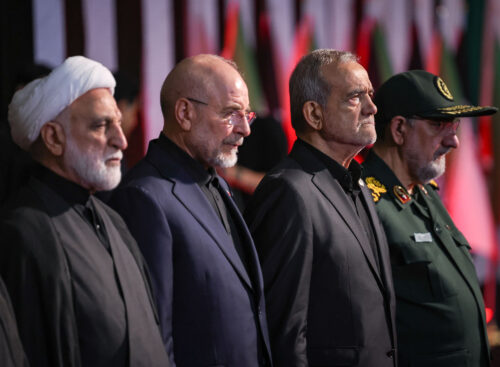
    President Donald Trump’s next move on Iran should follow from what he actually wants, and with his legacy at stake, the choice matters. If the ultimate goal is regime change through internal collapse, the logic points to a long squeeze: tighter enforcement of the economic blockade and periodic military strikes to limit Iranian actions in the Strait of Hormuz, a campaign that might outlast his presidency. Whether by design or by drift, that is roughly the course Washington is on today.

    Syria Is Paying the Price for the Iran War
  • Policy Memo
  • Syria Is Paying the Price for the Iran War

    When the United States and Israel launched military operations against Iran in February 2026, it triggered instability and conflict in almost every country across the Middle East. In Syria, however, what followed was nine months of record lows in violence, as the country’s process of internal stabilization continued apace. Yet Iranian attacks on the Gulf and the Strait of Hormuz, as well as broader regional instability fueled by the seemingly intractable US-Israeli conflict with Iran and the uncertainty resulting from the US blockade, threaten to cripple Syria’s economic recovery.

    COP31: What’s at Stake in Antalya
  • Podcast
  • COP31: What’s at Stake in Antalya

    More than 100,000 people registered for the UN’s 31st annual climate change conference, COP31, now under way in Antalya, Turkey, in what could be the largest climate summit to date. Mohammed Mahmoud, CEO and founder of the Climate and Water Initiative, joins hosts Alistair Taylor and Matthew Czekaj to discuss the key takeaways from the conference so far and the negotiations around a final agreement. They unpack the fight over fossil fuels and climate finance, the US government’s absence, and whether participants can deliver on their agenda.
    November 20, 2026

    The Gaza Plan: Delivered, Stalled, Reversed
  • Report
  • The Gaza Plan: Delivered, Stalled, Reversed

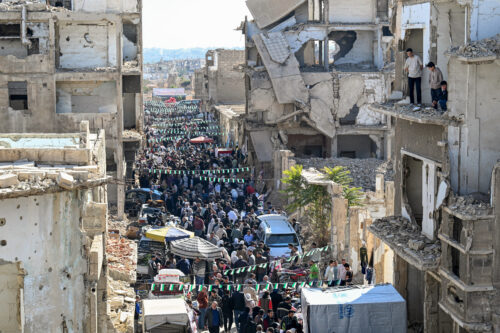
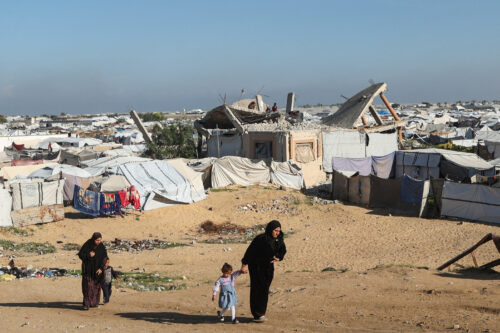
    One year on, the Trump administration’s 20-point plan for Gaza remains a work in progress, and the debate around it has split into two narratives that rarely meet. Official statements announce breakthroughs, while critics dismiss the plan as a cease-fire in name only. Neither narrative tells a policymaker which commitments are working, which are stalled, who is obliged to take the next step, and what would unlock the process. The central goals of this policy analysis are to answer those questions and suggest a pathway forward into 2027 and beyond.

    A Century of Egyptian Art
  • Arts & Culture
  • A Century of Egyptian Art

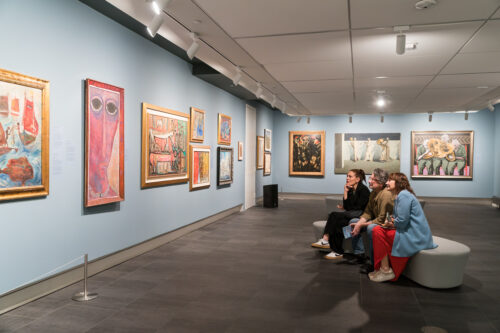
    A conversation with Curator Heba El Kayal and Art Historian Alex Dika Seggerman.

    November 18, 2026, 12:00 PM – 2:00 PM

    The MEI Art Gallery, 1763 N St. NW, Washington, District of Columbia 20036

    Recalibrating the Gulf Economic Model After Iran: Different Vulnerabilities in the Quest for Strategic Security
  • Analysis
  • Recalibrating the Gulf Economic Model After Iran: Different Vulnerabilities in the Quest for Strategic Security

    The war with Iran is forcing a fundamental shift in the Gulf economic model: from diversification built around growth and global integration toward diversification built around resilience and strategic security. The crisis has exposed sharply different vulnerabilities across the GCC, particularly in hydrocarbon exports, trade routes, and fiscal capacity. Rather than reversing economic transformation, it is likely to strengthen the role of the state in directing capital toward critical infrastructure, energy security, and risk reduction.

    Implications of West Bank Economic Collapse
  • Policy Memo
  • Implications of West Bank Economic Collapse

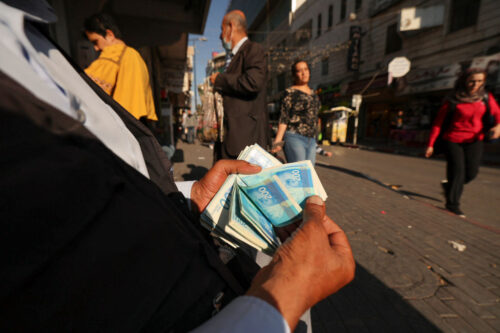
    The West Bank economy is in crisis. Since the Hamas attack on Israel on October 7, 2023, Israeli policies, compounded by Palestinian Authority (PA) governance and fiscal management weaknesses, have driven the economy into free fall. The measures are imposing severe hardship on the lives and livelihoods of Palestinians; risk destabilizing the West Bank; carry spillover implications for Israel and its neighbors; and threaten to derail the US administration’s efforts to implement its 20-point plan for Gaza.

    Oman and the New Geography of Gulf Access
  • Analysis
  • Oman and the New Geography of Gulf Access

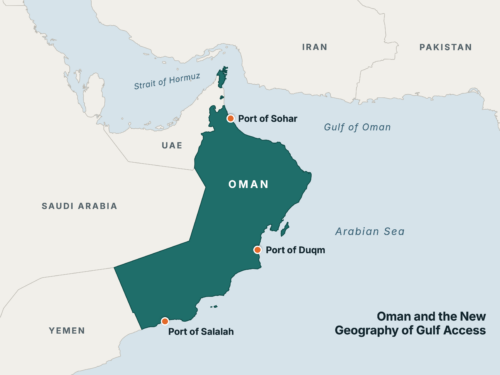
    For decades, Oman’s location has been both an advantage and a liability. Its access to the Indian Ocean has given it a maritime reach beyond the Strait of Hormuz, while leaving it on the periphery of the Gulf’s economic boom, dominated by its larger neighbors.

    Blue Wave, Regional Ripples: Turkey and Lebanon React to the Midterms
  • Podcast
  • Blue Wave, Regional Ripples: Turkey and Lebanon React to the Midterms

    The November 3 US midterms handed Democrats control of both chambers of Congress, a result many abroad read as a rebuke of President Donald Trump’s policies. How does the “blue wave” resonate among electorates and governments in Turkey and Lebanon, two key American partners in the Middle East? Ankara is weighing an early vote that could let President Recep Tayyip Erdoğan run again while his chief rival stands trial. Beirut, its elections postponed by war, is trying to restore state authority, including over Hizballah’s weapons. MEI Senior Fellows Gönül Tol and Fadi Nicholas Nassar join host Alistair Taylor to discuss how both countries read the results, how issues like corruption struck a chord in each, and what Ankara and Beirut expect from a Democratic Congress.

    November 12, 2026

    Syria’s SDF Integration: Progress, Obstacles, and Security Risks
  • Analysis
  • Syria’s SDF Integration: Progress, Obstacles, and Security Risks

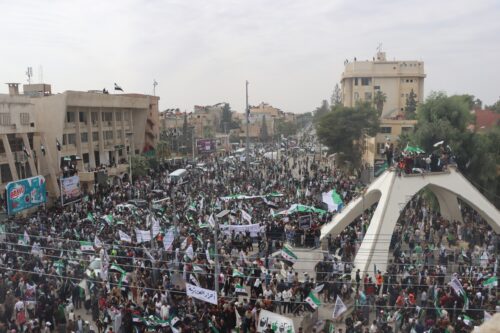
    On October 9, protesters in the northeastern city of Hasakah raised the Syrian flag and called for the extension of state authority, roughly six weeks after the Syrian Democratic Forces (SDF) announced their dissolution as an independent force. The protesters, who came from Ghwayran, al-Nashwa, al-Aziziyah, and the surrounding countryside, carried photographs of detainees. Alongside a stronger state presence, they demanded a say in how it would be exercised, from who is appointed to run local government to who is recruited into the security services.

    November 12, 2026