This text has been translated by AI and may contain errors.
Skip to Content

Priyanka Debnath

This individual is a guest contributor. MEI is not able to assist with contact requests.

The Latest from Priyanka Debnath

Filter by
10096 Results
Copts in Egyptian Civil Society: Challenge and Hope in Transition
  • Analysis
  • Copts in Egyptian Civil Society: Challenge and Hope in Transition

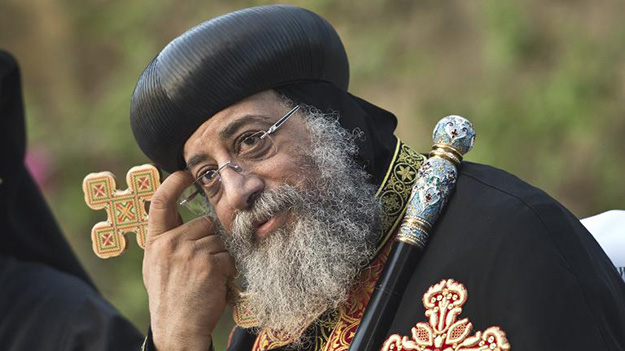
    “Through wisdom a house is built, and by understanding it is established.” Pope Tawadros II, the Pope of the Coptic Orthodox Church, tweeted this verse of scripture in December 2012. He wrote it as one of a series of daily reflections on the book of Proverbs. This phrase, however, also provides an entry point into the Coptic Orthodox Church and its place in Egyptian civil society. Egypt is in the midst of rebuilding its government and society following an 18-day revolution in 2011, 18 months of military rule that ended with the election of Mohamed Morsi, and the removal of President Morsi one year later by the Egyptian military in July 2013. Egyptian Christians now have the opportunity and challenge to renegotiate their place in Egyptian civil society during this time of unrest and transition. What wisdom, understanding, and vision will Christian clergy and lay leaders put forth in order to co-labor with their neighbors, the state, and other stakeholders to build a new house for Egyptian society? This new vision must be rooted in Copts’ historical experience and include the possibility for new models of engagement and representation.

    February 3, 2014

    Will Punishing Musharraf Be Good for Democracy?
  • Analysis
  • Will Punishing Musharraf Be Good for Democracy?

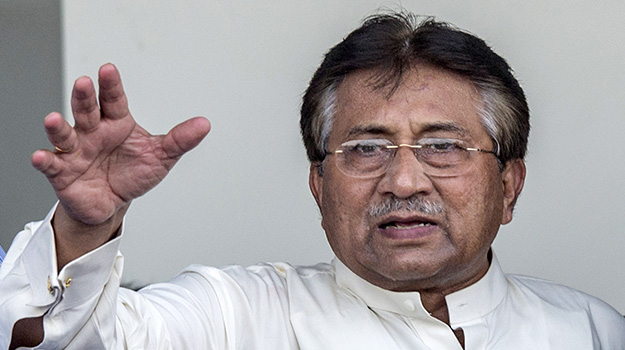
    After weeks of delay tactics by his lawyers, former military ruler Pervez Musharraf could be indicted in early February by a special court in Pakistan for high treason. If he is indicted, Musharraf will be the first serving or retired general in Pakistan’s history to face this particular ignominy.

    February 3, 2014

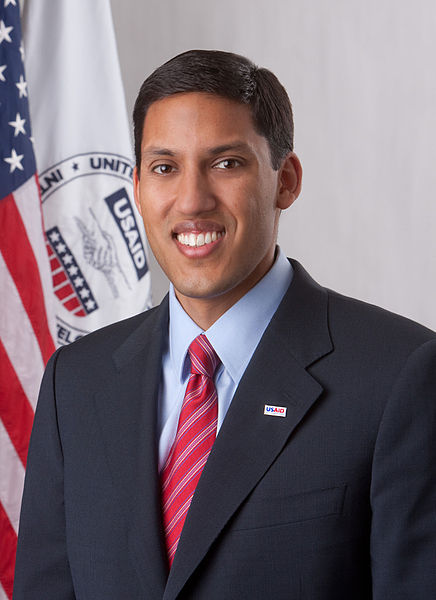
    Keynote Luncheon Featuring USAID Administrator Rajiv Shah

    Keynote Luncheon Featuring USAID Administrator Rajiv Shah

    January 31 – January 1, 1970, January 31 - 12:30 PM – 12:00 AM
    January 1 - 12:30 PM – 12:00 AM

    The National Press Club, 529 14th St. NW, 13th Floor, Washington, District of Columbia 20045

    Saving Syria's Civilians: Urgent Priorities and Policies
    Middle East Institute

    Saving Syria's Civilians: Urgent Priorities and Policies

    January 31 – January 1, 1970, January 31 - 9:00 AM – 12:00 AM
    January 1 - 9:00 AM – 12:00 AM

    The National Press Club, 529 14th St. NW, 13th Floor, Washington, District of Columbia 20045

    De-Ba`thification in Iraq: How Not to Pursue Transitional Justice
    Middle East Institute
  • Analysis
  • De-Ba`thification in Iraq: How Not to Pursue Transitional Justice

    The de-Ba`thification process in Iraq has fallen profoundly short as a transitional justice mechanism over the past decade. Poorly conceived, badly implemented, and controlled by hard-liners, the process has been so highly politicized that it has eroded the rule of law and intensified the sectarian tensions that are at the heart of the violence haunting Iraq.

    January 30, 2014

    Holding Aid Hostage in Syria
  • Analysis
  • Holding Aid Hostage in Syria

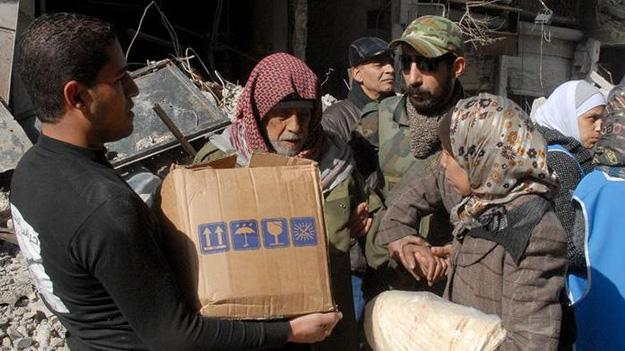
    In most wars combatants wield aid as a weapon, circumscribing humanitarian access and impeding assistance to civilians in enemy-held territory, hoping that hunger will starve resistance into submission or undermine the morale of foes. In no war is this truer than in Syria, where the horror of a prolonged vicious conflict has been compounded by aid being held hostage to politics and combat. The lack of adequate medical care, food, and shelter has added to the death toll and misery that has made Syria the world’s worst humanitarian catastrophe this century.

    January 30, 2014

    Erdogan in Tehran
    Middle East Institute
  • Analysis
  • Erdogan in Tehran

    Turkish Prime Minister Recep Tayyip Erdogan is in Tehran January 28 and 29 for his first meeting with Iranian President Hassan Rouhani. Foreign Minister Ahmet Davutoglu, Energy Minister Taner Yildiz, and Economy Minister Nihat Zeybekci are accompanying him. MEI spoke to Gonul Tol, Director of the Institute’s Center for Turkish Studies, about the meeting.

    What is the reason for this high-level visit?

    Dressing for Diplomatic Success: Iranian Negotiations Lead the Way
    Middle East Institute
  • Analysis
  • Dressing for Diplomatic Success: Iranian Negotiations Lead the Way

    In the Middle East today, diplomatic success and failure are unfolding side by side, often with some of the same players. High-profile attempts are being made to end the conflict between Israel and the Palestinians, to stop the massacre of innocents in Syria, and to bring Iran in from the cold.

    January 28, 2014

    Collection Spotlight: America's Great Game: The CIA's Secret Arabists and the Shaping of the Modern Middle East
    Middle East Institute
  • Analysis
  • Collection Spotlight: America's Great Game: The CIA's Secret Arabists and the Shaping of the Modern Middle East

    America’s Great Game: The CIA’s Secret Arabists and the Shaping of the Modern Middle East, by Hugh Wilford, 2013

    A tale of how the CIA set sail into the Middle East with the best intentions, ran aground on its own failings, and was overwhelmed by forces and events it could not control.

    January 28, 2014

    "Going Grassroots:" Transitional Justice in Egypt
    Middle East Institute
  • Analysis
  • "Going Grassroots:" Transitional Justice in Egypt

    Since the inception of its transitional justice and accountability program in November 2012, the Egyptian Initiative for Personal Rights (EIPR) has faced a number of challenges related to its work. Of these, one of the most arduous has been operating in a context of ongoing political and social upheaval. The period since November 2012 can generally be divided into three distinct phases, each marking a change in EIPR’s organizational and conceptual approaches to transitional justice. Though EIPR sees its work in Egypt less in phases and more as a long and complicated struggle against injustice and impunity that will likely continue for the foreseeable future, the three phases are helpful for documenting its approach to transitional justice since 2012.

    January 27, 2014

    Surviving Cold and Conflict in Syria
    Middle East Institute
  • Analysis
  • Surviving Cold and Conflict in Syria

    “Amal”[1] fled violence in the countryside outside of Damascus with her husband, father, and five children almost two years ago. The family moved to Salamieh, a Syrian town of approximately 100,000 people 33 kilometers southeast of Hama. Salamieh is still under the control of the government armed forces, and many displaced people, mainly Sunnis from Homs, Aleppo, and the Damascus area, have sought refuge there and in surrounding towns.

    January 24, 2014

    What's at Stake in Geneva II
  • Analysis
  • What's at Stake in Geneva II

    This article was originally published by NPR.

    With a major push from the U.S., a new Syrian peace conference opened Wednesday in Switzerland, the first such effort since the middle of 2012. It wasn’t easy getting everyone there, and it will be harder still to achieve a breakthrough.

    January 22, 2014