Rebecca Anne Proctor is an independent journalist, editor, author, and broadcaster based in Dubai and Rome, from where she covers the Middle East and North Africa. She is the former editor-in-chief of Harper’s Bazaar Art and Harper’s Bazaar Interiors.
The Latest from Rebecca Anne Proctor
Humanitarian aid for Northern Syria
Charles Lister, Mona Yacoubian, and James Jeffrey join host Alistair Taylor to discuss the upcoming UN Security Council vote on the renewal of cross-border assistance for Syria, Russia’s threats of severing access, and how they might impact stability across the region.
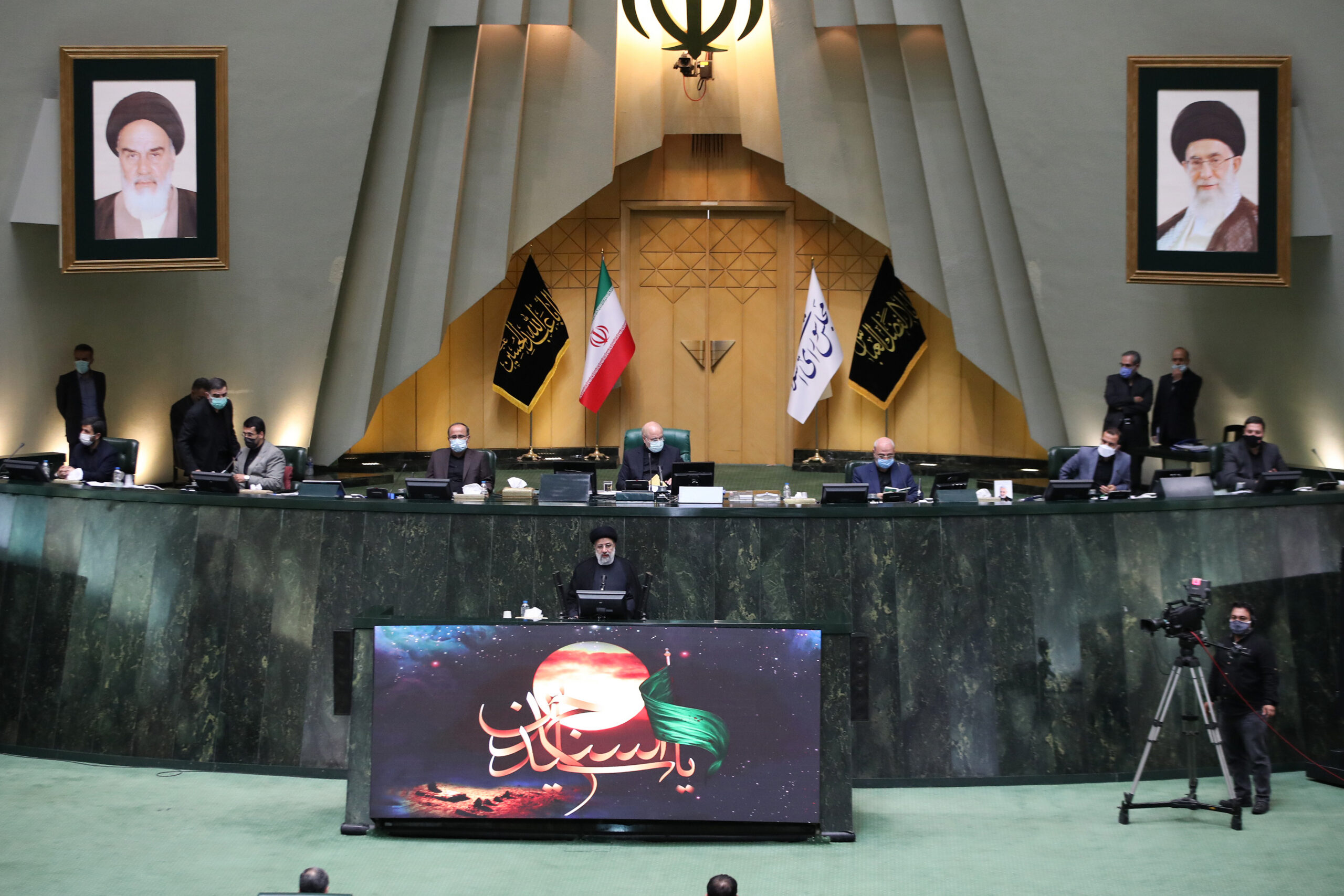
حلقة 18: آراء من واشنطن – أزمتان وفرصة أمام النظام الإيراني
ما هي الأزمات والفرص أمام النظام الإيراني بعد انتخابات الرئاسة؟ يستعرض إبراهيم الأصيل رأياً لأليكس فاتانكا في حلقة آراء من واشنطن لهذا الأسبوع
الضربات الجوية الأمريكية على الميليشيات العراقية وخطر دوامة التصعيد
مهما كانت شدة محاولات الحكومة العراقية لتوجيه البلاد بعيدًا عن الصراع الإيراني الأمريكي، فإن الميليشيات العراقية المدعومة من إيران ستظل تسحبها مجددًا لهذا الصراع
The promise and the pitfalls of Iraq’s tripartite New Mashreq
Sunday was a festive day in Baghdad. The last time Iraqis had received an Egyptian president 30 years ago, the region was gearing up for war and uncertainty as the late President Hosni Mubarak shuttled between Baghdad and Gulf capitals prior to Saddam Hussein’s invasion of Kuwait in 1990. The circumstances were quite different on June 27, when Egyptian President Abdel-Fattah el-Sisi and King Abdullah II of Jordan were given the red-carpet treatment at a tripartite summit marking the fourth meeting between the leaders of the three countries aiming to form a new regional alliance.
Gender and Covid-19: Women’s Rights, Roles, and Welfare through the Pandemic
Egypt's Nile strategy
Egypt, Ethiopia, and Sudan are caught in a dangerous deadlock over the Nile River and despite what the international community seems to think, the risk of military confrontation among the three nations is not at all far-fetched. Addis Ababa began the second phase of filling the reservoir behind its giant Grand Ethiopian Renaissance Dam (GERD) in early May without an agreement with the riparian nations — Egypt and Sudan. However, much has changed over the past year and the second filling has played out rather differently from the first last July. In the intervening months Egypt has ramped up its diplomatic outreach and emerged as an influential player in the Nile Basin, the Horn of Africa, and East and Central Africa. Cairo succeeded in forging strategic alignment with Khartoum to exert diplomatic pressure on Addis Ababa, forming webs of alliances with different regional powers across East and Central Africa and the Horn of Africa to project power and influence, and exerting geopolitical forward pressure on Ethiopia in parallel with the diplomatic track to solve the GERD dispute.
Monday Briefing: US airstrikes on Iraqi militias and the risk of an escalatory spiral
Read MEI’s weekly briefing featuring expert analysis of key regional developments for the week ahead.
Canal Istanbul: Don’t believe the hype
The Turkish government recently confirmed that the country has approved development plans to carve a new passage between the Black Sea and the Sea of Marmara. Cutting through forests and farmland, the new Canal Istanbul would run parallel to the Bosphorus for a total of 45 km (28 miles) with a depth of 20.75 meters (68 feet) and a width of 275-350 meters (900 to 1150 feet). Ground-breaking for the first bridge over the proposed canal is scheduled to take place on June 26. However, this will be a ceremony for domestic political consumption and by no means indicates that construction is really starting. Financing the massive project might prove impossible due to the environmental concerns and investment risks hanging over it.
Russia’s careful calculus in supplying Iran with a high-tech satellite
According to reporting from The Washington Post, Russia is set to provide Iran with a high-tech satellite called Kanopus-V. Russia will launch the satellite from its territory and then hand over control to an Iranian crew that received essential training in Russia. Iran will control the satellite from a newly built facility in Alborz Province, near Tehran.
Iran, Russia, and China in the Post US Withdrawal Afghan Landscape
Pakistan’s foreign policy challenges
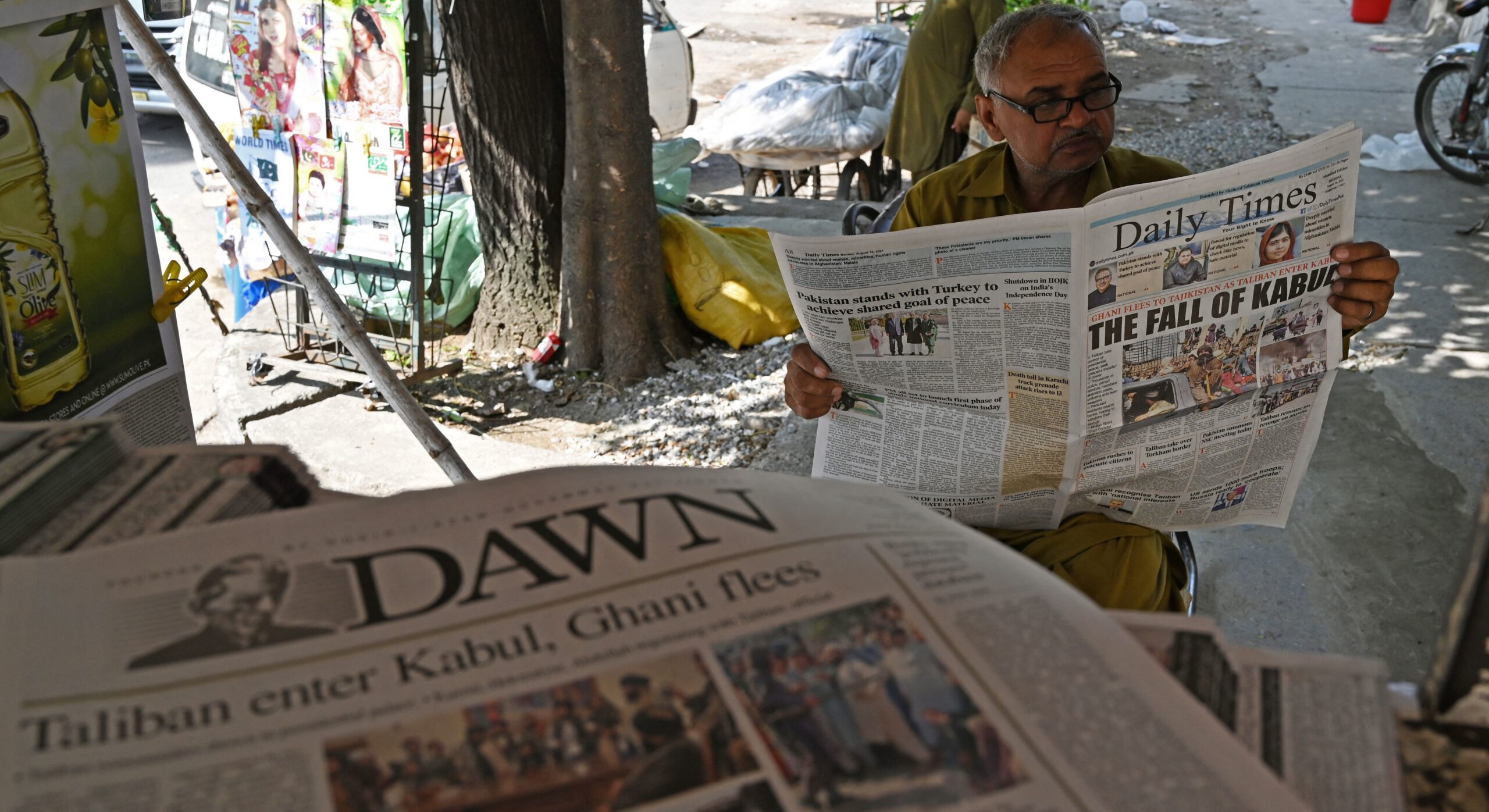
Madiha Afzal, Syed Mohammad Ali, and Marvin Weinbaum join host Alistair Taylor to discuss a range of issues facing Pakistan, from the implications of the U.S. military withdrawal from Afghanistan, to its bilateral relations with India, China, Saudi Arabia, and the United States under the Biden administration.
With Netanyahu gone, the Abraham Accords will not only survive, they might even flourish
Some international concern has been voiced about the future prospects of the Abraham Accords under Israel’s new government. This stems from the perception that the normalization agreements Israel signed in 2020 with the UAE and Bahrain were the personal achievements of two former leaders — Donald Trump and Benjamin Netanyahu — and would not have happened without them. The question thus arises of whether the agreements can survive their departure from power. Not only will the Abraham Accords survive, they will now be able to flourish and reach new heights. Foreign Minister Yair Lapid’s statement that his first visit abroad will be to the UAE is a good indicator.
HTS is not al-Qaeda, but it is still an authoritarian regime to be reckoned with
On June 1, PBS Frontline released a documentary entitled “The Jihadist,” which includes an interview by American journalist Martin Smith with al-Jolani, now the leader of Hayat Tahrir al-Sham (HTS), who “opened his heart” about the past, present, and future of his group. The interview revived the question of whether the international community should believe al-Jolani’s claims about his group’s transformation from global jihadism to a local focus and his denial of the allegations of torture in its prisons. This article argues that while HTS’s transformation and split from al-Qaeda is real, al-Jolani must be pressured to share power over Idlib and loosen his group’s authoritarian grip, which is causing grievances that in the long term will push locals into the hands of radical groups like ISIS and al-Qaeda.
Black Sea Security: Priorities for the US-Georgia Partnership Under President Biden
Tbilisi and Washington have in recent years built a strong strategic partnership. Yet, a myriad of threats imposed by Russia on Georgia and the Black Sea region – including a continued “borderization” policy, modernization of the Black Sea Fleet, and attempts to transform the Black Sea into an Anti-Access/Area Denial (A2/AD) zone – call for a review of U.S. policy toward Georgia and the wider Black Sea region.