This text has been translated by AI and may contain errors.
Skip to Content

Salam Kawakibi

This individual is a guest contributor. MEI is not able to assist with contact requests.

The Latest from Salam Kawakibi

Filter by
9991 Results
Special Briefing: The Trump administration’s potential last-minute Middle East policy moves
  • Commentary
  • Special Briefing: The Trump administration’s potential last-minute Middle East policy moves

    From Israel/Palestine and Lebanon to Iran and Afghanistan, there are a number of areas where the Trump administration may make policy moves before leaving office on Jan. 20. Experts from across MEI weigh in with their thoughts on what to watch out for over the next seven weeks.

    December 3, 2020

    A thinly veiled strategy: Assad's co-optation of women religious leaders
  • Analysis
  • A thinly veiled strategy: Assad's co-optation of women religious leaders

    A few weeks ago, Syrian social media was abuzz about a short clip featuring the famous woman religious scholar and regime loyalist Khuloud Suruji. The video also drew attention to one question that has gone largely unaddressed: how have Assad and the Ba‘ath regime mobilized and manipulated female religious scholars throughout the Syrian civil war?

    December 2, 2020

    Economic desperation and dependence are driving the Palestinian Authority’s political decisions
    Photo by Issam Rimawi/Anadolu Agency via Getty Images
  • Analysis
  • Economic desperation and dependence are driving the Palestinian Authority’s political decisions

    Faced with the Trump and Netanyahu governments’ persistent dismissal of the Palestinians and their rights, the PA has spent the better part of the last three years threatening to terminate all relations with Israel, and even to withdraw the Palestine Liberation Organization’s (PLO) recognition of Israel. The deteriorating situation culminated in Palestinian President Mahmoud Abbas’ May 2020 declaration that the Palestinian leadership was absolved “of all the agreements and understandings with the American and Israeli governments.” Notwithstanding previous similar warnings from Abbas in recent years, the announcement prompted speculation among Palestinian political parties, Palestinians at home and in the diaspora, scholars, activists, and journalists over the future of Palestinian politics in the post-Oslo era.

    December 2, 2020

    The Trans Adriatic Pipeline: Why it Matters and What Comes Next?
  • Analysis
  • The Trans Adriatic Pipeline: Why it Matters and What Comes Next?

    On November 14, the Transadriatic Pipeline (TAP) commenced operation. It is difficult to overstate the significance of this development. The new transit link running from Greece’s border with Turkey all the way to Italy, via a 878-stretch that also crosses Albania and the Adriatic Sea, makes the much-discussed Southern Gas Corridor a reality. It brings an annual 10 billion cubic meters (bcm) of natural gas from the Shah Deniz offshore field in the Caspian to consumers in the EU and the Western Balkans, helps diversify supplies away from Russia, and enhances Azerbaijan’s position on European markets.

    December 2, 2020

    Georgia’s new role in the Black Sea security framework
  • Analysis
  • Georgia’s new role in the Black Sea security framework

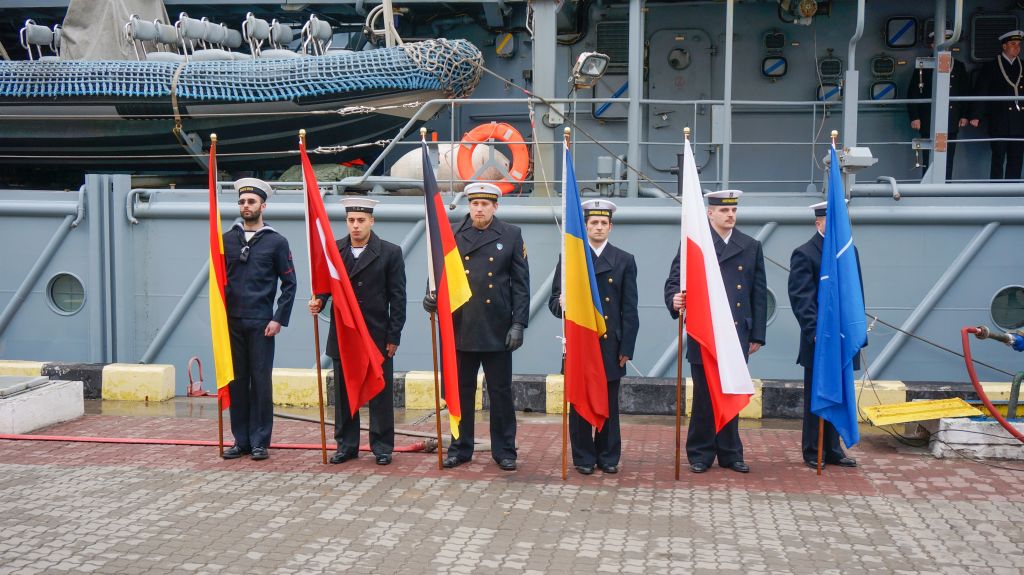
    It is critical that Tbilisi reframes and strengthens its role as a proactive contributor to Black Sea security. Georgia has already proved itself as a trustworthy NATO partner and contributor to Euro-Atlantic security through active participation in NATO-led operations and international missions. In a recent address, Prime Minister Giorgi Gakharia highlighted Georgia’s need for a new strategic role in Black Sea security.

    December 2, 2020

    DIY futures in the Middle East: What if small got bigger?
    Photo by Marwan Naamani/picture alliance via Getty Images
  • Analysis
  • DIY futures in the Middle East: What if small got bigger?

    It’s difficult to look at the Middle East and consider its future optimistically. Much of the analysis of the region centers on crisis and collapse. There is plenty of both, fueled by wars and civil conflicts, poverty, extremism, and more. Given the human toll, focusing on all this is natural. It is also necessary if solutions to deeply rooted problems are ever to be developed, leading to a better future.A related risk is becoming blinded to “weak signals” — early indicators of what could become features of potential alternative futures. Weak signals are developments that are emerging outside the dominant norms and trends of today. In the Middle East, probably the most dominant norm is the inability of governments throughout the region to provide security and prosperity for their citizens. The COVID-19 pandemic is making this even more apparent, and markedly worse. It is not just the obvious failed states — as Steven Cook recently observed, “sometimes state failure is a more chronic condition.” But in the midst of this — and fueled by it — there is evidence of activities at the local level to create what is missing. Could these be signals of a future different than the one it is so easy to expect for the region?

    December 1, 2020

    Biden could generate momentum for Israeli-Palestinian peace
  • Analysis
  • Biden could generate momentum for Israeli-Palestinian peace

    While the Israeli-Palestinian issue and renewal of negotiations is unlikely to feature prominently on his agenda anytime soon, Biden’s election generates renewed positive momentum.

    November 30, 2020

    Deeds matter most
    Photo by AFP via Getty Images
  • Analysis
  • Deeds matter most

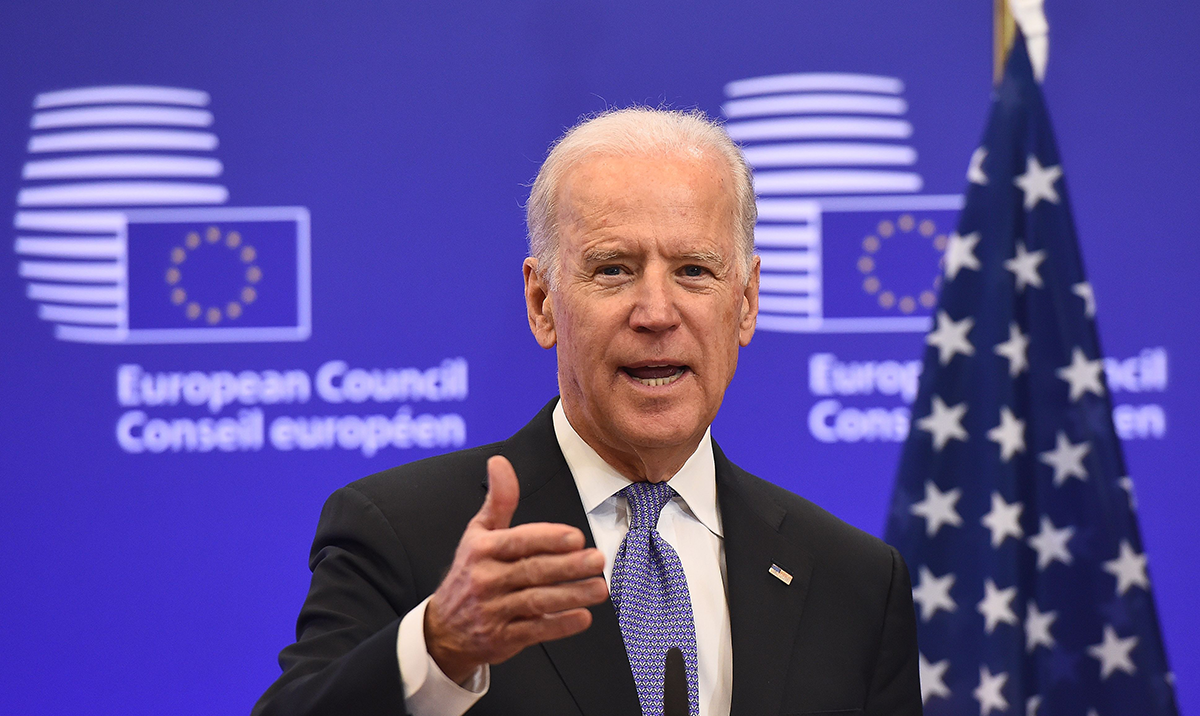
    “Deeds matter most” was the official diplomatic response to Joe Biden’s election from the Islamic Republic’s foreign minister, Javad Zarif. It came in the form of an early morning Tweet, an appropriate medium given the new political norm established in recent years. The statement read like one from a career diplomat urging “dignity, interest, and responsible diplomacy,” based not on empty rhetoric, but on actions — measurable steps that would demonstrate each side’s commitment to “multilateralism, cooperation, respect for law …” Yet the tweet’s author, Mr. Zarif, has a history of practicing the age-old political principle of “do as I say, not as I do.” Indeed, when it comes to U.S.-Iran relations, the month of November is the perfect time to assess each side’s deeds in this decades-old conflict. Bombastic rhetoric has been a hallmark of this rancorous relationship since Islamic revolutionaries stormed America’s embassy in Tehran in early November 41 years ago. Yet for all the regime’s bluster, including slogans like “Death to America,” its deeds, especially toward Iranians, speak much more loudly.

    November 30, 2020

    Absent with Leave: Moscow’s Deficient Eurasian Military Alliance
  • Analysis
  • Absent with Leave: Moscow’s Deficient Eurasian Military Alliance

    The Russian government has spent more than a decade constructing a multilateral security structure for the former Soviet space—the Collective Security Treaty Organization (CSTO). Yet, despite the occurrence this year of some of the most serious crises in Russia’s neighboring former Soviet republics, the CSTO has been notable for its absence in the Kremlin’s response.

    November 29, 2020

    حلقة 15: أولويات بايدن وشكل سياساته تجاه الشرق الأوسط — مع رندى سليم
  • Podcast
  • حلقة 15: أولويات بايدن وشكل سياساته تجاه الشرق الأوسط — مع رندى سليم

    هل ستكون سياسات بايدن استمرار لسياسات أوباما؟ كيف يمكن أن يكون أثر ترامب على السياسة الأمريكية بعد مغادرته البيت الأبيض؟ ما الذي يمكن أن يحصل بين اليوم ويوم استلام بايدن في السياسة الخارجية؟ خصوصاً بعد حادثة اغتيال العالم النووي الإيراني في طهران، هل نتوقع ظهور مفاجآت؟ ما هي توجهات وأولويات بايدن تجاه الشرق الأوسط؟ إيران، الخليج، اليمن، سوريا، لبنان، تركيا، وليبيا؟

    November 28, 2020

    Ending Trump’s war on refugees
  • Analysis
  • Ending Trump’s war on refugees

    President-elect Joe Biden has promised a return to normalcy. However, for refugees and asylum seekers, merely reversing the policies of President Trump will not be sufficient. Since entering office in January 2017, President Trump has engaged in an undeclared war on refugees. With the added stress of the COVID-19 pandemic, it is essential that the Biden administration adopt new policies that will support the most vulnerable populations around the world.

    November 27, 2020

    Intra-Party Democracy in Tunisia’s Ennahda: Ghannouchi and the Pitfalls of “Charismatic” Leadership
  • Analysis
  • Intra-Party Democracy in Tunisia’s Ennahda: Ghannouchi and the Pitfalls of “Charismatic” Leadership

    Rached Ghannouchi, president of the Islamist party Ennahda and speaker of Parliament, has been a voice of moderation and reason contributing to Tunisia’s incipient democratization. While there is much to praise in Ghannouchi’s stewardship of Ennahda, he should consider the pitfalls of longevity in power. This article examines the ongoing debate on Ennahda’s leadership crisis, considering it from the vantage point of intra-party democracy. 

    November 25, 2020