How Oman’s history inspires its novelists
Why have authors revisited it over the decades through literary works, and what makes it appealing to international readers?
This individual is a guest contributor. MEI is not able to assist with contact requests.
Shahmahmood Miakhel is the Country Director in Afghanistan for the US Institute of Peace (USIP). Prior to that he was a Governance Advisor for the United Nations Assistance Mission in Afghanistan (UNAMA), and, from 2003–2005, a Deputy Minister of the Interior in the Government of Afghanistan. In 1994–1995 he worked for the United Nations Development Programme (UNDP) and United Nations Office for Project Services (UNOPS) in South and Southeast Afghanistan helping to establish District Rehabilitation Shuras (DRS). He also worked as a reporter for the Pashto service of the Voice of America from 1985–1990.
Why have authors revisited it over the decades through literary works, and what makes it appealing to international readers?
Saudi Arabia has undergone tremendous social change in recent years, but it has struggled to make good on some of its more ambitious financial goals. Much of the promised foreign direct investment has yet to arrive, and the kingdom’s growth agenda has drained its foreign reserves. Most of Mohammed bin Salman’s more eye-catching promises, including futuristic urban megaprojects, remain unfinished.
In a sign of strengthening relations, a long procession of foreign ministers from MENA visited China earlier this month. In addition, two MENA nations signed MoUs involving the BRI, China’s global infrastructure development effort.
نائب الرئيس للسياسات
Ethiopia is Iran’s gateway to the Horn of Africa and the broader East Africa region. By helping Ethiopia in its ongoing conflict with the rebel Tigray Defense Forces, which represent the Tigray ethnic minority, Iran is preserving its so-called strategic depth in the region to bolster its influence.
Since the fall of the Soviet Union and the rise of Vladimir Putin in the 1990s, military and economic relations between Iran and Russia have improved, as their tensions with the West have intensified. One aspect of the relationship that has received little attention is their growing economic and trade cooperation involving the production, export, and import of halal meat and other products since 2015.
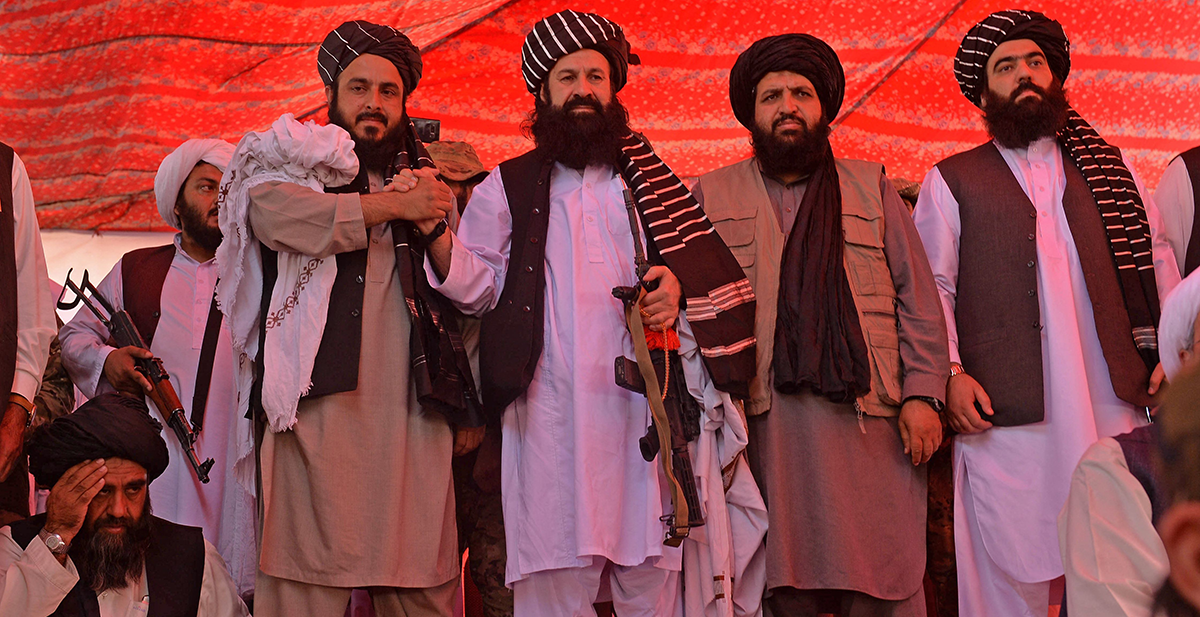
After a grueling 20-year campaign, America concluded its war in Afghanistan where it started: with the Taliban in charge. But this isn’t your father’s Taliban. In recognition of their need for a firmer ideological base and their desire to establish a purely Islamic system, the Taliban rulers are gradually putting together the framework for their new ideological state. They are enacting three closely intertwined ideological initiatives in order to solidify their rule: fleshing out a state religious ideology, burnishing their “originalist” religious credentials, and channeling Afghan nationalism into religious nationalism. These ongoing efforts, which revolve around the Taliban’s Islamism, provide a preview of how the new rulers intend to interact with temporal political realities by provoking religious reform in order to rule Afghanistan.
What these attacks and many others in the region have in common is Iran’s irrefutable involvement. They may have different local contexts and their perpetrators, all loyal to Iran, may have different motivations, but every single one of those attacks was possible only because Iran provided either the weapons or the know-how to assemble and use them.
Turkey, like all other countries, is facing the harsh reality of climate change. Last year, it experienced one of the hottest summers on record. Blistering heat waves led to widespread wildfires in the country’s southwest, affecting five times more land than normal during the summer. Though Turkey usually has large water surpluses, some areas experienced shortages due to extreme drought. Others suffered heavy flooding, leaving scores dead.
On Dec. 23, Jordanian Minister of Industry, Trade, and Supply Yousef Shamali and Russia’s Ambassador to Jordan Gleb Desyatnikov attended a ceremony to finalize a bilateral cooperation agreement on science, culture, and education. This agreement highlights Jordan’s delicate foreign policy balancing act. The government, led by King Abdullah II, will continue to work with a diverse group of countries, even those with tense relations with the West, to bolster its security and economic opportunities. Mitigating security threats and increasing business opportunities is key to political stability and the continuation of the king’s rule amid Jordan’s persistent socio-economic problems. However, the king will need to be careful not to undermine his closest allies by working with their adversaries.
On Jan. 6, 2022, a U.S. district court judge dismissed a lawsuit against the Palestine Liberation Organization (PLO) and the Palestinian Authority (PA) brought by the family of Ari Fuld, a dual U.S.-Israel citizen murdered in 2018 by a Palestinian teenager outside of Bethlehem in the occupied West Bank. The ruling demonstrates the strictly political nature of the lawsuit, whereby powerful interests with deep pockets use litigation and lobbying to target the PA’s finances, including foreign aid, in order to hasten its collapse, as well as the limits of this type of “lawfare” against the PA.
Will Raisi succeed where previous Iranian regimes have failed?
اقرأ تقرير MEI الأسبوعي الذي يتضمن تحليلات الخبراء للتطورات الإقليمية الرئيسية للأسبوع المقبل.