This individual is a guest contributor. MEI is not able to assist with contact requests.
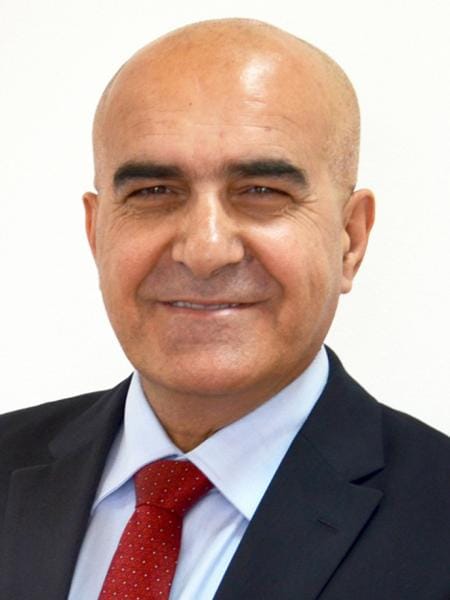
Shahmahmood Miakhel is the Country Director in Afghanistan for the US Institute of Peace (USIP). Prior to that he was a Governance Advisor for the United Nations Assistance Mission in Afghanistan (UNAMA), and, from 2003–2005, a Deputy Minister of the Interior in the Government of Afghanistan. In 1994–1995 he worked for the United Nations Development Programme (UNDP) and United Nations Office for Project Services (UNOPS) in South and Southeast Afghanistan helping to establish District Rehabilitation Shuras (DRS). He also worked as a reporter for the Pashto service of the Voice of America from 1985–1990.
China’s Role in Iran’s Anti-Access / Area Denial Weapons Capability Development
It is the military aspect of the Sino-Iranian relationship that troubles many observers in the West. China, and to a lesser extent, North Korea, have played a critical role in the development of Iran’s anti-access / area denial (A2/AD) capabilities.
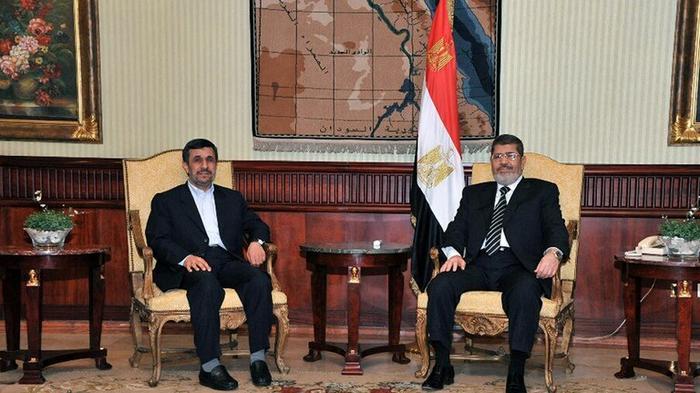
For over 30 years Egypt’s foreign policy has stood on three key pillars: building strategic relations with the United States, maintaining the peace treaty with Israel, and promoting the security of Arab states in the Gulf. The presidency and the security apparatus, moreover, have often overshadowed and minimized the influence of the Ministry of Foreign Affairs in the policymaking process. These pillars solidified under the rule of Hosni Mubarak, and as a result President Mohamed Morsi will not be able to uproot them anytime soon.
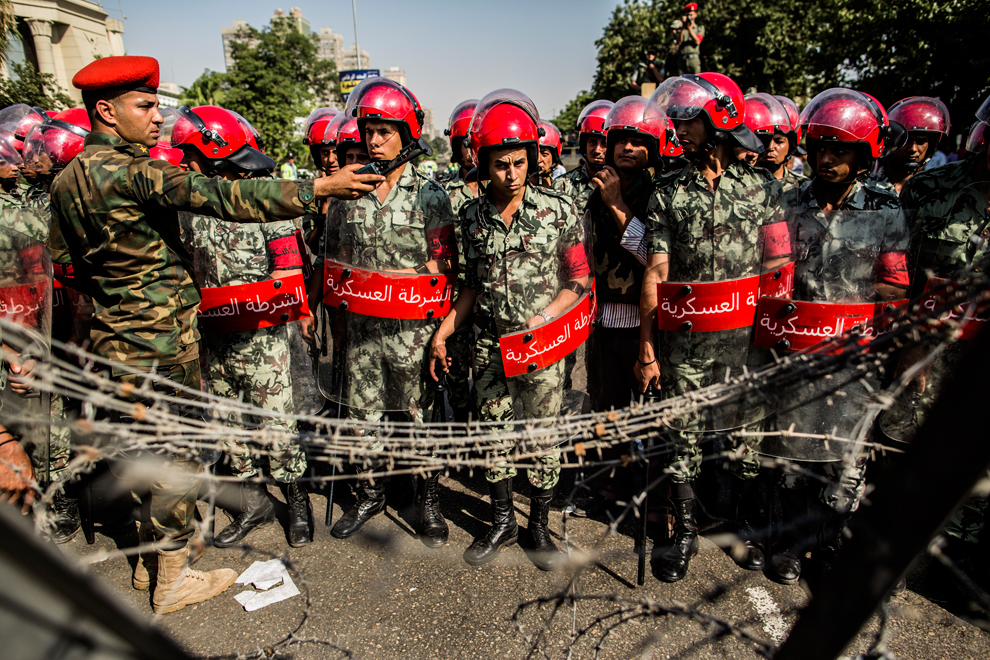
Since the most recent but now routine eruptions of violence between street protesters and Egypt’s state, speculation has swirled about the durability of the pact between the Muslim Brotherhood and Egypt’s armed forces.
When President Mohamed Morsi granted himself sweeping new powers last November, he unwittingly accomplished something no one had yet achieved. He managed to bring Egypt’s fractious and disparate political factions together around a single cause: bitterly opposing him and his Muslim Brotherhood.
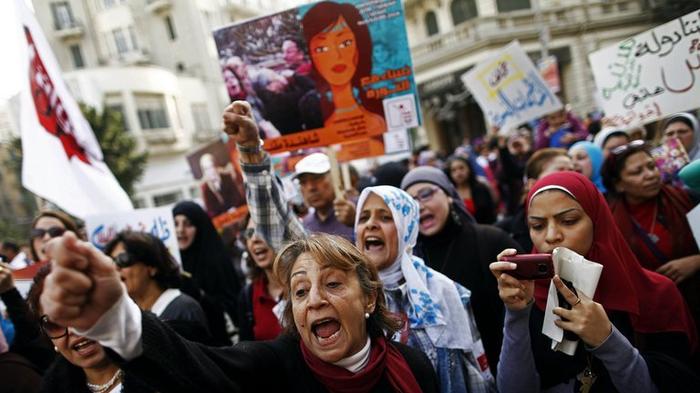
When I moved to Cairo in 1981 I discovered a courtly and safe city. The streets were alive with playful banter, expressions of the renowned Egyptian joie de vivre. Men who wished to attract the attention of lady passers-by sang bits of love songs or called them things like “minaret” and “gazelle.”
A Conversation with al-Gama`a al-Islamiya’s Hani Nour Eldin
Hani Nour Eldin is a member of the Egyptian Islamist group al-Gama`a al-Islamiya and an administrative employee of the Suez Canal Authority. In 2011 he was elected to parliament as part of the group’s political arm, the Building and Development Party. In June 2012 he caused considerable controversy when he traveled to Washington, D.C. as part of a parliamentary delegation.
Ten months have passed since the election of the Muslim Brotherhood’s Mohamed Morsi as Egypt’s first post-uprising president. During his election campaign, Morsi repeatedly promised “change.” So far, however, it appears that Egypt’s bureaucracy has been more successful at changing Morsi’s plans and discourse than he has been at changing the state’s structures.
Along with countries such as Syria and Iraq, Pakistan has become a theater of doctrinal differences between Shia and Sunni Muslims, signifying that rifts between local groups have become linked to the wider violent sectarianism in the Middle East.
The Asia-Pacific in the "Golden Age of Gas": Implications for Middle East LNG Exporters
Qatar, as the world’s largest single LNG exporter, will be at the forefront of competition with key players in both the European and Asian markets. As an infra-marginal producer with all major capital investments already in place and in the process of being amortized, Qatar occupies a privileged though by no means entrenched competitive position.
Japan’s Unfinished Democracy: Lessons for Democratic Transformation in the Middle East
Stability in the Middle East is essential for Japanese prosperity. Japanese investment and aid has already made significant contributions to the region’s socio-economic stability. The next step is for Japan to contribute its lessons learned as a successful case of democratic transformation.