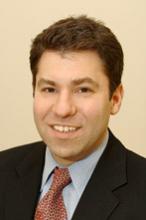
Hasib J. Sabbagh senior fellow for Middle Eastern studies
This individual is a guest contributor. MEI is not able to assist with contact requests.
Steven A. Cook is Hasib J. Sabbagh senior fellow for Middle Eastern studies at the Council on Foreign Relations (CFR). He is an expert on Arab and Turkish politics as well as U.S.-Middle East policy. Dr. Cook is the author of The Struggle for Egypt: From Nasser to Tahrir Square (Oxford University Press, Fall 2011), which won the Washington Institute for Near East Policy’s gold medal for best book on the Middle East in 2012, and Ruling But Not Governing: The Military and Political Development in Egypt, Algeria, and Turkey (Johns Hopkins University Press, 2007). Dr. Cook has published widely in a variety of foreign policy journals, opinion magazines, and newspapers. He currently writes the blog, “From the Potomac to the Euphrates.” Prior to joining CFR, Dr. Cook was a research fellow at the Brookings Institution (2001–2002) and a Soref research fellow at the Washington Institute for Near East Policy (1995–96). Dr. Cook holds a BA in international studies from Vassar College, an MA in international relations from the Johns Hopkins School of Advanced International Studies, and both an MA and PhD in political science from the University of Pennsylvania. He speaks Arabic and Turkish and reads French.
Closing the Channels of the Military's Economic Influence in Turkey
After a decade of working to subordinate Turkey’s military establishment so that it cannot influence the trajectory of Turkish politics, closing the channels of the military’s economic influence has been part of this process. Despite early expectations, the AKP has not forged a more democratic and liberal Turkey, but there is no denying the critical importance of its successful effort to institutionalize civilian control of the armed forces.