Although Russia has not directly intervened in the US-Israeli war with Iran, the conflict has underscored the nature and extent of its strategic partnership with the Islamic Republic. Moscow has provided Tehran with satellite targeting data for strikes on US forces as well as delivered advanced fiber-optic drone technology. It has amplified Iran’s propaganda campaign against the West, while benefiting from the war’s spillover effects. The Russia-Iran axis poses a real threat to the US and its allies; it demands a coherent and resolute response.
Why It Matters for the US
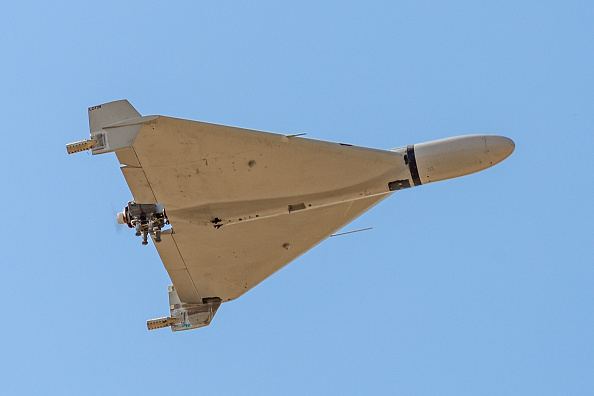
Russia is arming Iran. Russia has a long history as Iran’s top military supplier of armored vehicles, combat aircraft, submarines, and air-defense systems. Throughout Operation Epic Fury, Moscow has continued to produce and deliver fighter jets for the Iranian air force as well as train its pilots. Russia has delivered advanced fiber-optic drone components to Iran — technology that could inflict significant casualties on the US and our partners that Tehran has also passed on to its Middle Eastern proxies. In addition, Moscow has committed to supply Tehran with hundreds of man-portable air-defense systems (MANPADS) and thousands of missiles.
Russian-supplied targeting intelligence endangers US soldiers’ lives. Gen. Dan Caine, chairman of the Joint Chiefs of Staff, confirmed Russia has been aiding Iran during the 2026 war. This backing has included expanded intelligence sharing as well as satellite imagery to aid Tehran’s targeting of US forces. Ukraine revealed that Russian orbital surveillance assets captured images of the UK-US base on Diego Garcia, NATO’s Incirlik base in Turkey, Al Udeid Air Base in Qatar, and oil and natural gas fields in Saudi Arabia — all locations subsequently attacked by Iran. Russian intelligence services also provided Iran with a list of 55 critical energy infrastructure targets in Israel.
The Caspian Sea enables Iran to evade sanctions. Russia and Iran have expanded maritime trade via the Caspian Sea to circumvent US sanctions on both countries; meanwhile, ocean-going shadow fleets facilitate the bilateral flow of weapons and other goods under Russian supervision.
Russia’s nuclear cooperation with Iran compounds the long-term threat. Following the June 2025 12-day Israel-Iran war, Russia signed a deal to construct eight nuclear power plants in Iran. State-owned nuclear firm Rosatom, a key instrument of Russian geopolitical influence in the region, has resumed construction of reactors 2 and 3 at the Bushehr nuclear plant.
Russia benefits from the war at America’s expense. While profiting from surging energy prices and ostensibly temporary sanctions relief, Russia is using the war to advance anti-American propaganda, portraying Washington as a neocolonial power and stoking fears that US allies will be abandoned to face a radicalized Iran.
Policy Considerations
Apply targeted sanctions to cut off Russian military assistance to Iran. Congress should direct the administration to designate Russian individuals and entities responsible for weapons deliveries to and intelligence sharing with Iran.
Boost US support for Ukraine to help degrade Russian capacity to arm Iran. Ukraine’s pressure on Russia reduces the latter’s ability to transfer weapons to Iran. The US should consider increasing military aid for Ukraine, including long-range strike capabilities and air-defense systems, to indirectly weaken Russia. The two theaters are not separate — they share the same Russian supply chain.
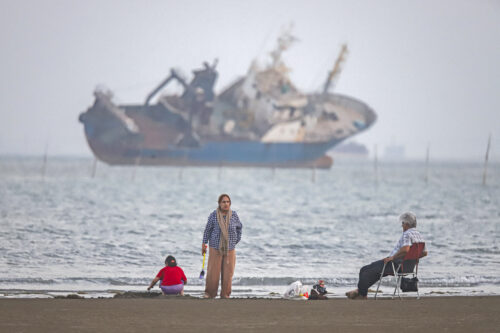
Close the Caspian loophole and tighten the shadow fleet enforcement net. Iranian-Russian sanctions evasion via their trans-Caspian maritime shipping channels is difficult to target. However, Israeli attacks on the port of Bandar Anzali, on the Caspian coast, in March likely degraded Iran’s shipping capacity in this basin. The US should also consider secondary sanctions on South Caucasus countries facilitating land transport of restricted goods via the International North-South Transit Corridor linking Iran to Russia.
Counter Rosatom nuclear activity in Iran. The US, in coordination with European and Middle Eastern allies and partners, should consider sanctions targeting Rosatom’s operations in Iran. Any future diplomatic negotiations pertaining to the Iran nuclear program should be directly conditioned on a rollback of Rosatom’s presence.
Fight Russian propaganda. Russia seeks to damage America’s image around the world. The US should increase cooperation with allies in the soft power space. Washington should boost support for government-funded American media outlets, as per the 2025 National Security Strategy, and task them with more systematically challenging Russian (and Iranian) propaganda, including by documenting Russian belligerence and exposing Russo-Iranian cooperation.
Iulia Joja is a Senior Fellow at MEI.
Photo by Anonymous/Middle East Images/AFP via Getty Images