This article is part of a report outlining an actionable US roadmap to win in Lebanon, comprising eight chapters of specific policy interventions across the security, economic, and political dimensions needed to secure a sovereign Lebanon, lock in US gains against Iran, and permanently end the Israel-Lebanon conflict.
Key Takeaways
- Lebanon is where the contest over who writes the rules of the Middle East’s future — Washington and its partners or Tehran and its proxies — will first be decided. Winning there means securing a sovereign Lebanon, ending the Israel-Lebanon conflict for good, dismantling Iran’s proxy model at its source, and locking in a new regional order before Iran recovers enough to reverse its losses.
- The conditions for success have never been more favorable. Hizballah has been degraded and exposed as an instrument of Iranian occupation, a Lebanese government with popular legitimacy is ready to partner with Washington, the region is aligned behind the outcome, and the main adversary to stability in Lebanon has never been more vulnerable.
- Hizballah is the crown jewel Iran cannot afford to lose but can no longer preserve. A Lebanese state determined to restore its sovereignty, backed by a decisive US commitment to see it through to victory, can defeat Hizballah. The loss of the template for the Axis of Resistance will prove that Iran’s project of exporting its revolution has failed, undermining the regime’s regional threat and its domestic tyranny.
- Sovereignty First must be Washington’s strategy to win in Lebanon. The US should organize Lebanese and regional partners around the principle of reclaiming Lebanon’s sovereignty by keeping the Lebanon-Israel track separate, turning the Lebanese Armed Forces into a sovereignty-enforcing institution, and using sticks and carrots to shift the political calculus in Beirut so the state prevails.
Introduction
A great prize lies unclaimed by the United States and its allies: Lebanon. Ever since Hizballah’s deadly attack against the US Marine barracks in Beirut in 1983, which killed 241 American service members and drove America from Lebanon, Iran has built Hizballah into the instrument it uses to dominate the country and spread its malign influence across the Middle East.
One reason that the United States has not won more in its 2026 war against Iran is that it has yet to capitalize on the present but fleeting opportunity to secure a sovereign Lebanon and permanently dismantle the centerpiece of Iran’s Axis of Resistance. And although Tehran is doubling down on restoring the crown jewel of its proxy empire, Hizballah remains militarily degraded, decapitated, and politically discredited after fighting Iran’s wars at Lebanon’s expense. Most Lebanese reject Hizballah’s claim to be a national resistance and see it instead as an Iranian occupation by proxy. They now look to the Lebanese state to reclaim their country and recognize America as the indispensable partner that can help them succeed. A determined Lebanese state, backed by a decisive US commitment to see it prevail, can defeat Hizballah once and for all. Doing so now would require less of the United States and its allies than at any time since Hizballah’s founding, and it would result in a crippling loss for Iran and a lasting victory for America that could translate into further gains against Iran’s battered proxy network.
It was on the memory of America’s withdrawal from Lebanon that Iran built the conviction of its regional ambition: that it could pay in blood what America was unwilling to spend in will. Lebanon is where Washington can now prove Tehran wrong and where the contest between a Middle East led by sovereign states and a Middle East held hostage by Iran’s militias will first be decided.
What Is at Stake for Washington in Lebanon
Lebanon is not a file to be managed. It is a front in America’s war with Iran — and it can be won or lost. The distinction matters more than it might seem because every US administration that had previously confronted the Lebanon problem eventually chose to contain it instead: brokering cease-fires that restored the status quo, deferring the hard choices in favor of temporary calm, and telling itself that managed erosion was preferable to the costs of restoration. Time and again, that choice neither preserved Lebanon nor served Washington. It only ensured the opposite: problems deferred returned harder to solve, cease-fires set the stage for deadlier wars, and concessions gave Iran the room to build the destabilizing proxy network the US now confronts.
The fleeting strategic opportunity in Lebanon, however, is one Washington cannot afford to squander by resorting once again to a failed playbook. The June 2026 Trilateral Framework Agreement between the US, Israel, and Lebanon opens the door for Donald Trump to be the first American president to achieve a permanent end to the Israel-Lebanon conflict, stabilizing one of the region’s most combustible front lines. The degradation of Hizballah, the fall of Bashar al-Assad’s regime in neighboring Syria, and the strikes on Iran itself have created conditions that did not exist before and may not again: a Hizballah that can be defeated, a Lebanese state that wants to defeat it, and a region that will not mourn its passing.
Dismantling the template of Tehran’s proxy model, if tied to a sustained strategy against the broader Axis of Resistance, will reverberate across every state Iran turned into a battlefield. And as the US and its Gulf partners double down on Syria’s recovery as part of a strategy to roll back Iran’s regional footprint, a sovereign and prosperous Lebanon will become both the enabling condition for the transformation of the wider Levant and the defensive line that prevents Hizballah from spoiling it.
The US, alongside Israel, has already taken the fight to Iran and battered its proxies, but a sovereign Lebanese state integrated into the regional order is the win Washington needs to lock in a lasting strategic gain, before the next round of conflict returns at greater cost. This is an end goal America shares with its Lebanese and regional partners. While the parties may not agree on how to get there, they do not differ on the destination or on who the spoiler is. Only America’s adversaries, Iran and Hizballah, want to prevent that outcome. What, then, did decades of accommodation deliver? Every arrangement that left Hizballah intact as an armed actor, every cease-fire that restored the line of fire rather than erasing it, every diplomatic process that granted it the standing of a legitimate interlocutor — each left the Lebanese state weaker and Hizballah stronger. When Hizballah marched its fighters into Beirut in 2008, the international community looked away, leaving the Lebanese state compelled to sign the Doha Agreement and hand its occupier a veto. Whatever the merits or shortcomings of the 2015 Joint Comprehensive Plan of Action (JCPOA) regarding Iran’s nuclear program, deliberately excluding its proxies and freeing up its funds gave Iran the resources and Hizballah the cover to build the Axis of Resistance into the multi-theater threat confronting America and its regional partners today. When Hamas attacked Israel on October 7, 2023, those concessions served Tehran, as they would again when Hizballah joined the fight for Iran after the assassination of Iranian Supreme Leader Ali Khamenei in late February 2026. Accommodation never managed the Lebanon problem — it was the Lebanon problem.
If accommodation proved, consistently and at enormous cost, to fail, confrontation demonstrated the opposite. It was American pressure in the aftermath of the 2003 invasion of Iraq and the 2005 assassination of former Lebanese Prime Minister Rafic Hariri that compelled Assad to withdraw Syrian forces from Lebanon, ending nearly three decades of occupation. It was Israel’s decimation of Hizballah and killing of its leader, Hassan Nasrallah, in September 2024 that broke open the political space Lebanon’s sovereign forces had been denied for a generation. Hizballah’s weakening also contributed to Assad’s fall that December and enabled more favorable conditions for Operations Midnight Hammer in June 2025 and Epic Fury this spring.
That said, the events following the November 2024 cease-fire between Israel and Lebanon show that while confrontation creates the conditions for change, converting them into a durable win requires Washington to play a more direct and sustained role in securing Hizballah’s full defeat. Israel’s military campaigns wounded the militia, and a new Lebanese government undermined its local standing, but given time, an Iranian lifeline, and a state yet to fully enforce its authority, Hizballah is regrouping, rearming, and returning to destabilize the region at Tehran’s direction. If confrontation is to produce lasting change, it must be seen through.
The latest verdict on accommodation versus confrontation was delivered in the span of a little more than a week. The US-Iran memorandum of understanding (MoU) that halted the fighting in May 2026 gave Iran a vote on the parallel conflict in Lebanon, but it was immediately rejected by the Lebanese and Israeli governments. Despite their disagreements, Israeli and Lebanese officials met under US auspices and signed the Trilateral Framework Agreement to supplant what the MoU seemed to imply vis-à-vis Lebanon. In a double win for Washington, both governments agreed that excluding Iran and partnering with the US was in their mutual interest and necessary to ending their conflict for good — proof that American leadership delivers what American withdrawal surrenders.
Lebanon Wants What America Is Selling
In Lebanon today, America’s partners and adversaries agree on precisely one thing: that only Washington can decide what comes next. The Lebanese state has staked its future on the proposition that cooperation with Washington delivers and is the only viable path to both ending the war with Israel as well as restoring full sovereignty over Lebanese territory. In turn, Hizballah, having lost the ability to deter Israel on the battlefield, is banking on Iran’s threat to weaponize the Strait of Hormuz to compel the US to force Israel’s hand instead. For a moment, the MoU rewarded that bet. The Trilateral Framework Agreement quickly reversed it. The choice Washington faces now is the same one it has always faced: whether American influence rewards those who cooperate with it or those who extort it.
The moment to reward cooperation is now. Lebanon’s people, across its sects, are done with wars fought for Syria, for Gaza, or for Iran, none of which delivered what was promised and all of which were paid for by Lebanese who were never consulted. A Gallup poll in the summer of 2025 found that 86% of Lebanese did not support war with Israel on behalf of a foreign cause like Palestine. It also found that a majority of Lebanese (79%) support Hizballah’s disarmament, including at high rates among Christians (92%), Druze (89%), and Sunnis (87%), as well as a notable minority among Shi’a (27%), Hizballah’s core base. That was before Hizballah fought yet another foreign war for Iran that brought further destruction and Israeli occupation of Lebanese land, deepening domestic anger at the Tehran-backed group.
More telling than any poll is what Hizballah could not do. It could not mobilize popular resistance — among its Shi’a base or across other sects — against any of the steps the Lebanese state took to restore sovereignty, from outlawing Hizballah’s military activities to signing the Trilateral Framework Agreement. Its familiar playbook of trying to intimidate the Lebanese public and project dominance over the capital by mobilizing large motorcycle convoys meant to provoke civil unrest came up short when a resolute Lebanese Armed Forces (LAF) stepped in and repeatedly dispersed them. It also failed to cow the Lebanese state and Lebanese people with its threats of civil war. Nor could the militia block the government from taking those decisions from within or delegitimize it by forcing a walkout; all Shi’a cabinet members, including Hizballah’s and the Amal Movement’s own, stayed in government and the government’s decisions held. The combination of the Lebanese state’s framing of these steps as necessary to restore sovereignty, the continuation of international backing, and the LAF’s ability to protect Lebanese from intimidation did not lead to internal disintegration, as some accommodationists warned — rather, it pushed the country further down the path of consolidating statehood.
Domestic support for Hizballah’s disarmament will only grow if the Lebanese state’s wager on American backing is vindicated. But it will recede dramatically if Iran’s bet on American ambivalence is proven right.
Washington cannot afford to misunderstand that Lebanese sovereignty today is not a sectarian cause. It is a Lebanese national interest, and it has a credible champion in the Lebanese state. Hizballah’s cause, on the other hand, lacks that broad, cross-cutting appeal, and its ability to mobilize popular support, even among Lebanese Shi’a, has been hollowed out by fighting Iran’s wars at Lebanon’s expense. After years of crisis, war, and regional isolation, most Lebanese want what sovereignty delivers: the rule of law, a functioning economy, stable borders, peace, and a place in the regional order. For once, what most Lebanese want points in America’s direction.
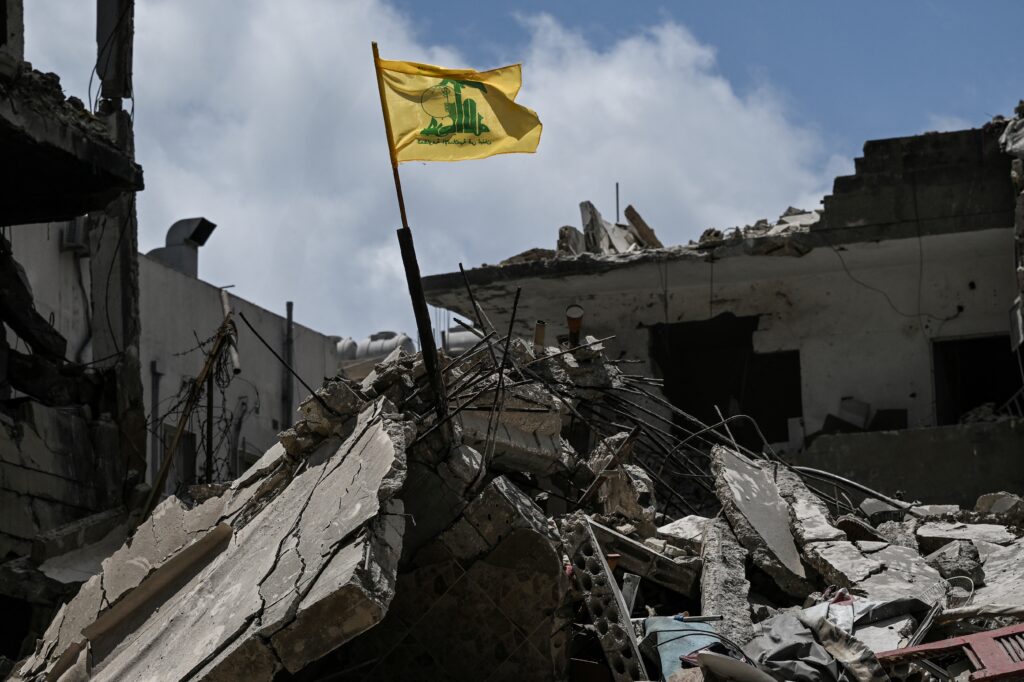
Hizballah has also never been more vulnerable. In the span of a few years, it has suffered consecutive defeats in undeniably costly wars. It spent more than a decade fighting in Syria, yet Assad fell. It attacked Israel in support of Hamas the day after October 7, a decision that would cost Nasrallah his life. After the colossal losses its base and the country endured, it attacked Israel again this February to avenge the killing of Ali Khamenei — a figure most Lebanese feel apathetic about, if not antagonistic toward — leaving Hizballah’s arsenal further diminished and more of Lebanon under occupation than in decades. The group’s leadership has been decapitated and its subservience to Iran’s Islamic Revolutionary Guard Corps (IRGC) increasingly exposed. While Hizballah remains a force that should not be underestimated, its weapons, Lebanese have learned at staggering cost, cannot achieve the militia’s stated objectives — they invite rather than resist occupation. And its ability to regroup and rearm is significantly impeded by the loss of the Assad regime in Syria on the one hand and the presence of a more proactive Lebanese state on the other, which monitors its entry points and curbs its illicit infrastructure. All Hizballah has left is the threat of violence against those who move toward sovereignty and Iran’s gamble that the US will grant it a lifeline at the negotiating table.
Iran’s Gamble Can Be Made to Backfire
From the October 7 attack to Operations Midnight Hammer and Epic Fury to the MoU, the contest with Iran has degraded some of its levers of power and enhanced others. Whether Iran emerges stronger or weaker will be decided by America’s will to convert Tehran’s material losses into lasting strategic gains.
The MoU was Iran’s opening bid at that recovery. By including its red lines on Lebanon, Washington gifted Tehran at the negotiating table what it lost on the battlefield. Hizballah exploited this to reframe its catastrophic losses as the price of a war that ended with Iran securing better terms. The promise of a coming resource boom fed the narrative that Tehran could rebuild Hizballah to its former glory and outcompete its local rivals. And above all, Iran pressed the claim that in the battle of patrons, it forced America’s surrender.
Washington corrected course, listened to its partners, and disconnected the two tracks through the Trilateral Framework Agreement. But the correction also revealed the mistake — one Washington must not repeat.
In its desperation to recover what it lost in Lebanon, however, Iran made a strategic error of its own. Tehran had previously sustained the influence of its proxy empire by claiming plausible deniability for the actions of its subordinates. But the MoU converted a line of fire maintained through proxy into a direct line of accountability. President Trump’s warning that Tehran must “immediately stop their highly paid proxies in Lebanon from causing trouble” or the US would hit Iran “very hard again” was the logical response to an admission the Islamic Republic can no longer deny. When Mohammad Bagher Ghalibaf, speaker of the Parliament of Iran, announced that more Lebanese had died for Iran than Iranians, he confirmed what the Lebanese have always known: Iran linked the fronts to the Iranian heartland. Washington should hold it to that and compel Tehran to sever that link once and for all.
Iran has promised more than it can deliver and revealed more than it may have intended. The MoU was a bet that in the pursuit of a bigger deal, Washington would trade away a sovereign Lebanon. But it was also an involuntary confession that Hizballah is irreplaceable — a strategic asset that Iran can neither afford to abandon nor preserve.
Since Nasrallah’s assassination, no leader has emerged to define the future of the Axis of Resistance. Nasrallah could threaten those who opposed him and inspire those who followed him. The combination of the two allowed him to convince those who paid the highest price for the cause he personified to believe they were part of a greater project that was moving toward victory. His successor, Naim Qassem, can do neither. Iran’s instinct is to resort to its tried and tested playbook by tightening IRGC control, replacing what appeared as a Lebanese cause with explicit Iranian direction, and betting that propaganda, insufficient American will, and a steady flow of money and arms can sufficiently deter Lebanese action and hold the line until America walks away. That desperate play has handed Washington a strategic opening to make common cause with a Lebanese public and government that increasingly view Hizballah as an instrument of Iranian occupation, not a Lebanese resistance.
No proxy has filled the gap Hizballah’s weakening left behind, because none can. It offered Iran strategic depth against Israel and served as the trainer, strategist, and operational backbone that inspired every other franchise in the axis. Despite their ambitions, the Houthis in Yemen have been unable to fill the void. In Iraq, where the Gulf states have made disarmament of Iran-backed militias a condition of regional reintegration after suffering direct attacks from them, the momentum toward sovereignty is building, as it is in Lebanon, though the outcome there is also not yet settled. The defeat of Hizballah will remove the critical node that inspired, connected, and sustained Iran’s wider Axis of Resistance and shatter the perception of its inevitability. The triumph of the Lebanese state will signal to every capital seeking to break free from Iran’s proxies that reclaiming sovereignty is not only necessary but achievable. The fall of Assad showed the region that Iran’s order could be reversed; the fall of Hizballah will show that it cannot be rebuilt.
Nor will that message be contained to Lebanon or just those Middle Eastern states struggling with their own Iranian proxy challenge. American success in securing a sovereign Lebanon will unmistakably demonstrate to the wider region that Iran could not hold on to what it was unwilling to give up. And inside Iran itself, where the chant of “Neither Gaza, nor Lebanon” was already the sound of a public that refused to support a cause that had failed them at home and abroad, that irrefutable loss will register as a reckoning for the regime.
In contrast, conceding Lebanese sovereignty will not buy Washington progress elsewhere. It will only weaken American credibility among its partners and adversaries, give Iran leverage, and strengthen Tehran’s conviction that holding firm to maximalist positions will pay off in the end. Handing Lebanon back to Iran would restore the belief that Iranian resistance can outlast American will at precisely the moment it is within Washington’s power to extinguish it.
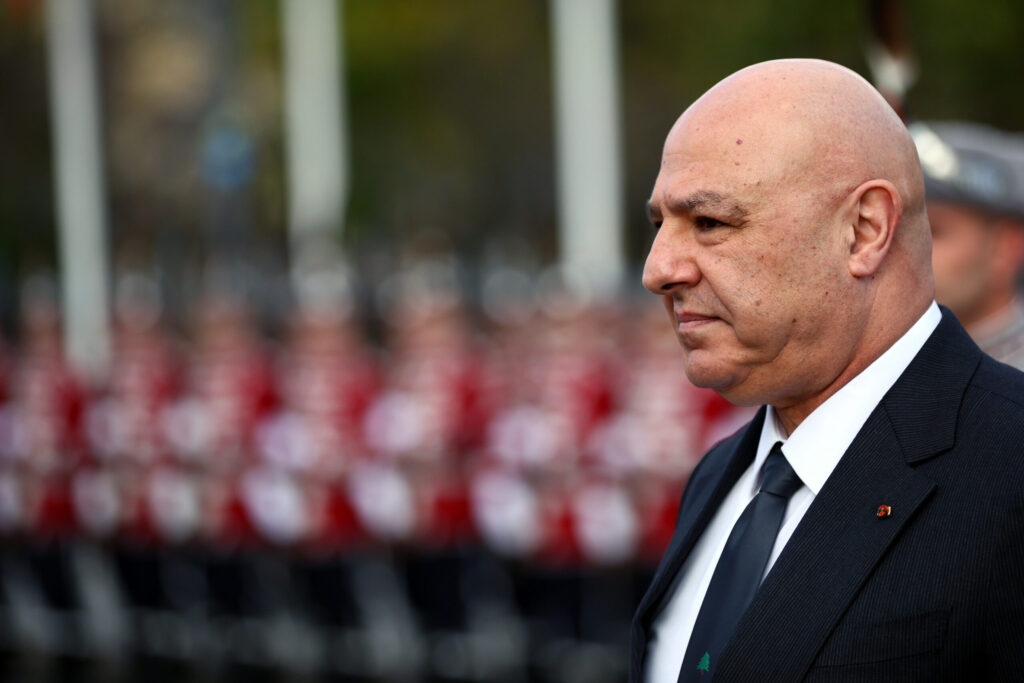
Sovereignty First: A Strategy to Win in Lebanon
A strategy to win in Lebanon is a strategy to restore what Iran plundered: sovereignty. Only the Lebanese can reclaim their country. Washington can neutralize Iran’s ability to deny them that right and empower them to win the fight only they can lead. The key to defeating Hizballah while holding Lebanon together is Lebanese mobilization: a country convinced that disarming Hizballah and dismantling its infrastructure of power serve its own interests. Because Hizballah frames every move against it as a foreign plot, the US should organize Lebanese and regional partners around a single campaign: Sovereignty First.
Sovereignty First is persuasive enough to rally the Lebanese behind the hard measures sovereignty demands and resonant enough with the broader struggle against Iran’s proxy network to travel from Beirut to Baghdad. However, with Iran deepening its commitment to Hizballah, Beirut’s moment hinges on whether America responds by supporting the Lebanese with the political, military, and economic backing they need to implement what they have already committed to.
Sovereignty First is that answer. It is a strategy Lebanese can own. It is realistic enough to fit America’s approach of empowering those reclaiming their country rather than fighting on their behalf. And it is built on the mutually shared twin interests of Hizballah’s defeat and the Lebanese state’s triumph.
The timing has never been more opportune to put that strategy into action — because a sovereign Lebanon that has disarmed Hizballah is also the precondition for ending its conflict with Israel. The Trilateral Framework Agreement’s real achievement has been establishing that the only durable path to peace runs through a sovereign Lebanese state. President Trump has today what no American president managed to assemble in decades: the leverage, the momentum, and governments in Beirut and Jerusalem that have run out of reasons not to take the difficult but necessary steps toward peace.1 To seal the deal, Washington must keep the Lebanon-Israel track separate, refuse any arrangement that restores Iran’s role or leaves Hizballah armed, and treat the Lebanese and Israeli governments as the only parties whose vote defines the outcome. The formula for lasting security ends with Hizballah disarmed, Israeli forces withdrawn, and Lebanon exerting full authority over its territory. Washington must hold that line and deny Iran the spoiling role it has always played.
But a deal on paper is only as good as its ability to be enforced, and enforcement requires both capability and will. If this effort is to end in success, where past agreements like United Nations Security Council Resolutions 1559 and 1701 or the November 2024 cease-fire did not, Washington must commit to turning the LAF into a sovereignty-enforcing institution with the leadership, intelligence, equipment, and American backing to finish the job.2 The Lebanese state has taken steps it cannot walk back, outlawing Hizballah’s military activities and signing the Trilateral Framework Agreement in Washington, steps that have already drawn direct threats from Hizballah. It is the LAF’s credibility in implementing those commitments, rather than avoiding them, that makes these milestones survivable and irreversible. But, as the absence of meaningful implementation so far makes clear, that credibility will not materialize unless Washington makes a decisive commitment to ensure the LAF can win the fight it is being asked to undertake.3
Confrontation with Hizballah is likely unavoidable; what Washington can determine is on whose terms it occurs and ends. As a generation of assassinated Lebanese statesmen and Hizballah’s military takeover of Beirut in 2008 made clear, a sovereign state and an armed militia loyal to Iran cannot coexist; each can only force the other’s surrender. The Lebanese state has staked its legitimacy on disarming Hizballah; Hizballah has staked its survival on refusing to disarm. Peace in Lebanon is achieved through strength. A state confident it can win facing a Hizballah certain it will lose is what makes the outcome predictable, shifting the advantage decisively to the state.
Only the United States, the LAF’s longstanding mentor, has the trust and capability to build the LAF into a force that can deter Hizballah from striking first, compel its disarmament and, if it comes to a fight, win it. There is no alternative to bolstering the LAF, because permanently defeating Hizballah and ensuring neither it nor any successor returns requires remedying the problem that made Hizballah possible in the first place: the absence of a sovereign state that can enforce its authority. While Israel has demonstrated it can significantly degrade Hizballah, it lacks the standing with the Lebanese public and the LAF to bring about the local cooperation and buy-in needed to fully eliminate the militia and prevent its resurgence. A Syrian intervention in Lebanon would be disastrous for both countries, especially given the haunting legacy of Damascus’s past occupation and its own immense challenges, and risks igniting a range of unintended consequences. Washington is uniquely positioned to ensure that confrontation comes on the state’s terms and secures its victory. The US can also draw on broad regional support to give the Lebanese the economic, political, and military backing they need to overcome the challenges ahead. The Gulf states agree on the end state for Lebanon, as they did for Syria when Assad fell. Washington can leverage that convergence, managing the differences that exist beyond Lebanon around the shared interest they all have in restoring its sovereignty. Integrating Lebanon into the regional economy and rallying diplomatic support behind the state are incentives Iran cannot match; they would be the clearest demonstration that the state, not Hizballah, offers the best future for the country.
Through sticks and carrots, Washington can enable the Lebanese to keep taking the courageous steps sovereignty requires. Dismantling Hizballah’s illicit financial network4 and exacting crushing costs on the cronies obstructing the state from within while rewarding those rebuilding its credibility would decisively shift the political calculus in Beirut toward the state. Sanctions on spoilers, matched with support for Lebanon’s institutions, its economy, and the reforms needed to integrate the country into the regional order, will make clear which side comes out on top.5
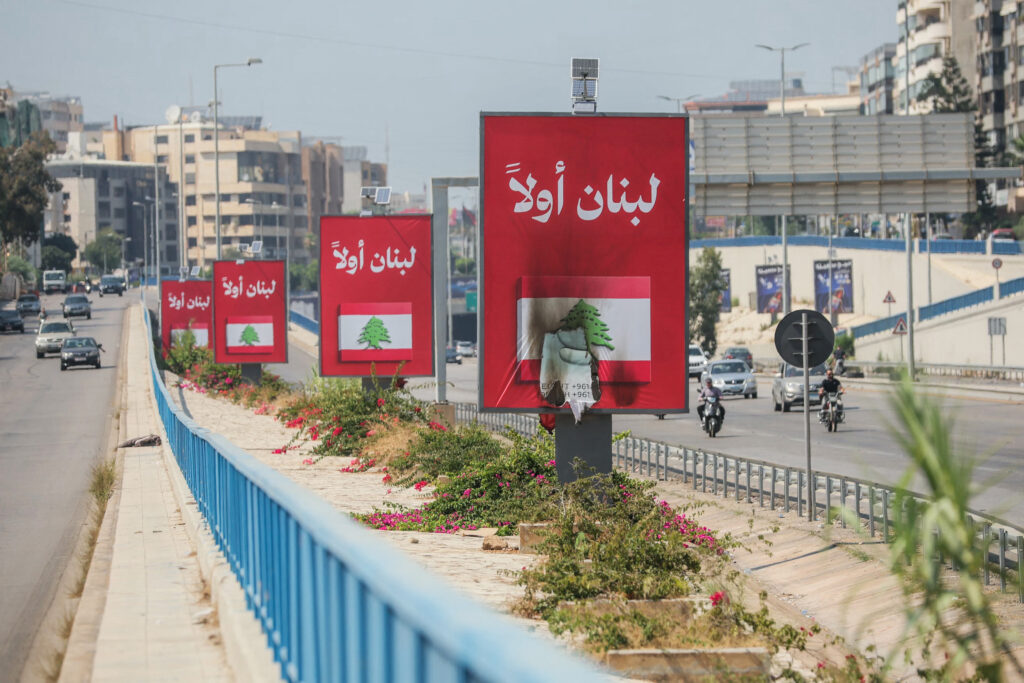
The Front That Decides the Others
As the tug-of-war over the regional order swings between the battlefield and the negotiating table, Lebanon has emerged as the front where it will first be settled — the place where either Washington’s or Tehran’s vision for the Middle East prevails.
The Berlin Wall stood as the most visible symbol of a similar contest, between two incompatible visions of how societies should be ordered. Yet by 1989, the memory of the Soviet Union’s determination to pay any cost to maintain its empire — as exemplified by Soviet tanks rolling into Budapest in 1956 and Prague in 1968 — had long outlasted its capacity to honor it. The Soviets did not send in the tanks as Berliners tore down the wall that divided them, because by then the Kremlin had already concluded that a determined America made their empire too costly to maintain. Once the world saw the Soviet empire’s iron grip falter, it gave way entirely. Most of the rest of the Eastern Bloc fell within weeks. The Soviet Union itself, undone by similar forces it could no longer suppress, followed within two years.
Iran has drawn its own lesson from that history — that loosening control, however incremental the intention, could set in motion a process of change it will not be able to arrest. The regime has demonstrated the atrocities it is willing to commit at home to retain power. The same logic, that stepping back inevitably leads to stepping down, appears to now shape how Tehran calculates the cost of losing Hizballah abroad.
In the still undecided contest between Washington and Tehran, Lebanon is the most immediate front, the most winnable, and the one in which Iran is most deeply mired. The contest with the Islamic Republic will not end in Lebanon, but it can begin to turn there. And what turns in Lebanon turns everywhere Iran has used Hizballah to impose its will.
It was on the memory of America’s withdrawal from Lebanon, and on the conviction that the Islamic Republic’s cause would inevitably force America out of the Middle East, that Iran built the foundation of its regional power. In Lebanon today, a competing idea is being tested: that sovereign states can supplant failed resistance franchises, and that America is the indispensable partner without which Iran’s stranglehold cannot be broken. But ideas are proved by what is born of them.
The memory that built Iran’s empire was made in Lebanon. The memory that ends it will be made there too — if Washington chooses to win.
Endnotes
1. For more on how to achieve lasting peace, see the paper in this report on “Achieving a Permanent End to the Israel-Lebanon Conflict.” For a more in-depth discussion of how the US can mediate to resolve border issues to restore Lebanon’s sovereignty and remove obstacles to peace, see “Lebanon-Israel Border Disputes: A Guide for American Mediation.”
2. For a discussion of how to realistically do so, see the paper in this report on “Setting the Lebanese Armed Forces up for Success.”
3. For more on how the US can enable the implementing and verifying of the framework, see the paper in this report on “Operationalizing the Trilateral Framework Agreement.”
4. For more on dismantling Hizballah’s ecosystem of power, see the paper in this report on “Hizballah’s Deep State: The Real Challenge of Disarmament in Lebanon.”
5. For more on how to reform the economy from within to integrate it into the regional economy, see the paper on “From Player to Referee: Dismantling the Culture of Entitlement and Cartelization in Lebanon.” For an in-depth look at how international actors can support Lebanese-led reconstruction, see the paper in this report on “Owning the Recovery: Supporting Lebanese-Led Reconstruction Without Repeating the Past.”
Fadi Nicholas Nassar is a Senior Fellow at the Middle East Institute.
Photo by Anwar Amro/AFP via Getty Images.
The Middle East Institute (MEI) is an independent, non-partisan, not-for-profit, educational organization. It does not engage in advocacy and its scholars’ opinions are their own. MEI welcomes financial donations, but retains sole editorial control over its work and its publications reflect only the authors’ views. For a listing of MEI donors, please click here.