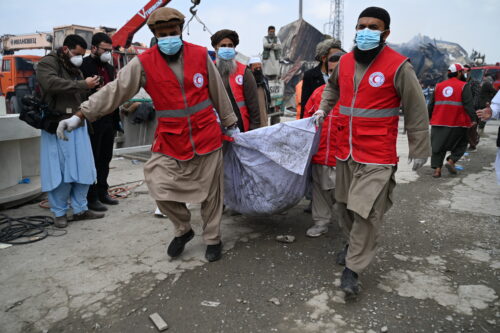
The most recent cross-border hostilities between Afghanistan and Pakistan show how tensions have crossed a dangerous threshold. The significant escalation was originally triggered by Pakistan’s comprehensive military initiative, Operation Ghazab lil-Haq (Wrath for the Truth), which featured highly coordinated air and ground strikes targeting Afghan Taliban and Tehreek-e Taliban (TTP) militants across multiple strategic locations within Afghanistan on February 27. These actions were met with forceful retaliation from Taliban forces, who referred to their attacks as Rad-ul-Zulm (Repelling Oppression). Though the escalation transitioned into a temporary and strict conditional pause — which coincided with the Eid al-Fitr holiday following diplomatic requests from Saudi Arabia, Qatar, and Turkey — Pakistan unilaterally announced the end of the pause and the resumption of its military operations against Afghanistan, stating that they would continue until its counterterrorism objectives are achieved.
Pakistan’s move toward a large-scale offensive against the Afghan Taliban regime was not abrupt but the result of escalating tensions and repeated coordinated attacks within its territory since the Taliban regained power in 2021. Islamabad clearly warned the Taliban that any further cross-border incursions, drone strikes, or terrorist activities on Pakistani soil would trigger military operations of renewed and heightened intensity. This hostile stance illustrates how Pakistan’s ultimate objective of forcing a “behavioral change” within the Afghan Taliban leadership has shifted from a strategy of defensive deterrence to a much more punitive and aggressive approach. The primary goal is no longer just to intercept terrorist attacks originating from inside Afghanistan, but to systematically prevent them by imposing such severe costs that any future aggression or continued support for terrorist groups becomes prohibitively expensive for the Taliban regime.
Throughout the recent 21-day period of escalation — which Pakistan has officially categorized as an open war — Islamabad appears to have successfully established a “new normal” in its diplomatic and military engagement with the Afghan Taliban. This new framework is shaped by a comprehensive strategy that integrates Pakistan’s military capabilities with national doctrine, geographic realities, and political logic. Within this nationalist doctrine, Pakistan no longer views the Afghan Taliban as fellow Muslim brothers but rather as enemies who have fundamentally deviated from the straight path of Islam. The title of the military operation, Ghazab lil-Haq, symbolically translates to divine punishment directed specifically against those who have lost their way; consequently, the act of fighting the Afghan Taliban is framed as religiously and nationally legitimate. Under this framework, any counter-narrative suggesting that Muslims are wrongly shedding the blood of fellow Muslims is dismissed as abhorrent. Pakistan portrays the Afghan Taliban regime as an illegitimate authority, framing its actions as a distortion of religion. Within this narrative, salvation from divine wrath is possible only by returning to the “straight path,” which entails complete adherence to Islamabad’s security demands.
From Patron to Critic
When the Afghan Taliban seized Kabul, Pakistan’s political and military leadership, along with key religious circles, hailed the group’s victory as a strategic success. Then-Prime Minister Imran Khan described it as Afghans breaking the “shackles of slavery,” while Faiz Hameed, then head of Pakistan’s premier intelligence agency, the Inter-Services Intelligence (ISI), assured that “everything will be okay,” signaling Pakistan’s expectation that the Taliban would safeguard its strategic and security interests. This optimism extended beyond the Pakistani state; even the Pakistani Taliban, a long-time opponent of Islamabad, praised its Afghan counterparts for a “blessed victory” and promptly pledged allegiance to the Taliban supreme leader, Hibatullah Akhundzada. Islamabad’s initial hopes turned into open hostility when the Afghan Taliban began supporting anti-Pakistan militants instead of fostering friendly ties with Pakistan. This divide has since become a major point of tension between the two.
On a geographical level, Pakistan now clearly perceives the Taliban’s control of Afghan territory as both an illegitimate and an existential threat to the security and long-term stability of the Pakistani state. To neutralize terrorist threats emanating from across the border, Pakistan has pursued a strategy of shifting the geography to its own tactical advantage by seeking to establish buffer zones along the former Durand Line inside Afghan territory. These areas are intended to function as permanent “no-go zones” for militants to prevent their infiltration into Pakistan. Islamabad intends to hold these pockets of seized territory for the long term, utilizing them as a critical bargaining chip for any potential future negotiations with the Taliban authorities.
From the perspective of political logic, Pakistan increasingly classifies the Afghan Taliban not merely as a facilitator or host of terrorism but as a terrorist organization in its own right. This view was expressed by Pakistan’s military spokesperson, Lieutenant General Ahmad Sharif, who described the Afghan Taliban as a “terrorist organization and a master terror proxy under which other groups operate.” His statements indicate that Pakistan’s current policy aims either to forcibly modify Taliban behavior through sustained military pressure — intended to weaken and potentially co-opt parts of the group — or, if that fails, fostering the necessary conditions to trigger regime change in Kabul by backing political factions such as the National Resistance Front of Afghanistan (NRF) and Afghanistan Freedom Front (AFF), both opposed to the Taliban. The NRF has voiced full support for Pakistan’s military operations against the Taliban, signaling it is more inclined toward a cooperative and peaceful relationship with Islamabad. Ultimately, Pakistan has indicated that diplomatic engagement with the Afghan Taliban will depend largely on whether the latter regime agrees to extradite wanted terrorists and decisively chooses between backing the TTP or sustaining a workable relationship with Islamabad.
At the same time, the Afghan Taliban appears to be balancing two conflicting priorities: the desire to seek military retaliation against Pakistan for its incursions versus the pragmatic need to safeguard its domestic rule by preserving a modicum of stability and control through strategic de-escalation. Statements from Taliban leaders further underscore this shift toward internal power consolidation rather than the pursuit of intensified direct tensions with Islamabad. By projecting a façade of resilience and downplaying recent setbacks, the Taliban leadership seeks to prevent panic, internal fragmentation, or potential defections within their ranks. The Taliban’s supreme leader, Mullah Haibatullah Akhundzada, has notably asserted that the group’s movement cannot be dismantled through military force alone. Concurrently, Interior Minister Sirajuddin Haqqani has emphasized that while the Taliban is not in a position of weakness, it must exercise caution to avoid acting purely out of a desire for revenge, specifically urging against further military escalation with Pakistan.
This specific messaging from the Taliban — including its public emphasis on restraint and the resolution of tensions through dialogue and peaceful means — suggests that, despite its desire for revenge, the Afghan regime may currently lack the military capacity to sustain a direct, prolonged confrontation with Pakistan. Nonetheless, this does not preclude the Taliban from inflicting damage on Pakistan through continued support for its proxies operating within the country. The limitation on direct confrontation likely stems from a combination of mounting internal pressures, acute economic fragility, and persistent security gaps. Simultaneously, this posture reflects a clear prioritization of regime survival: the Taliban leadership is intensely focused on maintaining internal control and is already struggling to contain active homegrown armed resistance from the NRF and the AFF, which could jeopardize its hold on power. The AFF has stated that in the past two years, it has launched 233 attacks across the country, resulting in 592 Taliban fighters killed and 699 wounded. In comparison, the NRF claims to have carried out over 2,000 attacks against the Taliban in the last five years.
Furthermore, this approach likely functions as a form of “strategic delay.” Such rhetoric serves to de-escalate immediate tensions in the short term while allowing the Taliban regime to preserve operational flexibility, including the ability to maintain covert ties with terrorist groups without committing to an open war with Pakistan. The Taliban’s intended aim appears to be containing Pakistan’s war on terror against the TTP within its own borders — a position it has repeatedly reinforced by claiming that terrorism is Pakistan’s internal problem. Taken as a whole, these developments point to a calculated Taliban strategy of prioritizing power consolidation and avoiding immediate high-stakes conflict with Pakistan. The denial of support to the TTP attacks on Pakistan allows the Afghan Taliban to keep its future options open and pursue its fixed, long-term geopolitical agenda centered on the rejection of the Durand Line and the reclamation of Pashtun-dominated tribal territories in Pakistan.
The Taliban’s strategic playbook can be understood as a proxy gambit, shaped by two primary dynamics in how the group leverages TTP militants in its power consolidation strategy. The first dynamic suggests that the Taliban may actively support the TTP, accepting the high risk of Pakistani military retaliation in exchange for a significant strategic gain: the eventual control of tribal territories along the 1,360-kilometer Durand Line. By relying on the TTP and betting that it can withstand Pakistan’s military offensive more effectively than Islamabad can manage a prolonged insurgency, the Taliban may seek to exploit anti-state grievances among the 29 tribes divided by this border, signal support to these populations, foster incitement, and expand its strategic influence well beyond Afghanistan’s current boundaries.
The second dynamic suggests that the Taliban may be unable to fully restrain the TTP, either because of limited control over the proxy or to avoid provoking a backlash. Allowing the TTP to operate independently reduces the risk of the group turning against the Taliban regime itself. This calculated passivity acts as a domestic stabilizer, mitigating internal friction and potential defections within Taliban ranks while directing the TTP’s operations outward. In this way, the Taliban preserves internal cohesion while avoiding a potentially destabilizing confrontation with its own proxy.
In stark contrast, Pakistan is now seeking to disrupt this calculus through coercive military pressure, forcing the Taliban to choose between its neighbor and its proxy. Islamabad’s policy is aimed at compelling the Afghan Taliban to act against the TTP — a move the proxy would likely perceive as a betrayal by its patron. To enforce this pressure, Pakistan is directly targeting Taliban forces, signaling that its long-standing “wait and see” approach has officially ended. The government is no longer willing to discriminate in its war on terror, previously targeting the TTP alone while leaving the group’s Afghan patrons untouched. Moreover, Pakistan views the Afghan Taliban as a significant strategic threat. Its continued military operations aim to prevent the Taliban from rebuilding or expanding its capabilities, particularly amid Islamabad’s accusations that India provides direct assistance to the regime and uses Afghan territory as a base to destabilize Pakistan.
Islamabad’s strategic calculus here is clear: the Afghan Taliban’s continued coordinated attacks through the TTP or its own regular forces create instability that primarily benefit Pakistan’s main regional rival, India. Consequently, by directly confronting the Taliban regime, Pakistan views itself as engaged in an indirect war with India. This proactive stance is designed to prevent New Delhi from opening a renewed front against Pakistan’s western flank, mirroring the intense hostilities witnessed during last year’s four-day war.
The recent military confrontation between the Afghan Taliban and Pakistan underscores a reality where the damage inflicted has become irreparable, and the prospects for establishing long-term peace or returning to a state of normalcy have effectively faded. Pakistan has created a stark new reality for the Taliban: to ensure its survival, the regime in Kabul must submit to Islamabad’s security demands and distance itself from India and its terrorist proxies or risk self-destruction. This deep-seated animosity and mutual distrust will now define all future bilateral scenarios. While the Afghan Taliban has absorbed the initial shock of Operation Ghazab lil-Haq, it is likely biding its time, waiting for an opportune moment to catch Pakistan off guard. In either case, the “off-ramps” to avoid a full-scale war are rapidly disappearing.
War in Gulf Impedes Pakistan’s Ability to Stay the Course in Afghanistan
For Pakistan, achieving its military objectives in the Afghan conflict has increasingly become a top priority, as it considers this essential for eliminating the threat of terrorism. Since regional countries that previously attempted to mediate hostilities between Pakistan and Afghanistan are now preoccupied with their own crises stemming from the United States and Israel’s war with Iran, expectations that external actors will intervene to halt the fighting remain low. However, while the absence of external mediation provides Pakistan with a degree of strategic latitude to continue its military campaign against Afghanistan, the broader regional crisis in the Middle East complicates its ability to sustain this action at pace.
Pakistan is already beginning to feel economic strain, and sustaining costly military operations requires a degree of financial stability. In the wake of the ongoing Iran-Israel-US conflict, Islamabad has implemented austerity measures, as the country risks an estimated $3 billion in monthly losses should a prolonged Gulf war disrupt vital trade routes and energy flows from Arab states. Such a disruption would also severely impact the millions of Pakistani workers in the Gulf, as economic slowdown, corporate downsizing, and rising inflation could lead to widespread job losses, reducing their ability to save and send money home. A large-scale return of these workers would further strain Pakistan’s economy, depriving it of a critical source of foreign income on which it has long depended.
At the same time, domestic pressures are mounting. Anti-American and pro-Iranian sentiments are rising within Pakistan, with opposition groups criticizing the government for its alignment with Washington, including its nomination of Donald Trump for the Nobel Peace Prize and participation in US-led initiatives such as the Board of Peace. As the US-Israeli-Iranian conflict continues, managing domestic backlash and containing anti-American sentiment is becoming an increasingly significant challenge for Pakistan’s leadership.
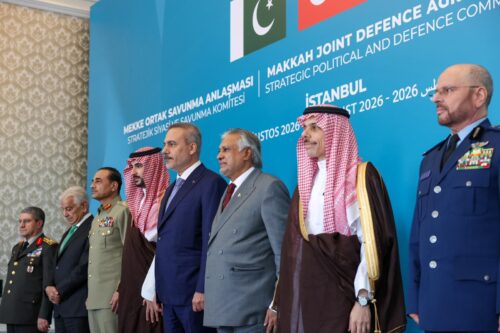
For Pakistan, a peaceful resolution to the Middle East conflict is strategically necessary, given its defense ties with Saudi Arabia and its working relationship with neighboring Iran. As Iran continues to conduct retaliatory strikes against regional targets in response to Israeli and US actions, the patience of the Gulf monarchies has reached a breaking point. Riyadh recently issued a stern warning to Tehran, signaling that its tolerance for attacks on its territory and those of its neighbors is limited, and that it is prepared to enter a state of war if necessary. Following high-level emergency trips by Prime Minister Shehbaz Sharif and Field Marshal Asim Munir to Riyadh, Islamabad believes it may be walking a geopolitical tightrope. Pakistan’s Deputy Prime Minister Ishaq Dar recently reminded Iran of Islamabad’s strategic mutual defense pact with Saudi Arabia. Furthermore, Pakistan recently joined 11 other Islamic nations in a joint statement urging Iran to immediately cease attacks on Gulf Cooperation Council (GCC) countries and regional allies.
Should Iran fail to cease its strikes, Riyadh might call on Islamabad to fulfill its obligations under the mutual defense pact, in which case Pakistan would be forced to choose between actively supporting the Saudi military or risking the loss of its most critical strategic and financial backer by remaining neutral. In a recent meeting with Pakistani Shi’a clerics, army chief Field Marshal Munir clarified that Pakistan would not permit sectarian narratives or externally sponsored destabilization to take root domestically. This indicates a clear desire by the Pakistani leadership to prevent a potential Saudi-Iranian war from spilling over into its own borders. However, whether Pakistan truly possesses the luxury of choice if a such a war erupts remains a daunting question.
Against this backdrop, Pakistan’s civil-military leadership is simultaneously pursuing efforts to de-escalate the ongoing Iranian-Israeli-US conflict. On March 23, Field Marshal Munir spoke by phone with President Trump to discuss de-escalation. Most notably, Pakistan has emerged as a key backchannel mediator between Iran and the United States, relaying messages between the two sides. President Trump publicly shared Prime Minister Sharif’s message expressing Pakistan’s willingness to host peace talks in Islamabad, while US Special Envoy Steve Witkoff confirmed Pakistan’s mediatory role, describing the exchanges as involving “strong and positive” messaging.
While Islamabad has intensified its diplomatic efforts in the Gulf to de-escalate the situation, the conflict continues to expand. Notably, Pakistan — which had already faced direct Iranian strikes in early 2024 — is struggling to maintain its precarious neutrality as regional volatility reaches new heights. In this context, even as the Pakistan-Afghanistan front enters a renewed phase of escalation, a far more complex and consequential front is emerging to the west. How Pakistan’s conflict with Afghanistan, coupled with escalating regional tensions involving Iran, will affect its ability to sustain its emerging role as a regional stabilizer remains to be seen.
Naade Ali is currently serving as a Research Assistant to MEI Senior Fellow Marvin G. Weinbaum. He has more than five years of involvement working with international organizations and think tanks as a political researcher, policy advisor, peace strategist, and human rights practitioner with experience in human and national security, democratization, conflict resolution, and political culture. Prior to joining MEI, Ali worked with Media Foundation 360, a think tank dedicated to strengthening democratic practices in Pakistan.
Photo by Wakil Kohsar / AFP via Getty Images
The Middle East Institute (MEI) is an independent, non-partisan, not-for-profit, educational organization. It does not engage in advocacy and its scholars’ opinions are their own. MEI welcomes financial donations, but retains sole editorial control over its work and its publications reflect only the authors’ views. For a listing of MEI donors, please click here.

Special Episode: Saudi Oil After the East-West Pipeline Attack
The Mecca Joint Défense Agreement: A New Geometry of Middle Eastern Power?