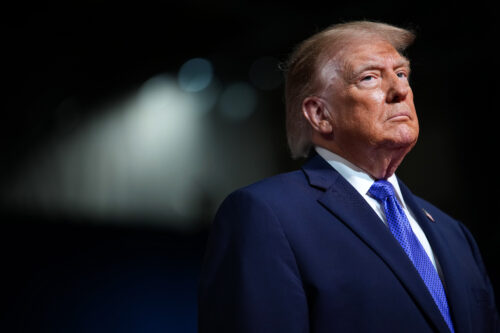
Trump’s Midterm Loss Opens a Window for Iran Diplomacy
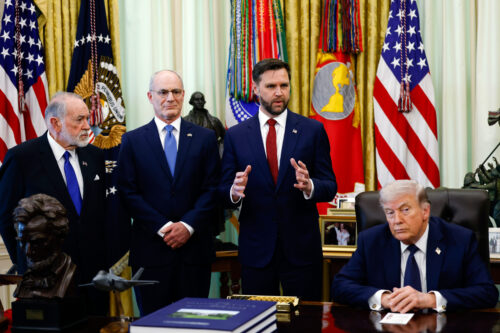
Eight months after launching the war alongside Israel, Trump has yet to explain what an American victory would look like or how much longer the United States must keep fighting to achieve it. While Americans opted to vote for the Democratic Party, which is preparing to challenge the logic of the war, Trump retains much executive power to stay in the war. Going forward, this means the political risks for him and his party will be high.
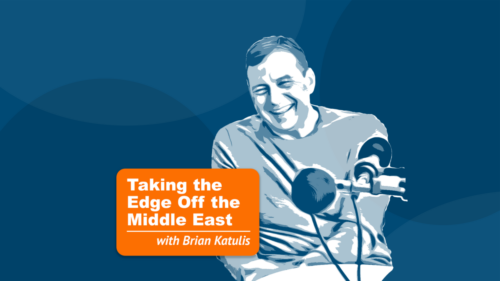
Brian is joined by His Excellency Talal Al Rahbi, the ambassador of the Sultanate of Oman to the United States of America, to discuss what it means to represent the “Switzerland of the Middle East” and the role of Oman’s quiet diplomacy. He also reflects on growing up during Oman’s transformation, his time spent in the United States, and why the two nations’ long-standing partnership matters today.
After decades of political setbacks, Iran’s former Revolutionary Guards commander has returned to the center of power. Is he an incidental beneficiary of war, or have observers underestimated him all along?
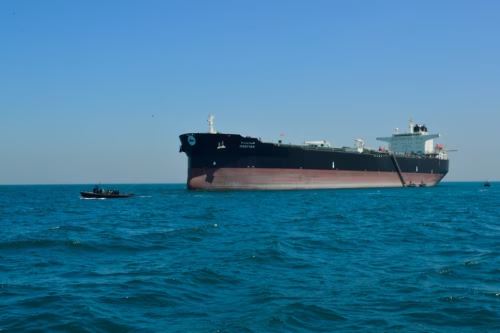
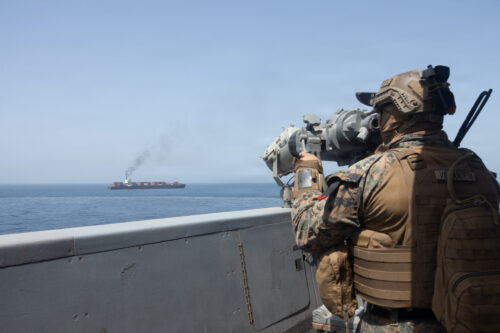
Few events have so abruptly collapsed the boundary between energy policy and national security as the US–Israel war on Iran that erupted in February 2026. The near-closure of the Strait of Hormuz triggered what the International Energy Agency described as the largest oil supply shock on record —driving up energy prices, fueling inflation in Europe, and disrupting supply chains worldwide.
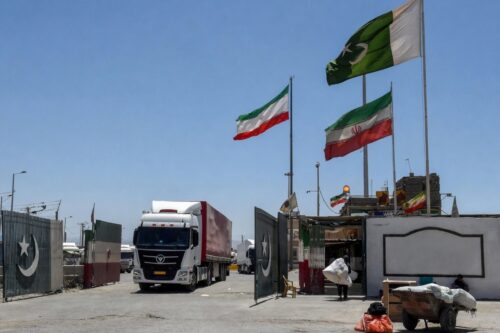
Beyond the Strait of Hormuz: How War Is Redrawing Trade Routes—and Elevating Pakistan
Pakistan is not merely reacting to the current phase of the 2026 Iran war; it is functioning as a system-adjusting intermediary within a rapidly reordering regional landscape. As established channels of diplomacy, trade, and financial coordination have fractured under wartime pressure, Islamabad has emerged as a critical node through which regional and extra-regional actors are progressively rerouting engagement, commerce, and influence.
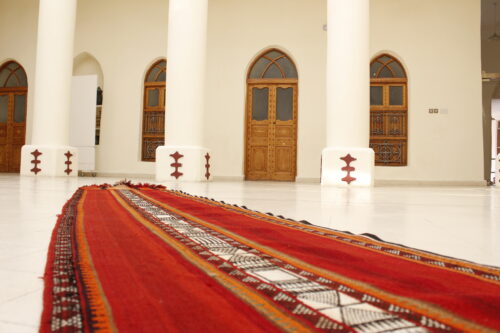
The Living Thread: Sadu Weaving and the Role of Cultural Institutions in Keeping Heritage Alive
Lunch & Panel Discussion | A panel conversation exploring how Sadu weaving, a disappearing, centuries-old craft, can thrive and evolve in a contemporary context.
The Houthis are a political-military faction and Zaydi religious movement founded in northwestern Yemen in the 1980s. A key member of Iran’s Axis of Resistance with links to other militant organizations in the Arabian Peninsula and the Horn of Africa, the group has continued to pose a threat to Western interests on a global scale.
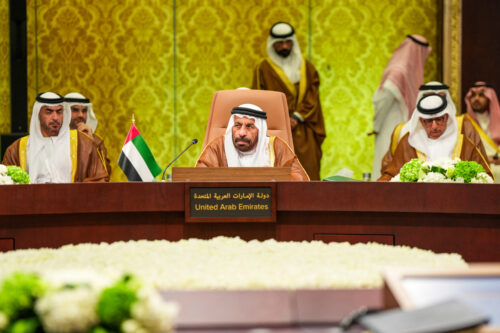
Agile Power: The UAE’s External Policy in an Era of Fragmentation
The external policy of the United Arab Emirates (UAE) is increasingly shaped by systemic fragmentation, regional insecurity, and shifting patterns of great-power engagement. In response, Abu Dhabi has moved away from reliance on fixed alignments toward a strategy of strategic diversification across security, economic, and technological domains.
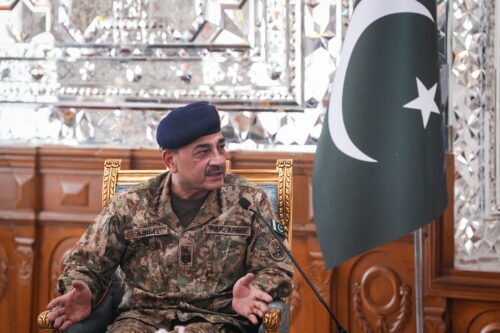
The Pakistani General Running Washington’s Backchannel to Tehran
As Washington and Tehran edge closer to escalation, the most critical line of communication keeping the crisis from spiraling is being run not by polished diplomats, but by an unlikely figure: a Pakistani general. Field Marshal Asim Munir, Pakistan’s powerful army chief, has quietly become the key intermediary in the U.S.-Iran standoff, managing what may be the most important backchannel between the two sides. The mediation has thrust Pakistan to the center of the crisis while exposing it to enormous risk.
The Hormuz Crisis and China’s Energy Security Dilemma
Despite sustained efforts to prioritize energy security across successive policy cycles, China remains exposed to external supply chains it does not control. The core problem is not simply import dependence, but reliance on maritime transit routes – particularly through the Strait of Hormuz – whose security ultimately lies beyond Beijing’s authority. The escalation of the Israel-U.S. war with Iran and the resulting disruption of traffic through Hormuz has transformed a long-recognized strategic risk into an immediate constraint, revealing the limits of China’s ability to ensure stable energy access under conditions of geopolitical contestation.
The UAE’s departure represents an undeniable strategic setback for OPEC+. Its most likely response will be to shore up the amount of output capacity subject to quotas. For now, there are two clear pathways it could take to accomplish this, although neither represents a quick fix.
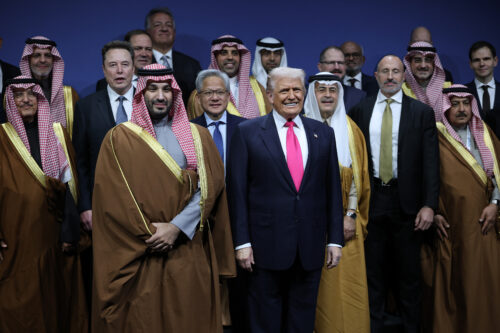
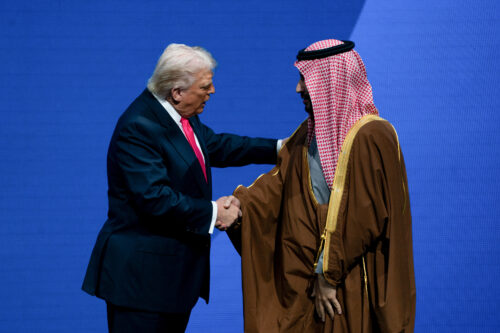
Last May, U.S. President Donald Trump paid a triumphant visit to Saudi Arabia, Qatar, and the United Arab Emirates. Over the course of a four-day tour, he admired the Gulf capitals’ “gleaming marvels,” cheered on their ambitious modernization plans, and showcased over $3 trillion in pledged Gulf investment and “mega-deals” between U.S. and Gulf businesses.
Trump Planned for Pressure on Iran, but Not the Global and Domestic Blowback
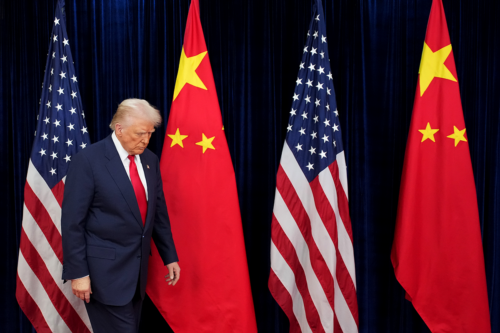
The limelight for American foreign policy shifts to Beijing this month, where US President Donald Trump and Chinese President Xi Jinping will meet on May 14-15 to address a long list of unresolved issues. But the Iran war and still unfolding geo-economic calamity resulting from it cast a long shadow. One thing to watch for is whether China or the US feels like it has a stronger hand in light of recent events in the Middle East.
Fixing America’s Failed Strategies in the Middle East
The Middle East is both central to key United States interests and prone to instability. Yet US national security and defense strategic guidance has struggled to account for the unique demands of the region. Calls for strategic divestiture from the region have grown in prominence among analysts and policymakers alike in recent years.
Rebalancing Ambition: Saudi Arabia’s Megaproject Pivot
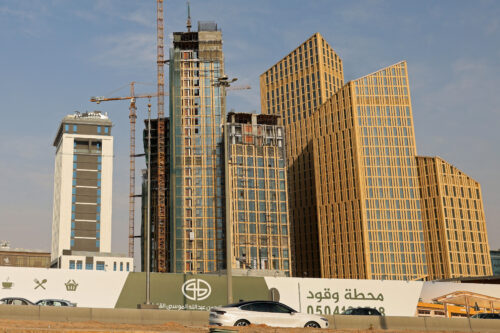
Saudi Arabia’s Vision 2030 has entered a sobering phase. The kingdom’s most ambitious megaprojects, conceived a decade ago during an era of oil-fueled confidence, are colliding with fiscal reality and a far more volatile external environment shaped by regional conflict and energy market disruption. What is unfolding is not the collapse of Crown Prince Mohammed bin Salman’s (MBS) diversification agenda, but a forced recalibration: a shift away from architectural spectacle toward economic pragmatism, reinforced by tightening fiscal space, institutional reprioritization under the Public Investment Fund’s (PIF) new strategy, and growing exposure to regional security risks.