The Americans Are Gone. Will Iraq’s Militias Disarm?
On September 30, the US completed its military withdrawal from Iraq, ending a 12-year-long mission to combat ISIS that began in 2014. The date was also meant to be the deadline for disarming the largely Iranian-backed militias known as the Popular Mobilization Forces (PMF), but Prime Minister Ali al-Zaidi has now pushed that cutoff back to June 30, 2027. MEI Distinguished Diplomatic Fellow Amb. (ret.) Robert S. Ford joins hosts Alistair Taylor and Matthew Czekaj to discuss what the US military withdrawal means for Iraqi security and the nature of the bilateral relationship going forward. They also speak about what it will take for Baghdad to bring the PMF militias to heel, and how Iraq may navigate the post-Iran war era.
Jordan’s Economy Weathers Iran War’s Shocks and Finds New Opportunities
In the summer of 2003, King Abdullah II told Bloomberg Jordan sits “between Iraq and a hard place,” a play on words designed to describe the kingdom’s challenging environment to an American audience amid the US-led Iraq war to the east and the lingering Palestinian-Israeli conflict to the west. Jordan is grappling with a much “harder place” today.
Proponents of the war with Iran have taken recent increases in crude-oil flows through the Strait of Hormuz as proof that the US strategy is finally working. President Trump is so confident in this that he recently rejected a seven-day plan, set forward by Iran’s foreign ministry, to end the war and open the strait. The United States is “winning tremendously,” Trump boasted.
Maliki in Washington: Arms Deals, Politics, and Proxy Wars
Iraqi Prime Minister Nouri al-Maliki is in Washington this week for meetings with Vice President Joe Biden, Defense Secretary Chuck Hagel, and President Barack Obama. We sat down with MEI’s Vice President for Policy and Research, Paul Salem, to discuss the topics on the table, what each side hopes to accomplish, and how the United States should approach Iraq.
Saudi Arabia & the Arab Gulf’s Disappointment with U.S. Policy
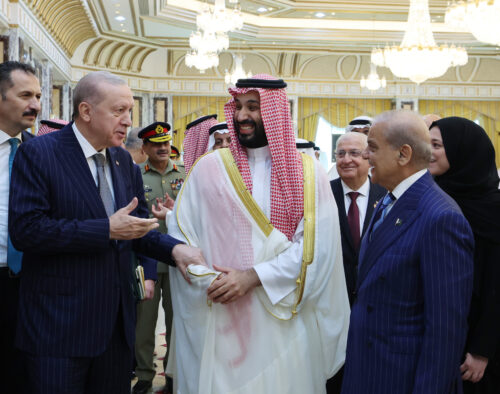
Whether Saudi Arabia takes a seat on the United Nations Security Council or not, the initial snub is aimed primarily at the United States. In particular, U.S.-Saudi relations are in for an exceptionally difficult period—perhaps a return to the policies of King Faisal bin Abdulaziz. It appears that Saudi Arabia and the Arab Gulf now share the view of Sir Charles Johnston, a British diplomat in the 1960s, who offered the following assessment of U.S.
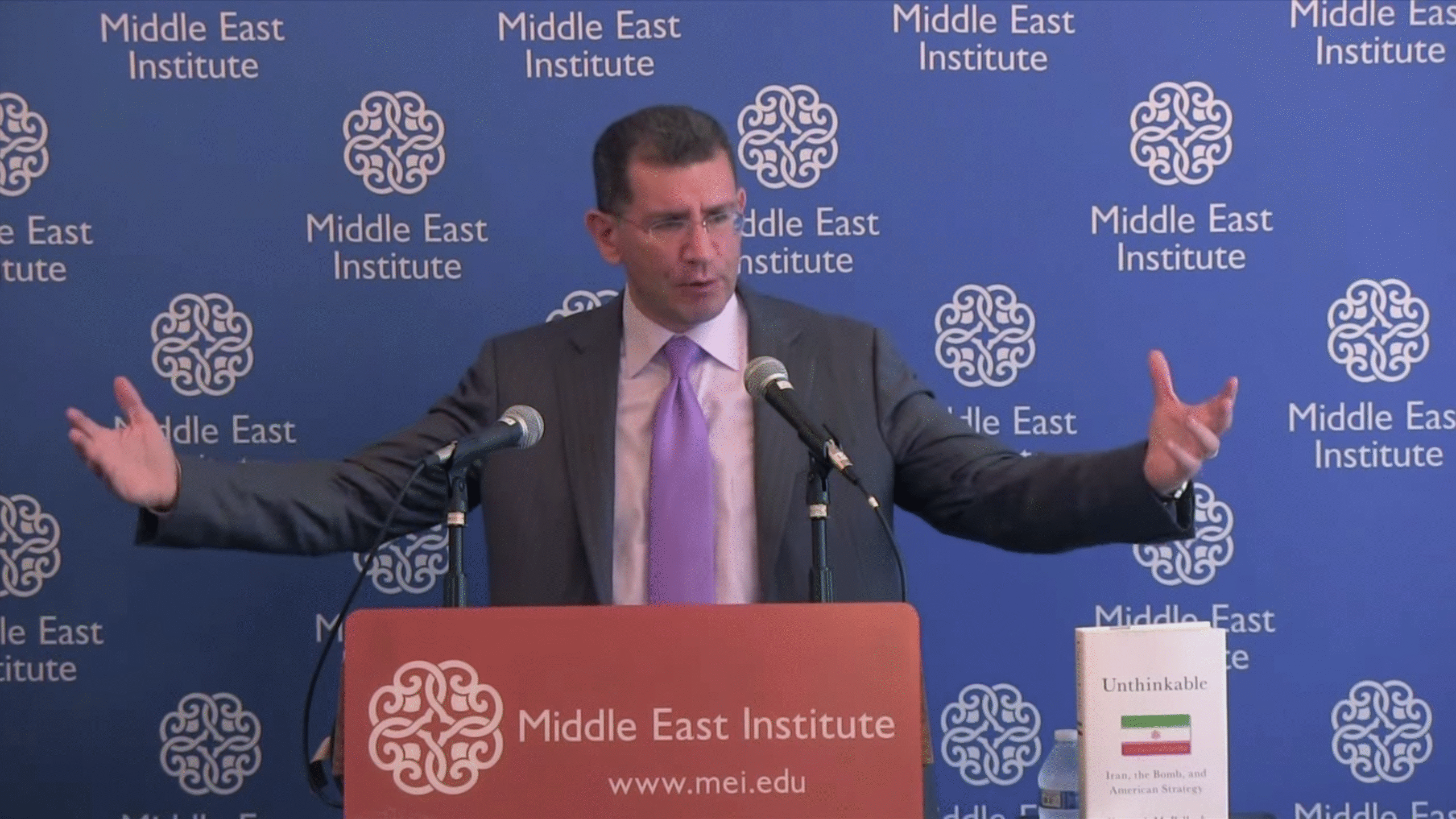
A Discussion with Ken Pollack, Author of Unthinkable
On Wednesday, October 16, 2013, the Middle East Institute hosted author and Brookings senior fellow Ken Pollack for a discussion of his book, Unthinkable: Iran, the Bomb, and American Strategy(Simon & Schuster, 2013). In his latest work, Pollack explores the protracted tensions underlying the U.S.-Iranian relationship, how it evolved to its current status, and how the U.S. should best address Iran’s nuclear ambitions.
A Discussion with Ken Pollack, Author of Unthinkable
The Middle East Institute is proud to host author and Brookings senior fellow Ken Pollack for a discussion of his book, Unthinkable: Iran, the Bomb, and American Strategy (Simon & Schuster, 2013). In his latest work, Pollack explores the protracted tensions underlying the U.S.-Iranian relationship, how it evolved to its current status, and how the U.S. should best address Iran’s nuclear ambitions.
In C.S. Lewis’ fantasy land of Narnia, the white witch put a spell on her realm to ensure that there would be perpetual winter and that Christmas would never come. For 34 years American-Iranian relations have been similar: a long, hard freeze unbroken by any cracks or signs of thaw.
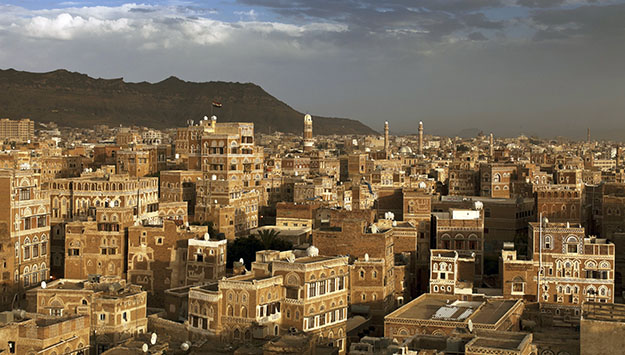
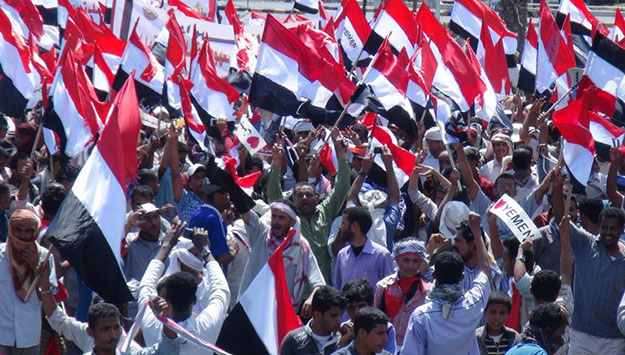
The members of the Friends of Yemen, comprising over 30 governments and several international institutions, including the United Nations, World Bank, Arab League, and European Union, gathered for their sixth meeting September 25 in New York on the margins of the UN General Assembly. Chaired by the governments of Yemen, Saudi Arabia, and the United Kingdom, participants praised Yemen’s efforts to implement a political transition through inclusive and comprehensive dialogue and negotiation—a stark contrast to the course of events in better-known Syria and Egypt.
Last week, MEI scholars Allen Keiswetter, a retired Foreign Service officer, David Newton, former ambassador to Yemen, and Roby Barrett, author of Yemen: A Different Political Paradigm in Context(2011), gathered for an informal discussion about Yemen’s National Dialogue Conference (NDC), which began in March.
The openly difficult relationship between Saudi Arabia and Muslim Brotherhood chapters across the region has become a salient feature of Middle East politics since the advent of the “Arab Spring.” This mutual mistrust has increased in the wake of the Kingdom’s recent support for the military takeover in Cairo and the generals’ subsequent repression of the Brotherhood there. But how is the Islamist organization affected by this dynamic in Syria, where the Muslim Brothers and the Saudis both battle against Bashar al-Assad?
Over the past two decades, Dubai has risen to become a global financial, commercial shipping, aviation, and art hub. These essays examine Dubai’s key role in revitalizing the historic ties between the countries of the Middle East and Asia-Pacific regions.
Whenever a Saudi Arabian king or senior prince publicly criticizes U.S. policy, they inevitably touch off speculation about how the Saudis may be rethinking their security alliance with the United States.
After the Financial Crisis: Dubai-China Economic Relations
Dubai is strategically located at a junction between Europe, Africa, and the Far East. For China, an emerging global leader in trade and international business, Dubai is a promising place in which to conduct business. Exploring Dubai-Sino economic relations beckons a more comprehensive understanding of both the level of Dubai’s economic diversification and the impact of the global financial crisis. Dubai’s private sector is extensively engaged in foreign trade, with an emphasis on the service industry. The service industry has three subsectors—tourism, finance, and real estate. Assessing the trajectory of China’s involvement in these three sectors of Dubai’s economy sheds light on how Dubai-Sino economic relations have been affected by the global financial crisis.
The oldest peer-reviewed publication dedicated to the study of the modern Middle East, MEI’s flagship journal covers politics, society, and culture in the region.