This text has been translated by AI and may contain errors.
Skip to Content

Iran

A Strategic Conundrum: Pakistan’s Transit Corridor to Iran as Lifeline or Liability
  • Analysis
  • A Strategic Conundrum: Pakistan’s Transit Corridor to Iran as Lifeline or Liability

    The US-Iran standoff over the Strait of Hormuz — disruptive to global trade and energy flows, and devastating for debt-burdened economies — has handed Pakistan an unexpected geoeconomic opportunity, one that may persist even if the framework agreement announced on June 14 results in a lasting peace and permanent reopening of the strait. But seizing it will have interlocking consequences for Islamabad’s ties with Tehran, Washington, and the Gulf states.

    June 17, 2026

    Iran: What’s Next for US Policy as the Region Seeks to Move On
  • Analysis
  • Iran: What’s Next for US Policy as the Region Seeks to Move On

    As the US and Iran move to reopen the Strait of Hormuz, the war’s real lesson lies in how Gulf states rapidly adapted — building pipelines, ports, and rail to bypass the chokepoint. Washington should seize this momentum, pursuing a “long game” of regional connectivity that serves shared security and economic interests.

    Filter by
    2744 Results
    Assessing Iran's Strategy Toward the Arab World

    Assessing Iran's Strategy Toward the Arab World

    March 27 – January 1, 1970, March 27 - 12:00 PM – 12:00 AM
    January 1 - 12:00 PM – 12:00 AM

    SEIU Conference Center, 1800 Massachusetts Ave. NW, Washington, District of Columbia 20036

    The Day After an Iran Nuclear Deal
    Middle East Institute
  • Analysis
  • The Day After an Iran Nuclear Deal

    March 24, 2015: Alex Vatanka, senior fellow at The Middle East Institute, discusses the mood in Tehran as the deadline for negotiations approaches, the state of U.S.-Iranian relations, and what reaching a deal could mean to that relationship and the Arab world, in a brief interview.

    Does Iran Have a 'Bridge' to Central Asia?
  • Analysis
  • Does Iran Have a 'Bridge' to Central Asia?

    This article was first published on Al-Monitor.

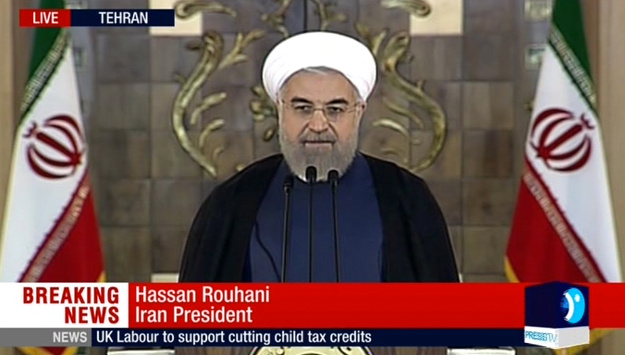
    President Hassan Rouhani’s recent trip to Turkmenistan cannot be dismissed as a one-off. Since coming to office in August 2013, the Rouhani administration has prioritized relations with the Muslim states of the former Soviet Union. Given the potential for economic ties and trade, Tehran’s aspirations are fully understandable.

    How Netanyahu's Speech Played in Iran
  • Analysis
  • How Netanyahu's Speech Played in Iran

    This article was first published on CNN.

    Israeli Prime Minister Benjamin Netanyahu’s speech to the Congress this week was as eagerly anticipated in Tehran as it was in Washington.

    The Iranian reaction to the speech has been a combination of indignation and indifference.

    Iran's Yemen Play
  • Analysis
  • Iran's Yemen Play

    This article was first published on Foreign Affairs.

    When the Houthis, a Shia rebel group in Yemen, forced the country’s pro-Western president, Abed Rabbo Mansour Hadi, to flee the capital this past January, many in the region concluded that another Arab state had fallen into Tehran’s lap—a result, as one prominent commentator put it, of Iran’s “offensive state, the likes of which we have not seen in modern history.”

    Netanyahu Changed Nothing
  • Analysis
  • Netanyahu Changed Nothing

    Read full article at Politico Magazine.

    Israeli Prime Minister Benjamin Netanyahu has come to the United States, spoken his piece and returned home to Israel to finish campaigning for the March 17 elections. Netanyahu’s visit to Washington was neither the triumph he expected nor the disaster forecast by opponents of the visit. Indeed, the visit shed no new light on the supposedly central issue of the day: the state of play in the Iran negotiations.

    March 4, 2015

    Four Iranian Threats That Terrorize Saudi Arabia
  • Analysis
  • Four Iranian Threats That Terrorize Saudi Arabia

    This article was first published by The National Interest.

    The Middle East is experiencing unprecedented upheaval, and by all indications the region is likely to remain in turmoil for the foreseeable future. From Yemen to Bahrain to Syria and Lebanon, the sectarian agendas and geopolitical maneuverings of the two regional heavyweights – Iran and Saudi Arabia – will likely remain the key drivers fueling the regional fire.

    Looking at Armenian-Iranian Relations Through a Russian Lens
  • Analysis
  • Looking at Armenian-Iranian Relations Through a Russian Lens

    The late January visit to Armenia by Iranian Foreign Minister Javad Zarif got little media attention, but it could have significant ramifications for geopolitics in Eurasia. Specifically, the trip could help Russia gain a trade outlet that softens the blow of Western sanctions.
     

    Why Should Iran Accept U.S. Presence in Afghanistan?
    Middle East Institute
  • Analysis
  • Why Should Iran Accept U.S. Presence in Afghanistan?

    Read the full article on Al-Monitor. 

    At first glance, Iran appears to be unconvinced about Afghanistan’s new President Ashraf Ghani, and the feeling is probably mutual. Ghani chose Saudi Arabia, China and then Pakistan as the first countries to visit as president, and has yet to visit Tehran. 

    Iran as an Occupying Force in Syria
  • Analysis
  • Iran as an Occupying Force in Syria

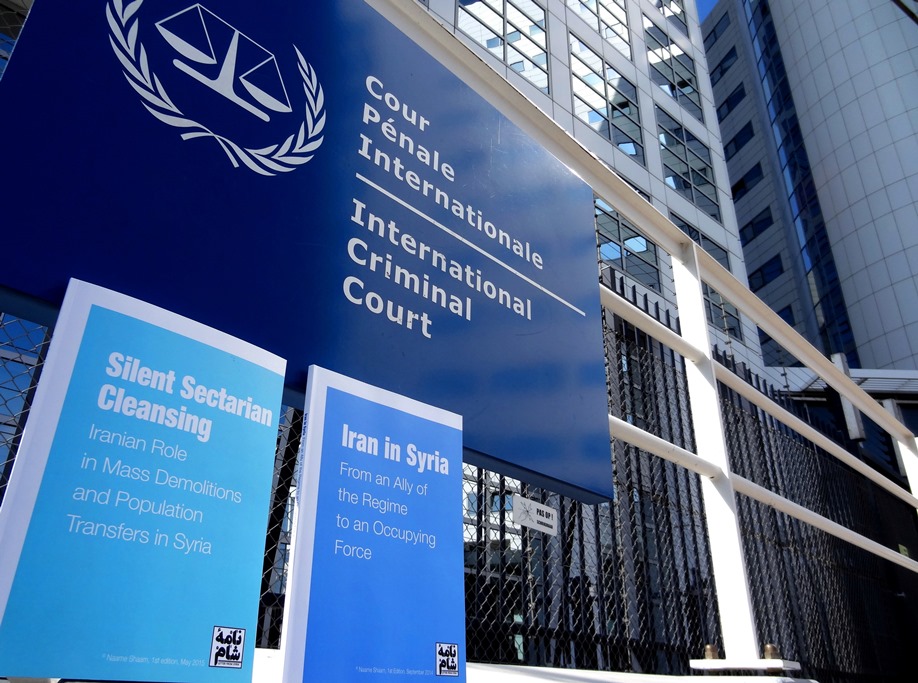
    It is no longer accurate to describe the war in Syria as a conflict between Syrian rebels on the one hand and Bashar al-Assad’s regime forces “supported” by the Iranian Revolutionary Guards (IRG), Hezbollah, and Iraqi militias on the other. Most major battles in Syria—along the frontlines of regime-held areas—are now being directed and fought by the IRG and Hezbollah, along with other non-Syrian Shi‘i militias, with Assad forces in a supportive or secondary role.

    December 17, 2014

    Iran’s Nuclear Secrets Need to be Revealed
  • Analysis
  • Iran’s Nuclear Secrets Need to be Revealed

    Expert American opinion on the outcome of last month’s nuclear negotiations with Iran is sharply divided. Those who want Iran to give up all enrichment technology are relieved that a “bad” deal was averted.

    December 10, 2014

    The American Approach in Syria and Iran: Soft and Dangerous
    Middle East Institute
  • Analysis
  • The American Approach in Syria and Iran: Soft and Dangerous

    In his pursuit of foreign policy deals with Syria and Iran, President Obama has taken a soft approach. As a result, Syria and Iran have taken advantage with aggressive opportunism.

    December 10, 2014

    Iran's Role in Syria: Drivers and Dynamics

    Iran's Role in Syria: Drivers and Dynamics

    November 14 – January 1, 1970, November 14 - 12:00 PM – 12:00 AM
    January 1 - 12:00 PM – 12:00 AM

    The Middle East Institute, 1761 N Street NW, Washington, District of Columbia 20036

    Read the Middle East Journal

    The oldest peer-reviewed publication dedicated to the study of the modern Middle East, MEI’s flagship journal covers politics, society, and culture in the region.