The Gulf’s New Information Battlefield: War, Technology, and the Reconfiguration of Security
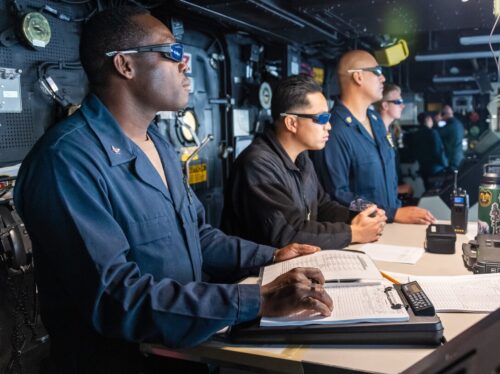
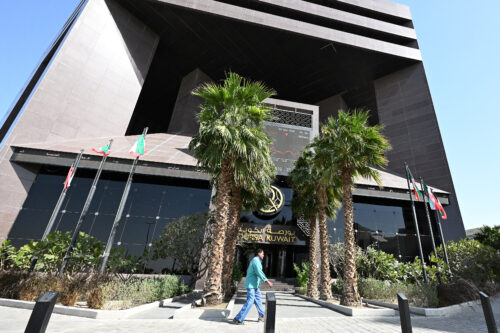
During the opening days of the 2025–2026 U.S.–Israel war with Iran, Kuwait’s military briefings highlighted intercepted Iranian missiles and drones while revealing little about strike locations or damage. The approach reflected a familiar wartime dilemma in which governments must reassure populations while limiting information that could aid adversaries or fuel uncertainty. Yet Kuwait’s response revealed a broader shift across the Gulf. Information was no longer simply a messaging tool; it had become part of the battlefield.
After the US-Israel-Iran war — and the strikes that followed the cease-fire — the Gulf states find themselves dangerously exposed. Host Alistair Taylor is joined by MEI Associate Fellow Gregory Gause to discuss the war’s impact on the Gulf, their partnership with the United States, and whether the turmoil of recent months will push Gulf leaders to reassess their alliances and international engagement.
The Gulf’s Strategic Paradox: Lost Confidence in the US Security Umbrella, Enduring Trust in the Dollar
This essay argues that the current debate about the future of the international monetary system is not really about Gulf currencies, oil pricing, or de-dollarization in the narrow technical sense. It is about something deeper and more important: whether institutional trust can survive when geopolitical certainty is eroding.
Few question the desirability of finding a political resolution to the Afghan conflict or doubt Pakistan’s pivotal role. The growing divide of opinion in this country is over how best to achieve that outcome. One camp led by our military strategists insists that various political agreements are likely to result from accumulated military successes, sustained by Afghan governance reforms and economic improvements. Visible counterinsurgency gains are expected to gradually wean fighters away from the ranks of the insurgency.
This Commentary first appeared in McClatchy News on January 5, 2011.
The assassination of Salman Taseer, the governor of Punjab, Pakistan's largest province, has illustrated the increasingly chaotic environment in that country, which only promises to get worse in the new year. Weeks before his death, Taseer had the courage to say what his fellow politicians were unwilling to: that Pakistan's blasphemy law must be repealed in order for Pakistan to enter the community of modern nations.
The US and Libya: Normalization of a Stormy Relationship
*This article was first published in January 2011 by the Foreign Service Journal.
Relations between Libya and the U.S. have a turbulent history: War at the beginning of the 19th century; U.S. government support for Libyan independence after World War II; official and private-sector American engagement in the development of Libya’s oil wealth and human resources in the mid-20th century; Libyan terrorism and U.S. military retaliation in the 1980s; U.S.-engineered economic sanctions and isolation in the late 20th century; and restoration of diplomatic relations in 2006.
The government formation stalemate in Iraq—well into its seventh month and counting—may at last be nearing an end. The next few weeks could seal a deal between rival electoral blocs that will produce the next national government.
Two scenarios with very different outcomes appear to be jockeying for rail position in the race to produce the next Prime Minister.
Where Does the US Stand After Its Retreat from Iraq?
This piece first appeared as a op-ed in The National on August 30, 2010
The last American combat troops rolled across the Kuwaiti border from Iraq on August 19, nearly two weeks ahead of schedule. The Obama administration has spoken of this milestone as a promise fulfilled and the first major step toward bringing a “responsible” end to the war in Iraq, setting the stage for the final withdrawal of American troops at the end of next year.
The Middle East Institute is proud to host Rochelle Davis, professor of Anthropology at the Center for Contemporary Arab Studies in the School of Foreign Service at Georgetown University, to discuss US military conceptions of culture and the war in Iraq.
US Interest Wanes in the Mission that Remains in Iraq
This Commentary first appeared as an op-ed in The National, July 25, 2010.
After the March 2003 invasion of Iraq by United States and coalition forces, a short but sharp war, and the declaration of “Mission Accomplished” aboard an American aircraft carrier, Iran felt isolated and encircled on all sides by US might. Not so today.
Tehran has closely observed US travails in Iraq over the years, and watched with satisfaction as the US began withdrawing its forces in anticipation of a full withdrawal by the end of 2011.
The Middle East Institute is proud to host distinguished academic and author Dr. Akbar Ahmed for a discussion of his latest book, Journey into America: the Challenge of Islam, a comprehensive study of the American-Muslim community. Dr. Ahmed will discuss the results of the research conducted by his team as they traveled to over 75 cities and 100 mosques across the United States to discover what Muslims are thinking, what they are reading, and how they are living every day in America. Among the questions his team asked include, "Can we expect an increase in homegrown terrorism?
As the US Plans Its Exit, the Iraqis Find Reason to Worry
This Commentary was originally published as an op-ed in The National May 31, 2010.
‘What does the US want from Iraq?” This was the question of a university educator during a large gathering of Iraqi politicians, students, journalists and activists we met during a 10-day trip to Baghdad and Kurdistan sponsored by Washington’s Stimson Center earlier this month.
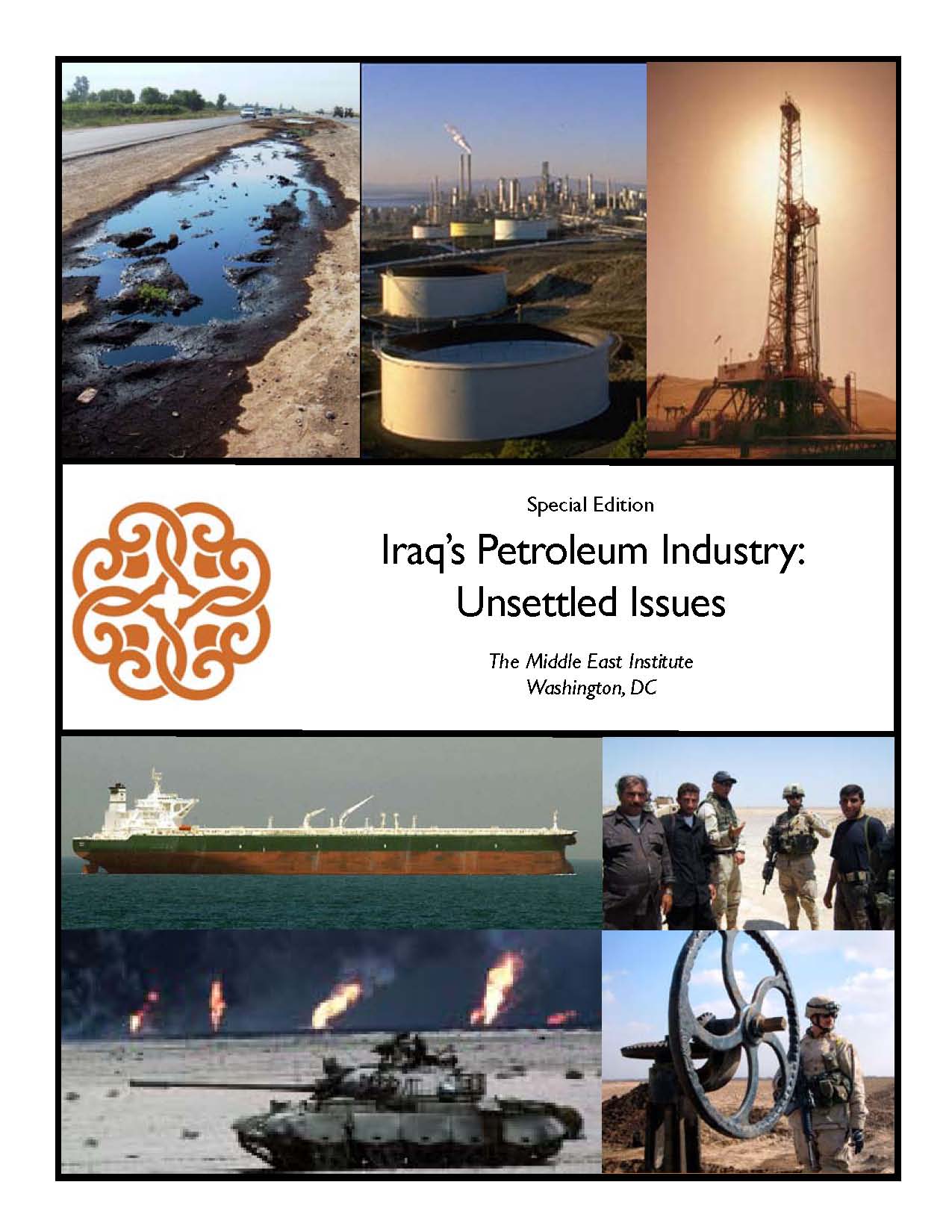
Iraq has the world’s third-largest oil reserves. However, the development of Iraq’s petroleum sector has been severely hampered by decades of war, sanctions, underinvestment, the exodus of scores of technocrats, and sabotage. Repairing Iraq’s oil infrastructure and expanding exploration, development, and production is of paramount importance to the country’s future. In June 2009, the Iraqi Oil Ministry embarked on an effort to help meet this challenge by offering service contracts to international oil companies (IOCs) in two rounds of tenders.