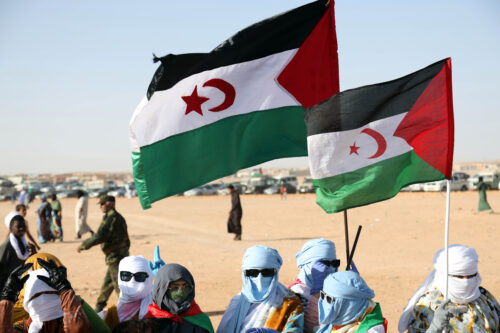
Western Sahara, a sparsely populated territory on the Atlantic coast of northwest Africa, is the site of one of the continent’s longest-running territorial disputes. The conflict dates to Spain’s withdrawal from the territory in 1975, after which Morocco Algeria, and Mauritania vied for control over the former colony.
This article is part of a collection of short essays written by the Fellows of the Middle East Institute to explore aspects of the ongoing war with Iran. The intent of the collection is to help readers see new and unexpected elements of the dynamics and impact of the ongoing hostilities and to think harder, deeper, and broader about the implications of the conflict.
Egypt: How the Iran War Has Affected Egypt’s Calculations
Egypt, which is not party to the war on Iran, has become a target as well as an intermediary in the conflict. As a result, the war has affected Egypt’s future calculations, particularly in three major areas: its economy, its security, and its regional alliances.
Libya on the Brink: Insecurity, Localism, and the State Not Back In
This essay is part of the Middle East-Asia Project (MAP) series on “’Civilianizing’ the State in the Middle East and Asia Pacific Regions.” The series explores the past and ongoing processes of Security Sector Reform (SSR) in Asia-Pacific countries and examines the steps already taken and still needed in the MENA region. See More
All Retributive Justice, No Restorative Justice in the Post-Arab Spring Middle East
In the wake of the revolutionary fervor that has swept the Middle East and North Africa since the beginning of 2011, retributive justice has taken precedence over restorative justice approaches as countries seek to address human rights violations.
The Egyptian revolutionary motto, “bread, freedom, social justice,” which echoed over 18 days until Hosni Mubarak’s ouster on February 11, 2011, illustrated how restricted access to food had become one of the people’s main grievances. In the aftermath of the revolution, infused by a renewed sense of ownership of their country, many citizens launched environmental initiatives with a focus on sustainable agriculture.
Since the “Arab Spring,” international actors have considered Tunisia an exemplar of democratic transition in the Arab world. But this optimism is increasingly being replaced by fear and frustration, especially within Tunisia itself. Transitional justice—dealing with the crimes committed by previous regimes—is one of the subjects of debate.
In December 2012, the Central Bank of Egypt announced that the country’s foreign reserves had reached an alarming low of $15 billion, less than 50 percent of its holdings following Hosni Mubarak’s ouster in February 2011. At that point, the Bank was no longer capable of providing the treasury with the monthly dollar transfers necessary for the purchase of basic food and energy imports, and thus had to rely on foreign borrowing to cover these imports and debt service as well as to support local currency.
The Arab Awakening: Determinants and Economic Consequences
Economist Zubair Iqbal explains the daunting economic challenges facing Arab countries in transition following the Arab Awakening and the different trajectories stemming from those nations’ policy responses. Tunisia and Egypt provide an instructive case study: the former made hard fiscal decisions and has embraced sound economic principles and achieved broad support for a reform plan, while the latter, suffering from more difficult political conditions, has been faced with limited policy options that increase the risk for long-term challenges.
Al Qaeda's Expansion in Egypt: Implications for U.S. Homeland Security
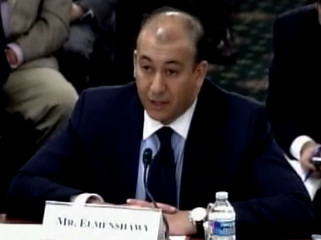
Testimony of MEI Resident Scholar Mohamed Elmenshawy before the House Committee on Homeland Security Subcommittee on Counterterrorism and Intelligence, delivered February 11, 2014. Click here for video clips and additional testimony from this hearing.
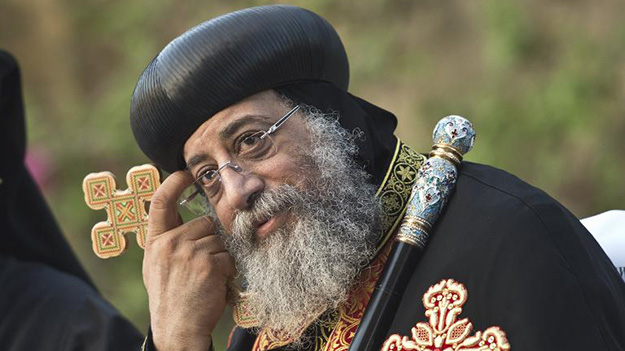
The Christmas visit of Egypt’s interim president Adly Mansour to the Coptic Cathedral in Cairo occasioned much commentary in the Egyptian press about a new era in church-state relations. Indeed, newspaper headlines heralded the visit as the first undertaken by an Egyptian president to a Coptic patriarch to offer congratulations on a Coptic holiday. The interim president’s magnanimity in making the visit was set in stark contrast to the parsimonious attitude of Hosni Mubarak, who would typically leave such obligatory greetings to a lesser figure in the Egyptian government.
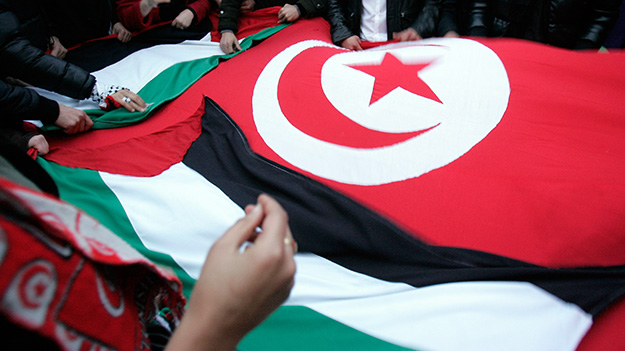
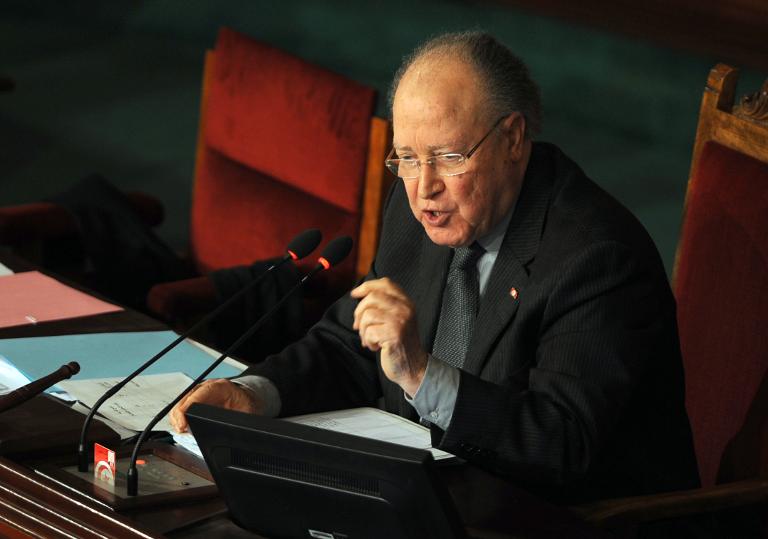
January 27, 2014 will likely be engraved in the collective memory of the Tunisian people as the day they witnessed the adoption of their first post-authoritarian constitution—a charter that will hopefully pave the way for the country’s democratization. This legal framework was ratified by members of the Tunisian National Constituent Assembly (NCA) in a celebratory atmosphere.
The recent attacks against Egypt’s police and military have raised concerns over the return of the militant insurgency that plagued Egypt during the 1980s and 1990s. Ansar Bayt al-Maqdis (ABM), a Sinai-based militant group, has repeatedly and publicly claimed responsibility for the cascade of bombings.
The situation in Egypt has been very complicated, with the democratic process and path toward transitional justice shifting under four different ruling systems—Mubarak, SCAF, the Muslim Brotherhood, and the interim ruling authorities—over a short period of time. All four systems committed abuses against the people, leaving victims and cases to be investigated. The combination of sharp divisions within society, disagreements about transitional justice itself, and delayed government responses to people’s demands has made the situation particularly charged.
Libya's Political Isolation Law: Politics and Justice or the Politics of Justice?
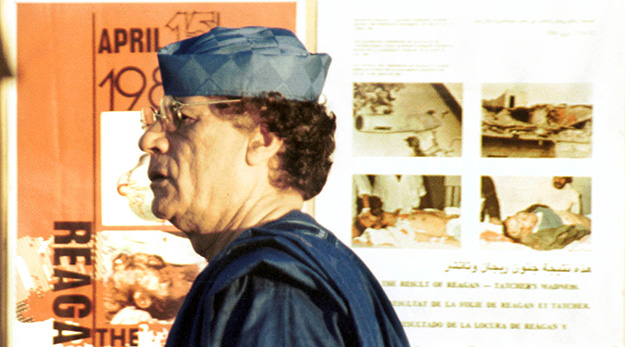
In May 2013, Libya’s General National Congress (GNC) overwhelmingly passed the Political Isolation Law (PIL). The PIL’s enactment represented a far-reaching attempt to prevent members of the regime of Muammar Qaddafi from holding public office during the country’s transition. But the decision also appeared to fit a precarious pattern of post-conflict accountability in Libya, which has been characterized by acts of vengeance and one-sided justice aimed at anyone associated with the defeated regime. The passage of the law also reflects the current state of political instability in Libya wherein decisions are politically motivated and often forced at the barrel of the gun rather than agreed upon through public consultation and democratic decision-making.
The oldest peer-reviewed publication dedicated to the study of the modern Middle East, MEI’s flagship journal covers politics, society, and culture in the region.