This article is part of a collection of short essays written by the Fellows of the Middle East Institute to explore aspects of the ongoing war with Iran. The intent of the collection is to help readers see new and unexpected elements of the dynamics and impact of the ongoing hostilities and to think harder, deeper, and broader about the implications of the conflict.
Egypt: How the Iran War Has Affected Egypt’s Calculations
Egypt, which is not party to the war on Iran, has become a target as well as an intermediary in the conflict. As a result, the war has affected Egypt’s future calculations, particularly in three major areas: its economy, its security, and its regional alliances.
Algeria and Morocco have long been at odds, but recent diplomatic moves may signal a widening geopolitical split in North Africa. Hosts Alistair Taylor and Matthew Czekaj are joined by MEI Senior Fellow Intissar Fakir to unpack Algeria’s decision to sever diplomatic ties with the United Arab Emirates and Morocco’s warming relations with both the UAE and Israel. They also explore linkages between these diplomatic shifts and the Western Sahara conflict, Moroccan domestic concerns, particularly in light of this week’s elections, as well as broader regional stability.
The Future of Democracy in Egypt: Notes from the Ground
The Middle East Institute is proud to host Sahar F. Aziz, associate professor of Law at Texas Wesleyan University, and Mirette F. Mabrouk, deputy director for Regional Programs at the Atlantic Council’s Rafik Hariri Center for the Middle East, for a discussion about the impact and implications of the ouster of President Mohamed Morsi. Mirette Mabrouk will provide a macro-perspective of the current situation and discuss some of the key turning points that precipitated the recent crisis.
The Future of Democracy in Egypt: Notes from the Ground
The Middle East Institute is proud to host Sahar F. Aziz, associate professor of Law at Texas Wesleyan University, and Mirette F. Mabrouk, deputy director for Regional Programs at the Atlantic Council’s Rafik Hariri Center for the Middle East, for a discussion about the impact and implications of the ouster of President Mohamed Morsi. Mirette Mabrouk will provide a macro-perspective of the current situation and discuss some of the key turning points that precipitated the recent crisis.
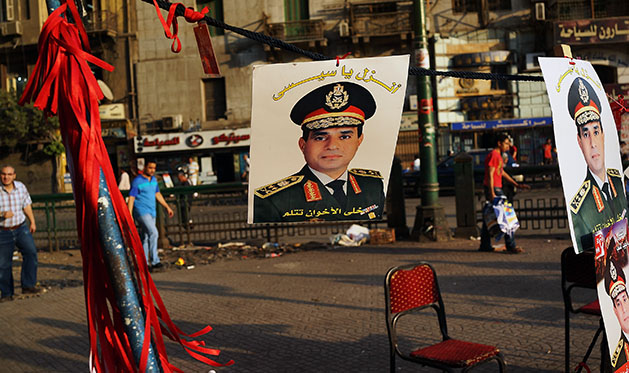
Yesterday, General Abdul Fattah el-Sisi, Egypt’s Minister of Defense and head of the military, called for Egyptians to take to the streets in protest on Friday to “confront terrorism.” Such a call amounts to a public relations one-upmanship vis-à-vis continued Islamist protests since Morsi’s ouster. Clearly, the Egyptian military is in no need of popular protests to confront credible national security threats or armed militias that threaten the security of citizens.
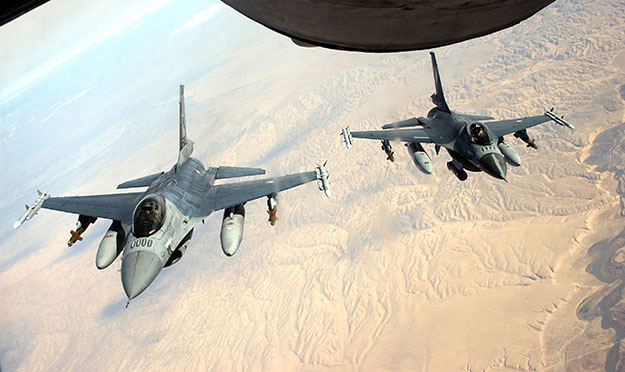
Yesterday, the United States announced that it would delay the delivery of four F-16 fighter jets to Egypt.[1] While such a move might appear to signal a block in U.S. military aid to the country, most Egyptians believe that the United States will, as it always does, provide Egypt with military funding.
Mada Masr’s journalist Lina Attalah spoke to Gehad el-Haddad, spokesperson of the Muslim Brotherhood and senior advisor to its political arm, the Freedom and Justice Party, at the Rabaa el-Adaweya sit-in, where pro-deposed President Mohamed Morsi protesters have been camping to express their rejection of the military coup that ousted him.
What is the current plan? Keep mobilizing to exert pressure? Negotiate at some point?
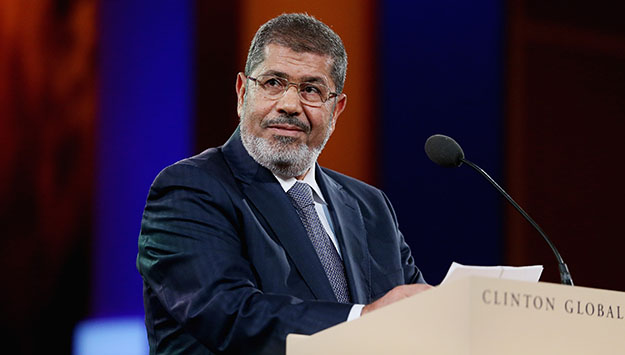
Before 3 July 2013 enters the annals of U.S.-backed anti-Islamist coups[1] it is worth noting that Mohamed Morsi’s ill-fated presidency differs from prior cases. Whereas the Islamic Salvation Front (FIS) and Hamas posed a threat (however chimeric) to Washington, Morsi quickly won plaudits from U.S. officials. Meanwhile, he menaced the domestic opposition with an autocratic panache. When Morsi exceeded his elected mandate and refused to share power, secularists and Salafists rose against him—while the U.S.
The Middle East Institute is proud to host Dr. Mona Makram-Ebeid for a discussion about the state of affairs in Egypt in the wake of the overthrow of Muslim Brotherhood President Mohamed Morsi. Dr. Makram-Ebeid is a prominent Egyptian academic and former member of the Shura Council, who recently resigned in support of the Tamarod movement. She will provide a first-hand perspective on the challenges ahead for Egypt following the recent military takeover of the government and the ensuing violence and unrest.
A white bed sheet had been strung between two trees on a median just opposite the Sayeda Aisha mosque in a working class area of Cairo. Everything had been arranged by volunteers under the protection of Ahmed, a well-known personality in the neighborhood. He helped them pick a spot to set up the projector, screen, and speakers. All that was missing was a functioning street lamp to power the equipment, but those nearby had been disconnected. A generator that was usually rented out to street vendors was used instead.
The Middle East Institute is proud to host Dr. Mona Makram-Ebeid for a discussion about the state of affairs in Egypt in the wake of the overthrow of Muslim Brotherhood President Mohamed Morsi. Dr. Makram-Ebeid is a prominent Egyptian academic and former member of the Shura Council, who recently resigned in support of the Tamarod movement. She will provide a first-hand perspective on the challenges ahead for Egypt following the recent military takeover of the government and the ensuing violence and unrest.Bios:Dr.
The Middle East Institute is proud to host Dr. Mona Makram-Ebeid for a discussion about the state of affairs in Egypt in the wake of the overthrow of Muslim Brotherhood President Mohamed Morsi. Dr. Makram-Ebeid is a prominent Egyptian academic and former member of the Shura Council, who recently resigned in support of the Tamarod movement. She will provide a first-hand perspective on the challenges ahead for Egypt following the recent military takeover of the government and the ensuing violence and unrest.Bios:Dr.
The Middle East Institute is proud to host Dr. Mona Makram-Ebeid for a discussion about the state of affairs in Egypt in the wake of the overthrow of Muslim Brotherhood President Mohamed Morsi. Dr. Makram-Ebeid is a prominent Egyptian academic and former member of the Shura Council, who recently resigned in support of the Tamarod movement. She will provide a first-hand perspective on the challenges ahead for Egypt following the recent military takeover of the government and the ensuing violence and unrest.Bios:Dr.
The Middle East Institute is proud to host Dr. Mona Makram-Ebeid for a discussion about the state of affairs in Egypt in the wake of the overthrow of Muslim Brotherhood President Mohamed Morsi. Dr. Makram-Ebeid is a prominent Egyptian academic and former member of the Shura Council, who recently resigned in support of the Tamarod movement. She will provide a first-hand perspective on the challenges ahead for Egypt following the recent military takeover of the government and the ensuing violence and unrest.Bios:Dr.
The Middle East Institute is proud to host Dr. Mona Makram-Ebeid for a discussion about the state of affairs in Egypt in the wake of the overthrow of Muslim Brotherhood President Mohamed Morsi. Dr. Makram-Ebeid is a prominent Egyptian academic and former member of the Shura Council, who recently resigned in support of the Tamarod movement. She will provide a first-hand perspective on the challenges ahead for Egypt following the recent military takeover of the government and the ensuing violence and unrest.Bios:Dr.
تُعد المجلة الرئيسية لمعهد الشرق الأوسط أقدم مطبوعة محكّمة مكرّسة لدراسة الشرق الأوسط الحديث، وتغطي المجلة الرئيسية في المعهد السياسة والمجتمع والثقافة في المنطقة.