This article is part of a collection of short essays written by the Fellows of the Middle East Institute to explore aspects of the ongoing war with Iran. The intent of the collection is to help readers see new and unexpected elements of the dynamics and impact of the ongoing hostilities and to think harder, deeper, and broader about the implications of the conflict.
Egypt: How the Iran War Has Affected Egypt’s Calculations
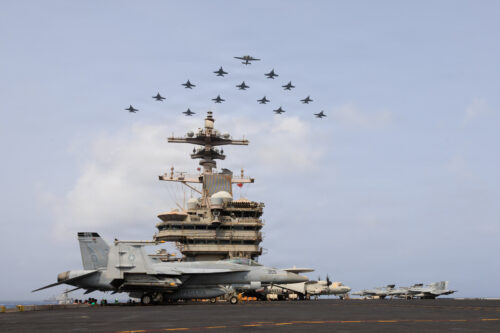
Egypt, which is not party to the war on Iran, has become a target as well as an intermediary in the conflict. As a result, the war has affected Egypt’s future calculations, particularly in three major areas: its economy, its security, and its regional alliances.
Algeria and Morocco have long been at odds, but recent diplomatic moves may signal a widening geopolitical split in North Africa. Hosts Alistair Taylor and Matthew Czekaj are joined by MEI Senior Fellow Intissar Fakir to unpack Algeria’s decision to sever diplomatic ties with the United Arab Emirates and Morocco’s warming relations with both the UAE and Israel. They also explore linkages between these diplomatic shifts and the Western Sahara conflict, Moroccan domestic concerns, particularly in light of this week’s elections, as well as broader regional stability.
Mohamed Yousry Salama passed away from stomach disease on 24 March 2013. The 39-year-old had been a spokesperson for the Salafi al-Nour Party immediately following Egypt’s revolution. After falling out with members of the party, he resigned in August 2011 and eventually co-founded the Dostour Party with such progressive political figures as Mohamed ElBaradei, George Ishaq, and Gamila Ismail.
The Egyptian Islamist Mohamed al-Zawahiri is most famous for being the brother of al-Qaeda front man Ayman, but his story is also a gripping one. Zawahiri was arrested in 1999 for his alleged participation in the assassination of President Anwar Sadat.
For over 30 years Egypt’s foreign policy has stood on three key pillars: building strategic relations with the United States, maintaining the peace treaty with Israel, and promoting the security of Arab states in the Gulf. The presidency and the security apparatus, moreover, have often overshadowed and minimized the influence of the Ministry of Foreign Affairs in the policymaking process. These pillars solidified under the rule of Hosni Mubarak, and as a result President Mohamed Morsi will not be able to uproot them anytime soon.
Since the most recent but now routine eruptions of violence between street protesters and Egypt’s state, speculation has swirled about the durability of the pact between the Muslim Brotherhood and Egypt’s armed forces.
When President Mohamed Morsi granted himself sweeping new powers last November, he unwittingly accomplished something no one had yet achieved. He managed to bring Egypt’s fractious and disparate political factions together around a single cause: bitterly opposing him and his Muslim Brotherhood.
When I moved to Cairo in 1981 I discovered a courtly and safe city. The streets were alive with playful banter, expressions of the renowned Egyptian joie de vivre. Men who wished to attract the attention of lady passers-by sang bits of love songs or called them things like “minaret” and “gazelle.”
A Conversation with al-Gama`a al-Islamiya’s Hani Nour Eldin
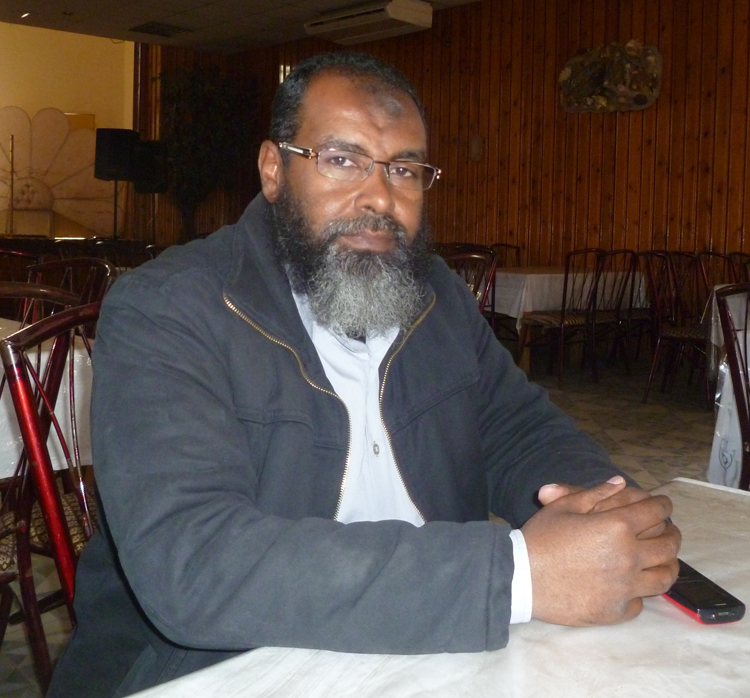
Hani Nour Eldin is a member of the Egyptian Islamist group al-Gama`a al-Islamiya and an administrative employee of the Suez Canal Authority. In 2011 he was elected to parliament as part of the group’s political arm, the Building and Development Party. In June 2012 he caused considerable controversy when he traveled to Washington, D.C. as part of a parliamentary delegation.
Ten months have passed since the election of the Muslim Brotherhood’s Mohamed Morsi as Egypt’s first post-uprising president. During his election campaign, Morsi repeatedly promised “change.” So far, however, it appears that Egypt’s bureaucracy has been more successful at changing Morsi’s plans and discourse than he has been at changing the state’s structures.
Interview with Ambassador Dr. Mohamed Noman Galal: Reflections of a Scholar-Diplomat on Arab-Asia Relations
To be sure, Asia is the home of great civilizations. It is also the continent of rising powers, dynamic economies, and nearly half of the world’s population. For these reasons, it only makes sense that Egypt continues seeking ways to expand its ties with Asian countries. It will take imaginative Egyptian leadership to accomplish this objective and, more broadly, to capitalize on the country’s location and to help unleash its people’s creative energy.
Economic Effects of the Arab Spring: Policy Failures and Mounting Challenges
Thu, 2/28/2013 12:00 pm to 1:00 pm The Middle East Institute is proud to host economists Andreas Bauer and Dr. Zubair Iqbal for an examination of the economic impact of the upheavals affecting Arab Spring countries, including Egypt and Tunisia. Since the 2011 uprisings, growth in the MENA region has slowed, inequality worsened, and unemployment increased, thus weakening the popular support needed for new governments to introduce difficult, but necessary, economic reforms.
Economic Effects of the Arab Spring: Policy Failures and Mounting Challenges
Thu, 2/28/2013 12:00 pm to 1:00 pm The Middle East Institute is proud to host economists Andreas Bauer and Dr. Zubair Iqbal for an examination of the economic impact of the upheavals affecting Arab Spring countries, including Egypt and Tunisia. Since the 2011 uprisings, growth in the MENA region has slowed, inequality worsened, and unemployment increased, thus weakening the popular support needed for new governments to introduce difficult, but necessary, economic reforms.
تُعد المجلة الرئيسية لمعهد الشرق الأوسط أقدم مطبوعة محكّمة مكرّسة لدراسة الشرق الأوسط الحديث، وتغطي المجلة الرئيسية في المعهد السياسة والمجتمع والثقافة في المنطقة.