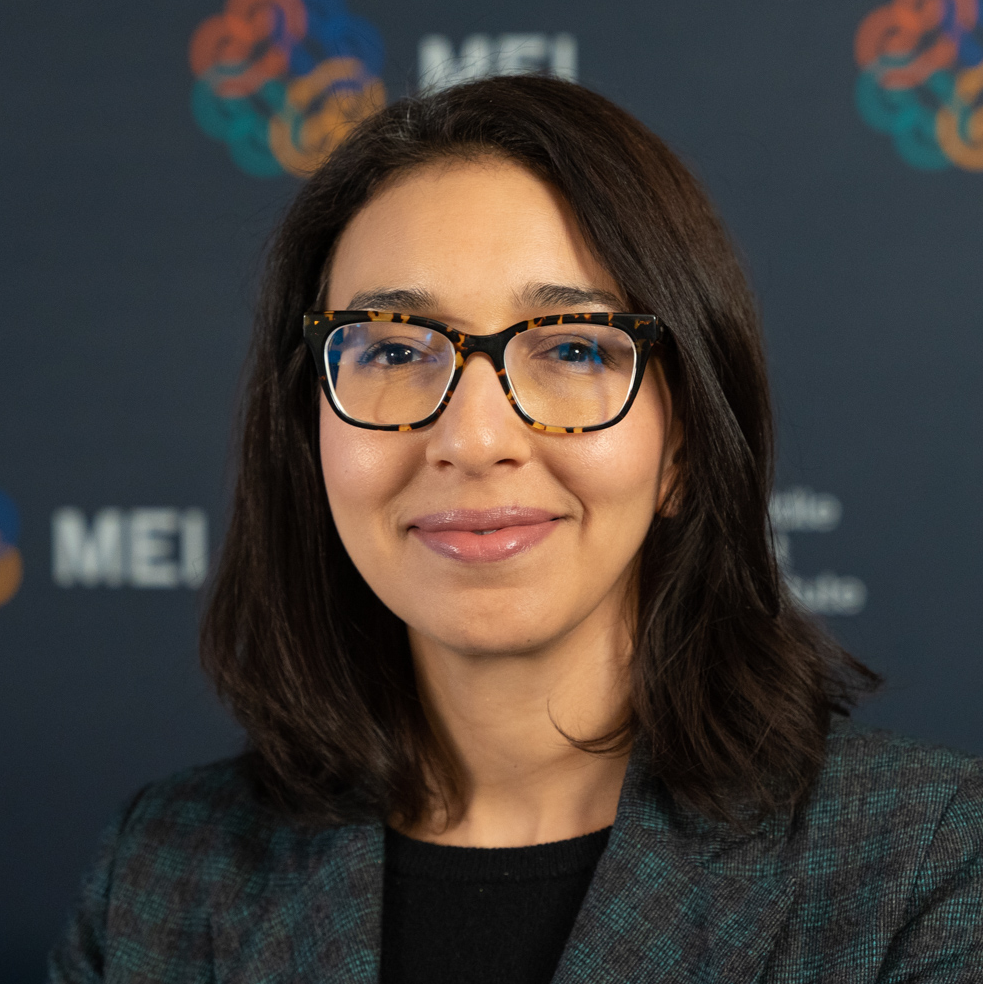
This summer, brutally hot temperatures, deepening water scarcity, and spiking fertilizer costs have put North Africa’s agricultural sector under intense pressure. Host Alistair Taylor is joined by Mohammed Mahmoud, CEO and founder of the Climate and Water Initiative and lead for Middle East Climate and Water Policy at the United Nations University Institute for Water, Environment, and Health, to unpack the region’s food and water security challenges. Drawing on Mahmoud’s new report card on agricultural sustainability in North Africa, they explore the diverging picture across the region, why some countries have weathered the strain better than others, and what it will take to build a more resilient and secure food system.
من الأمل الأكثر إشراقاً إلى سجن مفتوح: كيف فقدت تونس وعدها الديمقراطي
تظاهر آلاف التونسيين في العاصمة الأسبوع الماضي ضد ما وصفوه بـ "الظلم والقمع"، متهمين الرئيس قيس سعيد بترسيخ حكم الفرد الواحد من خلال الشرطة والقضاء. وتأتي هذه الاحتجاجات في إطار موجة واسعة من الاضطرابات، حيث يقول الصحفيون والمنظمات غير الحكومية والأحزاب السياسية المنقسمة والأطباء والمصرفيون وعمال النقل إن سعيد قد حوّل البلاد إلى سجن مفتوح، ويطالبون بإنقاذ تونس من أزمتها السياسية والاقتصادية المتفاقمة.
السيادة أولاً: إعادة تشكيل التعاون الدولي في شمال أفريقيا
تولي دول شمال أفريقيا ودول العالم بشكل متزايد الأولوية لتعريف صارم للسيادة وتميل نحو الدبلوماسية التبادلية. إن فهم الدوافع الكامنة وراء نهج "السيادة أولاً" الذي تتبعه شمال أفريقيا يمكن أن يساعد الولايات المتحدة وأوروبا على بناء علاقات متبادلة المنفعة ودائمة مع المنطقة في ظل هذا الواقع الجديد.
MEI 67th Annual Conference – Assessing the Transitions: Egypt and Tunisia
Panel 1: Assessing the Transitions: Egypt and Tunisia
Moderator: Paul Salem, The Middle East InstituteKhalil al Anani, The Middle East InstituteLarry Diamond, Stanford UniversityNoureddine Jebnoun, Georgetown UniversityRabab El Mahdi, American University of Cairo
The rise of the Nidaa Tounes (Call for Tunisia) Party has lifted the hopes of many Tunisians who hold Ennahda, the ruling Islamist party, responsible for the increase in religiously-motivated violence and suspect it of trying to establish a theocracy. Yet a closer look at the platform and rhetoric defining Nidaa Tounes suggests that the self-described “modernist” alternative to the Islamists might not be as inclusive and democratic as its leaders claim, as some of the party’s senior figures advocate the exclusion of Ennahda from politics.
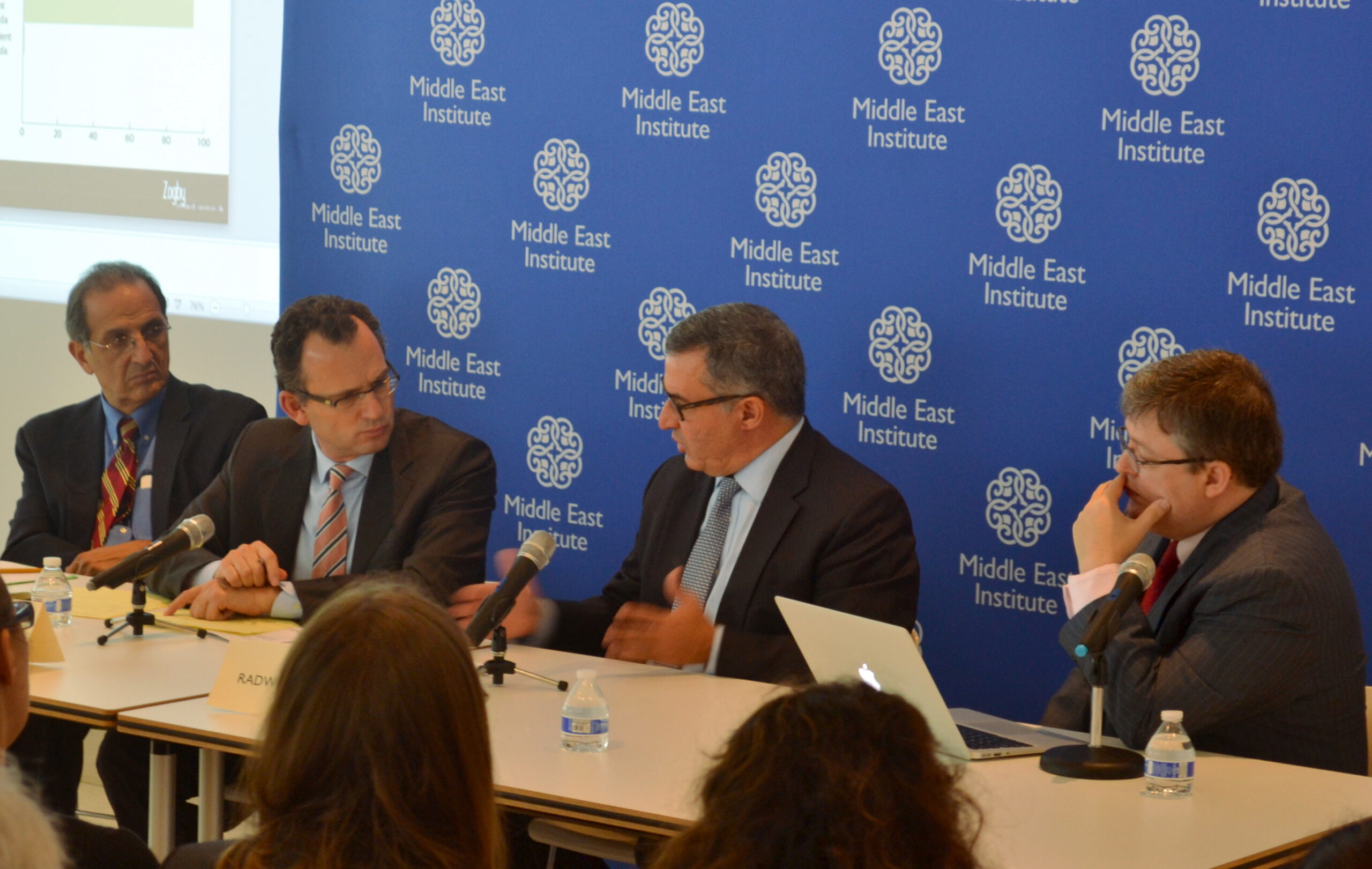
The Middle East Institute (MEI) is pleased to welcome James Zogby, president of the Arab American Institute and founder of Zogby Research Services (ZRS), William Lawrence, Professorial Lecturer in Political Science and International Affairs at George Washington University’s Elliot School of International Affairs, and Radwan Masmoudi, Center for the Study of Islam and Democracy, for a discussion about the findings of a recent poll on Tunisian attitudes toward their country’s political actors and institutions, moderated by MEI Vice President Paul Salem.Zogby Research Services recently surveye
Economic Effects of the Arab Spring: Policy Failures and Mounting Challenges
Thu, 2/28/2013 12:00 pm to 1:00 pm The Middle East Institute is proud to host economists Andreas Bauer and Dr. Zubair Iqbal for an examination of the economic impact of the upheavals affecting Arab Spring countries, including Egypt and Tunisia. Since the 2011 uprisings, growth in the MENA region has slowed, inequality worsened, and unemployment increased, thus weakening the popular support needed for new governments to introduce difficult, but necessary, economic reforms.
Economic Effects of the Arab Spring: Policy Failures and Mounting Challenges
Thu, 2/28/2013 12:00 pm to 1:00 pm The Middle East Institute is proud to host economists Andreas Bauer and Dr. Zubair Iqbal for an examination of the economic impact of the upheavals affecting Arab Spring countries, including Egypt and Tunisia. Since the 2011 uprisings, growth in the MENA region has slowed, inequality worsened, and unemployment increased, thus weakening the popular support needed for new governments to introduce difficult, but necessary, economic reforms.
Economic Effects of the Arab Spring: Policy Failures and Mounting Challenges
Thu, 2/28/2013 12:00 pm to 1:00 pm The Middle East Institute is proud to host economists Andreas Bauer and Dr. Zubair Iqbal for an examination of the economic impact of the upheavals affecting Arab Spring countries, including Egypt and Tunisia. Since the 2011 uprisings, growth in the MENA region has slowed, inequality worsened, and unemployment increased, thus weakening the popular support needed for new governments to introduce difficult, but necessary, economic reforms.
Economic Effects of the Arab Spring: Policy Failures and Mounting Challenges
Thu, 2/28/2013 12:00 pm to 1:00 pm The Middle East Institute is proud to host economists Andreas Bauer and Dr. Zubair Iqbal for an examination of the economic impact of the upheavals affecting Arab Spring countries, including Egypt and Tunisia. Since the 2011 uprisings, growth in the MENA region has slowed, inequality worsened, and unemployment increased, thus weakening the popular support needed for new governments to introduce difficult, but necessary, economic reforms.
Migration Agreements between Italy and North Africa: Domestic Imperatives versus International Norms
The upheavals which spread across North Africa in 2011 changed the political map of the region. With the downfall of longstanding rulers, the European Union has sought to re-launch a policy dialogue informed by an awareness of human rights issues and to support the process of democratic transition in its Mediterranean neighbors.