This report explores maritime security conditions in the Mediterranean and the evolving US engagement in the region. As critical infrastructure becomes increasingly vulnerable to sabotage, freedom of navigation is undermined by conflict, and energy disputes generate tension, US policy focus on the region has become fragmented and disengaged. The authors call for a sustained American role to strengthen maritime domain awareness, allied coordination, infrastructure protection, and the capacity to respond when Mediterranean crises affect US and transatlantic interests.
The United States retains a significant military presence in the Mediterranean, but its strategic attention and higher-value military resources have increasingly shifted toward other theaters. This is a miscalculation because while the sea basin and its littoral areas are essential to allied military operations, global trade, energy flows, and American hard power projection, the region’s security environment has been growing increasingly complex.
The security conditions across the Mediterranean are deteriorating on multiple fronts. Critical infrastructure, from ports and energy distribution and production facilities to undersea communication networks, face growing vulnerability to sabotage. Freedom of navigation (FoN) has come under pressure from conflict spillover in the Black Sea and Red Sea, maritime chokepoint disruptions, and the proliferation of shadow fleets operating outside regulatory frameworks. Maritime energy disputes in the Eastern Mediterranean continue to generate tensions among regional actors, including US allies. Organized crime and irregular migration add to the pressures on governments across the region.
These trends, while predating reduced US engagement, have continued to unfold alongside the ongoing shift in attention and resources toward other theaters. Russia, China, and Iran have, meanwhile, expanded their presence in and around the Mediterranean basin, reflecting their strategic objectives and facilitated by the region’s own conflicts and vulnerabilities. At the same time, a smaller and more episodic American role risks creating additional opportunities for competitors to consolidate their positions and leaves allies with more onerous surveillance, coordination, and response burdens. And while European partners have assumed a larger share of these responsibilities in recent years, existing responses remain fragmented across military, migration, law enforcement, infrastructure, and other frameworks.
The United States does not face an immediate Mediterranean crisis. However, the region has demonstrated its ability to demand costly US intervention when instability escalates. A sustained American role supporting rather than replacing European regional efforts could strengthen maritime domain awareness, allied coordination, infrastructure protection, and the capacity to respond when Mediterranean crises affect US and transatlantic interests.
Policy Recommendations
Maintain a modest but continuous US maritime security baseline force for the Mediterranean. The US currently has the Navy’s Sixth Fleet headquartered in Naples, Italy, six forward-deployed destroyers stationed at the port of Rota, in Spain, as well as maritime patrol and reconnaissance capabilities spread throughout the region, and it engages in regular Mediterranean operations. But those assets are frequently pulled away to other theaters. What is needed now is to establish a minimum Mediterranean readiness/availability requirement, ensuring that some intelligence, surveillance-and-reconnaissance, command-and-control, and surface-combatant capacity remains available for Mediterranean contingencies.
Improve maritime surveillance and protect critical infrastructure. The North Atlantic Treaty Organization (NATO) runs Operation Sea Guardian, which supports maritime situational awareness and can protect critical infrastructure when authorized by the North Atlantic Council. NATO has also established the Maritime Center for Critical Undersea Infrastructure (CUI) as well as the CUI-Network, which aim to enhance coordination on safeguarding these assets; in 2025, the alliance explicitly expanded the latter’s work in the Mediterranean. What is needed now is to move from periodic surveillance toward persistent monitoring of selected high-risk transit corridors. Rather than create a new institution, existing elements of different models can be adapted by integrating naval surveillance, unmanned systems, commercial shipping data, and infrastructure operators. This can be piloted in one or two corridors where, for example, military threats, shadow fleet presence, and undersea cable sabotage risks overlap.
Counter shadow fleets, sanctions evasion, and illicit maritime networks. Washington is already sanctioning Iran- and Russia-linked shadow fleet networks aggressively. Moreover, the EU’s Operation EUNAVFOR MED Irini monitors hundreds of ships, ports, airports, and suspect flights; shares information with law enforcement agencies; and has added a maritime-situational awareness mandate. An additional step to bolster these efforts would be to connect financial intelligence to operational maritime enforcement. This could be achieved by creating a joint US-EU mechanism — potentially through existing NATO/Operation Irini channels — that turns ownership, insurance, automatic identification system (AIS) manipulation, and financial intelligence from the US Department of the Treasury’s Office of Foreign Assets Control (OFAC) into prioritized vessel watchlists for European port inspection and maritime surveillance.
Use American diplomacy selectively to prevent maritime disputes from escalating. Washington has supported Greece-Turkey dialogue and mediated the 2022 Lebanon-Israel maritime agreement. But Washington can push for more regular Greece-Turkey deconfliction mechanism exercises under the NATO umbrella as well as update them to cover the kinds of incidents that created the 2020 crisis over their competing offshore claims. Rather than attempt to mediate every regional maritime dispute, US diplomacy can intensify when disputes show signs of military escalation.
Bolster cooperation with North African partners. The US is already engaged with North African partner states through Phoenix Express, an exercise sponsored by US Africa Command (USAFRICOM) and led by the Sixth Fleet. In 2026, it coordinated with Algeria, Egypt, Morocco, Tunisia, and European allies to enhance maritime domain awareness, information sharing, interdiction of narcotics trafficking and weapons proliferation, and regional security cooperation. Adding scenarios reflecting the newer threat environment, including drones launched from or concealed aboard commercial vessels, attacks on ports and submarine cables, shadow fleet activity, and cyberattacks on ports, would bolster these efforts and tie collaborative responses like Phoenix Express more directly to emerging dangers.
Introduction
The United States maintains significant military infrastructure and naval capacity in the Mediterranean region, but its posture has become leaner and more episodic as strategic attention and high-end military assets have increasingly been redirected to other theaters. By 2025, American naval strength in the basin had declined to a multi-year low, while US carrier deployments have become occasional rather than routine.[1] Though not a full withdrawal, the tempo reduction reflects a broader shift in priorities even as maritime security in the Mediterranean has become more complex. The region’s overlapping challenges, including energy infrastructure vulnerabilities, freedom of navigation (FoN) threats, irregular migration, illicit trafficking, and intensifying militarization, have all increased in recent years, elevating the Mediterranean to a key arena of global competition and concern.
With American focus mostly turned elsewhere, China, Russia, and Iran have expanded their activities in and around the Mediterranean, creating a more crowded strategic environment for the US and its North Atlantic Treaty Organization (NATO) allies. That said, there is not a straightforward correlation between the declining American presence on the one hand and increased regional activities of its rivals on the other. The case for US engagement is therefore not a call for a return to an earlier era of American maritime dominance but the preservation of a modest but sustained role that can support allies, improve coordination, maintain access, and reduce the costs of responding when crises escalate.
Compounding Challenges
The Mediterranean sits at a critical intersection of geopolitical interests for the US and littoral countries alike. It provides essential routes for global power projection, hosts infrastructure vital to NATO operations, and facilitates transatlantic trade. But the region’s security conditions have for years been deteriorating along several dimensions. Energy infrastructure vulnerabilities are increasing as disputes over maritime borders intensify. Migration pressures on destination and transit countries persist, with routes continually shifting between eastern and western corridors. Trafficking networks operate with growing sophistication. Strategic maritime chokepoints face mounting challenges to free passage. And regional militarization is escalating. These trends point to scenarios that constitute threats to core US interests, such as compromised naval access, instability affecting NATO cohesion, as well as adversarial actors’ growing influence and control over strategic corridors. The policy choice before the US becomes whether to engage preventatively while challenges remain manageable or wait to respond actively only when they escalate into crises directly affecting American interests and security, at which point intervention becomes much more costly.
In considering these issues, it is important to distinguish between the sub-regional differences across this wide theater. The Eastern Mediterranean faces intensifying tensions driven mainly by great power competition and energy discoveries among littoral states, from Cyprus to the countries of the Levant. This half of the Mediterranean basin is also where Russia’s military buildup and Iranian proxy activities have been concentrated. The Western Mediterranean presents different but equally complex challenges: migration pressures from Morocco to Spain and from Tunisia and Libya to Italy, illicit trafficking networks spanning the region, and strategic international competition for control over key North African ports. Though at the same time, it is important to note that many if not all of the above-mentioned issues can be observed, to one degree or another, in the east as well as the west.
As these trends have been unfolding, US priorities and attention have been shifting elsewhere, compelling Europe to take greater responsibility for Mediterranean security. China’s, Russia’s, and Iran’s expanded military, political, and commercial activities in the region, which have been occurring at the same time, have their its own drivers; but limited or inconsistent Western engagement can certainly make it easier for outside actors to consolidate positions once established.
The interconnected nature of infrastructure protection, human mobility, illicit trade, FoN, and military cooperation in this region — and their global repercussions — demands a cohesive strategy that bridges civilian and military efforts across both sub-theaters. The Mediterranean is not solely Europe’s or North Africa’s problem. Measured American leadership can help prevent regional issues from necessitating expensive, long-term interventions.
Critical Infrastructure and Basing Vulnerabilities
Securing critical infrastructure is placing growing demands on governments and corporations around the world, with ports, shipping lanes, energy facilities, and food-production sectors increasingly vulnerable to competition, strikes (both conventional and in the cyber realm), and environmental disruptions. This is equally true in the Mediterranean region, where local states understand the challenge must be met through improved monitoring, allied coordination, and infrastructure designed for resilience rather than just low construction costs. The nature and degree of exposure differ between east and west. In the Eastern Mediterranean, spillover from neighboring conflicts have spurred littoral authorities into action to protect their critical infrastructure.[2] These states have seen how Russia’s war in Ukraine brought subversive attacks on submarine cables in the Baltic Sea, while maritime and transportation infrastructure across the Middle East has come under repeated threat since the October 7, 2023, Hamas attacks and subsequent regional conflagrations.[3] In July 2026, explosions from a drone attack on Egypt’s Damietta port,[4] which occurred amid the US-Iran conflict, set two nearby-moored ships on fire, including an American-owned gas storage vessel. The incident underscored the region’s exposure to direct assaults on maritime infrastructure.
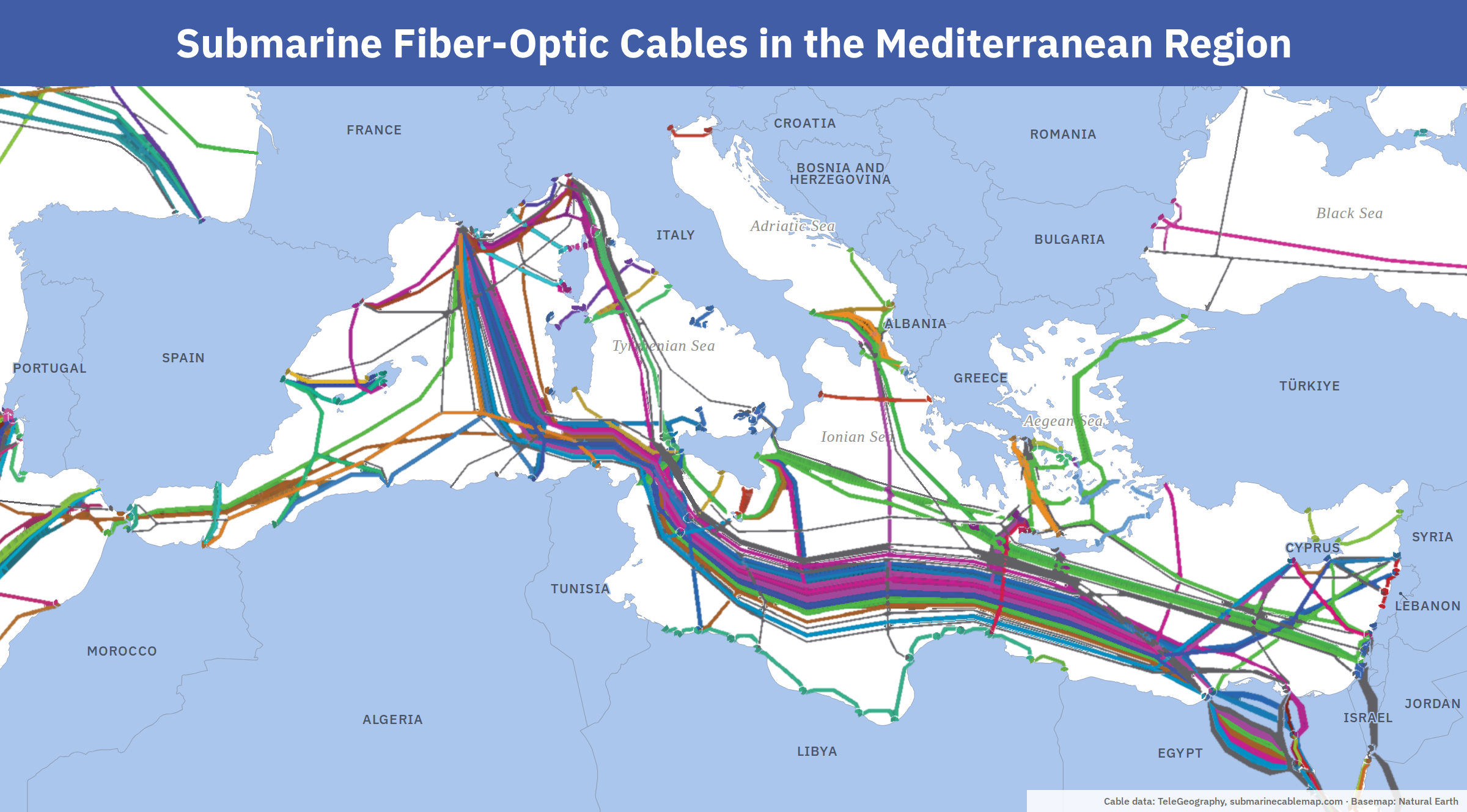
The Western Mediterranean faces a similar set of vulnerabilities — particularly to its role as Europe’s primary gateway for North African trade and energy imports — albeit mostly due to other risk drivers, including uncontrolled migration flows, sabotage, and efforts by outside powers to assert control over critical infrastructure. Maritime transport remains the main channel for trade across the globe, and the Mediterranean is one of the world’s busiest maritime spaces, supporting 20% of all global seaborne trade; more than 24% of all merchant vessels ply these waters annually.[5] The Strait of Gibraltar, linking the Atlantic and Mediterranean, is a critical chokepoint to such sea-based traffic, with the Spanish Algeciras and Moroccan Tanger Med port complexes serving as major logistics nodes on either side. Further east, additional key seaports, such as Valencia, in eastern Spain, and Marseille-Fos, in southern France, anchor important container, industrial, and energy supply chains. For the European Union, whose shipowners collectively control a substantial share of the global commercial fleet, keeping those corridors secure and open is a direct strategic and economic interest. Compared to the Eastern Mediterranean, the region’s western half has seen fewer hybrid attacks (i.e., covert or overt destabilizing activities, below the threshold of open armed conflict) outside of the cyber sphere; but it has not been immune.[6] In 2022, coordinated sabotage of undersea fiberoptic cable landing sites near Marseille degraded telecommunications services in France, an incident the country’s authorities described as “unprecedented.”[7]
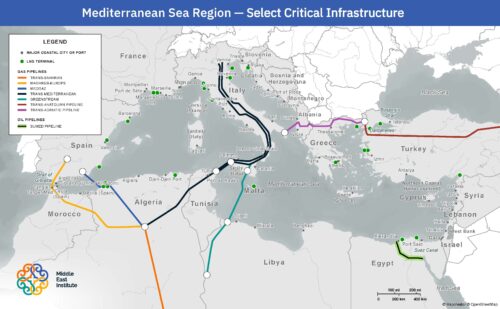
The actual locations of the identified cables are approximate. This graphic was produced by the Middle East Institute and modified with the assistance of AI.
The North Atlantic alliance recognizes the threat and has adopted several initiatives to help its members protect their critical infrastructure. In the Mediterranean basin itself, NATO annually conducts five to six focused naval missions under Operation Sea Guardian, which supports maritime situational awareness and can be employed to protect critical infrastructure if directed to do so by the North Atlantic Council, the alliance’s principal political decision-making body. NATO has also established the Maritime Center for Critical Undersea Infrastructure (CUI) as well as the CUI-Network, which aim to enhance coordination on safeguarding these assets; in 2025, the alliance explicitly expanded the latter’s work in the Mediterranean.[8] These maritime surveillance efforts remain episodic, however. Especially the most heavily utilized regional transit corridors and infrastructure networks need continuous monitoring, which could be accomplished, in part, through improved integration of allied naval surveillance, unmanned systems, commercial shipping data, and infrastructure operator activities.
For the United States, infrastructure throughout the wider Mediterranean region is crucial for maintaining transatlantic trade, deterring adversaries, and protecting the maritime arteries that support America’s military bases in Europe, Africa, and the Middle East. Washington maintains a significant regional naval presence in the form of the Sixth Fleet, headquartered in Naples, Italy, buttressed by a network of bases and installations from multiple US military services as well as NATO facilities arrayed around the basin. Nevertheless, the Mediterranean is no longer dominated by the kind of sustained American maritime posture seen during previous decades. European allies and NATO have been assuming greater day-to-day responsibility for maritime monitoring, infrastructure security, and regional vigilance, particularly since Russia’s invasion of Ukraine — but coordination and surveillance challenges remain.
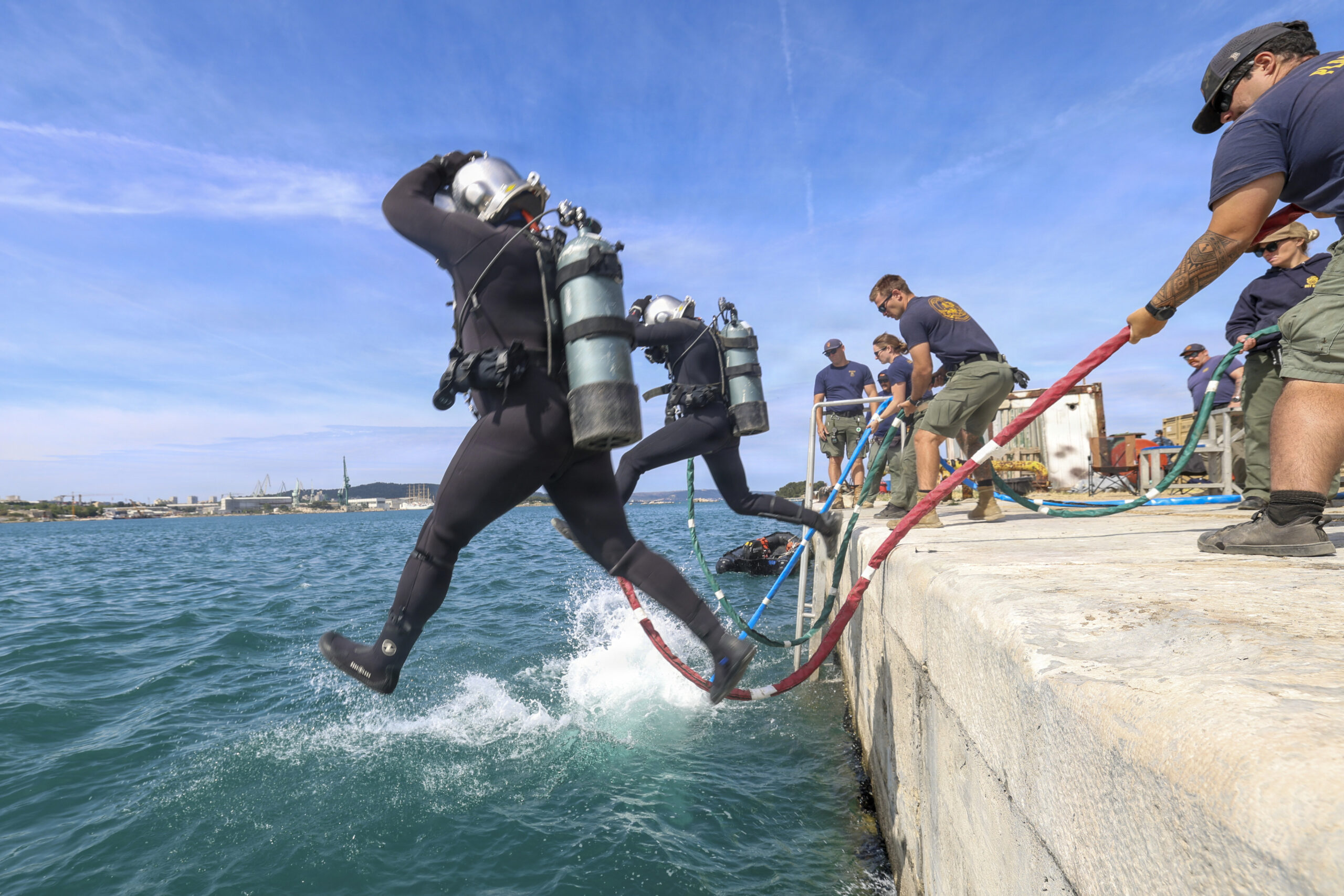
Photo above: US Navy Seabee divers front step into the water to conduct infrastructure repairs and assessments at the Port Brizine fuel terminal in Split, Croatia, May 5, 2026. Photo by US Navy Mass Communication Specialist 3rd Class Jackson Wanous.
Military bases on NATO’s southwestern flank, which include the Rota naval station and other key installations in Spain as well as the British facilities in Gibraltar, are crucial to securing the Atlantic-Mediterranean chokepoint. Although — or perhaps because — these bases and the string of littoral alliance installations further east underpin the region’s broader security architecture, they are also subject to attacks.[9] NATO members, including Croatia, Italy, Greece, and Spain, have faced a rising volume of cyberattacks on ports and other sensitive sites — Russia, China, and Iran are suspected in many if not most of these incidents.[10]
But alongside the growing threat of attacks on ports and other infrastructure, a more ever-present concern relates to rival external powers’ efforts to gain access to or outright control over strategic maritime assets, particularly along the North African coast. The broader Tanger Med industrial ecosystem in Morocco is emblematic of this trend, illustrating China’s growing commercial footprint in North Africa. Namely, the adjacent Mohammed VI Tanger Tech City, a Sino-Moroccan development partnership, has attracted a growing cluster of Chinese industrial investments, raising worries in the EU that the kingdom could become host to Chinese factories able to circumvent European trade restrictions and, potentially, locking Morocco into China’s advanced technology ecosystem.[11] Russia’s entrenchment in eastern Libyan ports further highlights the risk from an even more security-forward standpoint. Moscow has used access to those facilities and logistics networks, in breach of the United Nations arms embargo, to move weapons into the Sahel, gaining an adversarial position astride a critical EU trade and energy gateway.[12] The Libyan case is emblematic of how limited and inconsistent Western engagement can facilitate the consolidation of outside actors that have their own independent, countervailing, and potentially destabilizing objectives.
Freedom of Navigation Challenges
Freedom of navigation has been one of America’s most consistent foreign policy commitments, upheld across administrations for over two centuries, and treated as a foundational principle of the international order the US helped build after the end of World War II. From the Barbary Wars (1801-05 and 1815) to Operation Prosperity Guardian (2023), Washington has repeatedly put naval power behind the principle that commercial and military vessels must be able to move freely through international waters. This foundation makes current trends in the Mediterranean a national security concern for the US and a test of the commitment that has underpinned American credibility globally.
Though increasingly under pressure from multiple directions throughout the Mediterranean basin, FoN is particularly endangered in the eastern half. The Russo-Ukrainian war poignantly illustrated this fact. First, Russia’s sharply escalated aggression in the adjoining Black Sea region in early 2022 prompted Turkey to apply its rights under the 1936 Montreux Convention, which empowers Ankara to regulate traffic through the Turkish Straits (the Bosphorus and the Dardanelles).[13] As soon as the full-scale Russian invasion of Ukraine began in 2022, Turkey closed the straits to all foreign military ship traffic — including that of both of the belligerent parties but effectively only affecting Russia (since Ukraine has virtually no navy) — preventing them from entering the Black Sea or exiting into the Eastern Mediterranean, with the exception of warships returning to their home ports. Russia then compounded the disruption to FoN in the Black Sea by blockading Ukrainian seaports and attacking its maritime exports attempting to traverse the basin.
As much as 95% of Ukraine’s agricultural products had heretofore been transported by ship, so the Russian actions interrupted Mediterranean-bound grain flows to 400 million consumers in Asia, North Africa, and beyond, including crucial food deliveries destined for Egypt.[14] Ukraine has historically been one of the largest suppliers of wheat to the UN World Food Program (WFP), with 40% of its global wheat supplies sourced directly from Ukrainian farms before Russia’s escalation, the majority heading to Middle Eastern and African countries.[15] The resulting price spikes and shortages of grain in the summer of 2022 led to food insecurity across the Middle East. Support from NATO members to provide alternative export options for Ukrainian agricultural products and protection for the Black Sea-Mediterranean route eventually stabilized the situation. But the episode nonetheless underscored the vulnerability of supply chains crossing the Mediterranean and Middle East and North African regions. A more sustained US naval presence in the Eastern Mediterranean would improve surveillance and strengthen allied coordination, providing additional reassurances to commercial shippers needing to enter and exit the Black Sea as well as to their insurers.
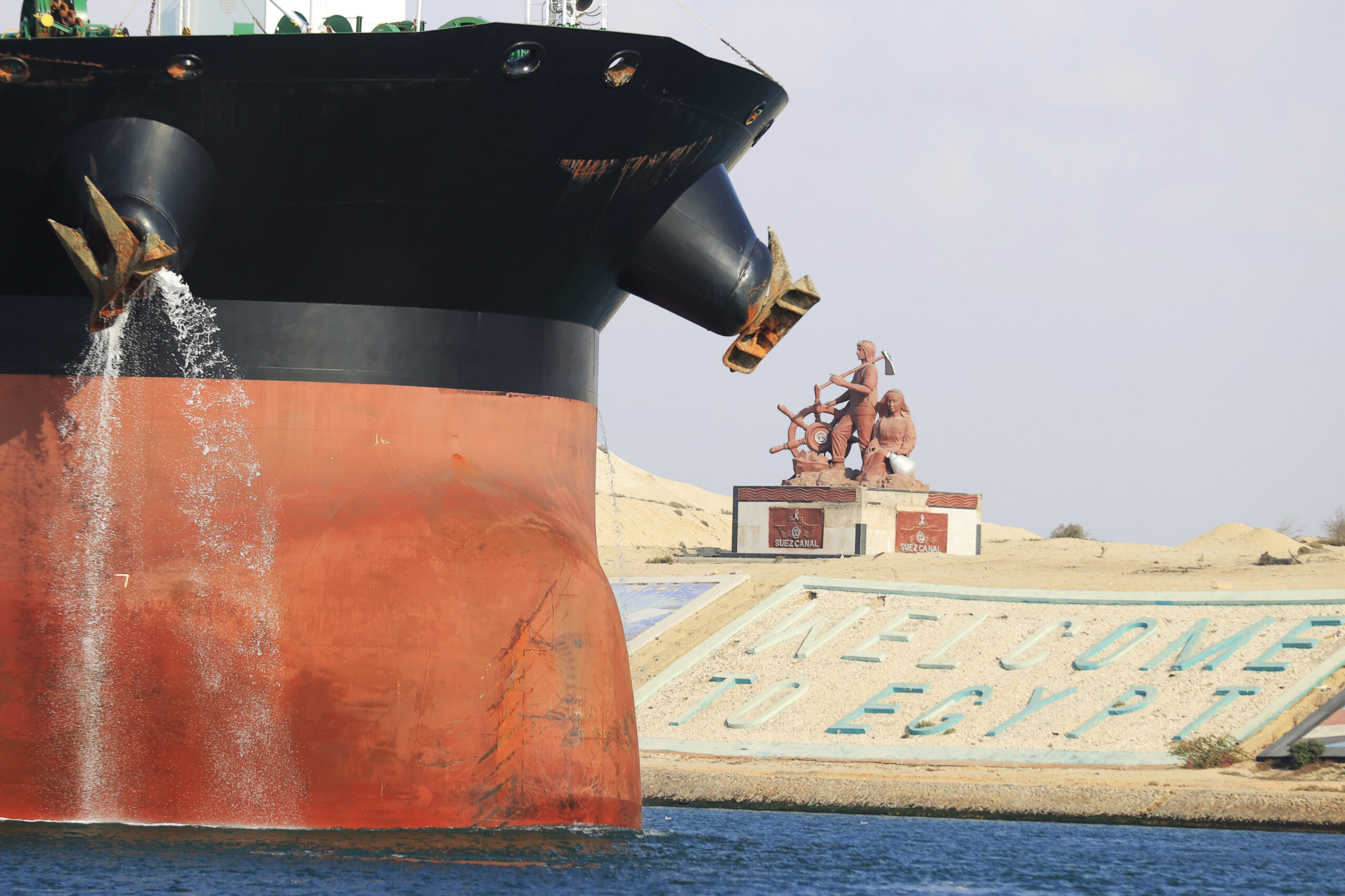
Photo above: A cargo vessel navigates the Suez Canal near the Egyptian city of Ismailia, December 29, 2023. Photo by Fareed Kotb/Anadolu via Getty Images.
To the southeast, attacks on commercial ships in the Red Sea by the Iran-backed Houthis in Yemen have also impinged on FoN and international trade into and out of the Mediterranean basin.[16] The disruption in Red Sea traffic contributed to a sharp decline in port calls and a quadrupling of shipping rates in the Mediterranean when the crisis began.[17] Though the Houthis framed their attacks as resistance to Israel, the brunt has been felt primarily by Western and Asian economies, since the Red Sea is the most direct maritime path connecting the two markets. Between October 2023 and 2025, the Houthis launched more than 530 attacks on ships passing through this critical transportation route, sinking or hijacking several vessels and significantly reducing the volume of shipping into the Eastern Mediterranean.[18] The threat has since become more serious, as the Houthis took control of Yemen’s western coastline and islands along the Bab al-Mandab strait, putting them in a position to threaten or close this critical chokepoint linking the Indian Ocean to the Red Sea and, through Suez, the Mediterranean.[19]
In December 2023, in response to the initial Houthi strikes on Red Sea shipping and to reassert FoN in the maritime corridor, the US formed Operation Prosperity Guardian in coalition with around 20 other countries, including the United Kingdom, Australia, and Singapore, all of which were directly affected by the disruption.[20] And a month later, Washington, with support mainly from London, spearheaded the offensive-centered Operation Poseidon Archer, carrying out 12 months of strikes on Houthi targets inside Yemen.[21] In parallel, the EU launched Operation Aspides in February 2024, a purely defensive mission designed to protect commercial vessels.[22] When President Donald Trump returned to office in 2025, his administration expanded the tempo and intensity of the US air campaign, rechristened Operation Rough Rider; it lasted roughly seven weeks, until early May 2025, when Oman brokered a cease-fire. The pause held until the Houthis reentered the conflict in support of Iran in March 2026, soon after the February 28 outbreak of the US-Israeli military action against Iran. This conflict has exacerbated preexisting international maritime pressures and broadly reshaped threat calculations across the region, with insurance rates rising by up to 1,000% for vessels operating in this area.[23]
Operations Poseidon Archer/Rough Rider and Aspides have all been reactive engagements, resulting in serious costs and limited gains. In the American case, the campaign required the short-notice redeployment of naval and air assets from other theaters, incurring direct military costs and diminished presence elsewhere and illustrating the tradeoffs involved when forces needed to respond to a crisis are committed to other missions. Europe’s Aspides faced a different constraint: assembled from a handful of multinational ships on short notice, it could protect individual civilian vessels but could not eliminate the source of the threat.
While only a small portion of US seaborne trade utilizes the Suez Canal or the Strait of Gibraltar, 30% of global container shipping transits these passages. And because the Red Sea and the Mediterranean form a single trade corridor linked by the Suez Canal, disruption at one end quickly leads to congestion and cost spikes that ripple through the entire global shipping sector. A sustained US role in the Eastern Mediterranean would help bolster the resilience of commercial maritime transit along this route. By anchoring naval coordination involving its European allies and Egypt, such a US-backed regional effort could better protect the Suez approaches and Mediterranean ports as well as reinforce the air- and missile-defense and surveillance links that support operations to blunt Houthi attacks.
Adversarial seizures of maritime chokepoints or threats to shipping routes can incur significant security and commercial harm. The 2026 US-Iran conflict has brought this point into sharper relief with Tehran’s forcible closure of the Strait of Hormuz and its Yemeni proxies’ analogous designs on the Bab al-Mandab. The Mediterranean is bottled up by three similar chokepoints — the Strait of Gibraltar, the Suez Canal, and the Turkish Straits — and potentially threatening Iran-linked activity is already present in the approaches to at least the latter two.
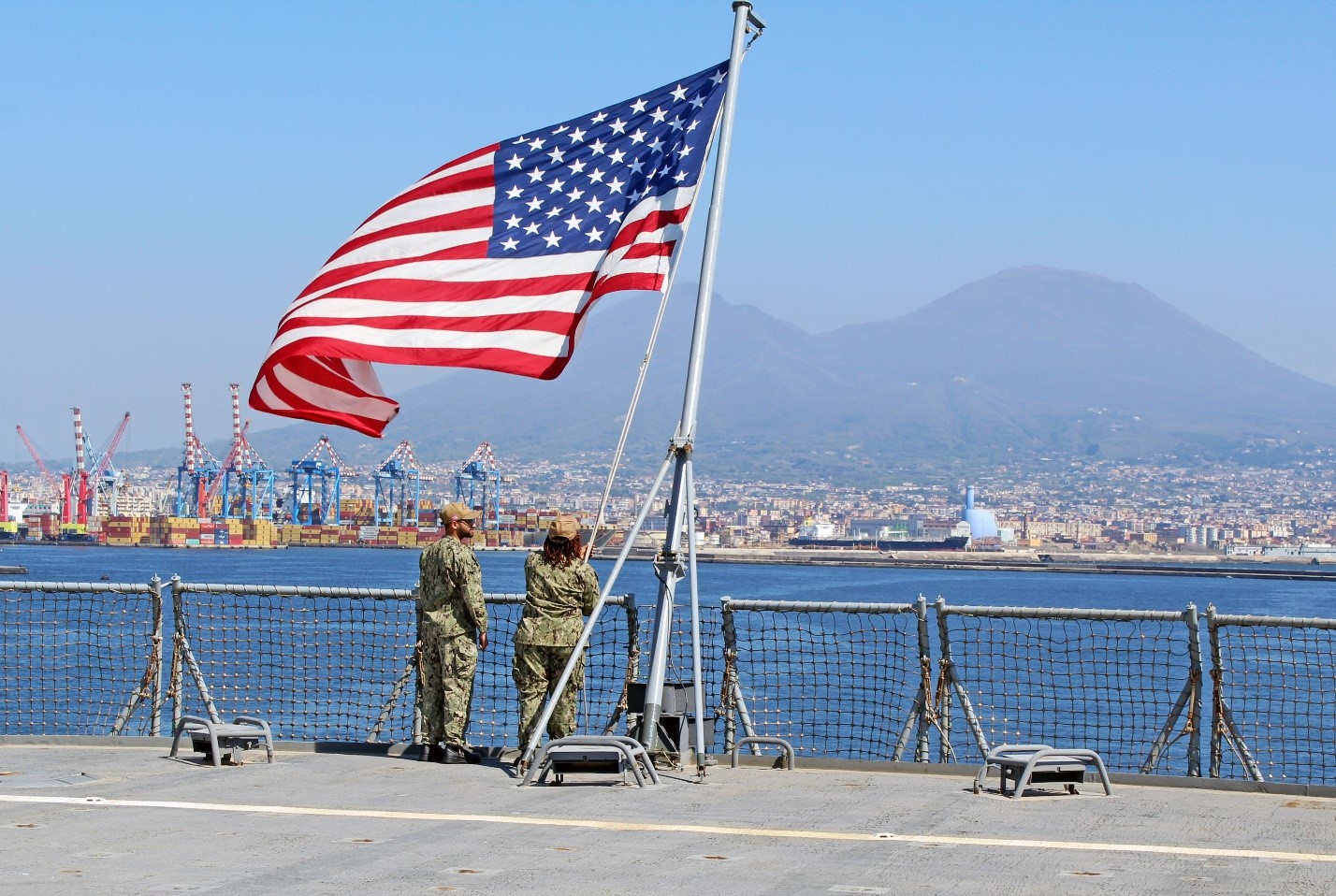
Photo above: The US Navy Sixth Fleet’s flagship, USS Mount Whitney, arrives in Naples, Italy, to participate in the 75th anniversary of the NATO alliance, April 7, 2024. Photo by US Navy Mass Communication Specialist 2nd Class Mario Coto.
Defending these corridors requires sustained presence, but the available baseline has changed. During the 2003 Iraq invasion, two US carrier strike groups operated in the Mediterranean at the same time.[24] Today the US’s continuous naval presence there has become much leaner, centered on a handful of destroyers dispersed across the basin: the Sixth Fleet is headquartered in Naples, its flagship is homeported in Gaeta, Italy, and six destroyers are based at the Spanish port of Rota.[25] As of early October 2026, that presence includes no carrier or amphibious group in the Mediterranean, and operations against Iran have pulled Rota’s destroyers eastward, leaving fewer ships for exercises with allies or to respond to the growing number of regional emergencies involving unilateral attempts to restrict free maritime passage.[26]
The Department of Defense’s own reports show the number of excessive offshore sovereignty claims, undermining FoN rights for international vessels, increased from 22 in fiscal year 2022 to 29 in 2023.[27] Four of these occurred in the Mediterranean and Adriatic seas.[28] While the Sixth Fleet retains the capability to respond to such incidents, it has fewer assets at its disposal than in periods of more consistent Mediterranean presence, and those forces are more often diverted to other operations.
Challenges to free maritime passage anywhere in the world undermine core US national interests. However, in the Mediterranean, unfettered access is critical to guarantee mobility for US naval forces between Europe, the Middle East and North Africa, and the Indo-Pacific via the Suez Canal. The Sixth Fleet’s Naples headquarters provides a logistical base from which to quickly mobilize to all of them. In 2011, the US, along with European and Arab allies, depended on unrestricted Mediterranean access to intervene in the Libya crisis.[29] In 2024, Operation Iron Shield, which helped protect Israel from Iranian missile attacks, hinged upon unrestricted access to and air control over the entire basin.[30] In recent years, however, this continued access has faced growing pressure from both physical threats and intra-regional geopolitical disputes. In the Aegean and Eastern Mediterranean, competing Greek and Turkish offshore claims, alongside a bilaterally negotiated Turkish-Libyan maritime delimitation agreement, risk creating diplomatic friction and complicating naval operations and infrastructure-protection missions. The Montreux Convention’s restrictions on warship transit through the Turkish Straits during the Russo-Ukrainian war further illustrate how geopolitical developments can constrain the movement of allied naval assets between the Mediterranean and Black Sea.
The value of maintaining FoN throughout the Mediterranean basin, of course, is not limited to war-time responses. In peacetime, the US and its allies rely on the same access to interdict illegal arms shipments, monitor hostile activities, and disrupt trafficking networks. Since 2015, for example, European allies have repeatedly intercepted illicit arms shipments heading to Libya.[31] Israeli coastal patrols, in turn, have spent a decade targeting or interdicting Iranian sanctions-busting oil and weapons shipments, including cruise missiles and drones moving through the same corridors.[32]
On the commercial front, even limited disruptions to freedom of navigation can translate quickly into economic losses and energy price spikes. The Red Sea crisis — to say nothing of the closure of the Strait of Hormuz — demonstrated this clearly. Supply chain delays caused by Houthi attacks affected US manufacturing, technology, and pharmaceutical sectors, while economic slowdowns in Europe reduced demand for American exports.[33] Moreover, the proliferation of low-cost attack drones, missiles, and cyberwarfare employed by both state and non-state actors have made these disruptions easier to carry out and harder to detect. As infrastructural vulnerabilities increase and responses become more reactive, they will undermine US force projection across multiple regions. To prevent that, the US will have to prioritize protecting critical infrastructure and safeguarding FoN throughout the wider Mediterranean.
Energy Security
The vulnerability of strategic energy infrastructure often has global economic implications. The apparent 2022 sabotage of the Russian-built Nord (North) Stream natural gas pipeline in the Baltic Sea was a reminder of how exposed such infrastructure can be, though the economic impact was minimal given the EU’s earlier push to cut back on Russian gas purchases. The repeated Iranian strikes on oil and gas facilities across the Gulf in 2026, on the other hand, have poignantly illustrated how energy supply disruptions can have truly worldwide effects.[34] The Mediterranean region — home to a dense web of energy infrastructure, including liquefied natural gas (LNG) terminals and submarine electricity transmission cables that ring or crisscross the basin — is thus particularly vulnerable to similar war-time targeting or hybrid attacks. But the threat environment is not limited to open warfare. The more routine and lingering nature of the threat to these assets, especially in the eastern part, is one of overlapping sovereign claims and legal wrangling over access to offshore natural resources.
Technological advances have increased the potential for offshore gas exploration in the Mediterranean, though environmental concerns about deep-sea offshore drilling have grown alongside improving capabilities.[35] Since Israel’s development of the Tamar natural gas field in 2009, the Eastern Mediterranean has emerged as a hotspot for offshore exploitation.[36] Israel’s Leviathan gas field came online in 2019, enabling export agreements with Jordan and Egypt. Another massive gas field, Aphrodite, located within the Cypriot exclusive economic zone (EEZ),[37] was discovered in 2011, and drilling for the first appraisal well began in mid-2023, with an eye to beginning production in 2027.[38] Egypt’s Zohr offshore natural gas field, discovered in 2015, promoted a vision of Egypt as a gas hub, although expanding domestic demand has undermined that ambition.[39] Since those heady early days, exploration has continued apace. The Italian company Eni discovered an estimated 2 trillion cubic feet of gas off Egypt’s coast in 2026.[40]
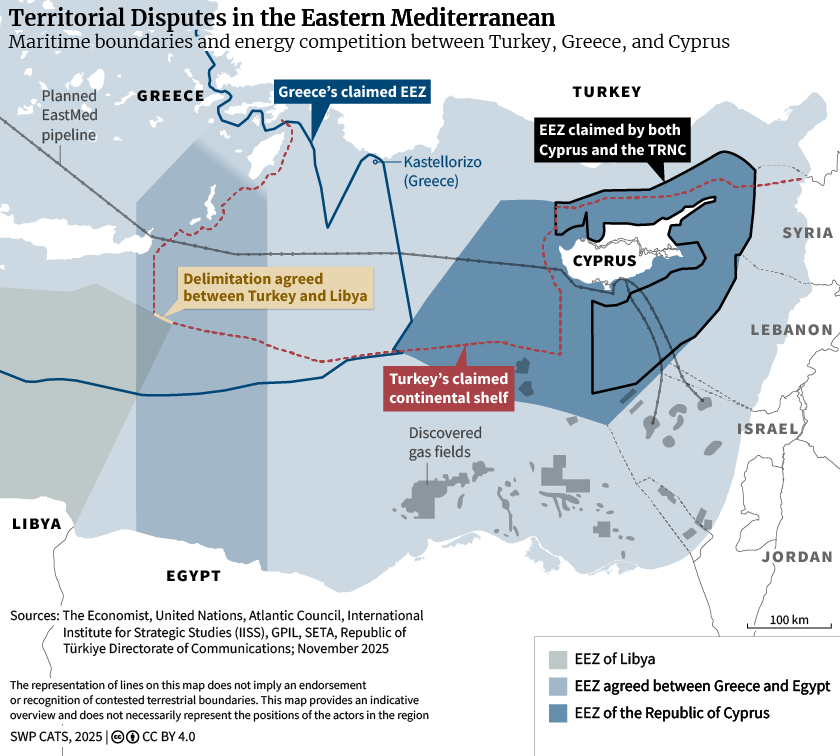
These discoveries have raised hopes of improved energy security for producers and potential regional consumers alike but have also heightened political tensions and disputes. The East Mediterranean Gas Forum (EMGF), announced in 2019 to provide a cooperative framework around the Leviathan, Aphrodite, and Zohr fields, conspicuously excluded Turkey and drew Ankara into a countermove.[41] In 2019, Turkey signed a controversial maritime boundary agreement with Libya’s United Nations-recognized Government of National Accord (GNA), asserting expansive Turkish claims that overlap with what Greece, Cyprus, and Egypt consider their EEZs, effectively creating a contested area between Crete and Libya.[42] The GNA received critical Turkish military support in return to defend against a 2019 assault by the opposing forces of General Khalifa Haftar. Turkey’s intervention in Libya certainly involved broader considerations, but the maritime agreement shows how energy politics can become intertwined with civil conflict. The maritime deal became both cause and consequence of Ankara’s deeper involvement.
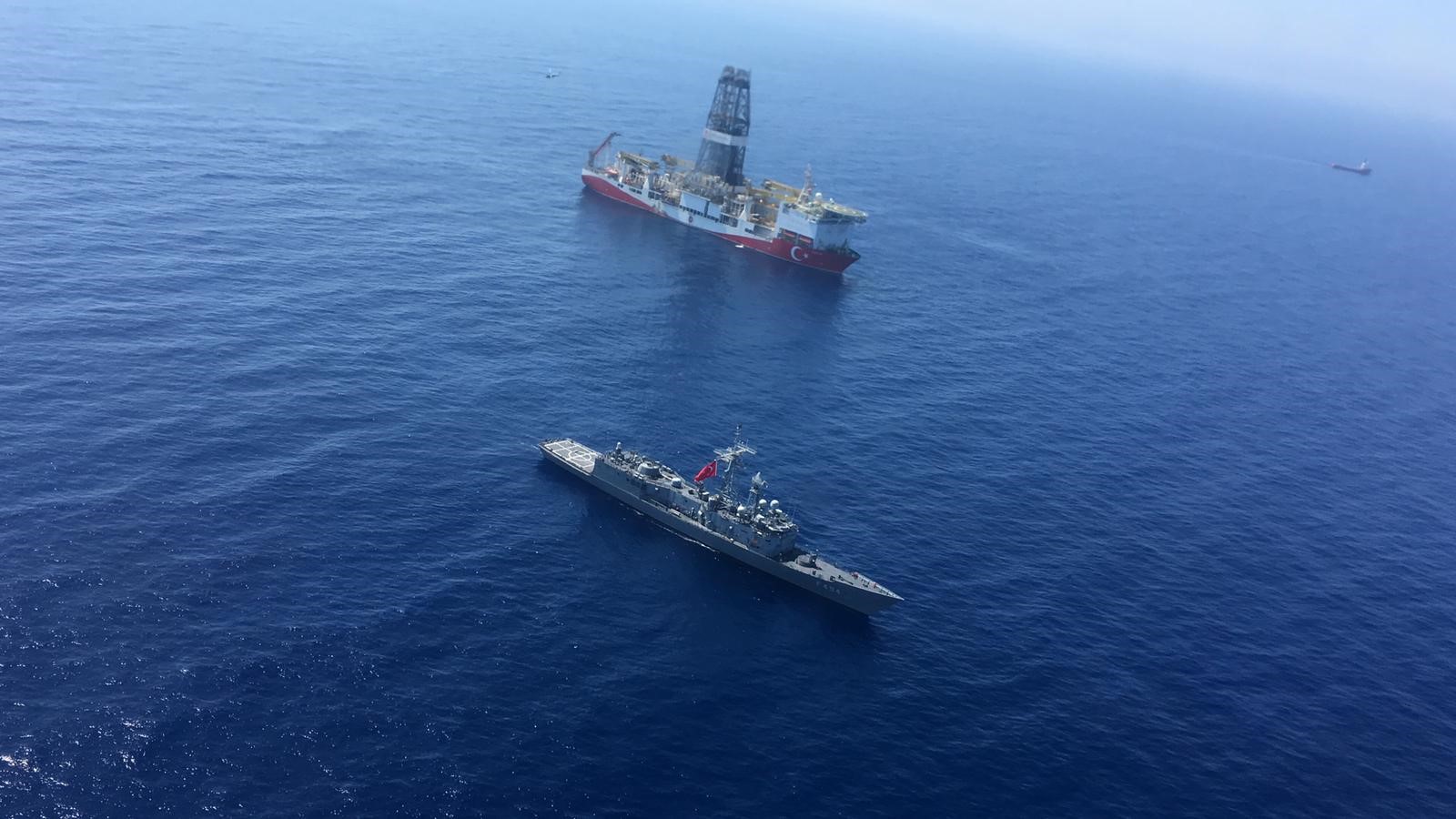
The regional tensions that followed the Turkish-Libyan offshore delimitation deal were not contained by diplomacy. In 2020, Turkey and Greece pursued competing offshore exploration programs that resulted in an armed standoff.[43] Turkey sent offshore gas exploration vessels accompanied by warships into waters Greece and Cyprus consider their EEZs. Athens scrambled its own navy, and Paris sent French warships in support of Nicosia. The dispute was never fully resolved, even with US diplomatic engagement.[44] Despite some forward momentum toward starting production, Cyprus’s Aphrodite field remains underdeveloped due to the broader Greek-Turkish divide over the island, Turkey’s exclusion from the EMGF, and EU sanctions against Turkish drilling.[45] So rather than a commercial and energy security success story, the aftermath of the discovery of the Aphrodite gas field has come to showcase how a legal conflict can begin to spiral out of control when sustained diplomatic engagement fails.
Photo above: Turkish-flagged drill ship Fatih carries out offshore drilling operations while escorted by a Turkish naval vessel west of Cyprus, July 11, 2019. Photo by Turkish National Defense Ministry/Handout/Anadolu Agency/Getty Images.
In contrast, the US-mediated Lebanon-Israel maritime boundary accord in 2022, fragile as it is, demonstrates that pragmatic resolutions in the Eastern Mediterranean are, in fact, possible.[46] One of the main goals of the agreement — and why Washington devoted significant diplomatic capital to achieve it — was to translate Israeli-Lebanese energy cooperation into a pathway toward deconfliction. After some initial optimism,[47] the deal’s prospects as a confidence-building mechanism were undermined by an uncertain outlook on gas exploration as well as regional instability following the October 7, 2023, Hamas attacks on Israel. Yet despite all of the open conflict and instability that has occurred since, the Israeli-Lebanese maritime boundary agreement itself remains in place.
In some ways, the concord was unique: more typically, the US has restrained its involvement in other such complex negotiations between Mediterranean littoral states, often leaving European partners to manage competing claims — even among NATO allies. The comparison, thus, demonstrates both the potential and limits of American diplomacy. On the one hand, US involvement alone cannot resolve the thick web of underlying political and sovereignty disputes that drive Eastern Mediterranean tensions; but on the other hand, targeted mediation can be valuable when maritime disputes threaten escalation, commercial developments, or relations among US allies.
The fragmented political landscape of the Eastern Mediterranean, undelimited maritime boundaries, and competing legal frameworks for dealing with competing claims, combined with the technical challenges inherent in deep-sea drilling and uncertain reserve quantities, suggest that the promised energy bonanza may be more elusive than initially anticipated. However, the main lesson remains that maritime boundary disputes, once triggered by energy discoveries, tend to grow into conflicts that outlast the economic incentives that created them. These disputes are transforming Eastern Mediterranean resources from a potential global energy solution into a source of regional instability and militarization that then impedes commercial activity. These are the geopolitical risks American and European companies are forced to navigate.
While the Eastern Mediterranean has dominated headlines with offshore gas discoveries and EEZ disputes, the Western Mediterranean plays a quieter but critical and generally far more stable role in assuring Europe’s energy security. LNG terminals in Spain and Italy handle significant North African gas imports, and renewable energy interconnectors are beginning to link Morocco’s solar energy to European grids. Algeria, meanwhile, remains a major and generally reliable hydrocarbon supplier to southern Europe.[48]
The region also presents genuine opportunities for greater cooperation, particularly on energy transition. North Africa’s abundant solar and wind capacity, combined with gas pipeline infrastructure — including the transcontinental Medgaz, Transmed, and Greenstream — create a credible pathway for supplying Europe with renewable energy and, potentially, green hydrogen. These sectors are drawing more foreign investment and negotiation. Real risks accompany such opportunities but should be viewed in proportion. Greater energy integration can create dependencies if countries become overly reliant on particular suppliers, export markets, or infrastructure corridors. More broadly, while instability in Maghreb countries is concentrated in Libya, other countries remain susceptible to governance and economic pressures that can shift political conditions quickly. Neither vulnerability is unique to the Western Mediterranean. Rather, they are a feature of energy dependency relationships anywhere. For Europe, the challenge is not to avoid cooperation but to pursue it in ways that build resilience on both sides, strengthen long-term energy security, and give partner countries a greater stake in their resulting infrastructure and investment.
Irregular Migration and Human Trafficking
The Mediterranean has emerged as one of the world’s most heavily utilized migration corridors; the sheer number of people trying to make these dangerous maritime crossings into Europe has led to multiple humanitarian crises over the past decade.[49] Three primary routes have developed. The Eastern Mediterranean route runs primarily through Turkey to Greece, Cyprus, and Bulgaria. The Central Mediterranean channel connects Libya and Tunisia to Italy and Malta. And finally, the passage in the Western Mediterranean links Morocco and Algeria to Spain, including the Canary Islands. While these routes are somewhat fluid, shifting based on enforcement patterns and bilateral agreements, the division provides a useful framework for tracking movement.
Over the past decade, Mediterranean migration flows have repeatedly adapted to enforcement pressure with traffic shifting among different routes in response to changing push and pull factors across the basin. The Eastern Mediterranean witnessed its sharpest spike in migrants after the outbreak of civil war in Syria in 2011, reaching nearly 885,400 detected crossings via Turkey into Greece, Cyprus, and Bulgaria in 2015; these individuals originated from 103 countries, but Syrians made up a quarter of the total.[50] Another 52,000 Syrians that year took the equally dangerous Central Mediterranean route through North Africa into Italy or Malta.[51]
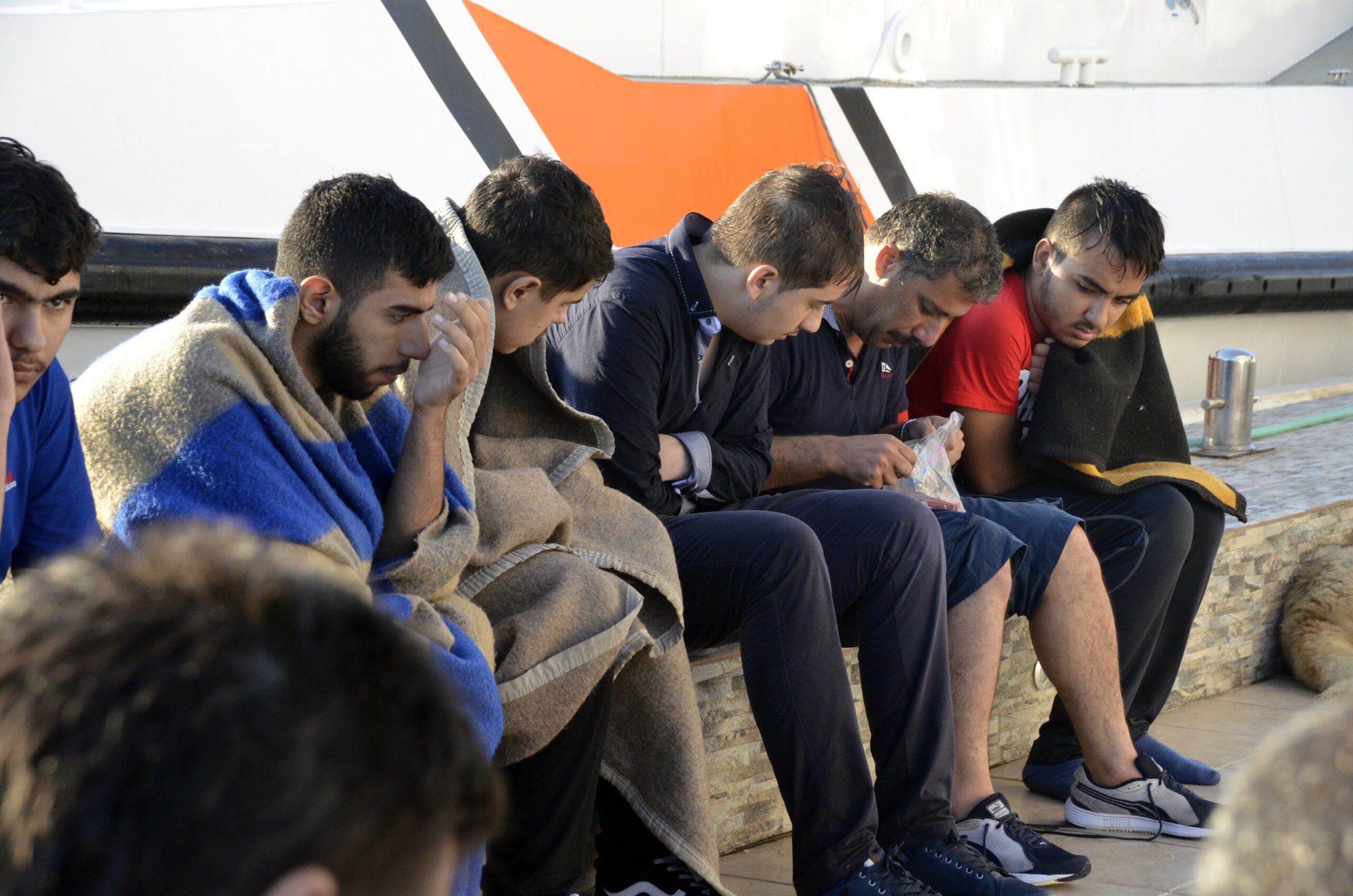
Photo above: Migrants who were trying to reach Greece’s Kos island are rescued by the Turkish coast guard after their boat sank off Turkey’s Aegean coast, August 18, 2015. Photo by Ali Balli/Anadolu Agency/Getty Images.
In response, the EU and Turkey reached a €6 billion deal whereby Brussels would pay the Turkish government to host refugees on its own soil and prevent them from entering Europe.[52] Following the implementation of the 2016 EU-Turkey deal, Eastern Mediterranean crossings dropped sharply, from hundreds of thousands annually to thousands. But as that route tightened, Central Mediterranean crossings surged. In 2016, Italy received over 181,000 migrants, a historic increase. A similar, albeit more problematic, EU-backed Italian migration deal with Libya’s Government of National Accord in 2017 aimed to curb Central Mediterranean flows.[53] The agreement cut the rate of arrivals to Italy in 2018. But simultaneously, Western Mediterranean crossings rose by 172%, with half making their way to Spain, which recorded 57,250 arrivals in 2018.[54]
The Mediterranean has continued to see persistent flows in subsequent years, with North African states serving as source, transit, and destination countries. The location of the Spanish exclaves Ceuta and Melilla, directly bordering Morocco, and the relatively short oversea crossing to mainland Spain have made the Western Mediterranean route attractive despite significant risks. This corridor recorded over 56,000 arrivals in 2023, with pressure on the Canary Islands, which saw a 154% increase compared to the previous year. Likewise, the Italian island of Lampedusa’s relative proximity to the Tunisian coast has increased Central Mediterranean journeys by migrants, witnessing 158,000 illegal crossings across the whole corridor, a 50% increase compared to the previous year.[55] By comparison, in 2023 the EU’s Border and Coast Guard Agency (Frontex) registered 60,000 crossings via the Eastern Mediterranean route, with mainly Syrians, Afghans, and Palestinians making the attempts.
Receiving countries in Europe have struggled with multiple pressures as a result. Politically, migration that appears uncontrollable fuels the rise of far-right parties and populist leaders across Europe, many of whom oppose EU integration and NATO’s role on the continent and view Russia’s expansionism uncritically. In terms of security, sustained pressure on border and asylum systems can create enforcement and information gaps that trafficking and smuggling networks exploit. Processing backlogs can also impede timely identification, security screening, and appropriate processing of new arrivals.[56]
Economically, southern European states often bear the costs of staging reception center facilities, processing arrivals, and providing social services, which stress local budgets. The budget of Frontex, which grew from €143 million in 2015 to over €1 billion, has partially offset some of these costs through operational support and grants. In 2023, for instance, Italy received €39 million in Frontex grants, while its interior ministry reported migration reception costs of about €1.7 billion annually.[57] At the same time, transit countries receive separate EU neighborhood funds for border management capacity, though the amounts and conditions of these deals and packages have been consistently contested.
For migrants themselves the humanitarian toll remains severe. According to the International Organization for Migration’s (IOM) Missing Migrants Project, more than 3,100 migrants died or went missing across all three Mediterranean corridors in 2023.[58] Most of those fatalities were along the Central Mediterranean route. These figures are widely considered underestimates, as many incidents go undetected and unreported. In Libya, for example, sub-Saharan migrants have faced systemic abuse and exploitation. Mass graves, torture, and extortion have been widely documented as recently as February 2025.[59] Armed militias back traffickers who reportedly leverage EU support to solidify their influence and profit from migration control while being complicit in serious human rights violations. Human rights groups have repeatedly criticized the EU’s migration deal with Libyan coast guard forces, in July 2025 warning that funding meant to reduce migration has frequently been diverted or misused, and in some cases used to avoid providing legal protections and perpetuate abusive detention.[60] Preliminary 2026 data suggests that arrivals have fallen: IOM recorded 89,600 arrivals as of October 19. Yet the humanitarian toll remains severe, with nearly 2,500 people recorded dead or missing so far, more than 1,000 of them on the Central Mediterranean route.[61] These patterns show how migration policy can be used by local networks for political and financial gain, often at the expense of meaningful protection for migrants.
Meanwhile, Moscow has sought to weaponize migration to exacerbate the pressures on European countries, indirectly presenting a serious challenge to US interests.[62] Russia and its ally Belarus have deliberately instrumentalized migration along the EU’s eastern land borders. Russia’s expanding military presence in Libya and the Sahel has raised concerns among European officials that Moscow could exploit Mediterranean migration routes in a similar manner. Assessments by the European Parliament and EU member state intelligence agencies warn that Russia-aligned networks, particularly in Libya and previously in Syria and Turkey, facilitated unchecked migration into Europe to overload border systems, stress alliance cohesion, and fuel far-right political movements that oppose Euro-Atlantic institutions.[63] Moscow’s ultimate goal is to undermine intra-European and transatlantic ties. This and other hybrid warfare activities require responses beyond simple border security from European allies. Where such activity intersects directly with Russian hybrid operations and NATO security, targeted US intelligence and security cooperation can complement European border and law enforcement responses.
Militarization and Great Power Rivalry
The United States’ shrinking regional footprint notwithstanding, the Mediterranean has become increasingly militarized over the past decade, with more naval exercises and armed buildup by littoral as well as external states. Illustrative of the latter trend, China, Russia, and Iran have been expanding or routinizing their military presence in and around this basin — part of their broader participation in intensifying great power competition on the global stage. The eastern half of the Mediterranean has seen the most concentrated activity from these rivals to the US and Europe. In the western half, the regional military buildup has predominantly been in the form of NATO’s enhanced southern flank operations and North African military modernization programs.
China has conducted three notable joint military exercises with Russia in the Mediterranean, beginning in 2015 with relatively small-scale naval drills designed, in part, to highlight mutual strategic interests in the region.[64] Those exercises have since grown in ambition. In 2017, Chinese warships conducted a series of live-fire drills in the Mediterranean before stopping in the port of Piraeus, Greece (where the Chinese state-owned enterprise COSCO holds a controlling stake in the Piraeus Port Authority), en route to join Russian naval vessels for maneuvers in the Baltic Sea. Through the port call China sought to display both its naval reach and commercial leverage.[65]
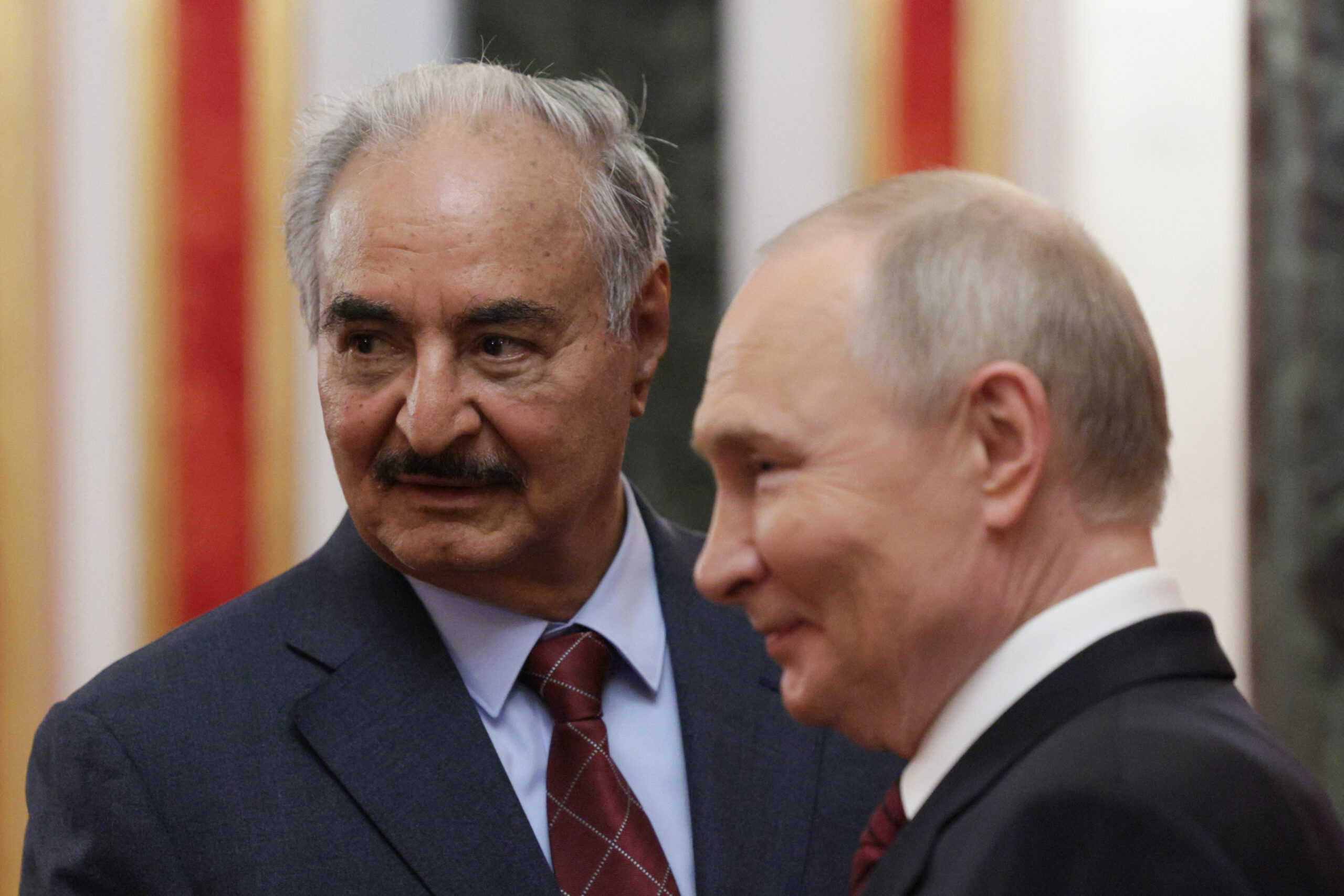
Russia’s intervention in Syria beginning in 2015 created an opportunity to expand its network of Mediterranean bases — namely, the Tartus naval logistics facility and the Hmeimim Airbase — from which it could project power into Libya and further into the Sahel.[66] This later expansion coincided with a period of reduced US attention in the Mediterranean and complicated the operating environment for NATO.[67] A more consistent American role might not necessarily have prevented this Russian presence, but greater surveillance of Russian movements, allied coordination, and sustained attention would have improved Western awareness of and responses to Moscow’s development of logistics networks in the region. Although the fall of Bashar al-Assad in December 2024 disrupted Moscow’s position and ended the certainty of its basing arrangements in Syria, Russia has since negotiated a reduced presence at Tartus and Hmeimim with the new leadership in Damascus.[68] Meanwhile, the Kremlin has strengthened its reliance on Libya’s air bases, ports, and overland corridors to sustain operations across Africa. Its influence networks, built through Russian military advisors and personnel from the paramilitary Wagner Group — now reorganized largely under the state-controlled Africa Corps — therefore remain a security concern for NATO and the US.[69]
Photo above: Russian President Vladimir Putin meets with Libyan strongman Khalifa Hifter, Moscow, May 10, 2025. Photo by Ali Balli/Anadolu Agency/Getty Images.
Iran, likewise, expanded its maritime presence in the wider Mediterranean after Syria’s civil war began in 2011, deploying its naval forces to bolster the Assad regime and exert regional power.[70] Until Assad’s forced departure, Tehran’s support for the Axis of Resistance coalesced around the Eastern Mediterranean, using Syria as a corridor for supplying Hamas and Hizballah.[71] The toppling of the Assad regime, Israel’s wars against Iranian proxies across the Middle East, and the 2025 and 2026 US interventions against Iran have dealt major blows to Tehran’s regional posture, but its underlying willingness to continue to compete for influence in the basin continues.[72]
NATO has responded to this militarization on its doorstep by rival powers through increased naval patrols, expanded exercises involving Spain, France, and Italy, and strengthened security partnerships with Morocco and other North African partners.[73] But the transatlantic alliance’s response has been mostly reactive and incremental rather than strategic: it has focused on managing immediate threats rather than establishing a sustained posture capable of deterring rival military expansion, monitoring adversarial logistics networks, and protecting critical maritime infrastructure across the basin.
A more strategic approach would align naval deployments, intelligence sharing, joint exercises, and infrastructure protection within a long-term Mediterranean security framework that addresses threats across both its eastern and western halves. The US should play a central role in this effort by maintaining a more consistent naval presence, including the periodic deployment of carrier or amphibious groups when operationally feasible; strengthening maritime surveillance and intelligence sharing with European and North African partners; and coordinating allied efforts to monitor Russian military logistics through Syria and Libya, as well as Chinese port access and expanding regional influence. Such engagement would help deter coercive behavior by outside actors, improve response times during crises, and prevent adversaries from exploiting gaps between allied areas of responsibility. These steps would at least partially reverse the consequences of the progressive decline in US military availability for Mediterranean operations, which had left European allies — themselves increasingly prioritizing NATO’s eastern flank — carrying a growing share of the burden.
The Western Mediterranean has also seen something akin to an arms race unfold among North African states, punctuated by their conscious decisions to seek out a wider selection of global suppliers. Algeria, long one of Russia’s largest weapons purchasers, has been diversifying its weapons stocks, including major acquisitions of Type 056 corvettes from China and expanding domestic shipbuilding capacities.[74] This modernization corresponds with, and potentially responds to, Morocco’s military upgrades, such as its landmark 2019 deal with the US to purchase 25 F-16C/D Block 72 multirole fighters and upgrade 23 Block 52 jets to the F-16V configuration in a package worth around $4.8 billion.[75] Moreover, Turkey has emerged as a drone supplier to both Morocco and Algeria, further intensifying the arms race between the two North African rivals.[76] In 2025, Morocco received its first Bayraktar Akinci combat drones, and Algeria sought to increase its unmanned aerial systems inventory by acquiring twin-engine ANKA-S systems from Turkish Aerospace Industries.[77]
In the Eastern Mediterranean, meanwhile, Egypt has pursued an extensive naval and air modernization strategy that includes acquisitions of Italian FREMM frigates, French Rafales, German Type 209 submarines, and expanded maritime infrastructure.[78] Turkey has also featured as part of Egypt’s military buildup with a $350 million deal covering drones, air-defense systems, and ammunition production. Libya, in contrast, remains fragmented between competing forces backed by different external powers — Russia, Turkey, the United Arab Emirates, Egypt, and, to a lesser extent, France and Italy — intensifying militarization as the country’s adversarial factions acquire increasingly sophisticated weapons, military equipment, and logistical support from foreign sponsors despite the UN arms embargo.[79]
The implications of these regional buildups are better read through what the acquisitions signal than what they immediately deliver. The Algerian-Moroccan arms dynamic reflects deteriorating bilateral relations around the Western Sahara dispute and geopolitical hedging;[80] the atmosphere of mutual mistrust and competing regional ambitions raises the risk of miscalculation. Egypt’s extensive naval expansion, on the other hand, goes beyond what would be needed to protect its Suez Canal or offshore energy interests, thus signaling Cairo’s apparent determination to assert itself as a regional power. In turn, external powers like China and Russia, as well as some regional neighbors like Turkey, gain influence through these arms sales and military partnerships, which deepen dependencies and create new alignment patterns that incrementally challenge NATO’s security along its southern flank.
Organized Crime, Illicit Trafficking, and Sanctions Evasion
Illicit trafficking of arms and narcotics is a growing maritime security challenge across the Mediterranean. Criminal and trafficking networks are becoming more sophisticated, and many have developed links to state and quasi-state actors using criminality to generate revenues and influence international affairs. The corridors important for global commerce and military operations are precisely the same ones used for illicit trafficking — Spain and Italy are the major Mediterranean entry points for illegal goods heading to Europe, while Turkey serves as a transit hub between Asia and Europe. This makes governance of those spaces a security concern. Counter-trafficking efforts in the Mediterranean are led primarily by EU member states and European agencies such as Europol, supported by Frontex, with US involvement limited to intelligence sharing.
The Western Mediterranean faces distinct trafficking challenges because of its proximity to major drug production areas. Morocco is a leading cannabis resin producer, with trafficking routes extending into European markets.[81] Spain’s extensive coastline and the narrowness of the Strait of Gibraltar create numerous entry points not only for Moroccan cannabis but also South American cocaine arriving via West African transit countries. Organized crime networks in the Western Mediterranean have adapted to changing enforcement patterns, with Spanish and Italian authorities reporting increased cooperation between North African trafficking organizations and European criminal groups. The Spanish exclaves Ceuta and Melilla on the Moroccan coast are particularly vulnerable and create an added challenge for border security and anti-trafficking efforts.
These dynamics have worsened in the context of Russia’s full-scale war against Ukraine, as the Kremlin continues trying to weaponize migration flows against Western states and organized crime becomes more intertwined with both these efforts and Moscow’s sanctions evasion schemes involving weapons, “dual-use” electronic components, fuels, money laundering, and the like. Russian firms have notably been able to exploit loose regulatory oversight in Turkey to smuggle sanctioned goods, including weapons-grade components, into and out of Russia.[82] In Cyprus, Russian mafia groups have long played a key role in helping Russian oligarchs evade taxes at home by subversively channeling their profits from embezzled state assets into the Eastern Mediterranean island’s banking sector. And especially since 2022, those same networks have facilitated gray zone transactions involving the Russian state and intelligence services.[83] People-smugglers have been found recruiting Russian crews for migrant crossings, while Russian mercenaries embedded into the Africa Corps in Libya attempt to control migration routes.[84]
From the US perspective, Mediterranean trafficking is a secondary concern in the sense that it does not flow directly toward US shores. But the real stakes are that illicit networks fund terrorist organizations that threaten the interests of the US and its partners. Moreover, the same networks that move narcotics move weapons and people. Russian sanctions evasion, which overlaps with organized crime networks, in turn, not only undermines US foreign policy tools but also erodes the broader international frameworks on which American and EU strategies depend.
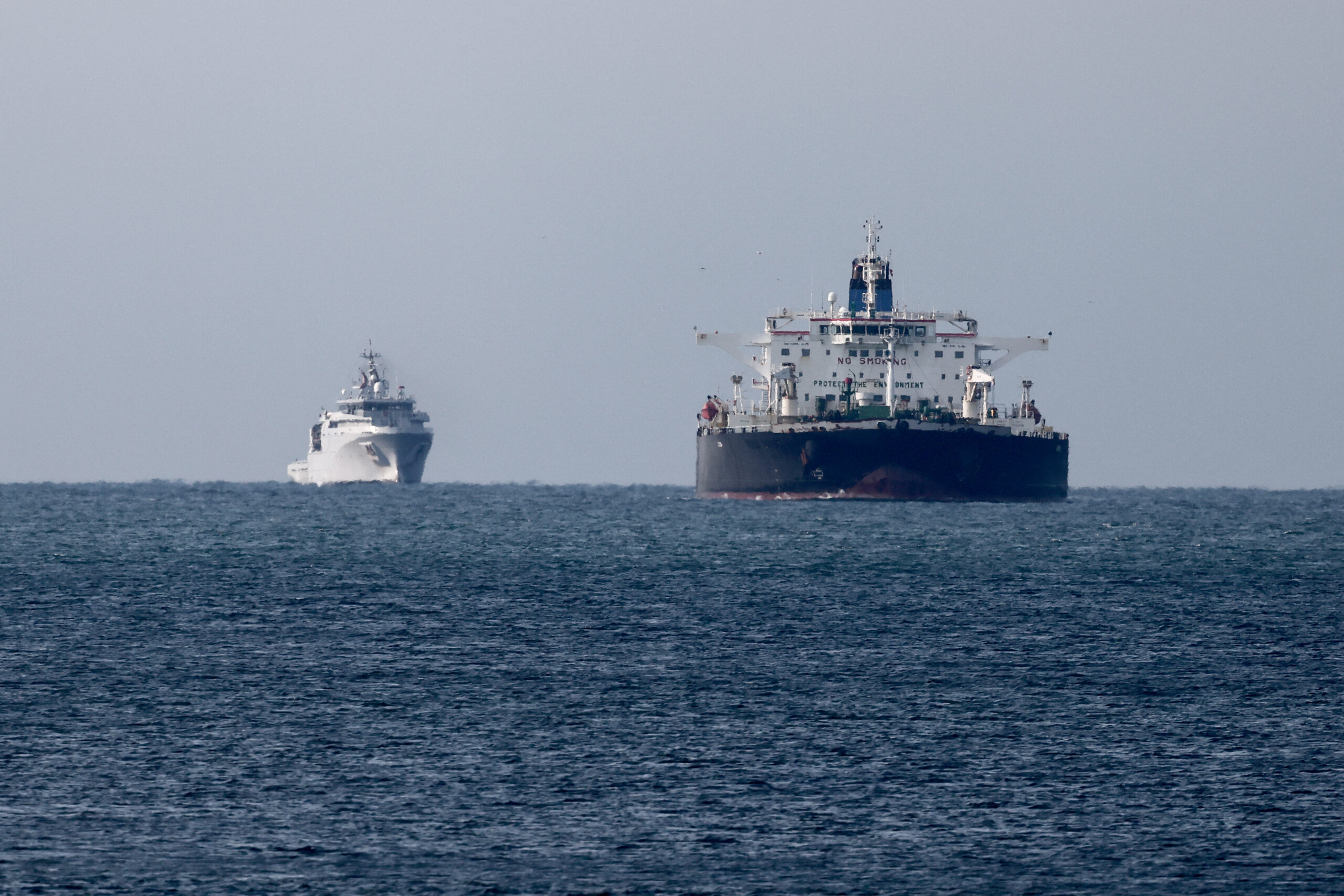
A related phenomenon — and one with a tangible impact on international energy markets — is the presence of Russia’s and Iran’s so-called “shadow” oil tanker fleets,[85] whose vessels regularly traverse Mediterranean maritime corridors throughout the basin on their way to various global destinations. Iran advanced and expanded the model after 2018 — when the US withdrew from the 2015 Iran nuclear deal, or Joint Comprehensive Plan of Action, and reimposed sanctions — building a parallel network of oil transit vessels, formed of mostly old, uninsured ships operating outside regulatory frameworks to hide cargo origins, evade price caps, and bypass safety requirements. Thanks to its shadow fleet, Iran’s heavily energy export-dependent economy managed to survive years of increasingly punishing international sanctions. Russia adopted the model at scale beginning in 2022, in response to sharp international sanctions passed to condemn its full-scale invasion of Ukraine. Sanctioned crude now represents an estimated 18% of global tanker capacity, with Russia and Iran the primary beneficiaries and China the principal buyer.[86]
Photo above: Oil tanker Deyna, suspected of belonging to Russia’s shadow fleet, is surveilled by the French Navy near the port of Marseille-Fos, March 23, 2026. Photo by Thibaud MORITZ/AFP via Getty Images.
For Mediterranean maritime security, the implications are direct and illustrative of how sanctions pressures have generated new maritime risk. Shadow fleet networks intersect with illicit finance channels through which Iranian proxy groups, including Hizballah and the Houthis, historically have been funded.[87] These maritime gray zones also overlap with traditional criminal networks: the US Treasury sanctioned a Maltese-Libyan ring that moved Libyan fuel to Malta and Italy under falsified certificates, an operation that investigative reporting linked to Sicilian Cosa Nostra figures.[88] Over the past few years, “dark fleet” tankers[89] have been tracked deactivating their transponders off eastern Libya and at Hurd’s Bank near Malta to move diesel, possibly of Russian origin, into European markets.[90]
These channels have been poorly monitored and difficult to interdict. Last March, France intercepted two Russian oil tankers that it said were linked to the Russian shadow fleet.[91] European naval forces operating under EUNAVFOR MED Irini[92] have actively boarded Russia-linked shadow fleet vessels in the Mediterranean to perform flag-verification inspections; the mission lacks the authority to detain ships suspected of violating sanctions, however.[93] In the absence of a sustained US forward presence resolutely backing regional allied naval capabilities, all such measures remain reactive and, thus, unlikely to resolve the problem.
A sustained US forward presence is necessary to turn one-off interdictions into a standing capability. Optimally, it would pair persistent surveillance of transponder-dark vessels with intelligence sharing and boarding support for EU and allied naval operations like Irini. That combination could raise the risk of detection for shadow fleet operators and the criminal and proxy networks that rely on them, thus helping protect the ports, tankers, and offshore infrastructure these vessels now threaten.
The physical risks are quite real, not only due to these oil carriers’ aging condition, lack of maintenance, and absence of insurance, which create ecological hazards,[94] but also because of the shadow fleets’ role in inviting a spillover of neighboring conflicts. In 2025 alone, three tankers suffered explosions off the coasts of Italy, Turkey, and Libya. Two of the three incidents reportedly involved limpet mines attached to their hulls; the perpetrators remain unidentified.[95] The third, involving the Russian shadow fleet oil tanker Qendil, was attributed to Ukraine, which launched a drone attack against the vessel as it passed off the coast of Libya in December 2025.[96] A notable factor that ties all three incidents together is that each of these ships had recently called into Russian ports, thus suggesting all were part of Russia’s extensive shadow oil fleet.
Legitimate vessels have also come under attack in the Mediterranean basin as a consequence of the wars in the Middle East. As noted above, last July, two ships, including a US-owned gas storage vessel, caught fire because of a drone strike on Egypt’s Damietta port.[97] The following September, the US Central Intelligence Agency (CIA) uncovered a suspected Russian plan to launch drone attacks from concealed commercial shadow fleet vessels in the Mediterranean.[98] These incidents and warnings demonstrate the increased vulnerability of critical infrastructure of allies and partners across the region.
International Cooperation and Fragmentation Challenges
In 2024, NATO adopted its first Southern Action Plan at the Washington Summit.[99] It was a belated but nonetheless important recognition that the Mediterranean requires alliance attention. The plan established a special representative for the southern neighborhood and called for stronger political dialogue with the region. But this initiative remains without adequate resources and lacks strong US backing. Amid interconnected and accelerating threats from this region, a framework focused solely on political dialogue and relying on modest institutional tweaks falls short of what the moment demands.
Although the North Atlantic Alliance acknowledges the level of concern, coordination on a response remains an issue. Managing the Mediterranean region’s multipronged and interlinked threats requires joint planning and execution across multiple domains, yet existing international cooperation mechanisms are fragmented in ways that systematically underperform. The aforementioned 2020 Greek-Turkish standoff over offshore drilling illustrates the problem.[100] When Turkey sent a seismic survey vessel with a military escort into disputed waters off the coast of Greece, the responses revealed incoherence. NATO attempted diplomacy between its two member states; the EU threatened sanctions against Turkey (even as some EU member states were opposed); France deployed naval assets in support of Greece, outside of the NATO framework; and the US remained largely disengaged. No actor seemed to possess the ability to unify these responses.
Routine Mediterranean operations suffer from similar fragmentation. Mediterranean security operations often involve multiple institutional actors with distinct mandates. National coast guard authorities and Frontex handle external border surveillance, while Europol and national law enforcement agencies focus on cross-border crime; NATO leads maritime security cooperation efforts such as Operation Sea Guardian; and the European Union’s EUNAVFOR MED Irini (the successor to Operation Sophia) addresses arms smuggling. The European Court of Auditors has found that information exchange frameworks and situational awareness among EU border and security organizations are lacking, preventing a full understanding of the operational picture on migration, trafficking, and security.[101] Furthermore, EU mechanisms frequently lack the military capability and political authority to act decisively, while NATO’s military focus means it operates in parallel rather than integrated with civilian agencies managing migration, energy cooperation, and law enforcement. NATO Maritime Command and the EU’s Operation Irini already cooperate through SHADE MED, a forum for information-sharing and deconfliction; however, this does not constitute an integrated operational command or enforcement mechanism.
Bilateral arrangements have filled specific gaps where multilateral frameworks have not been suitable or possible. The EU-Turkish migration deal demonstrated how targeted agreements can manage crisis-level population flows. US mediation showed the potential for “cooperation without recognition” when it helped mediate an agreement on the Lebanese-Israeli maritime boundary dispute. France’s bilateral defense partnerships with Greece and regional North African allies provide additional security layers. But these and similar arrangements are ad hoc by nature and sometimes conflict with broader NATO or EU strategies, compounding the incoherence.
The deeper problem is geographic as much as it is institutional. Eastern Mediterranean frameworks rarely include Western Mediterranean actors. North African states are often absent from Eastern Mediterranean security or energy initiatives, even as their maritime security concerns and energy exports directly affect European stability. Frameworks focused on North Africa, such as the 5+5 Dialogue or EU migration pacts with Morocco, Tunisia, and Libya, rarely include Eastern Mediterranean partners. This fragmented geography means that states with overlapping maritime interests, like Turkey, Greece, Egypt, Algeria, and Italy, among others, often operate in separate arenas with sometimes contradictory mandates and limited interaction. The result is that interconnected threats are addressed in disconnected initiatives.
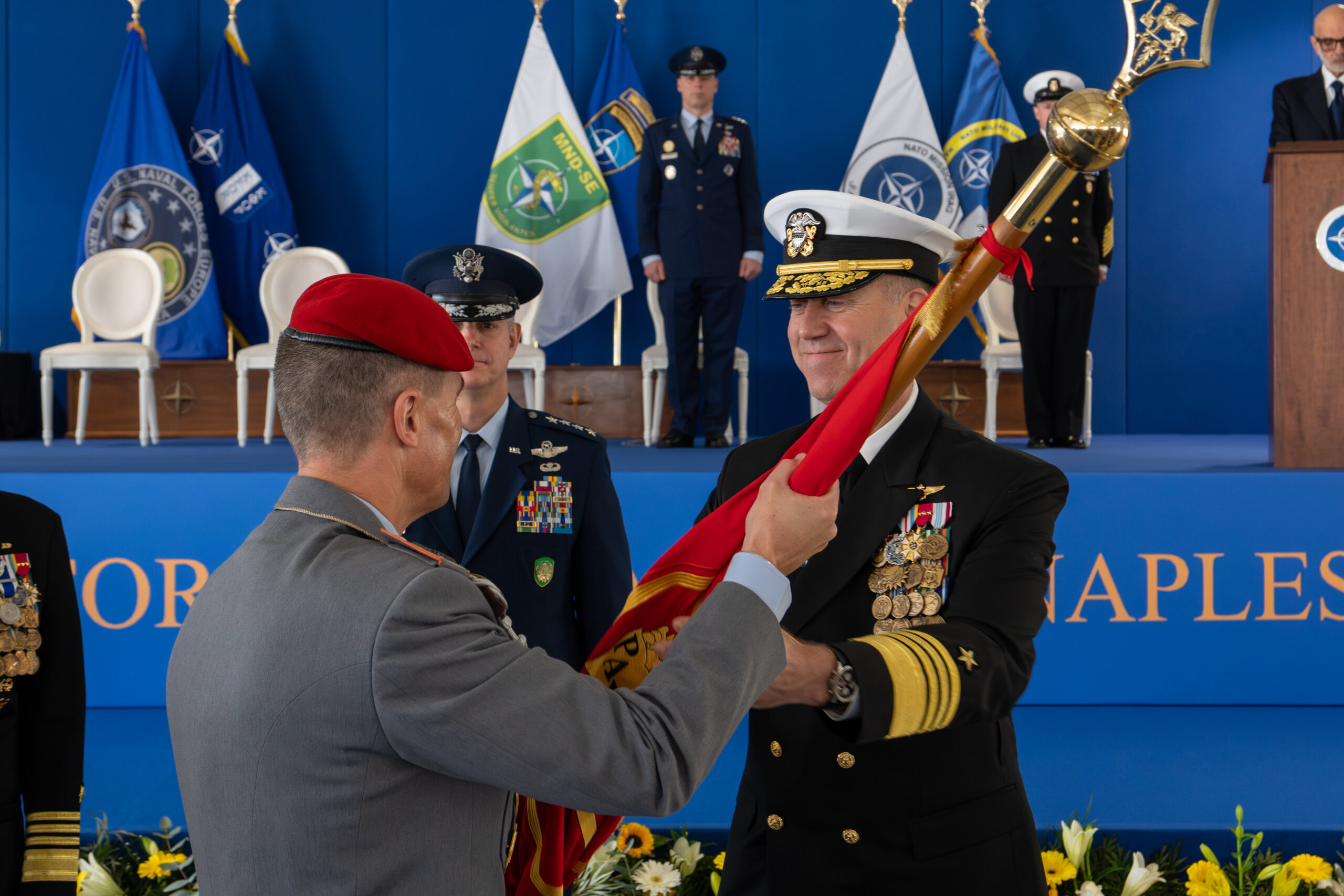
Photo above: Admiral George M. Wikoff, Commander of US Naval Forces Europe and Africa (NAVEUR/NAVAF), is presented with the Allied Joint Forces Command Naples flag during a change of command ceremony held at JFC Naples on November 19, 2025. Photo by US Army Master Sargeant Ryan Hohman via US Naval Forces Europe.
Tackling these issues requires institutional innovation that matches the scope of the multi-pronged, overlapping challenges. Better information-sharing mechanisms need to bridge military, law enforcement, and regulatory domains. Regional frameworks need to engage actors without relying on superficial geographical divisions. One possible model could include a Mediterranean coordination cell anchored in NATO’s southern flank strategy but jointly operated by the EU and southern Mediterranean rim partners, building on the US Sixth Fleet’s existing role as a cooperation hub for allied operations.[102] The US could expand Mediterranean monitoring capacities into its regional hubs and link counter-trafficking operations with energy infrastructure protection and migration monitoring. Phoenix Express, the annual exercise sponsored by US Africa Command (USAFRICOM) and led by the Sixth Fleet, potentially provides another useful foundation to build on. Phoenix Express transcends some of the usual east-versus-west stove piping by, this year, bringing together Algeria, Egypt, Morocco, Tunisia, and European allies to strengthen maritime domain awareness, information sharing, and interdiction of narcotics and weapons trafficking.[103] Updating its scenarios to cover drone attacks, threats to ports and undersea cables, and shadow fleet activity would align this existing cooperation with the region’s emerging threats. These kinds of approaches are needed to move beyond isolated responses and toward stronger collective security that can more effectively deal with future crises.
The Case for Preventive Engagement
The challenges facing the Mediterranean are not static. Without sustained engagement, they can compound and have done so in many cases. Opportunistic attacks and hybrid infrastructure threats will continue to test freedom of navigation. Eastern Mediterranean energy disputes are also likely to continue generating friction among NATO allies and neighboring states. Migration flows will keep adapting to enforcement pressures. North African militarization will continue responding to and feeding regional arms race dynamics and geopolitical shifts. And adversaries will continue to fill the spaces ceded by Western allies and seek to exploit the resulting instabilities. These trends are likely to worsen in the absence of European capacity to respond and without US support.
It is true that none of these challenges constitute a direct threat to US homeland security. Americans are not immediately at risk from Mediterranean energy disputes, migration flows, or trafficking networks. Proponents of an “America First” foreign policy have a reasonable basis for asking why Washington should carry the weight. But that framing misses where US interests truly lie. The Sixth Fleet depends on unrestricted access to the region to be able to project power across Europe, the Middle East, and Africa: indeed, US military operations from the Baltic Sea to the Gulf run through Mediterranean routes and require regional port access and infrastructure that current security conditions place at growing risk. NATO’s southern flank security depends on managing threats that could overwhelm European partners or fuel political movements that oppose transatlantic cooperation. China, Russia, and other adversarial powers are building dependencies, establishing footholds, and positioning themselves inside infrastructure and governance structures that shape the region’s future.
The Mediterranean has a way of time and time again demanding American attention or playing a critical role in US missions around the world — in recent years, including the NATO air campaign over Libya in 2011, the US-Israeli attacks on Iran in 2025, and the larger conflict with Tehran in 2026. Indeed, the ongoing Iran war has clearly spotlighted the region’s strategic criticality on the one hand and vulnerability on the other: as the conflict kicked off, the USS Gerald R. Ford carrier strike group staged through the Mediterranean to take part in the US bombing campaign, while Iran’s retaliatory drone strikes included targets as far as Cyprus. That regional duality also offers an important lesson for future policy planners: US disengagement from the Mediterranean has repeatedly been followed by a necessary, costly redeployment, whether to respond to a newly developed crisis or to reclaim a lost capacity to deploy to other global hotspots. The Mediterranean’s multifarious, complicatedly interconnected threat environment necessitates that this pattern of reduced focus and forcible return be replaced by a sustained American presence. Only a long-term, strategically informed commitment will effectively bridge fragmented European efforts, deter the regional consolidation of adversaries, and maintain an acceptable level of stability in the region.
[7] Nicole Carter et al., “Protection of Undersea Telecommunication Cables: Issues for Congress,” US Library of Congress, Congressional Research Service, August 7, 2023, https://www.congress.gov/crs-product/R47648.
[30] Kelly Grieco, Michael O’Hanlon, and Jason Campbell, “Testing the Shield: Air and Missile Defense Capabilities in the Iran War,” Middle East Institute, March 24, 2026, https://mei.edu/events/53688/.
[37] An exclusive economic zone, or EEZ, is an offshore area, generally extending 200 nautical miles (230 miles) beyond a country’s territorial waters, within which a littoral nation has jurisdiction over both living and nonliving resources, extending from below the seafloor to the surface. A national claim to an EEZ, whether legally recognized or not, does not restrict foreign vessels from freedom of navigation through the area. See: “What is the ‘EEZ’?” NOAA Ocean Exploration,” updated January 6, 2023, https://oceanexplorer.noaa.gov/ocean-fact/useez/.
[71] Clayton Thomas, “Iran-Supported Groups in the Middle East and US Policy,” US Library of Congress, Congressional Research Service, September 26, 2024, https://www.congress.gov/crs-product/IF12587.
[89] “Dark fleets” are a similar but separate phenomenon to shadow fleets. These vessels specifically navigate with their transponders turned off or otherwise manipulated to avoid notice or identification, often to evade sanctions. Since the closure of the Strait of Hormuz in 2026, many tankers transporting Arab Gulf oil out of the Persian Gulf have been operating in this way to avoid being targeted by Iranian missiles.
Intissar Fakir is a Senior Fellow at the Middle East Institute, where she researches the politics and geopolitics of North Africa and the Sahel. Prior to joining MEI, Fakir was a fellow at the Carnegie Endowment for International Peace and editor-in-chief of Sada. Earlier in her career she worked on democracy, governance, and socioeconomic reform across the Middle East and North Africa. Originally from Morocco, she holds an MA from the Elliott School of International Affairs at George Washington University and is a frequent commentator in international media.
Iulia Joja is a Senior Fellow at the Middle East Institute, where she focuses on European and Black Sea security, with particular attention to defense, strategic cultures, and transatlantic relations. She is also an adjunct professor at Georgetown University and George Washington University, teaching European affairs and security. Before joining MEI, Dr. Joja served as an advisor to the Romanian president and as a deputy project manager at NATO Allied Command Transformation in Virginia. She holds a PhD in Strategic Studies from the National School of Political and Administrative Studies in Bucharest, an MA in International Conflict Studies from King’s College London, and a BA in Political Science and International Relations from Freie Universität in Berlin.
Additional Photos
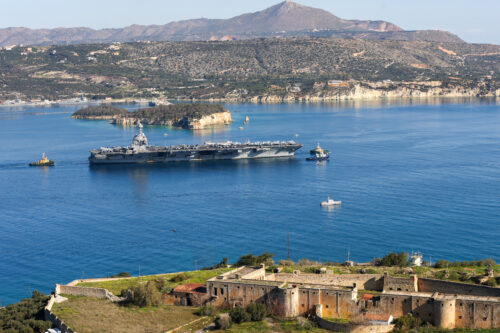
Cover photo: United States Navy aircraft carrier USS Gerald R. Ford passes the island of Crete on the way to the Middle East on February 26, 2026, two days before the outbreak of the US-Israeli war with Iran. Photo by Costas METAXAKIS/AFP via Getty Images.
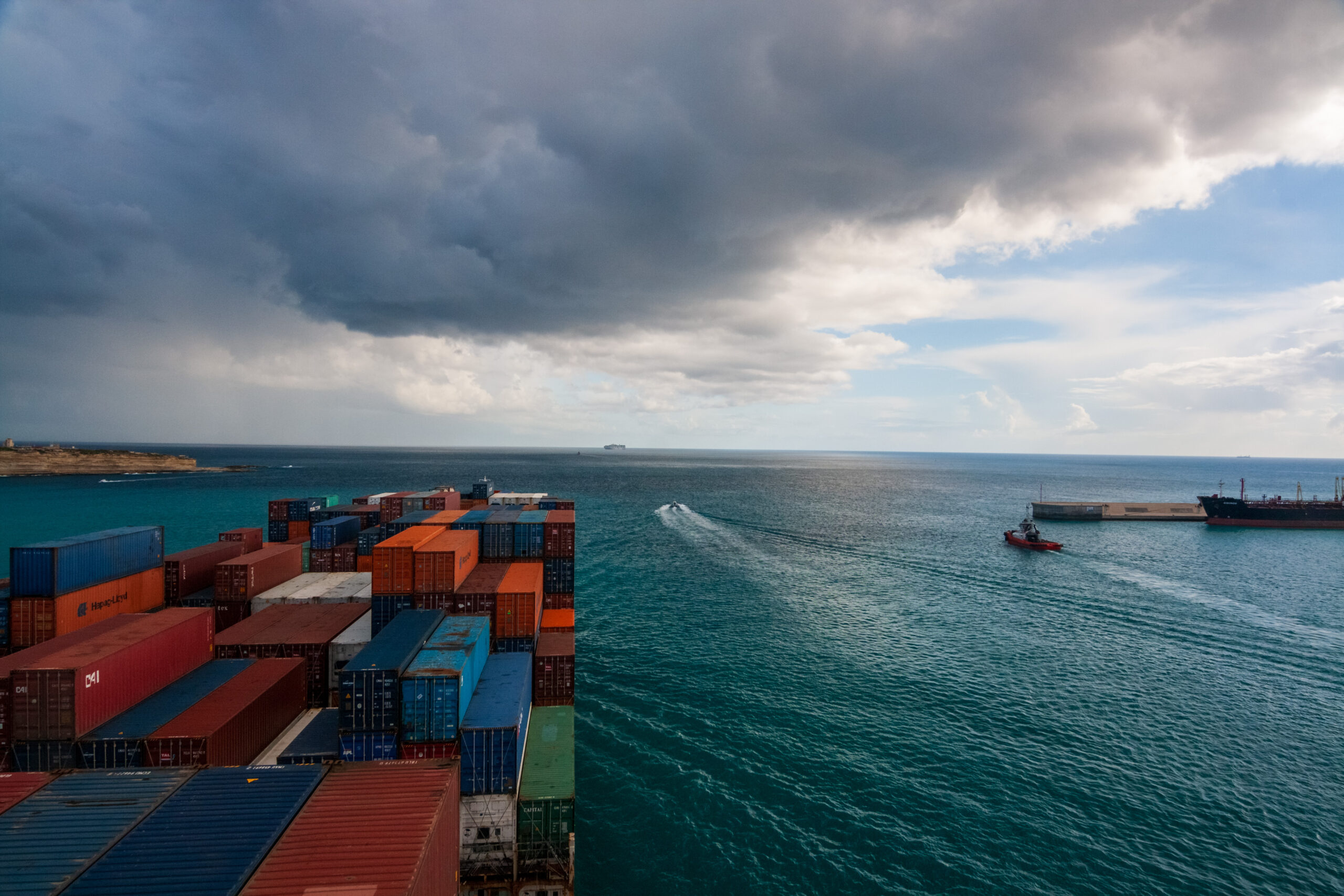
Contents photo: A cargo ship loaded with containers leaves Marsaxlokk, Malta, on January 25, 2017. Photo by Camille Delbos/Art In All of Us/Corbis via Getty Images.