Bonus Episode: Previewing Israel’s First Post-October 7 Election
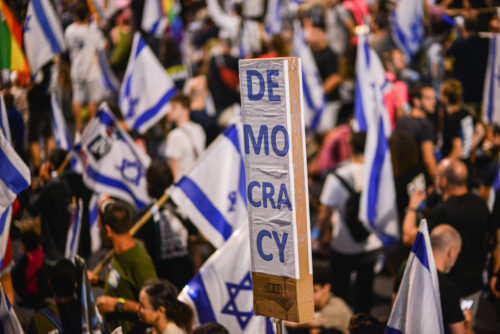
Israel is preparing to hold what may be its most consequential election in decades. On October 27, Prime Minister Benjamin Netanyahu will face his first electoral test since October 7, 2023. In this bonus episode of Middle East Focus, we present the audio from a recent MEI webinar, hosted in Israel on the eve of the vote. Senior Fellow Natan Sachs is joined by Dr. Shira Efron, Distinguished Chair for Israel Policy and senior fellow at the RAND Corporation, and Neri Zilber, veteran journalist and Financial Times correspondent. They explore what’s at stake in this historic election and how different outcomes could reshape Israel’s domestic politics and the wider region.
Israel Was Built on Hope. This Election May Be Our Last Chance to Save It
Israel’s national anthem, Hatikva, means “the hope.” Israel is not just another country, but the culmination of a 2,000-year-old dream of national redemption. The rebirth of the Jewish people’s ancestral homeland, just three years after the Holocaust, was a miraculous triumph of hope over all odds.
Today, that hope has been shattered and the elections on October 27 have become the most consequential in Israel’s history.
Washington says it doesn’t know who runs Iran. Tehran insists its leadership is united. MEI Senior Fellow Alex Vatanka joins hosts Alistair Taylor and Matthew Czekaj to sort out where the truth lies. They look at the small circle of political and military figures now steering the war effort in Tehran: who they are, how they make decisions, and how unified they really are. They also discuss the current state of US-Iran negotiations, the role of the upcoming midterm elections in the United States, and how the Islamic Republic is preparing for a potential renewal of conflict afterward.
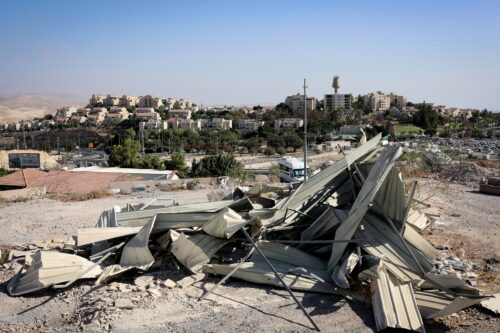
Since 1967, Israeli settlements in the West Bank have been a contested feature of the Israeli-Palestinian conflict. The ultimate disposition of the settlements and ongoing activity related to their growth have repeatedly defied agreement in negotiations over a resolution to the conflict.
The Houthis are a political-military faction and Zaydi religious movement founded in northwestern Yemen in the 1980s. A key member of Iran’s Axis of Resistance with links to other militant organizations in the Arabian Peninsula and the Horn of Africa, the group has continued to pose a threat to Western interests on a global scale.
The India-Middle East-Europe Economic Corridor (IMEC) is a proposed multinational infrastructure initiative aimed at upgrading connectivity between the three regions through integrated trade, energy, and digital networks. Announced at the G20 summit in New Delhi in September 2023, IMEC is envisioned partially as a counterweight to China’s international infrastructure project, the Belt and Road Initiative.
After a decade of post-Arab Spring isolation, Turkey’s leaders have recognized that their ambition to position the country as an agenda-setter on the world stage requires active engagement in all directions. President Recep Tayyip Erdoğan’s consolidation of executive authority has centralized foreign policy decision-making and tied it to his domestic political priorities, transforming the country’s revisionist approach to one shaped primarily by personal and pragmatic interests.
MEI Senior Fellow Brian Katulis engages friends, colleagues, and policy experts in casual conversations on the most important happenings in the Middle East.
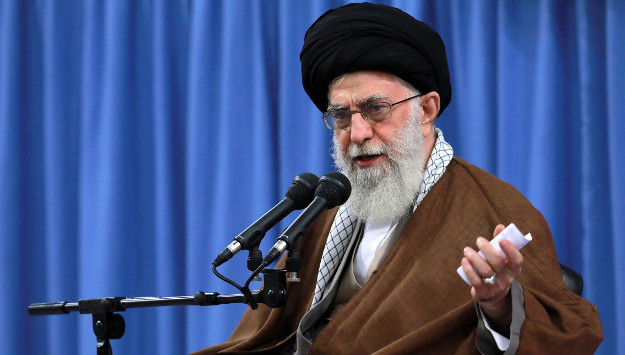
Khamenei praises Assad and vows “resistance front” will soon pray in Jerusalem
Iran’s Supreme Leader Ali Khamenei praised Syrian President Bahsar al-Assad as a “great fighter” and reiterated Tehran’s support for Syria as a “front line” state against the United States and Israel, the Iranian media reported. “Today, Syria is the front line. Therefore, it is our duty to support the Syrian resistance. Indeed, Mr. Bashar al-Assad emerged as a great fighter and stood up firmly and without hesitation.
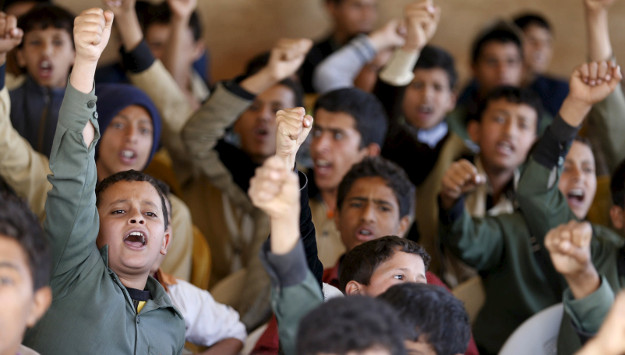
New Houthi-imposed university curriculum reportedly glorifies Iran, promotes sectarianism
A new academic curriculum introduced by the Houthi rebels in Yemen’s Sana’a University promotes sectarianism and glorifies the Houthis and their foreign allies in Iran, Lebanon and Syria, according to reports published in Al-Arabiya,
Revitalized coffee economy provides Yemen a boost amid conflict
Yemen’s national emblem depicts a relief of the Marib Dam, Yemen’s greatest manmade feature—and a coffee plant, Yemen’s most storied natural resource. This is no coincidence. Coffee drinking, as we know it today, originated in Yemen in the 15th century when Sufis discovered red coffee berries in the country’s mountain highlands.
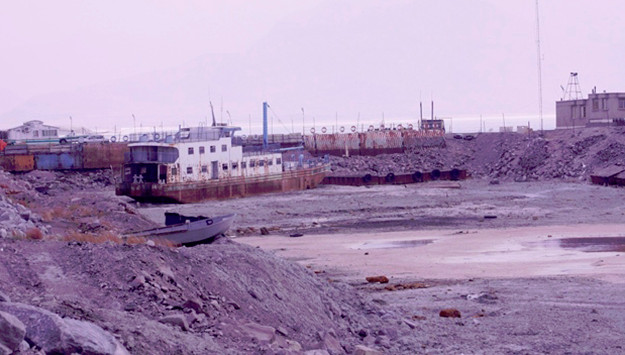
Water crisis fueling tension between Iran and its neighbors
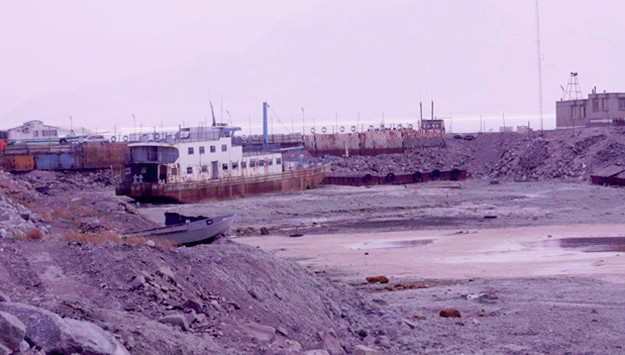
Iran’s growing water shortage and other environmental challenges have recently reached crisis point. Water scarcity and air pollution have not only triggered sociopolitical and security problems inside the country but have also caused tension between Iran and its neighbors. With the collapse of ISIS, Iran and Turkey are stepping up competition for the control of water in the region, while a potential effort by Tehran to severely restrict the flow of water into Iraq could create more problems for the war-torn country.
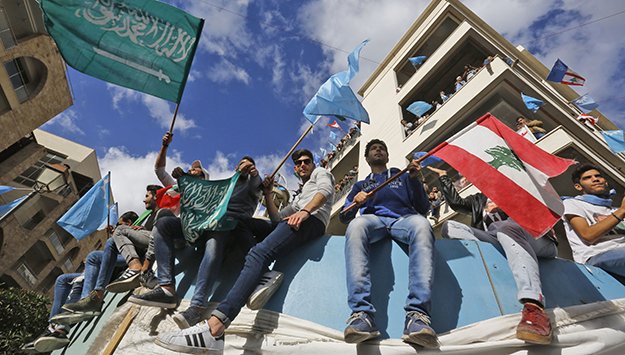
Reversing months of troubled relations, Saudi royal envoy Nizar al-Aloula arrived in Lebanon on Monday with messages of strong support for the country. He emphasized that Saudi Arabia sought strong and supportive relations with the Lebanese state and people, saying, “You will see a new approach from Saudi Arabia.” Aloula also extended an official invitation to Prime Minister Saad Hariri to visit Riyadh. Today Hariri is in Riyadh, where he met with King Salman and is due to meet with the crown prince.
“Iran has shared water [resources] with 12 neighboring countries. Drought can become a source of cooperation or friction,” Major General Yahya-Rahim Safavi, military adviser to Supreme Leader Ali Khamenei, said at the Water Diplomacy and Hydro-politics Conference on Tuesday.
The gravity of Safavi’s statement is best understood against the background of the water crisis in Iran and the country’s existing water disputes with neighboring countries.
Hizbut Tahrir in Indonesia: Riding the Wave of the Islamization Agenda
Over the past 20 years, Indonesia — the world’s fourth most-populous country and the largest Muslim-majority nation — has evolved into a democracy based on tolerance and a moderate interpretation of Islam, and has emerged as one of Asia’s fastest-growing economies. This essay is part of a series on “Indonesia and the Middle East: Exploring Connections,” which examines the nature, scope, and implications of Indonesia’s ties with the MENA region.
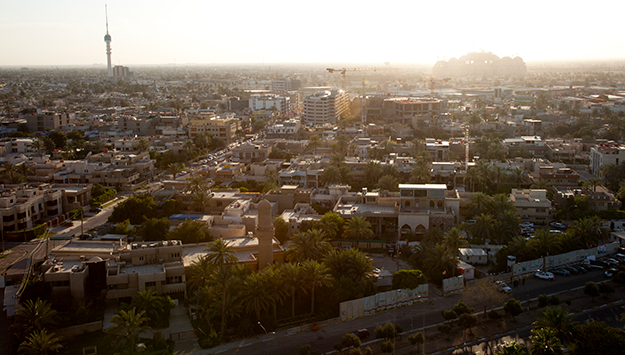
The Baghdad Declaration: good neighborhood principles for the Middle East
Over the course of the last three years, the Middle East Institute convened a regional dialogue involving participants acting in their personal capacities from Egypt, Iraq, Iran, Jordan, Lebanon, Saudi Arabia, Syria, United Arab Emirates and Turkey. The dialogue also involved participants from China, Europe, Russia and the United States. The discussions resulted in the following declaration of good neighborhood principles for the Middle East agreed in Baghdad 15-16 December 2017.
…….
The Middle East dialogue, which began its twice-a-year meetings in October 2012, convened its eleventh meeting in Baghdad 15-16 December. Participants included current and former officials and senior experts from Egypt, Iraq, Iran, Jordan, Lebanon, Saudi Arabia, Syria and United Arab Emirates as well as China, Europe, Russia, and the United States.
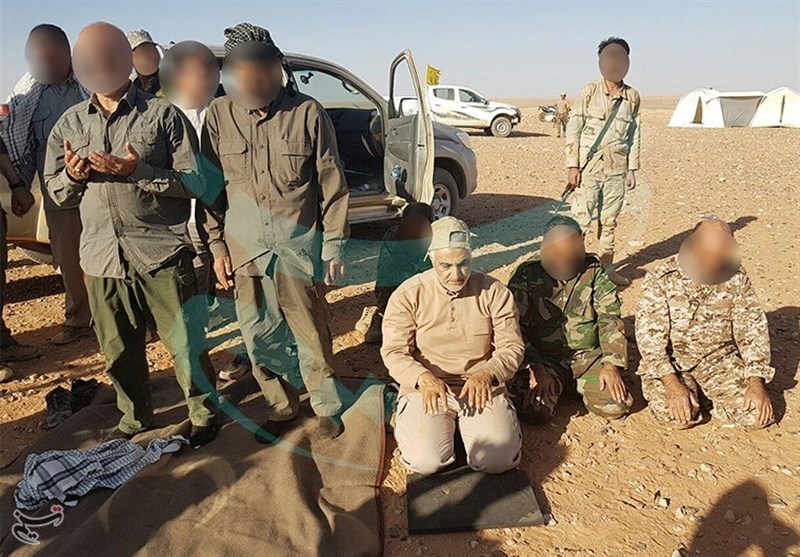
Iran-backed Afghan fighters in Syria vow to battle Israel and Saudi Arabia next
Sayed Ali-Asghar Hosseini, an Afghan national living in Iran, says he hopes to quickly recover from injuries he sustained in the Syrian conflict in order to return to the Arab country and take part in the next phase of war against Israel and Saudi Arabia. “Our real war with Israel and the al-Saud family is still there.
Tehran fails to appreciate European efforts to preserve the nuclear deal
Sobh-e Sadeq, a weekly outlet affiliated with the Islamic Revolution Guards Corps (IRGC), has lashed out at European powers for cooperating with Washington on the 2015 Iran nuclear agreement. One of its lead articles on February 26 condemned the “shameless behavior of the European troika” – referring to France, Germany and Britain which are the three signatories of the Iran deal.
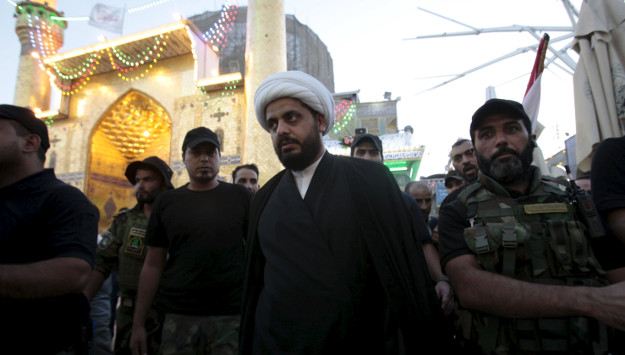
Iran-backed Asaib Ahl al-Haq: We’ll form next Iraqi government and will expel US forces
The head of a prominent Iranian-backed militia group in Iraq has said that the priority of the next government in Baghdad will be to “expel the American forces from Iraq and terminate the strategic cooperation agreement between the two countries.” Qais al-Khazali, who is the leader of Asa’ib Ahl al-Haq, also predicted that a coalition of Popular Mobilization Forces (PMF) will form the next government after the upcoming parliamentary elections slated for May 12.
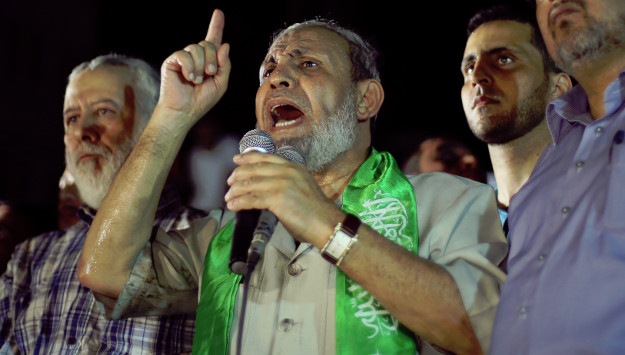
Hamas urges Tehran to hold international conference to denounce US decision on Jerusalem
A senior official of the Palestinian Hamas has called on Iran to organize an international conference of Islamic countries to condemn the Trump administration’s decision to move the American embassy to Jerusalem.
The oldest peer-reviewed publication dedicated to the study of the modern Middle East, MEI’s flagship journal covers politics, society, and culture in the region.