Bonus Episode: Previewing Israel’s First Post-October 7 Election
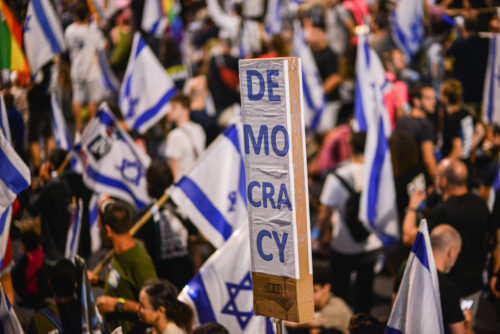
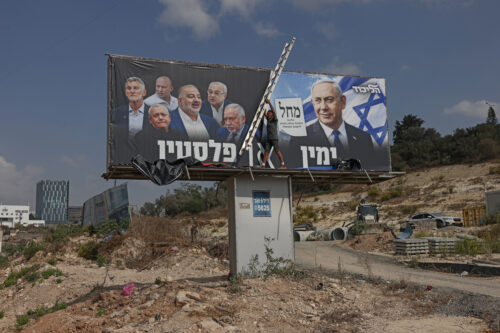
Israel is preparing to hold what may be its most consequential election in decades. On October 27, Prime Minister Benjamin Netanyahu will face his first electoral test since October 7, 2023. In this bonus episode of Middle East Focus, we present the audio from a recent MEI webinar, hosted in Israel on the eve of the vote. Senior Fellow Natan Sachs is joined by Dr. Shira Efron, Distinguished Chair for Israel Policy and senior fellow at the RAND Corporation, and Neri Zilber, veteran journalist and Financial Times correspondent. They explore what’s at stake in this historic election and how different outcomes could reshape Israel’s domestic politics and the wider region.
Israel Was Built on Hope. This Election May Be Our Last Chance to Save It
Israel’s national anthem, Hatikva, means “the hope.” Israel is not just another country, but the culmination of a 2,000-year-old dream of national redemption. The rebirth of the Jewish people’s ancestral homeland, just three years after the Holocaust, was a miraculous triumph of hope over all odds.
Today, that hope has been shattered and the elections on October 27 have become the most consequential in Israel’s history.
One striking thing about US President Donald Trump’s endorsement of Israeli Prime Minister Benjamin Netanyahu this past week is how isolated he was in making this call. The Israeli Prime Minister has become a widely detested figure worldwide following Israel’s war in Gaza—where Israel committed war crimes. This disdain was clearly on display in New York in September when dozens of diplomats streamed out of the hall during Netanyahu’s speech.
Since 1967, Israeli settlements in the West Bank have been a contested feature of the Israeli-Palestinian conflict. The ultimate disposition of the settlements and ongoing activity related to their growth have repeatedly defied agreement in negotiations over a resolution to the conflict.
The Houthis are a political-military faction and Zaydi religious movement founded in northwestern Yemen in the 1980s. A key member of Iran’s Axis of Resistance with links to other militant organizations in the Arabian Peninsula and the Horn of Africa, the group has continued to pose a threat to Western interests on a global scale.
The India-Middle East-Europe Economic Corridor (IMEC) is a proposed multinational infrastructure initiative aimed at upgrading connectivity between the three regions through integrated trade, energy, and digital networks. Announced at the G20 summit in New Delhi in September 2023, IMEC is envisioned partially as a counterweight to China’s international infrastructure project, the Belt and Road Initiative.
After a decade of post-Arab Spring isolation, Turkey’s leaders have recognized that their ambition to position the country as an agenda-setter on the world stage requires active engagement in all directions. President Recep Tayyip Erdoğan’s consolidation of executive authority has centralized foreign policy decision-making and tied it to his domestic political priorities, transforming the country’s revisionist approach to one shaped primarily by personal and pragmatic interests.
MEI Senior Fellow Brian Katulis engages friends, colleagues, and policy experts in casual conversations on the most important happenings in the Middle East.
Khamenei’s Insincere “Clemency” ahead of Revolution Day
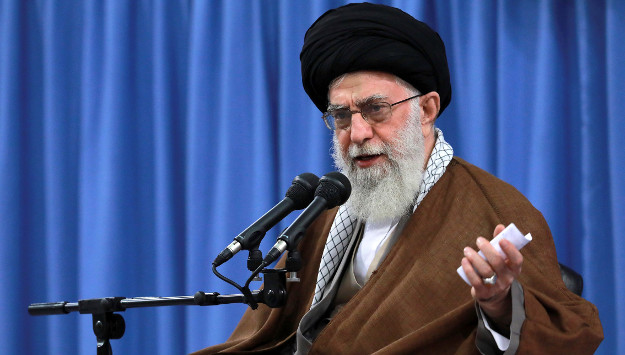
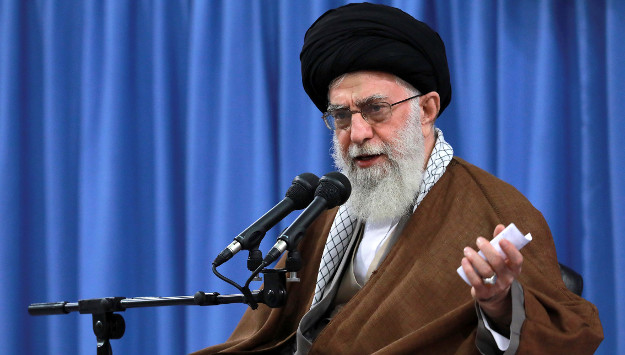
Iran’s Supreme Leader Ali Khamenei has agreed to pardon or commute the sentences of 631 Iranian convicts, the Iranian media reports. The “clemency” was suggested by Iran’s Judiciary Chief Ayatollah Sadegh Amoli Larijani on the occasion of a Shiite religious event and ahead of the anniversary of Iran’s 1979 revolution. The convicts were mostly from Iran’s revolutionary courts, the Judiciary Organization of the Armed Forces and the State Discretionary Punishment Organization.
Afghan Official Says Iran Is Fueling Sectarian Tension in Western Provinces
The BBC Persian reports that Iran has significantly expanded its ideological, cultural and economic sphere of influence in Afghanistan’s western province of Nimroz and is inflaming sectarian tension in the province.
Harsh I.R.G.C. Attack on Turkey in Midst of Syria Talks
Mohsen Rezaei, a top commander in the Islamic Revolution Guards Corps (I.R.G.C.), has waged an exceptionally tough attack on Turkey and accused Ankara to be the minion of the United States in Washington’s “dangerous game in the Middle East.”
Iran Hardliners Urge Escalation in Houthi Attacks on Saudi Arabia
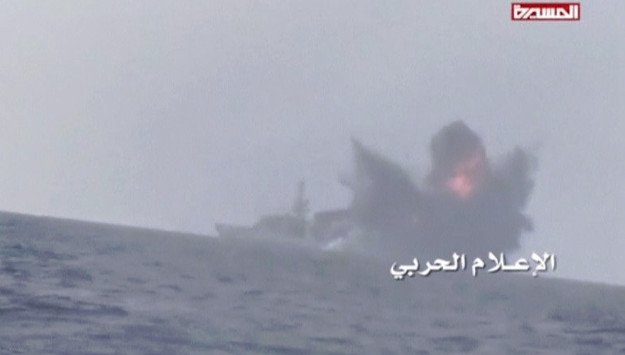
Hardline Iranian media are enthusiastically speculating that the conflict in Yemen will soon enter a more dangerous phase with the intensification in the use of missiles by the Yemeni rebels.
Uranium Shipments from Russia to Iran May Further Alarm Washington
A senior official of the Atomic Energy Organization of Iran (AEOI) has confirmed the shipment of five kilograms of 20 percent enriched uranium from Russia to the Iranian province of Esfahan.
Monday Briefing: Trump’s Executive Orders Don’t Reveal a Coherent Strategy
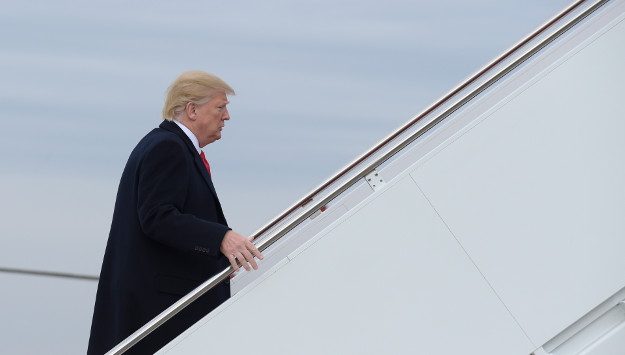
In this week’s Monday Briefing, MEI experts Paul Salem, Paul Scham, Randa Slim, W. Robert Pearson, and Marvin G. Weinbaum provide analysis on recent and upcoming events including the Trump administration’s apparent lack of a coherent strategy in the implementation of executive orders, the possibility of an improved relationship between Israel and the UK in the wake of Brexit, the Astana meeting to discuss the Syrian cease-fire deal, bilateral efforts to improve Turkish-Israel relations, and the uncertainty surrounding U.S.-Pakistani relations under the Trump administration.
Senior Iranian Official Threatens to Attack Israel, U.S. Bases in Mideast
A senior member of Iran’s parliament’s National Security and Foreign Policy Commission and former Islamic Revolution Guards Corps (I.R.G.C.) official has warned that if Washington “makes any mistake,” Iran will attack Israel and U.S. military bases across the Middle East. “The Fifth Fleet of the U.S.
On February 5, the Secretary of Iran’s Supreme National Security Council, Ali Shamkhani, said that “certain countries are worried about the weakening of terrorist groups in Syria.” Shamkhani made the remarks after his meeting with visiting Russian president’s Special Envoy for Syrian Affairs, Alexander Lavrentiev. Shamkhani and Lavrentiev praised the latest Syrian peace talks held in Astana and which were brokered by Russia, Turkey and Iran.
Generals from the Islamic Revolution Guards Corps (I.R.G.C.) have been busy in the last few days issuing threats against the United States and her regional allies such as Bahrain and Saudi Arabia. One such commander has been Esmail Kowsari.
Tehran Provokes Washington with Military Drill, Subversive Actions in Iraq
As the Trump administration is attempting to push back against Iran’s controversial ballistic missile program and the country’s support for regional terrorist and sectarian groups, the Islamic Republic appears to be only escalating its provocative actions against the U.S. and its regional allies.
Fearing a U.S.-Russia Partnership, Rouhani Rushes to Moscow to Shore up Iranian-Russian Ties
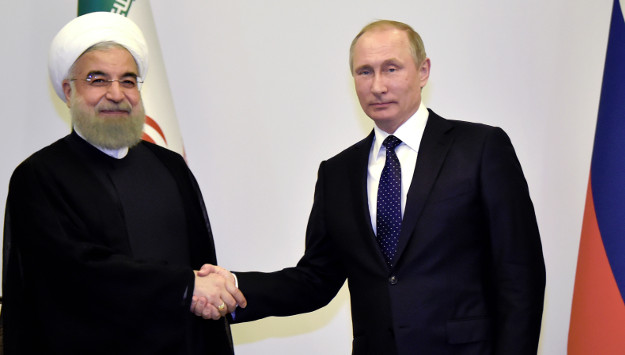
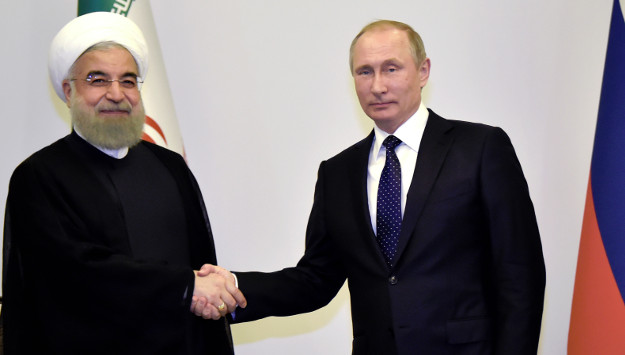
Iran’s President Hassan Rouhani is rushing to Moscow for talks with his Russian counterpart Vladimir Putin in March, Iranian and Russian media confirm. Rouhani’s trip may be an attempt to ensure that Moscow would not sacrifice Tehran as part of a grand bargain with Washington.
Rights Group Says Iranian Regime Executed 87 in January, including Minors
A human rights organization reports that the Iranian regime executed at least 87 people last month, including two men who were convicted when they were under 18. According to data compiled by the Iran Human Rights (IHR), the Iranian authorities announced only 19 of the 87 executions.
Prominent Iranian Hardliner Demands Rouhani Government Abrogate Nuclear Deal
Mojtaba Zonnour, the head of the Nuclear Affairs commission in the Iranian parliament has demanded that Tehran “stop implementing the [2015] nuclear deal.” Zonnour argued that the strong U.S.
The oldest peer-reviewed publication dedicated to the study of the modern Middle East, MEI’s flagship journal covers politics, society, and culture in the region.