Geopolitical influence over trade increasingly rests on controlling the systems that make them work. The Middle East illustrates the stakes. US ports, cable corridors, cloud facilities, artificial intelligence (AI) investments, and maritime routes connect regional economies to global commerce while exposing them to external decisions and disruptions. For the United States, the challenge is to translate technological advantage into resilient networks rather than rely on centrality that can itself become a source of vulnerability and coercion.
Bonus Episode: Previewing Israel’s First Post-October 7 Election
Israel is preparing to hold what may be its most consequential election in decades. On October 27, Prime Minister Benjamin Netanyahu will face his first electoral test since October 7, 2023. In this bonus episode of Middle East Focus, we present the audio from a recent MEI webinar, hosted in Israel on the eve of the vote. Senior Fellow Natan Sachs is joined by Dr. Shira Efron, Distinguished Chair for Israel Policy and senior fellow at the RAND Corporation, and Neri Zilber, veteran journalist and Financial Times correspondent. They explore what’s at stake in this historic election and how different outcomes could reshape Israel’s domestic politics and the wider region.
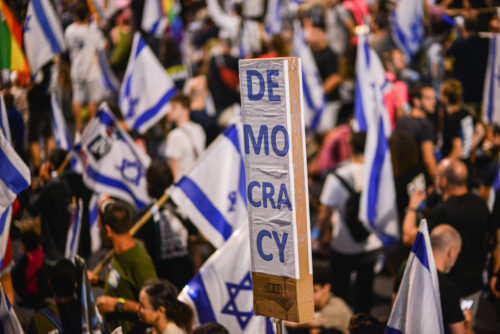
Israel Was Built on Hope. This Election May Be Our Last Chance to Save It
Israel’s national anthem, Hatikva, means “the hope.” Israel is not just another country, but the culmination of a 2,000-year-old dream of national redemption. The rebirth of the Jewish people’s ancestral homeland, just three years after the Holocaust, was a miraculous triumph of hope over all odds.
Today, that hope has been shattered and the elections on October 27 have become the most consequential in Israel’s history.
Since 1967, Israeli settlements in the West Bank have been a contested feature of the Israeli-Palestinian conflict. The ultimate disposition of the settlements and ongoing activity related to their growth have repeatedly defied agreement in negotiations over a resolution to the conflict.
The Houthis are a political-military faction and Zaydi religious movement founded in northwestern Yemen in the 1980s. A key member of Iran’s Axis of Resistance with links to other militant organizations in the Arabian Peninsula and the Horn of Africa, the group has continued to pose a threat to Western interests on a global scale.
The India-Middle East-Europe Economic Corridor (IMEC) is a proposed multinational infrastructure initiative aimed at upgrading connectivity between the three regions through integrated trade, energy, and digital networks. Announced at the G20 summit in New Delhi in September 2023, IMEC is envisioned partially as a counterweight to China’s international infrastructure project, the Belt and Road Initiative.
After a decade of post-Arab Spring isolation, Turkey’s leaders have recognized that their ambition to position the country as an agenda-setter on the world stage requires active engagement in all directions. President Recep Tayyip Erdoğan’s consolidation of executive authority has centralized foreign policy decision-making and tied it to his domestic political priorities, transforming the country’s revisionist approach to one shaped primarily by personal and pragmatic interests.
MEI Senior Fellow Brian Katulis engages friends, colleagues, and policy experts in casual conversations on the most important happenings in the Middle East.
On December 7, Iran’s Supreme Leader Ali Khamenei appointed Brigadier General Gholamhossein Ghaib-Parvar as the new commander of Iran’s Basij organization. Brigadier General Mohammad Reza Naqdi, former head of Basij, will direct the Islamic Revolution Guards Corps (IRGC’s) cultural and social affairs.
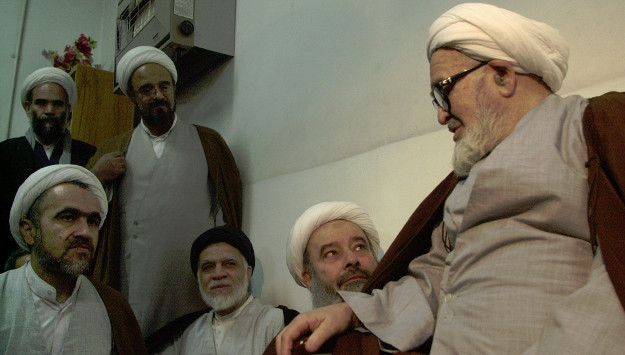
Iran Cleric Gets Jail Term for Releasing Mass Execution Tape
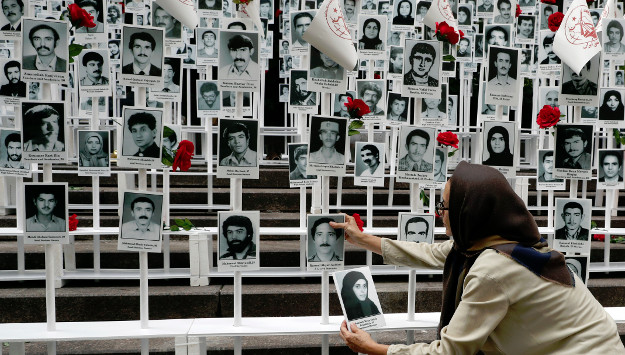
In the latest act of political repression and human rights violation in Iran, a Special Clerical Court has defrocked regime critic Ahmad Montazeri and sentenced him to six years in jail for publishing an audio recording in
Shell Latest Energy Giant to Return to Iran after Nuclear Deal
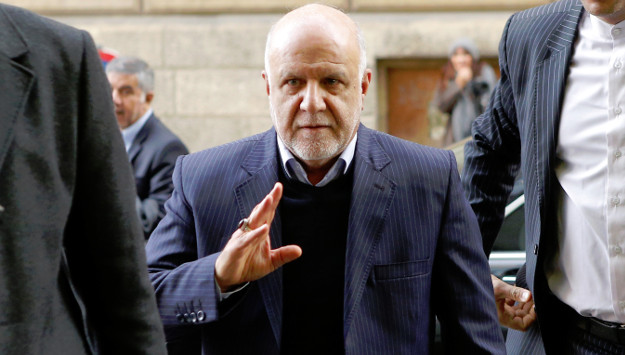
Despite uncertainty surrounding the future of the 2015 Iran nuclear deal, international energy giants are competing fiercely to invest in Iran’s rich oil and natural gas sectors.
Access to Legal Residency for Refugees in the Middle East: Bureaucracy, Deterrence, and Prolonged Impermanence
The more than four million refugees presently residing in Middle East and North Africa host states often have difficulty accessing residency due to several factors, including bureaucratic barriers, prohibitive application costs, and policies designed to intentionally exclude them from the national residence system. This essay explores how states such as Egypt only issue permits for very limited periods of time, states such as Turkey make residency contingent upon remaining in one isolated geographic region, and states such as Lebanon make the process so expensive and burdensome that refugees are effectively forced to remain in an irregular status. While sometimes these barriers only have mild implications because residency permits are not frequently checked by host state authorities, in many cases the consequences can be dire.
Rouhani Warns Trump: You Can’t Tear up Nuclear Deal
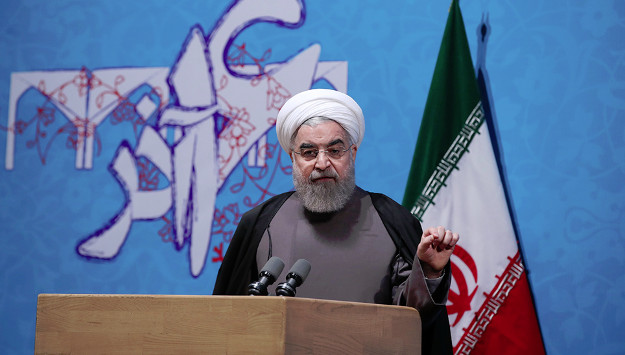
Iran’s President Hassan Rouhani said he would not allow President-elect Donald Trump to tear up the 2015 nuclear agreement and warned of “bitter response” if the next US administration failed to honor the deal.
Reformists and Hardliners at Loggerheads over Opposition Leaders’ Arrest
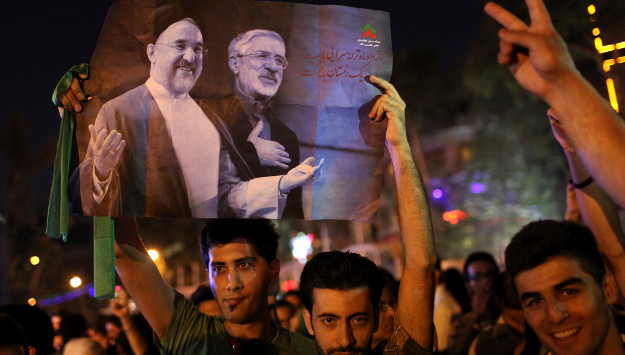
More than seven years since the 2009 presidential elections in Iran, controversies related to the disputed polls and the regime’s subsequent crackdown of the protest movement continue to haunt the Islamic Republic. As the country is gearing up for next year’s presidential vote, Iranian conservatives and reformists are yet again at loggerheads over the house arrest of Green Movement leaders Mir Hossein Mousavi and Mehdi Karroubi.
In this week’s Monday Briefing, MEI experts Herman Franssen, Charles Lister, W. Robert Pearson, and Marvin G. Weinbaum provide analysis on recent and upcoming events including OPEC’s agreement to reduce oil output, the continuing offensive in Aleppo, Erdogan’s increasing executive powers, and deteriorating relations between Pakistan and India.
Iran’s Recruitment of Afghan, Pakistani Shiites Fuels Sectarianism
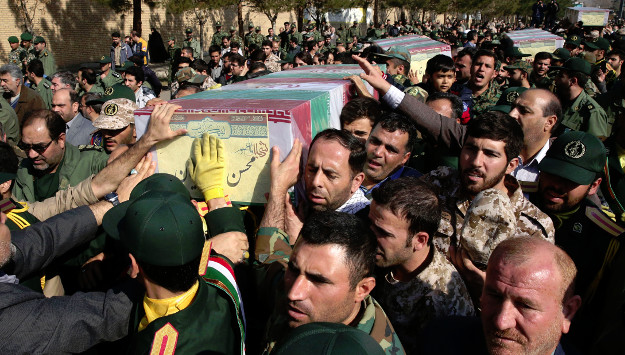
On November 30, hundreds of people gathered in the Iranian city of Qom to attend the funeral procession of several Afghan and Pakistani Shiites killed in Syria.
Tycoon's Death Penalty Points to Oil Corruption in Iran
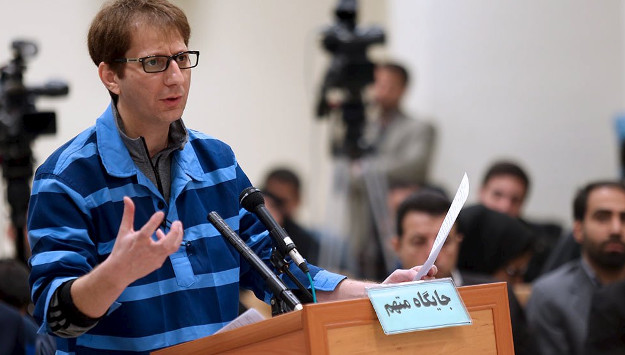
The Iranian media reports that the country’s Supreme Court has upheld the death sentence for Babak Zanjani, an Iranian billionaire convicted in a high-profile oil corruption case. In March, a court in Iran had convicted him of being “
In Tehran, the November 30 decision by OPEC to cut oil production by member states was predictably a big deal. This, however, was not just about the economics of the event. Sure, the price of crude oil shot up by 10% on the announcement. It was the first time in eight years that OPEC states had agreed to a collective production cut.
But in Tehran, the other big news was that Iran – OPEC’s third-biggest producer – had escaped the call for it to cut back its production. On the other hand, Iran’s biggest regional rival, Saudi Arabia, agreed to a steep cut.
Iranian Authorities Intensify Acts of Repression against Artists
Mehdi Rajabian, an Iranian musician serving a three-year jail term at Tehran’s Evin prison, is being treated for internal bleeding at a hospital. But the country’s judiciary has demanded that he return to prison, disregarding his serious medical condition.
A Revolutionary Court in 2015 found Rajabian, his filmmaker brother Hossein Rajabian, and their musician friend Yousel Emadi guilty of “insulting Islamic sanctities” and “illegal audio-visual activities.”
Iran’s Fars News Agency (FNA) reports that Syria’s army has formed a new elite force called the Al-Filq Al-Khamis-Eqteham (Fifth Assault Corps) and is calling on volunteers to join the group.
New Findings about Iran’s Arms Aid to Houthis Alarm Gulf Nations
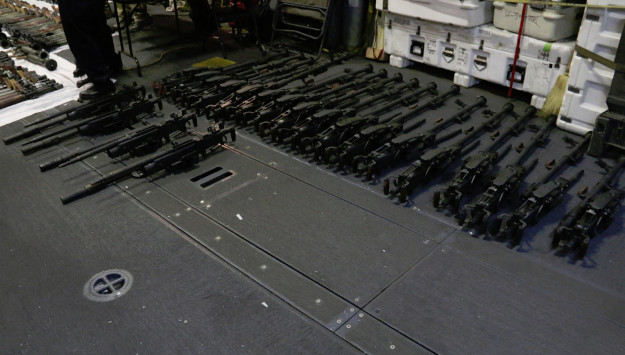
It is no longer a secret that Iran assists Shiite Houthi group to fight the Saudi-backed government of Abdrabbuh Mansur Hadi in Yemen. But a new report published on November 30 provides new evidence of an arms “pipeline” originating from Iran and extending to Yemen and Somalia.
The oldest peer-reviewed publication dedicated to the study of the modern Middle East, MEI’s flagship journal covers politics, society, and culture in the region.