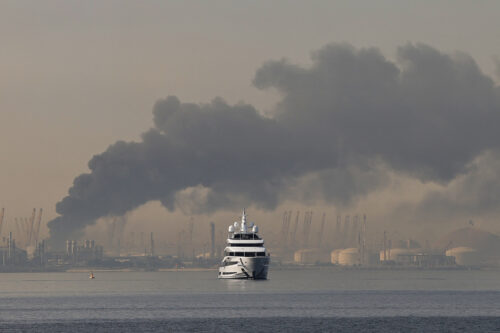
Geopolitical influence over trade increasingly rests on controlling the systems that make them work. The Middle East illustrates the stakes. US ports, cable corridors, cloud facilities, artificial intelligence (AI) investments, and maritime routes connect regional economies to global commerce while exposing them to external decisions and disruptions. For the United States, the challenge is to translate technological advantage into resilient networks rather than rely on centrality that can itself become a source of vulnerability and coercion.
Bonus Episode: Previewing Israel’s First Post-October 7 Election
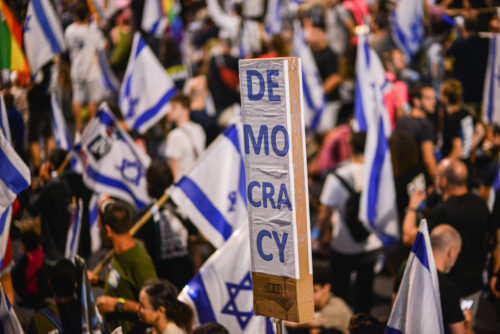
Israel is preparing to hold what may be its most consequential election in decades. On October 27, Prime Minister Benjamin Netanyahu will face his first electoral test since October 7, 2023. In this bonus episode of Middle East Focus, we present the audio from a recent MEI webinar, hosted in Israel on the eve of the vote. Senior Fellow Natan Sachs is joined by Dr. Shira Efron, Distinguished Chair for Israel Policy and senior fellow at the RAND Corporation, and Neri Zilber, veteran journalist and Financial Times correspondent. They explore what’s at stake in this historic election and how different outcomes could reshape Israel’s domestic politics and the wider region.
Israel Was Built on Hope. This Election May Be Our Last Chance to Save It
Israel’s national anthem, Hatikva, means “the hope.” Israel is not just another country, but the culmination of a 2,000-year-old dream of national redemption. The rebirth of the Jewish people’s ancestral homeland, just three years after the Holocaust, was a miraculous triumph of hope over all odds.
Today, that hope has been shattered and the elections on October 27 have become the most consequential in Israel’s history.
Since 1967, Israeli settlements in the West Bank have been a contested feature of the Israeli-Palestinian conflict. The ultimate disposition of the settlements and ongoing activity related to their growth have repeatedly defied agreement in negotiations over a resolution to the conflict.
The Houthis are a political-military faction and Zaydi religious movement founded in northwestern Yemen in the 1980s. A key member of Iran’s Axis of Resistance with links to other militant organizations in the Arabian Peninsula and the Horn of Africa, the group has continued to pose a threat to Western interests on a global scale.
The India-Middle East-Europe Economic Corridor (IMEC) is a proposed multinational infrastructure initiative aimed at upgrading connectivity between the three regions through integrated trade, energy, and digital networks. Announced at the G20 summit in New Delhi in September 2023, IMEC is envisioned partially as a counterweight to China’s international infrastructure project, the Belt and Road Initiative.
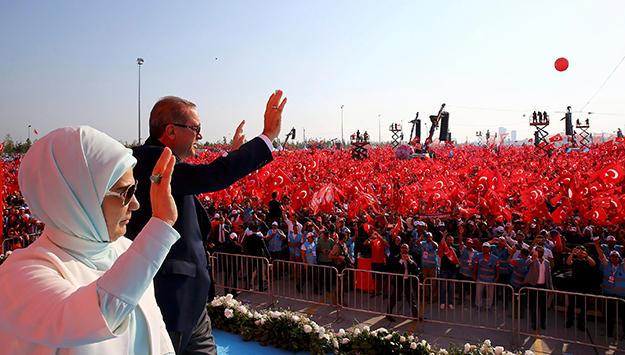
After a decade of post-Arab Spring isolation, Turkey’s leaders have recognized that their ambition to position the country as an agenda-setter on the world stage requires active engagement in all directions. President Recep Tayyip Erdoğan’s consolidation of executive authority has centralized foreign policy decision-making and tied it to his domestic political priorities, transforming the country’s revisionist approach to one shaped primarily by personal and pragmatic interests.
MEI Senior Fellow Brian Katulis engages friends, colleagues, and policy experts in casual conversations on the most important happenings in the Middle East.
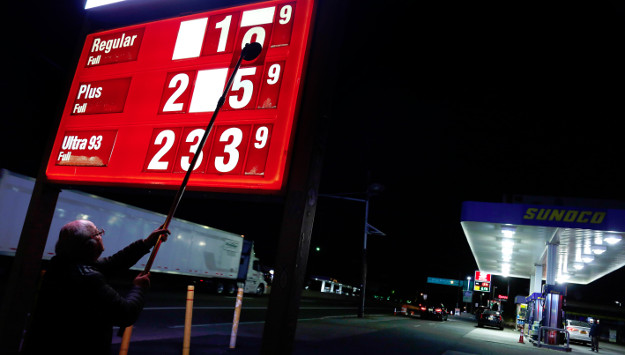
After months of protracted discussions, OPEC members reached a consensus on November 30 to cut collective oil production next year by about 4.5 percent. The news about the first reduction in eight years pushed up oil prices by eight percent to above $50 a barrel. According to the deal, Iran will keep its production level at 3.8 million barrels per day (bpd) – almost the same amount as its pre-sanctions output.
Islamists in Government: Lessons from their Successes and Failures
The question of whether Islamist groups are compatible with democracy has been a topic of serious discussion for some time, especially considering the claims that Islamists have structural impediments when it comes to adapting to various social and political contexts.
IRGC Hails Shiite Militias’ Success but Sunnis Voice Concern
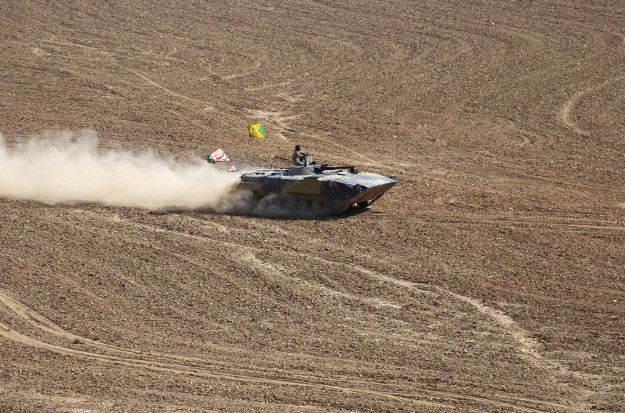
With Shiite militia forces scoring territorial gains in Iraq and Syria, the Islamic Revolution Guards Corps (IRGC) feels vindicated. In numerous interviews with Iranian media outlets, senior IRGC officials claim that their support for the Popular Mobilization Forces (PMF) in Iraq and Shiite militant groups in Syria has not only saved the two countries from “terrorists and takfiris” but has also warded off the threat of terrorism from spilling over into the Iranian territory.
Iran Continues to Arrest Dual-Nationals for Ransom
Richard Ratcliffe, the husband of a British-Iranian woman jailed in Iran’s notorious Evin Prison, says that Islamic Revolution Guard Corps (IRGC) officials are using his wife as a “bargaining chip” to secure a decades-old £500 [$620] million debt for a tank deal from the British government.
Erdoğan’s Syria Remark Angers Iran, Russia and Syria
Turkish President Recep Tayyip Erdoğan’s November 29 remark that Turkey intervened in Syria to topple President Bashar al-Assad has drawn a sharp rebuke from Tehran, Damascus and Moscow.
For Rouhani’s Reelection, It’s Still the Economy, Stupid
The Central Bank of Iran (CBI) has announced that the inflation rate for the past 12 months stood at 8.6 percent – down from 11.9 percent from the same period the year before. Previously, the Statistical Center of Iran had put this year’s figure at 7.5 percent.
Are Syrian Men Vulnerable Too? Gendering The Syria Refugee Response
This essay examines the place of Syrian men in the refugee response, with a focus on the situation in Jordan. It questions the prevailing understandings of vulnerability, and outlines how the assumption that women and children are ‘the most vulnerable’ affects the distribution of aid and services. The essay demonstrates that, contrary to the perceptions of many in the humanitarian sector, work with refugee men is not only necessary, but can be extremely successful. Syrian men can be vulnerable too.
On November 28, Iranian President Hassan Rouhani and his Russian counterpart Vladimir Putin agreed in a telephone conversation to coordinate steps about global oil and gas prices as well as on the war in Syria.
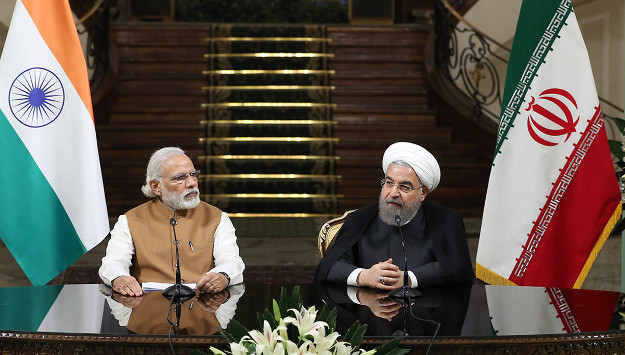
Iran Overtakes OPEC Rivals as India’s Top Oil Supplier
In another sign of Tehran’s improving trade and economic ties with regional countries, Iran has overtaken OPEC-member rivals Saudi Arabia and Iraq as Indi
In this week’s Monday Briefing, MEI experts Charles Lister, Yousef Munayyer, and Mabrouka M’Barek provide analysis on recent and upcoming events including the Assad regime’s advances in Aleppo, Fatah’s annual conference, and Tunisia’s upcoming conference for its economic plan.
In a remark that is likely to heighten tension in the Gulf region, the Iranian chief of staff of the armed forces has called for setting up naval bases across on the coasts of Yemen and Syria in the future.
Infighting in Iran over Corruption Allegations within Judiciary
On the evening of November 26, security officials tried to arrest Mahmoud Sadeghi, a university lecturer and lawmaker from Tehran – disregarding his parliamentary immunity. But the authorities backed down after Sadeghi’s supporters, including a number of parliamentarians and students, gathered in front of his house to protest the move. The controversy soon turned into the “most heated” political issue in Tehran the following day.
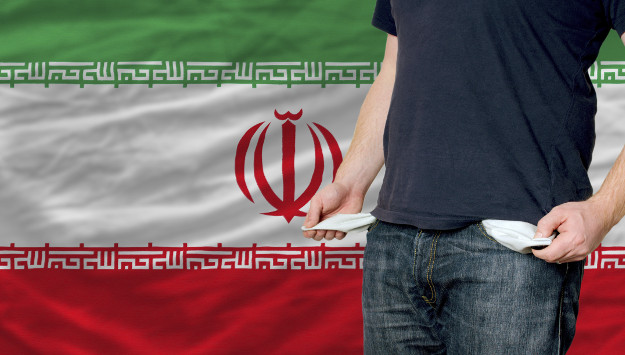
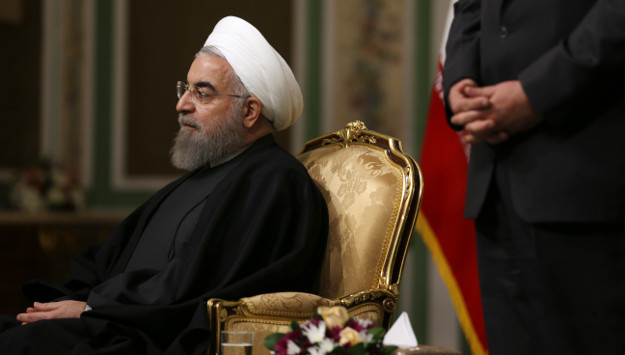
The Iranian president, Hassan Rouhani, faces an uphill struggle as he prepares for his reelection bid scheduled for May 2017. It was not supposed to be this way. Iran’s 2015 nuclear deal with world powers, including the United States, was supposed to seal Rouhani’s second term.
After all, the moderate cleric had delivered on his key promise, the lifting of the painful nuclear-related international sanctions. But Rouhani’s hardline opponents inside the Islamic Republic are now increasingly identifying corruption as Rouhani’s Achilles Heel.
The oldest peer-reviewed publication dedicated to the study of the modern Middle East, MEI’s flagship journal covers politics, society, and culture in the region.