تمت ترجمة هذا النص بواسطة الذكاء الاصطناعي وقد يحتوي على أخطاء.
تخطي إلى المحتوى

الأبحاث والتعليقات

اقرأ الأبحاث والتحليلات والتعليقات المتعمقة من زملاء وخبراء معهد الشرق الأوسط عن الشرق الأوسط. 

Trump’s Family Business Deals Risk Further Undermining the Credibility of US Middle East Policy
  • التحليل
  • Trump’s Family Business Deals Risk Further Undermining the Credibility of US Middle East Policy

    President Trump’s family businesses are once again in the spotlight as a new financial disclosure showed they earned $2 billion in income in 2025 — a dramatic increase on the year before, with much of it coming from Gulf entities, raising emoluments concerns. Mounting perceptions of corruption, combined with unresolved crises in Iran and Israel-Palestine, are eroding trust among key partners in the Middle East. With the 2026 midterms approaching, these entanglements could represent a major political vulnerability and further undermine America’s already-strained standing in the region.

    Do the Gulf States Need a New Playbook?
  • Podcast
  • Do the Gulf States Need a New Playbook?

    After the US-Israel-Iran war — and the strikes that followed the cease-fire — the Gulf states find themselves dangerously exposed. Host Alistair Taylor is joined by MEI Associate Fellow Gregory Gause to discuss the war’s impact on the Gulf, their partnership with the United States, and whether the turmoil of recent months will push Gulf leaders to reassess their alliances and international engagement.

    July 2, 2026

    Additional Research & Commentary

    معلومات أساسية

    The Houthis
  • معلومات أساسية
  • The Houthis

    The Houthis are a political-military faction and Zaydi religious movement founded in northwestern Yemen in the 1980s. A key member of Iran’s Axis of Resistance with links to other militant organizations in the Arabian Peninsula and the Horn of Africa, the group has continued to pose a threat to Western interests on a global scale.

    May 15, 2026

    The Abraham Accords
    الصورة من تصوير أليكس وونغ/Getty Images
  • معلومات أساسية
  • The Abraham Accords

    تقدم هذه الوثيقة المعلوماتية لمحة عامة عن كيفية التوصل إلى اتفاقيات أبراهام، والمصالح الأمريكية المعنية، وعواقبها الاقتصادية والاستراتيجية، وآفاق التوسع في المستقبل.

    17 نوفمبر 2025

    Turkish Foreign Policy
  • معلومات أساسية
  • Turkish Foreign Policy

    After a decade of post-Arab Spring isolation, Turkey’s leaders have recognized that their ambition to position the country as an agenda-setter on the world stage requires active engagement in all directions. President Recep Tayyip Erdoğan’s consolidation of executive authority has centralized foreign policy decision-making and tied it to his domestic political priorities, transforming the country’s revisionist approach to one shaped primarily by personal and pragmatic interests.

    April 23, 2026

    الصحراء الغربية: لماذا لا يزال الصراع مهمًا
  • Video
  • الصحراء الغربية: لماذا لا يزال الصراع مهمًا

    مع دخول نزاع الصحراء الغربية عقده الخامس، لا يزال النزاع الإقليمي دون حل وغير معروف إلى حد كبير. تحلل إنتصار فقير من معهد الشرق الأوسط (MEI) التاريخ المعقد للصحراء الغربية والمطالبات المتنافسة من قبل المغرب والجمهورية العربية الصحراوية الديمقراطية. وتبحث في التطورات الأخيرة، مثل اعتراف الرئيس ترامب بسيادة المغرب على الإقليم وانهيار وقف إطلاق النار الذي دام 30 عامًا، بالإضافة إلى الأسئلة الجوهرية التي لا تزال دون إجابة بعد نصف قرن.

    7 أغسطس 2025

    المدونات الصوتية

    التركيز على الشرق الأوسط

    البودكاست الأسبوعي الرائد لمعهد الشرق الأوسط حول السياسة الخارجية الأمريكية والقضايا السياسية والاجتماعية المعاصرة في الشرق الأوسط.

    إزالة الحافة من الشرق الأوسط

    براين كاتوليس، زميل أول في معهد الشرق الأوسط كاتوليس يشارك الأصدقاء والزملاء وخبراء السياسة في محادثات غير رسمية حول أهم الأحداث في الشرق الأوسط. 

    إعادة التفكير في الديمقراطية

    زميل أول في معهد الشرق الأوسط غونول تول تستضيف كبار العلماء وقادة الفكر حول اتجاهات الديمقراطية العالمية وحالة النظام الدولي الليبرالي. 

    تصفية حسب
    8748 Results
    Gaza Airborne Again?
  • التحليل
  • Gaza Airborne Again?

    A recent United Nations report warned that the Gaza Strip might become “uninhabitable” by 2020 for its 1.8 million residents.[1] Serious changes must be implemented as soon as possible to reverse the coastal enclave’s de-development.

    October 21, 2015

    Civil Society in Southeast Asia: Not All It’s Cracked Up to Be
    معهد الشرق الأوسط
  • التحليل
  • Civil Society in Southeast Asia: Not All It’s Cracked Up to Be

    In Southeast Asia, civil society arrived early and has mostly remained buoyant. But the region is complex, diverse, and highly dynamic, ensuring that civil society’s motivations and trajectories have been too. Despite the many democratic transitions in Southeast Asia, civil society’s performance has since been inconsistent. Some civil society organizations and social movements, then, have behaved in ways that have prevented new democracies from gaining in quality—or have even contributed to authoritarian reversals.

    October 20, 2015

    Nameless and Leaderless in Jerusalem
  • التحليل
  • Nameless and Leaderless in Jerusalem

    Although the Israeli-Palestinian conflict has been around for generations, it still has the capacity to surprise.  Even the experts are confused by the current violence that has been roiling Jerusalem for weeks now.  Is this the long-awaited third intifada?  What is causing it?  Why is it centered in Jerusalem, not the West Bank? Who is leading it, and why are the principal actors teenagers with household knives?  In fact, similar questions were asked at the beginning of the two previous intifadas, and of the Palestinian Revolt during the British Mandate.  Why now?  What for?

    October 16, 2015

    Palestinian Security Forces: Living on Borrowed Time
  • التحليل
  • Palestinian Security Forces: Living on Borrowed Time

    On a scale not seen since April 2002, Israel is instituting dramatic increases in the deployment of its military and police forces throughout Israel, East Jerusalem and the West Bank proper. These moves by the government of Prime Minister Benjamin Netanyahu comprise the initial security response to limited but escalating Palestinian attacks against Israeli civilians, settlers, and military forces throughout Israel and the occupied West Bank.

    October 16, 2015

    Taking On Egypt’s Big Bureaucracy
  • التحليل
  • Taking On Egypt’s Big Bureaucracy

    Since the 1990s, the need for streamlined procedures to facilitate business, trade and investment has grown to crisis proportions in Egypt. But the political will to deliver administrative reform was always lacking, not least because it would involve lay-offs and wage reductions; in other words, direct threats to the livelihoods of some seven million state employees and consequently the regime’s popularity. But with the government wage bill estimated to reach USD30 billion next year, Egypt has finally taken action.

    October 15, 2015

    A Flawed Nexus?: Civil Society and Democratization in the Middle East and North Africa
    معهد الشرق الأوسط
  • التحليل
  • A Flawed Nexus?: Civil Society and Democratization in the Middle East and North Africa

    The core assumption—building on a specific understanding of the recent political history of Latin America and Eastern Europe—is that civil society activism is positively correlated with democracy and democratization. However, a conceptualization of Arab civil society in liberal terms is destined to disappoint since liberal and democratic values have much shallower roots than would be required for successful challenge to authoritarian rule. Indeed, evidence is lacking either for the pro-democratic orientation of civil society in the Arab world or its capacity to drive democratic reform.

    October 15, 2015

    Democratization and the Changing Role of Civil Society in Indonesia
    معهد الشرق الأوسط
  • التحليل
  • Democratization and the Changing Role of Civil Society in Indonesia

    This essay discusses some of the contradictions and difficulties that Indonesian democracy faces. Focusing on the political zigzag around the law used for the direct election of regional heads, the author demonstrates that it is elite competition rather than the ability of a fragmented civil society that occasioned the triumph of “people power”.

    October 14, 2015

    Wealth and Giving in the Arab Region
    معهد الشرق الأوسط
  • التحليل
  • Wealth and Giving in the Arab Region

    Two news items sparked debate across the Arab region recently. One reinforced Gulf stereotypes, while the other highlighted a bold out-of-the-box initiative. The first was Saudi King Salman’s official two-day visit to Washington, for which he brought an entourage numerous enough to take over a large Georgetown hotel. The second was Egyptian mega-entrepreneur Naguib Sawiris’ offer to purchase a Mediterranean island and supply it with infrastructure so that Syrian refugees could build new lives there. Both of these men have great wealth at their disposal.

    October 13, 2015

    Civil Society, Political Alliance-Building, and Democratization in the Philippines: An Instructive Example for the MENA Region?
    معهد الشرق الأوسط
  • التحليل
  • Civil Society, Political Alliance-Building, and Democratization in the Philippines: An Instructive Example for the MENA Region?

    If the case of the Philippines is any measure, civil society actors rely on strategic alliances with political elites in order to be able to exert profound political influence, and popular demonstrations led by civil society are dependent on at least tacit military support to succeed. A cursory look at the MENA region shows a rather similar pattern. During the Arab Spring, civilian protests toppled authoritarian regimes only in those countries where the military chose not to crack down, or even sided with the protesters.

    October 9, 2015

    Changing Cairo’s Spaces from the Bottom Up
  • التحليل
  • Changing Cairo’s Spaces from the Bottom Up

    In mid-June, just before Ramadan, the pre-dawn calm of downtown Cairo was shattered by the sound of heavy machinery. The municipality had decided to repair the battered sidewalks, a fairly regular occurrence since shoddy concrete tiles are typically used for the job. Truckloads of sand were deposited at intervals along the main boulevards to be spread as a bed for the new tiles, while much of the rubble from the old ones was left piled by the curbs. To avoid the rough new terrain pedestrians took to the streets with the cars.

    October 7, 2015

    The Rise and Fall of Uncivil Society? Salafism in Tunisia After the Fall of Ben Ali
    معهد الشرق الأوسط
  • التحليل
  • The Rise and Fall of Uncivil Society? Salafism in Tunisia After the Fall of Ben Ali

    In some ways, the arrival of illiberal movements on the public scene and their ability to propagate their message unhindered is ultimately beneficial to the political growth of society because liberals then have a clear target they can fight rather rely on authoritarianism to sweep problematic debates within society under the carpet through the use of repression. Up to a point, therefore, Salafism in Tunisia helped unify society through strengthening the political system.

    October 7, 2015

    Russia’s New Middle East Great Game
  • التحليل
  • Russia’s New Middle East Great Game

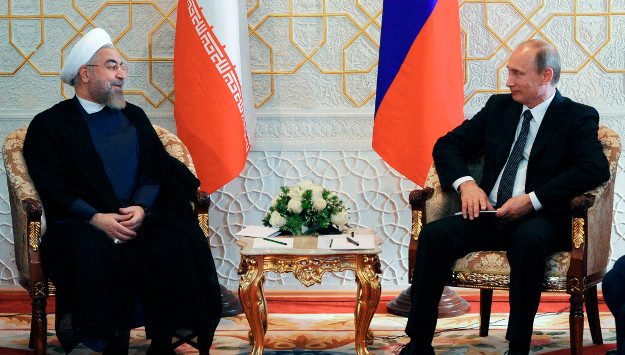
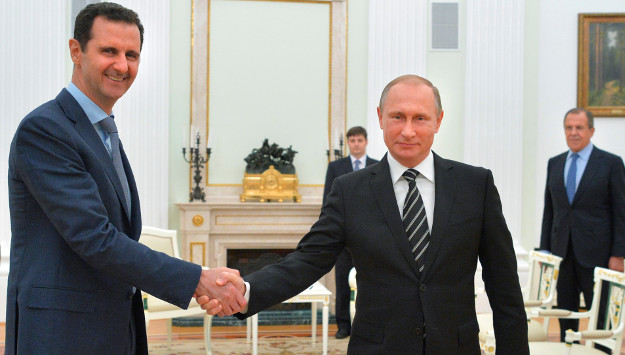
    Recent Russian activity in Syria is not about combating the Islamic State, despite Russian claims to the contrary. Though actively fighting ISIS and thus propagating its long-stated goal of keeping Assad in power would seem to be the straightforward explanation for Russia’s recent behavior, the fact that Russian strikes are also hitting U.S.-backed, rebel-held areas demonstrates the hollowness of official discourse.

    October 5, 2015

    The U.S. Military and Countering ISIS
  • التحليل
  • The U.S. Military and Countering ISIS

    October 2015 marks the fourteenth month of formal U.S. military engagement in the struggle against the Islamic State (ISIS). The Obama administration was at first reluctant to engage U.S. military power in this struggle but then became more deliberate in its approach. U.S. involvement in the battlegrounds of Iraq and Syria has been evolving especially over the past year. This evolution has been defined and is in many ways limited by a strategy that emphasizes political change in Iraq and a broad coalition of states taking action against ISIS. 

    October 1, 2015

    The Exploitation of Moral Controversies and the Marginalization of Morocco’s Justice and Charity Association
    معهد الشرق الأوسط
  • التحليل
  • The Exploitation of Moral Controversies and the Marginalization of Morocco’s Justice and Charity Association

    When a moral controversy arises in Morocco, the two main actors of the official political stage carefully play their specific role. On one side, the Party of Justice and Development (PJD), the party that leads the Moroccan government and as such is accountable to the electorate, reliably endorses the Moroccan majority’s socially conservative attitudes in order to fulfill its electoral mandate. On the other side, the king fully exploits his wider room for maneuver by adopting, according to circumstances, either a progressive stance or a conservative one. While the rhythm of moral controversies sets the tempo of the official political game and shows that Moroccan society is still very much conservative, the largest Islamist opposition group, the Justice and Charity Association, seeks to escape its marginalization within the civil society sphere.

    October 1, 2015

    اقرأ مجلة الشرق الأوسط

    تُعد المجلة الرئيسية لمعهد الشرق الأوسط أقدم مطبوعة محكّمة مكرّسة لدراسة الشرق الأوسط الحديث، وتغطي المجلة الرئيسية في المعهد السياسة والمجتمع والثقافة في المنطقة.