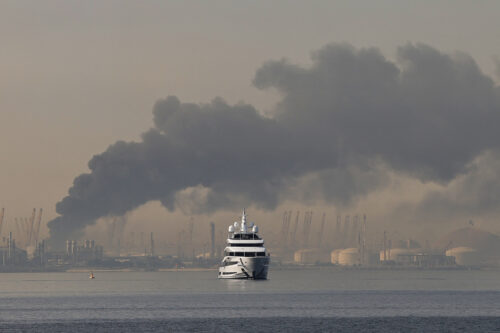
Geopolitical influence over trade increasingly rests on controlling the systems that make them work. The Middle East illustrates the stakes. US ports, cable corridors, cloud facilities, artificial intelligence (AI) investments, and maritime routes connect regional economies to global commerce while exposing them to external decisions and disruptions. For the United States, the challenge is to translate technological advantage into resilient networks rather than rely on centrality that can itself become a source of vulnerability and coercion.
Bonus Episode: Previewing Israel’s First Post-October 7 Election
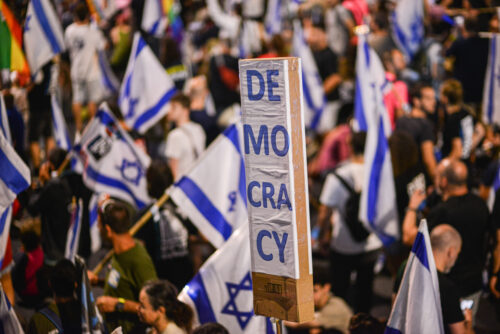
Israel is preparing to hold what may be its most consequential election in decades. On October 27, Prime Minister Benjamin Netanyahu will face his first electoral test since October 7, 2023. In this bonus episode of Middle East Focus, we present the audio from a recent MEI webinar, hosted in Israel on the eve of the vote. Senior Fellow Natan Sachs is joined by Dr. Shira Efron, Distinguished Chair for Israel Policy and senior fellow at the RAND Corporation, and Neri Zilber, veteran journalist and Financial Times correspondent. They explore what’s at stake in this historic election and how different outcomes could reshape Israel’s domestic politics and the wider region.
Israel Was Built on Hope. This Election May Be Our Last Chance to Save It
Israel’s national anthem, Hatikva, means “the hope.” Israel is not just another country, but the culmination of a 2,000-year-old dream of national redemption. The rebirth of the Jewish people’s ancestral homeland, just three years after the Holocaust, was a miraculous triumph of hope over all odds.
Today, that hope has been shattered and the elections on October 27 have become the most consequential in Israel’s history.
Since 1967, Israeli settlements in the West Bank have been a contested feature of the Israeli-Palestinian conflict. The ultimate disposition of the settlements and ongoing activity related to their growth have repeatedly defied agreement in negotiations over a resolution to the conflict.
The Houthis are a political-military faction and Zaydi religious movement founded in northwestern Yemen in the 1980s. A key member of Iran’s Axis of Resistance with links to other militant organizations in the Arabian Peninsula and the Horn of Africa, the group has continued to pose a threat to Western interests on a global scale.
The India-Middle East-Europe Economic Corridor (IMEC) is a proposed multinational infrastructure initiative aimed at upgrading connectivity between the three regions through integrated trade, energy, and digital networks. Announced at the G20 summit in New Delhi in September 2023, IMEC is envisioned partially as a counterweight to China’s international infrastructure project, the Belt and Road Initiative.
After a decade of post-Arab Spring isolation, Turkey’s leaders have recognized that their ambition to position the country as an agenda-setter on the world stage requires active engagement in all directions. President Recep Tayyip Erdoğan’s consolidation of executive authority has centralized foreign policy decision-making and tied it to his domestic political priorities, transforming the country’s revisionist approach to one shaped primarily by personal and pragmatic interests.
MEI Senior Fellow Brian Katulis engages friends, colleagues, and policy experts in casual conversations on the most important happenings in the Middle East.
Last week, President Obama said that he has no strategy yet to confront the Islamic State (IS) in Syria. He was attempting to counter speculation about American bombing of IS targets there. It had been rumored that the President wanted to decide on a war plan by the end of the week.[1]
Turkey’s Syria and Iraq Policy Hostage to Islamic State
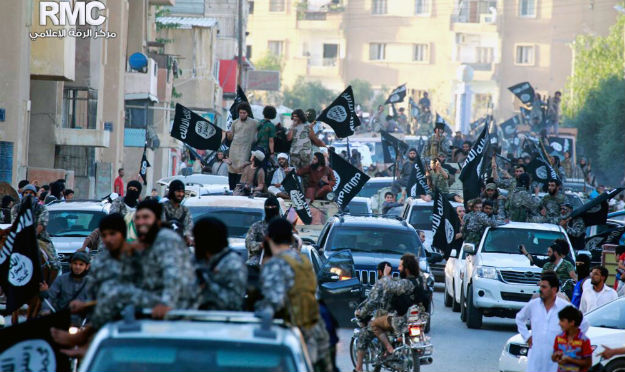
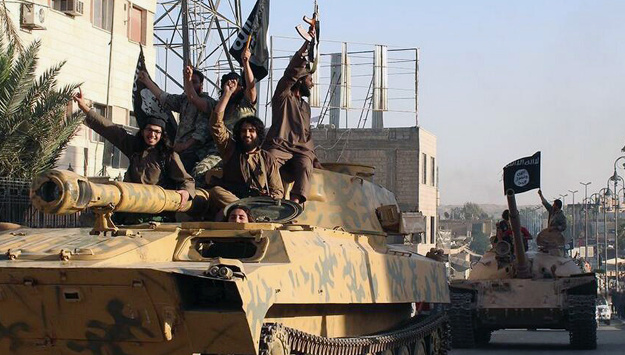
As the United States struggles to mobilize a coalition of allies including Turkey behind potential military action against the Islamic State (formerly known as ISIS) in Syria, Turkey’s Iraq and Syria policies remain captive to ISIS and the 49 Turkish hostages it holds. Turkey might be key to the U.S. effort to confront ISIS, and it is in a very tough spot.
The August 26 permanent cease-fire crafted by Egypt between Israel and Hamas and Islamic Jihad forces in the Gaza Strip offers the best opportunity in years to take Palestinians off the “diet” imposed on them by Israel after Hamas ousted Fatah security forces from Gaza in June 2007.
No sooner had that confrontation ended than Israel expanded an already draconian economic “siege” on the enclave of 1.8 million. It closed Gaza’s border with Israel—its only functioning trade link to the outside world—to all commercial activity.
American airstrikes might be needed in Syria, but that would not be the most important tactic for success, nor would more material aid to the rebels be sufficient to contain the Islamic State over the long term. As in Iraq, there has to be a political angle as well.
Several weeks ago an Islamist and jihadist alliance led by Ansar al-Sharia–a group with ties to Islamic State (formerly ISIS)–took control of Benghazi and declared an “Islamic Emirate.” A few days ago, an Islamist alliance took control of Tripoli’s main airport. These developments have come as a shock to the Egyptian government, which considers an Islamic state on Egypt’s 720-mile long western border an immediate threat to Egypt’s national security. This helps explain Egypt’s alleged role in recent airstrikes inside Libya coordinated with the United Arab Emirates.
The Fall of Amran and the Future of the Islah Party in Yemen
As the world’s attention was riveted on the lightening conquests of the Islamic State in Iraq, Yemen’s al-Huthi movement made an equally stunning but largely unnoticed military advance on Amran Governorate and captured the provincial capital, Amran, in July. The fall of Amran has extraordinary political significance: The al-Huthi advance dislodged the al-Ahmar family’s grip on the leadership of the Hashid tribal confederation, a central political pillar of the Yemeni Republic since 1962, and threatens the survival of the Islah Party itself.
The outlines of a US strategy to roll back ISIS, or the ‘Islamic State’ as it styles itself, in Iraq have become relatively clear, even if success is uncertain.
Alexandria, like Cairo, is a mismanaged city with little to offer by way of basic services, much less cultural activities. But unlike Egypt’s insular, desert capital, it is a Mediterranean city, cooler, less polluted or crowded than Cairo (with just six million inhabitants), no longer a cosmopolitan hub but open to the world in material and other ways. There are signs here of a trend toward “social transformation”—a focus on the immediate surroundings, the city itself, to explore and expand its possibilities.
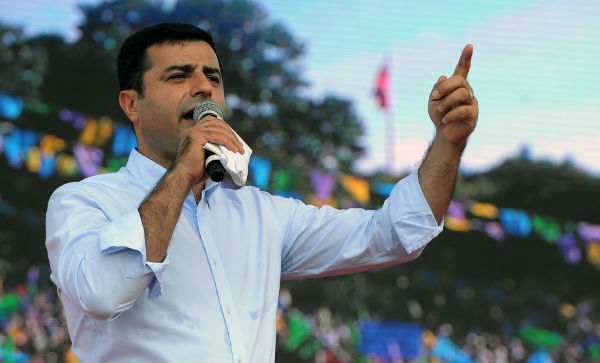
Pro-Kurdish Peoples’ Democratic Party is Big Winner in Turkish Elections
A recent statement from the imprisoned leader of the Kurdistan Workers’ Party, Abdullah Ocalan, hails a new era for Turkey’s Kurds. In a statement from his cell on the prison island of Imrali in the Sea of Marmara, Ocalan said that Turkey was now on the verge of “historic developments” after last week’s presidential elections and declared that through a major democratic negotiation, the 30-year war was coming to an end.
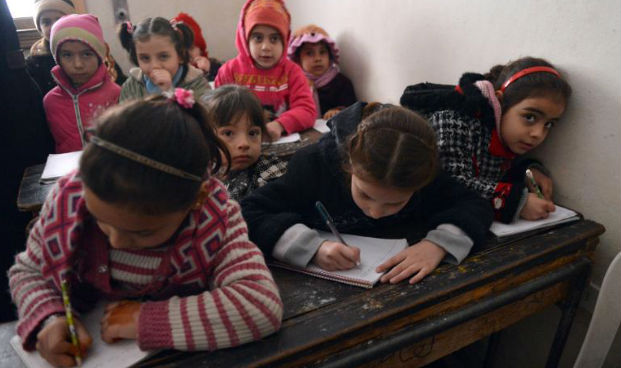
If the future of a nation is built on the competencies learned by its children, then the future of Syria gives cause for great concern. Since the start of the civil war in Syria in 2011, at least 3 million children have been unable to go to school, the vast majority of them within Syria itself.[1] Interventions are urgently required to educate these children so that they can help rebuild Syria.
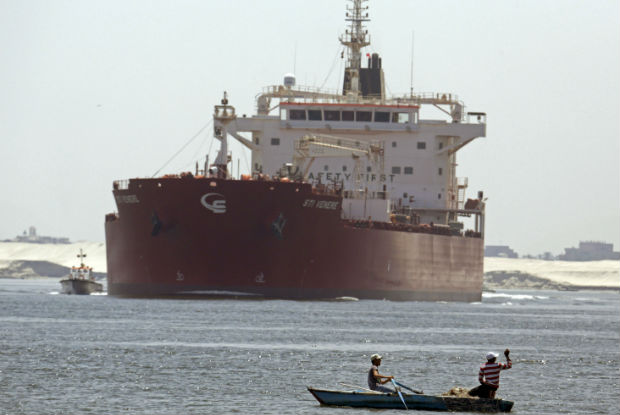
If it manages to overcome some rather formidable obstacles, Egypt’s much touted “mega project of the century”—the Suez Canal Corridor Project (SCCP)—has the potential to transform the country into a world-class center for trade and industry.
Positioning Malaysia within the Global Energy Landscape
Malaysia ― Southeast Asia’s second largest oil and gas producer and the world’s second largest exporter of liquefied natural gas (LNG) ― is located along the seaborne energy trade channel that binds together the Indian and Pacific oceans. Yet rapidly increasing energy use has led to a sharp rise in Malaysia’s dependence on oil imports and a decline in the surplus of natural gas for export. Under these circumstances, the government of Prime Minister Najib Razak has embarked on an ambitious effort to transform Malaysia into a major maritime energy hub and revitalize the oil and gas (O&G) sector. This essay discusses the major steps that Malaysia has taken in pursuit of these goals and the ways in which Malaysia-Gulf Arab energy relations have changed as a consequence.
As voters headed for the polling stations in late May to elect a president for the second time since Hosni Mubarak’s 2011 ouster, the interim authority announced the state budget for the 2014 financial year. The budget included austerity measures that were sure to be painful for ordinary Egyptians, and the timing of the announcement suggests that the interim authority wanted to shield the new president from responsibility.
The oldest peer-reviewed publication dedicated to the study of the modern Middle East, MEI’s flagship journal covers politics, society, and culture in the region.