تمت ترجمة هذا النص بواسطة الذكاء الاصطناعي وقد يحتوي على أخطاء.
تخطي إلى المحتوى

الأبحاث والتعليقات

اقرأ الأبحاث والتحليلات والتعليقات المتعمقة من زملاء وخبراء معهد الشرق الأوسط عن الشرق الأوسط. 

Trump’s South Caucasus Peacemaking Is His Most Successful, but It Remains Unfinished
  • تعليق
  • Trump’s South Caucasus Peacemaking Is His Most Successful, but It Remains Unfinished

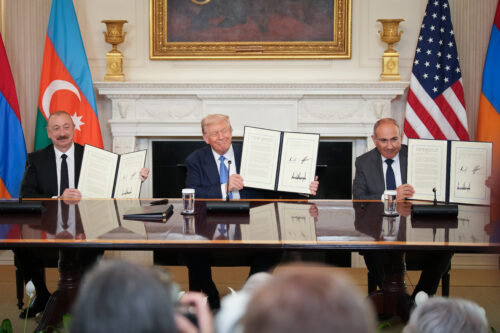
    Of all the fronts in President Trump’s peacemaking agenda, the South Caucasus has delivered the most concrete results. The August 2025 Washington Declaration, signed between Armenia and Azerbaijan and witnessed by Trump, marked an important step toward peace in the region. The two sides initialed a peace agreement and advanced plans to unblock regional connectivity, including through the establishment of the Trump Route for International Peace and Prosperity (TRIPP), which would connect Azerbaijan to its Nakhijevan exclave through southern Armenia. Implementation of TRIPP has since made notable progress, but construction has yet to start. A breakthrough on those two tracks would, in turn, unlock Armenia–Türkiye normalization, transforming a long-fractured region into an area of trade and interdependence.
    The Iran War Was Always About Regime Change
  • تعليق
  • The Iran War Was Always About Regime Change

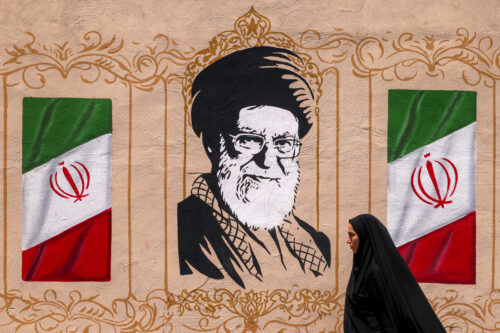
    Wars don’t just end. They get interpreted, reinterpreted, and turned into strategic doctrine. That is what happened after the Iran-Iraq War of the 1980s, a conflict that saw the United States back Tehran’s Iraqi adversaries. The war taught Tehran three lessons it never unlearned: that Washington wants the Islamic Republic gone, that Iran stands essentially alone in the world, and that it cannot survive a direct, overt fight with the U.S. and Israel.

    Iran’s New War Cabinet Is Really an Old One
  • التحليل
  • Iran’s New War Cabinet Is Really an Old One

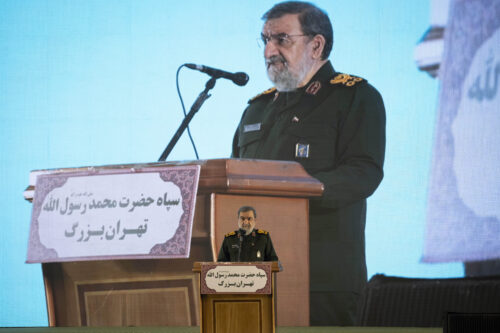
    Within 48 hours this week, Iran filled six of the most important posts in its battered military and security establishment. Read together with the biographies and mandates behind them, the appointments show how Tehran is drawing lessons from successive wars and preparing for a prolonged period of insecurity, without proving it has abandoned negotiation.

    Additional Research & Commentary

    معلومات أساسية

    Israeli Settlements in the West Bank
  • معلومات أساسية
  • Israeli Settlements in the West Bank

    Since 1967, Israeli settlements in the West Bank have been a contested feature of the Israeli-Palestinian conflict. The ultimate disposition of the settlements and ongoing activity related to their growth have repeatedly defied agreement in negotiations over a resolution to the conflict.

    June 9, 2026

    The Houthis
  • معلومات أساسية
  • The Houthis

    The Houthis are a political-military faction and Zaydi religious movement founded in northwestern Yemen in the 1980s. A key member of Iran’s Axis of Resistance with links to other militant organizations in the Arabian Peninsula and the Horn of Africa, the group has continued to pose a threat to Western interests on a global scale.

    May 15, 2026

    The India-Middle East-Europe Economic Corridor
  • معلومات أساسية
  • The India-Middle East-Europe Economic Corridor

    The India-Middle East-Europe Economic Corridor (IMEC) is a proposed multinational infrastructure initiative aimed at upgrading connectivity between the three regions through integrated trade, energy, and digital networks. Announced at the G20 summit in New Delhi in September 2023, IMEC is envisioned partially as a counterweight to China’s international infrastructure project, the Belt and Road Initiative.

    June 3, 2026

    Turkish Foreign Policy
  • معلومات أساسية
  • Turkish Foreign Policy

    After a decade of post-Arab Spring isolation, Turkey’s leaders have recognized that their ambition to position the country as an agenda-setter on the world stage requires active engagement in all directions. President Recep Tayyip Erdoğan’s consolidation of executive authority has centralized foreign policy decision-making and tied it to his domestic political priorities, transforming the country’s revisionist approach to one shaped primarily by personal and pragmatic interests.

    April 23, 2026

    المدونات الصوتية

    التركيز على الشرق الأوسط

    البودكاست الأسبوعي الرائد لمعهد الشرق الأوسط حول السياسة الخارجية الأمريكية والقضايا السياسية والاجتماعية المعاصرة في الشرق الأوسط.

    إزالة الحافة من الشرق الأوسط

    براين كاتوليس، زميل أول في معهد الشرق الأوسط كاتوليس يشارك الأصدقاء والزملاء وخبراء السياسة في محادثات غير رسمية حول أهم الأحداث في الشرق الأوسط. 

    إعادة التفكير في الديمقراطية

    زميل أول في معهد الشرق الأوسط غونول تول تستضيف كبار العلماء وقادة الفكر حول اتجاهات الديمقراطية العالمية وحالة النظام الدولي الليبرالي. 

    تصفية حسب
    8783 Results
    The February 17th Revolution in Libya
    معهد الشرق الأوسط
  • التحليل
  • The February 17th Revolution in Libya

    The recent uprisings in Bahrain, Egypt, Libya, Syria, Tunisia, and Yemen share associated economic grievances and a common call for responsive government and a more dignified way of life; however, their underlying social dynamics are the product of diverse encounters with the outside world and years of oppression under very different political regimes. This is particularly true in the Libyan case, where socioeconomic and political structures and institutions shaped before as well as during the Qadhafi years have combined to produce a unique political economy.

    August 1, 2011

    People Power: The Real Force behind the "Bad Year for the Bad Guys"
    معهد الشرق الأوسط
  • التحليل
  • People Power: The Real Force behind the "Bad Year for the Bad Guys"

    It has been a bad year for bad guys. The events and political changes that marked 2011 were previously thought to be impossible. Yet, before July 1, 2011, Egyptian President Husni Mubarak and Tunisian President Zine el-‘Abidine Ben ‘Ali were out of power and prosecuted, Libyan leader Colonel Muammar Qadhafi and Yemeni President ‘Ali ‘Abdullah Salih were on their knees, Syrian President Bashar al-Asad was seriously challenged, and, unrelated but equally significant: Usama bin Ladin dead and Ratko Mladic in jail.

    August 1, 2011

    The Power of Strategic Nonviolent Action in Arab Revolutions
    معهد الشرق الأوسط
  • التحليل
  • The Power of Strategic Nonviolent Action in Arab Revolutions

    The largely nonviolent pro-democracy insurrections that have swept the Arab world in recent months have succeeded in toppling dictators in Tunisia and Egypt and have threatened the survival of autocratic regimes in Yemen, Bahrain, and Syria.

    August 1, 2011

    A "Cute" Facebook Revolution?
    معهد الشرق الأوسط
  • التحليل
  • A "Cute" Facebook Revolution?

    Two big misconceptions have been circulated about the Egyptian revolution in January 2011: first in the international media, research, and policy circles, and second inside Egypt itself through the Egyptian media. In the international sphere, the misconception was that the Egyptian revolution was a “cute” Facebook, social media, social network, or internet revolution (in which scrappy youths banded together over the internet to create change). Inside Egypt, the second misconception is that it was a pre-planned, organized, orchestrated, well-led revolution.

    August 1, 2011

    Israel's Palestinians: The Conflict Within
    معهد الشرق الأوسط
  • Podcast
  • Israel's Palestinians: The Conflict Within

    The Middle East Institute is proud to host Ilan Peleg and Dov Waxman, authors of the book Israel's Palestinians:The Conflict Within (Cambridge, 2011), for a discussion about their findings. One in five citizens of Israel are Palestinian. Often overlooked by outside observers, the challenges facing the Palestinian minority in Israel are an inseparable part of the Israeli-Palestinian conflict. Resolving this conflict – a central concern of U.S. foreign policy and current international diplomacy – requires more than the establishment of a Palestinian state.

    July 25, 2011

    Israel's Palestinians: The Conflict Within
  • Video
  • Israel's Palestinians: The Conflict Within

    The Middle East Institute is proud to host Ilan Peleg and Dov Waxman, authors of the book Israel's Palestinians:The Conflict Within (Cambridge, 2011), for a discussion about their findings. One in five citizens of Israel are Palestinian. Often overlooked by outside observers, the challenges facing the Palestinian minority in Israel are an inseparable part of the Israeli-Palestinian conflict. Resolving this conflict – a central concern of U.S. foreign policy and current international diplomacy – requires more than the establishment of a Palestinian state.

    July 25, 2011

    How Long Can NATO Keep Going In Libya?
    معهد الشرق الأوسط
  • التحليل
  • How Long Can NATO Keep Going In Libya?

    *This Commentary first appeared on neimanwatchdog.org on July 8, 2011

    While political debate still roils over the legality of the American role in Libya, other questions have grown more pressing. Those questions include whether the European side of the NATO operation can be sustained and whether the Libyan opposition truly has the ability to achieve their goal of taking down the regime of Muammar Qaddhafi & Co.

    These issues are critical for those favoring US participation in NATO operations as well as those opposed.

    July 12, 2011

    A Political Solution to the Afghan War
    معهد الشرق الأوسط
  • التحليل
  • A Political Solution to the Afghan War

    This article originally appeared in TheAtlantic.com and on Peacefare.net on July 7, 2011

    July 7, 2011

    My Father Died for Pakistan, An Examination of Religious Extremism in Pakistan
    معهد الشرق الأوسط
  • Podcast
  • My Father Died for Pakistan, An Examination of Religious Extremism in Pakistan

    The Middle East Institute is proud to host Shehrbano Taseer, daughter of Governor Salmaan Taseer, who was murdered this past January for speaking out against the misuse of Pakistan's blasphemy laws. The assassinations of Punjab Province Governor Salmaan Taseer and Federal Minister for Minorities Affairs Shahbaz Bhatti have raised concerns about the rise of religious extremism in Pakistan. Shehrbano Taseer will discuss her father's work and legacy and offer her thoughts on the state of religious minorities and the spread of extremism in Pakistan.

    June 27, 2011

    Center for Turkish Studies' Second Annual Conference
    معهد الشرق الأوسط
  • Podcast
  • Center for Turkish Studies' Second Annual Conference

    Welcoming Remarks by Wendy Chamberlin
    Speaker: Amb Wendy Chamberlin

    Introduction by Dr. Gönül Tol
    Speaker: Dr. Gönül Tol

    Keynote Address by The Honorable Ambassador Alexander Vershbow
    Speaker: Amb Alexander Vershbow

    Keynote Address by H.E. Ambassador Namik Tan
    Speaker: H.E. Ambassador Namik Tan

    Rethinking Turkey-U.S. Relations in a New Era
    Speakers: Dr. Stephen F. Szabo, Prof. Dr. Mustafa Aydin, Brian Katulis, Jay Solomon

    Keynote Address by Ibrahim Kalin
    Speaker: Ibrahim Kalin

    June 23, 2011

    After the Arab Spring: Toward Political & Economic Inclusion in the Arab World
    معهد الشرق الأوسط
  • Podcast
  • After the Arab Spring: Toward Political & Economic Inclusion in the Arab World

    The Middle East Institute and the UNDP are proud to host a discussion with UNDP Administrator Helen Clark, Under Secretary for Economic, Energy and Agricultural Affairs Robert D. Hormats, and Middle East Institute Scholar Amb. Edward Walker about how best to address political, economic and human development needs in the Arab world today.

    June 22, 2011

    After the Arab Spring: Toward Political & Economic Inclusion in the Arab World
    معهد الشرق الأوسط
  • Video
  • After the Arab Spring: Toward Political & Economic Inclusion in the Arab World

    The Middle East Institute and the UNDP are proud to host a discussion with UNDP Administrator Helen Clark, Under Secretary for Economic, Energy and Agricultural Affairs Robert D. Hormats, and Middle East Institute Scholar Amb. Edward Walker about how best to address political, economic and human development needs in the Arab world today.

    June 22, 2011

    Palestinian Authority-Hamas Unity Agreement: An overdue step towards peace or another stone in the road?
    معهد الشرق الأوسط
  • Podcast
  • Palestinian Authority-Hamas Unity Agreement: An overdue step towards peace or another stone in the road?

    Dr. Matti Steinberg, Israel's premier expert on Islamist politics and Hamas, has spent his career as a public intellectual and analyst of Israel's relations with the modern Arab and Islamic world. He has taught at the Hebrew University and the Herzliya Interdisciplinary Center. Dr. Steinberg has just completed a semester teaching a seminar to graduate students on Islamic Fundamentalism as a Gruss-Lipper lecturer and scholar at the Woodrow Wilson School at Princeton University.

    June 21, 2011

    اقرأ مجلة الشرق الأوسط

    تُعد المجلة الرئيسية لمعهد الشرق الأوسط أقدم مطبوعة محكّمة مكرّسة لدراسة الشرق الأوسط الحديث، وتغطي المجلة الرئيسية في المعهد السياسة والمجتمع والثقافة في المنطقة.