The Multiple Costs of the US–Iran War – From Hormuz to Europe and South Asia: The Widening Economic and Political Geography of the Conflict
Wars are decided by those who hold military power, but their costs are increasingly borne by those who have little or no voice in the decisions that start them. The US–Iran war shows this imbalance very clearly. Its economic consequences have gone far beyond the battlefield and have disrupted energy markets, trade routes, food supplies, public finances and investment in the Gulf, Europe, Africa and Asia. The most striking feature of the conflict, however, is not only the size of the damage but its very unequal distribution.
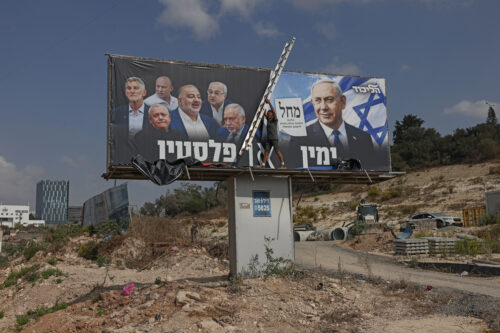
One striking thing about US President Donald Trump’s endorsement of Israeli Prime Minister Benjamin Netanyahu this past week is how isolated he was in making this call. The Israeli Prime Minister has become a widely detested figure worldwide following Israel’s war in Gaza—where Israel committed war crimes. This disdain was clearly on display in New York in September when dozens of diplomats streamed out of the hall during Netanyahu’s speech.
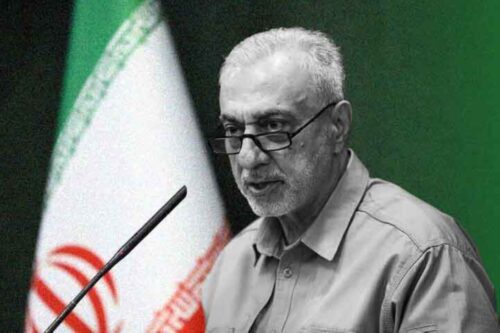
Iran’s New Defense Minister Is a Missile Man, Not a Military Man
Mehrdad Akhlaghi was appointed defense minister in October 2026 by Iranian President Masoud Pezeshkian. He is an unusual choice, as, unlike most of his predecessors, he does not come from a uniformed military background. And his appointment comes arguably at the most sensitive time in the history of the Islamic Republic.
Freedom’s arrival in Syria remains deeply fragile. Even as the country’s new rulers gain diplomatic recognition, goodwill, and early relief from Western sanctions, Syria itself is still fractured—geographically, socially, and institutionally.
Ankara’s double win: Kurds, Israel, and the new Syria
Whether the truce between Damascus and the Kurdish-led Syrian Democratic Forces holds or collapses will have major implications for neighboring Turkey, which has long-standing interests in Syria, but recent developments already point to a win for Ankara.
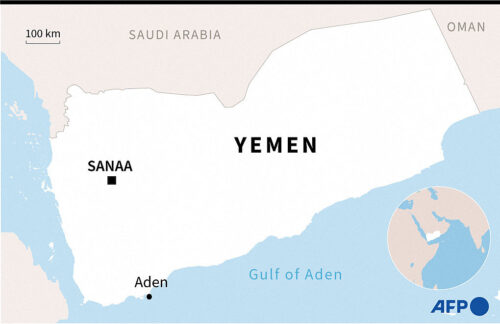
This bonus episode of Middle East Focus features an excerpt from a recent MEI Virtual Briefing recorded on January 20. Director of Communications Zeina Al-Shaib is joined by MEI Affiliate Fatima Abo Alasrar and Associate Fellow F. Gregory Gause III to discuss the dramatically changing dynamics in Yemen’s civil war. Last month, Yemen emerged as a focal point of rising tensions between Saudi Arabia and the United Arab Emirates. The Southern Transitional Council, a UAE-backed southern separatist movement, has disbanded in recent weeks, following fierce clashes with Saudi-backed forces. In the conversation, Alasrar and Gause analyze the political, security, and socio-economic shifts affecting Yemen’s internal dynamics and what all this means for regional stability.
The Pakistan-Afghanistan conflict: A strategic concern for the US
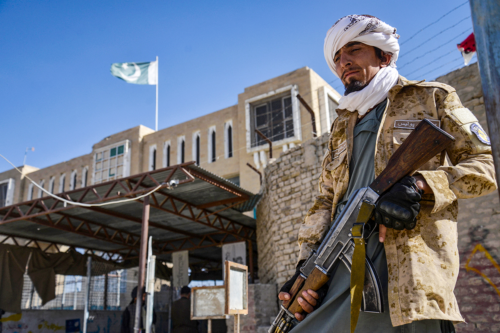
Pakistan’s relationship with the Afghan Taliban has shifted from open sponsorship in the 1990s to a silent partnership following 2001 to alienation and belligerence since 2021. Their current conflict, which comes at great cost to both countries and seems to have no easy military or political resolution, also poses a threat to the stability and prosperity of neighboring states. Although American strategic interests in the region greatly diminished following the United States’ military withdrawal from Afghanistan in August 2021, the region’s altered political dynamics have prompted a growing American engagement with Pakistan and tentatively with Afghanistan. At the same time, the US has become a factor in how both Islamabad and Kabul have come to form their national security strategies.
What Ankara sees in Riyadh — and why it still needs Abu Dhabi
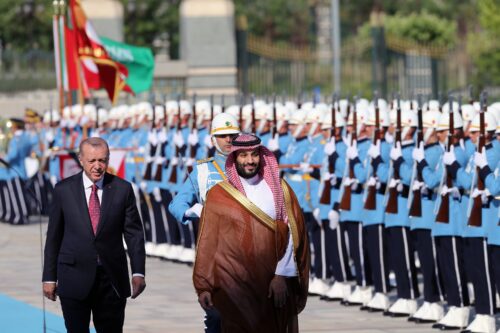
As the rivalry between Riyadh and Abu Dhabi sharpens in Yemen and beyond, Turkey has begun edging closer to Saudi Arabia, sparking claims that a new regional order is taking shape: a Turkey-Saudi axis backed by a NATO-like defense architecture, implicitly aligned against Israel and the United Arab Emirates. This reading overstates the case.
Venezuela’s Shadow Over MENA: Perceptions and Precedents
MEI Vice President for Policy Ken Pollack joins hosts Alistair Taylor and Matthew Czekaj to explore what the precedent set by the Trump administration’s military capture of Venezuelan President Nicolás Maduro could mean for US policy in the Middle East — particularly in light of ongoing anti-regime protests in Iran. The conversation unpacks the reverberations of Operation Absolute Resolve, Washington’s options for and potential consequences of responding to the Iranian regime’s brutal crackdown, regional perceptions of recent US actions and stated objectives, and broader questions around the direction of the Trump administration’s evolving grand strategy.
Balancing on a Fault Line: Turkey Between Russia, Ukraine, and the US
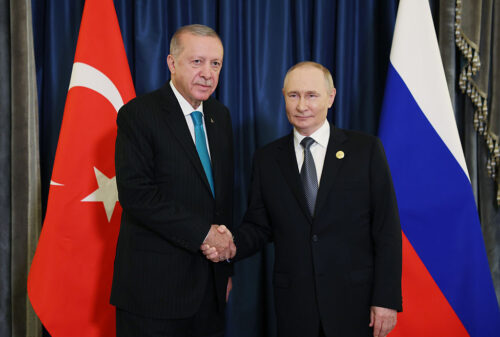
This webinar discussed the following looming questions: Can Turkey sustain a three-way balancing act between Russia, Ukraine, and the US? Where does Ankara stand on Trump’s peace plan, which would require Ukraine to cede territory to Russia? How does Moscow view Turkey’s S-400 dilemma? And what would the continuation of the Russia-Ukraine war mean for Turkey’s security—and for its already strained relations with the West?
Yemen’s Southern Front: Strategic Leverage, Fragmentation, and Regional Risk
Beginning in early December 2025, UAE-backed Southern Transitional Council (STC) forces launched an offensive in eastern Yemen, seizing Seiyun and key military and administrative sites across Wadi Hadhramaut before advancing into al-Mahrah, as Saudi-aligned tribal and government units withdrew under mounting political and military pressure.
The oldest peer-reviewed publication dedicated to the study of the modern Middle East, MEI’s flagship journal covers politics, society, and culture in the region.