Keynote Address: General (ret.) Joseph Votel on U.S. Middle East Priorities
Keynote address at MEI’s 73rd Annual Conference on November 13, 2019 in Washington, D.C.
This individual is a guest contributor. MEI is not able to assist with contact requests.
Keynote address at MEI’s 73rd Annual Conference on November 13, 2019 in Washington, D.C.
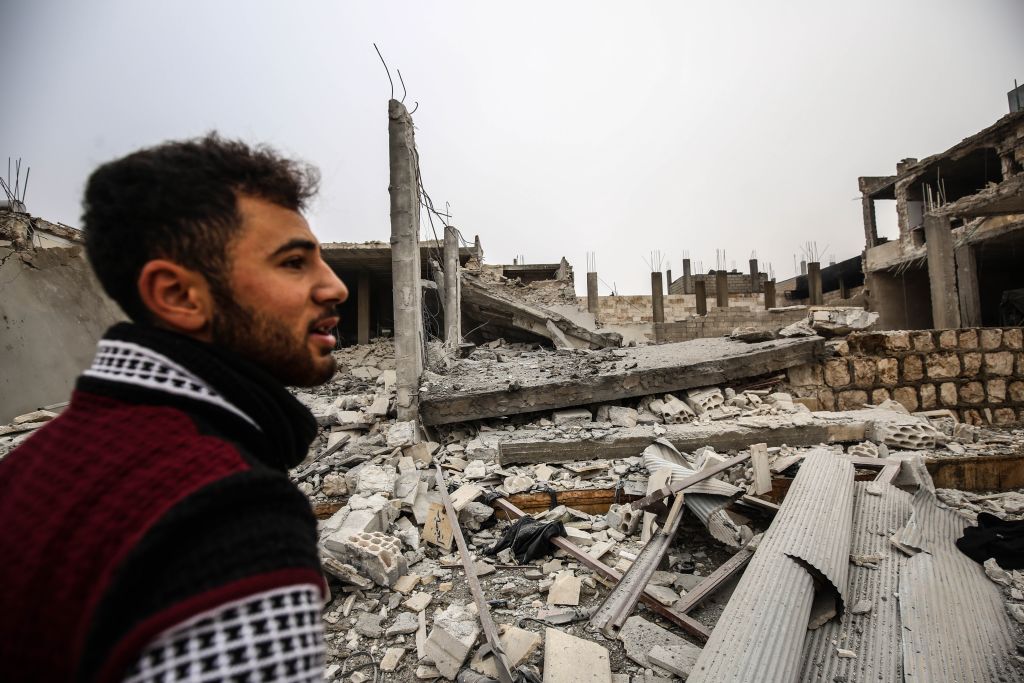
East Ghouta is perhaps the darkest example of renewed Assad regime rule over former opposition territory. 18 months after the regime recaptured the area, its security forces and intelligence apparatus continue to terrorize Syrians there. Night-time raids on homes, mass arrests, and forced disappearances are common occurrences across the region. Intelligence forces assert themselves in every aspect of daily life, especially at the ubiquitous checkpoints where personnel extort residents for bribes when they pass, subjecting them to security checks that can lead to civilians either being arrested on the spot or conscripted into military service. In addition, residents of East Ghouta are facing a humanitarian crisis amid a total lack of basic services, from sewage to schools and hospitals, and the basic pillars of the local economy remain in total disrepair.
Philanthropists Othman & Leila Benjelloun received the 2019 Middle East Institute Visionary Award at MEI’s 73rd Annual Awards Gala on November 12 in Washington, DC.
Oscar-nominated Lebanese film director Nadine Labaki received the 2019 Issam M. Fares Award for Excellence at MEI’s 73rd Annual Awards Gala on November 12 in Washington, DC.
Over the past two decades, China has gradually incorporated the use of soft power into its foreign policy. China’s efforts to ramp up its soft power in the Middle East is part of a wider offensive to bolster trade and national security. This article discusses China’s use of tourism as an instrument of soft power in the region.
The Royal Institute for Strategic Studies (IRES), charged by the Government of Morocco with analyzing and monitoring the country’s external relations, turned its attention to the U.S.-Morocco relationship at a conference conducted at its Rabat headquarters on Oct. 29. Taking note of the long history of the bilateral relationship — Morocco was one of the first countries in the world to recognize the new American republic in 1777 — panelists reviewed the current state of political, economic, and cultural engagement between the two nations.
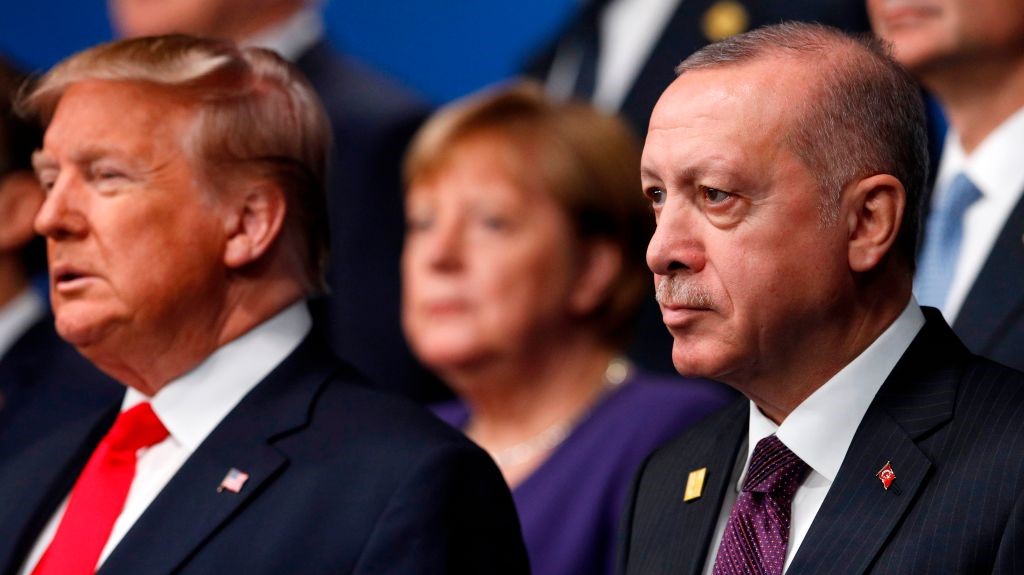
Turkish President Recep Tayyip Erdogan is set to meet with his U.S. counterpart, Donald Trump, in Washington on Wednesday. While there are doubtless other items for discussion on the agenda, at the top of the list is, at least on Turkey’s side, Syria — or more specifically, what U.S. policy is and should be in Syria.
The U.S. and World Bank sponsored talks last week between Egypt, Ethiopia, and Sudan, over the Great Ethiopian Renaissance Dam – the latest developments in a regional soap opera that’s been running since 2010, when Ethiopia first announced the construction of the dam.
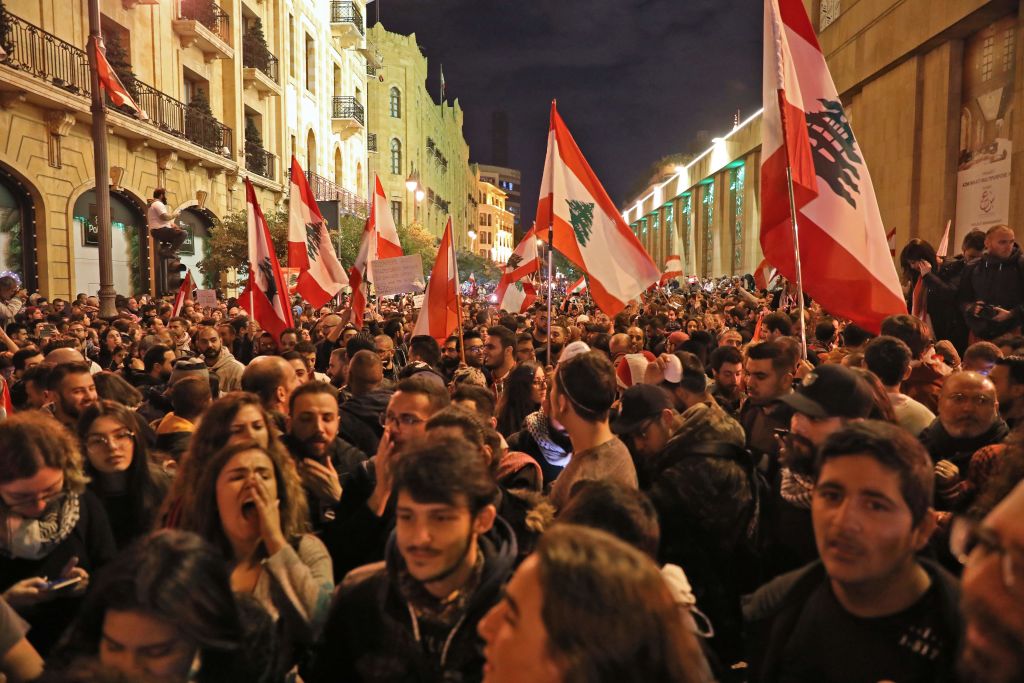
Lebanon’s popular uprising seems to be moving into a long and painful standoff between, on the one hand, a new generation along with a wide spectrum of the population demanding wholesale accountability and profound change, and on the other a ruling class mired in an interdependent web of corruption, intent on protecting its interests and waiting out the populace.
Pakistan’s capital, Islamabad, has been paralyzed in recent days by supporters of Maulana Fazlur Rehman and his Jamiat-Ulema-e-Islam (JUI-F), a well-entrenched Islamist party. The protestors are seeking the resignation of the military-backed Prime Minister Imran Khan and fresh elections, and the demonstration has emerged as an existential problem for Khan.
After more than two months of Saudi-mediated indirect talks between the Republic of Yemen Government (ROYG) and the UAE-backed Southern Transitional Council (STC), the two sides finally reached a deal on Nov. 5. The Saudi effort, which culminated in the signing of the Riyadh Agreement, is aimed at resolving the conflict within the Arab coalition-backed front and uniting the two parties in the fight against the Iranian-backed Houthi militias. The agreement, which spans political, economic, security, and military arrangements, involves restructuring the executive, military, and security branches of the ROYG, partial disarmament of STC-loyal forces, and the demilitarization of Aden — all of which will be phased in over the next three months.
Lebanese artist Katya Traboulsi joins guest host Lyne Sneige to discuss her art exhibition, Perpetual Identities, which consists of 22 hand-crafted replicas of bombshells used in the Lebanese civil war, each adorned with designs and iconography associated with the artistic traditions of 22 featured countries.
The Nov. 1 seizure by Malta of two 2000-cubic-foot containers full of Libyan currency printed by the Russian state printer, Goznak, that was intended for delivery to Libya’s non-internationally recognized eastern government, highlights the continuing importance of the economic aspects of Libya’s ongoing civil war.