This individual is a guest contributor. MEI is not able to assist with contact requests.
Hassan Mneimneh specializes in the Middle East and North Africa and the wider Islamic world with a particular emphasis on radicalism and factionalism. In previous capacities, he has focused on the significance of socio-political and cultural developments in the MENA region to U.S. and European policies; assessed civil reaction to radicalizing tendencies in Muslim societies; and studied the evolution, record, and prospects of radical Islamist formations worldwide.
He has written on political, cultural, historical, and intellectual questions concerning the Arab and Muslim worlds. He is a regular contributor to the pan-Arab newspaper al-Hayat, and is currently affiliated with Middle East Alternatives and Fikra Forum. His previous affiliations include the German Marshall Fund of the United States, Hudson Institute, the American Enterprise Institute, and the Iraq Memory Foundation.
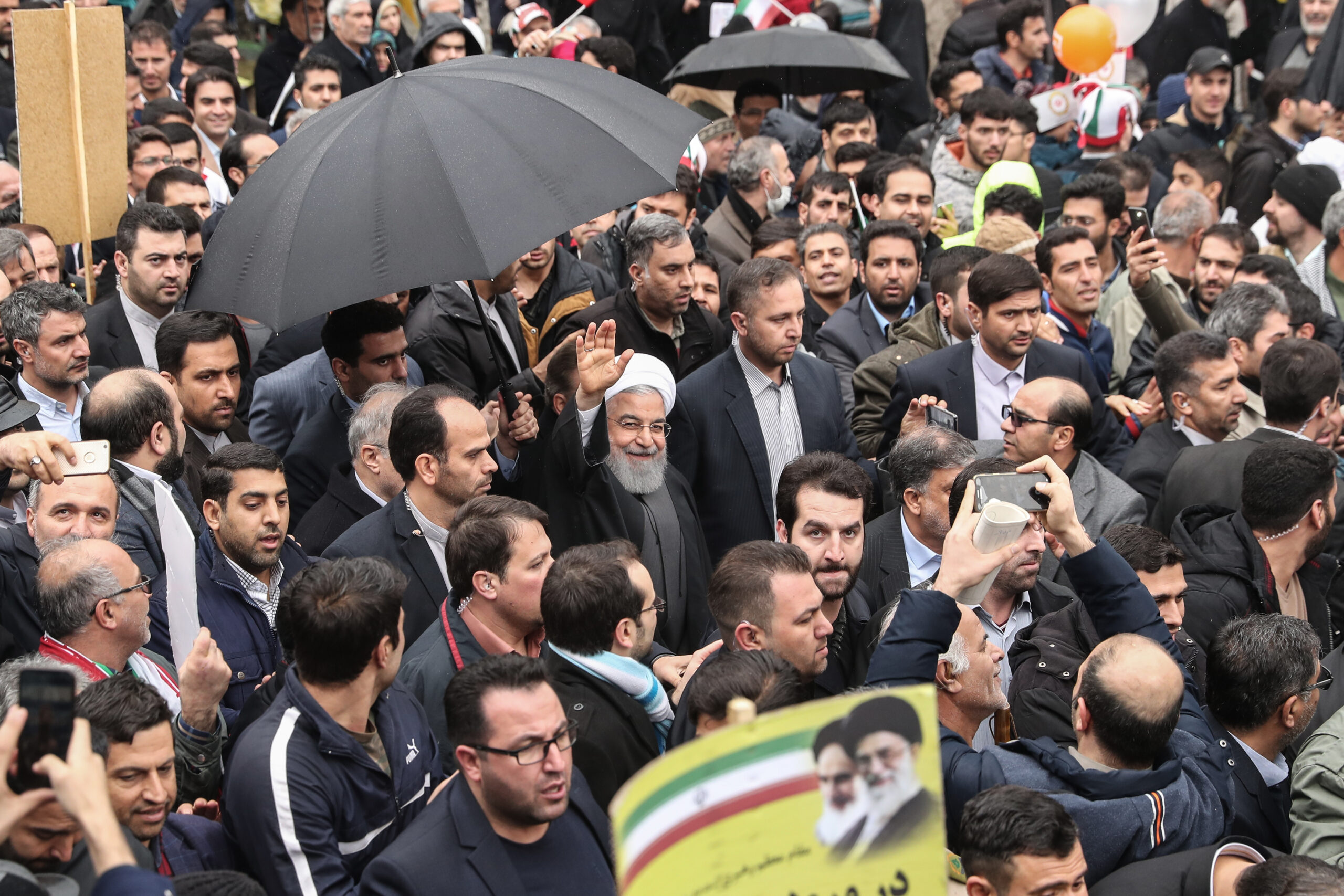
In this week’s Monday Briefing, MEI experts Ahmad Majidyar, Mirette F. Mabrouk, and Hassan Mneimneh provide analysis on recent and upcoming events including the 40th anniversary of Iran’s Islamic Revolution, a proposal for constitutional amendments in Egypt, and Iraqi PM Abdul-Mahdi’s first 100 days in office.
Iraqi elections: crafting a democracy amid challenges
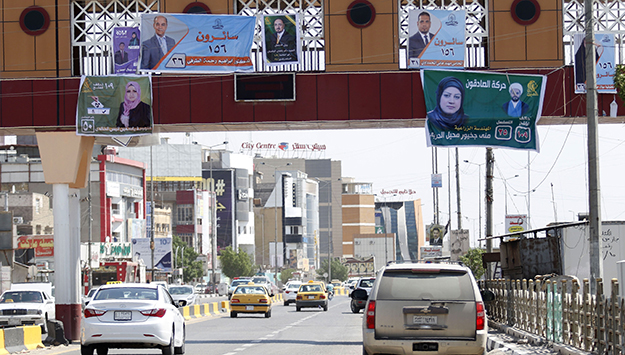
Fifteen years after the fall of the dictatorial regime of Saddam Hussein, Iraq is still engaged in the process of transitioning to a system of governance representative of its population. The new Iraq has experienced meaningful progress and serious setbacks. While the upcoming elections, slated for May, promise a further constructive push, Iraq faces serious structural impediments to progress—including a divisive political environment and significant social challenges in the wake of ISIS—and should expect incremental rather than revolutionary change.
In an ideal world, the ousting of a militant group that has openly committed genocide and engaged in ethnic and religious cleansing ought to be followed by an affirmation of national unity. This sadly is not the case in Iraq’s war-torn Nineveh province.
Iraqi Prime Minister Haider al-Abadi has expressed outrage at the recent Turkish parliamentary extension of the mandate of Turkey’s military presence on Iraqi soil. For months, Turkish forces have maintained a contingent in northern Iraq, ostensibly at the invitation of local forces, with the announced mission of training them in preparation for the battle for Mosul. With multiple parties preparing for the offensive, Mosul, Iraq’s second largest city, is slated to be liberated from a 30-month-old Islamic State (ISIS) occupation.
The Dangerous Stipulation of Islamic Exceptionalism
Is the religion of Islam “exceptional” in how it relates to politics? The argument at the center of Shadi Hamid’s new book is that it is. This is not a novel argument, but one likely to be misused.
Weekly Briefing: Baghdad Bombing, NATO Summit, Israel’s Africa Outreach, and Saudi Embassy Trial in Iran
In this week’s briefing, MEI experts Hassan Mneimneh, Daniel Serwer, Paul Scham, and Alex Vatanka provide analysis on recent and upcoming events including the ISIS bombing in Baghdad, this week’s NATO summit in Warsaw, Israel’s outreach to Africa, and the trial in Iran over the ransacking of the Saudi embassy.
In this week’s Monday Briefing, MEI experts Marvin G. Weinbaum, Charles Lister, Hassan Mneimneh, and Paul Scham provide analysis on recent events including the killing of Afghan Taliban leader Mullah Akhtar Mansour, deadly blasts targeting regime-held territory in Syria, Iraq’s intra-Shiite feud, and Avigdor Lieberman’s appointment as Israel’s Defense Minister.
Iraq is enduring a dangerous political crisis. Its substance, however, is under dispute. For many, it is a valiant attempt at reform, and at fulfilling the long overdue promise of sound governance, against a system brought to a halt by corruption and dysfunction. For others, it is a questionable maneuver to restore autocracy, and to unravel the checks and balances that have been instituted over more than a decade. The truth, however, is not somewhere in between, irrespective of the many smokescreens that the opponents of reform may raise.
Monday Briefing: Iraq's Political Storm and U.S. Efforts to Salvage the Syrian Cease-fire
In this week’s Monday Briefing, MEI experts Hassan Mneimneh, Robert S. Ford, and Mabrouka M’Barek provide analysis on recent events including Iraq’s political storm, efforts to salvage the Syrian cease-fire, and the first Tunisia-U.S. Joint Economic Commission meeting starting later this week.
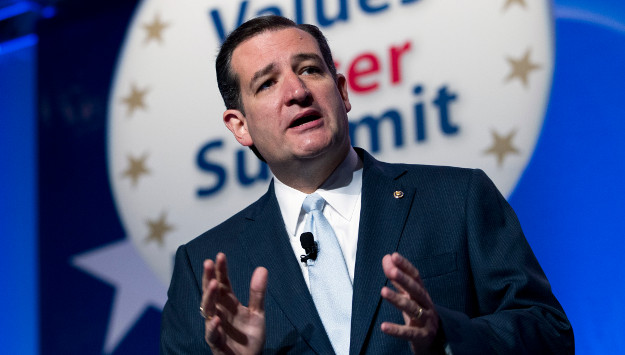
Sen. Ted Cruz, when asked at last month’s CNN town hall meeting to defend his controversial proposal to target Muslim neighborhoods in the United States, made a valuable distinction between Islam and Islamism.
Egyptian President Abdel Fattah el-Sisi has earned numerous accolades, domestic and international, for his repeated calls for religious discourse away from extremism. Sisi has expressed the conviction that the proclivity to radicalism and conflict is not inherent to Islam, but is the product of the sacralization of texts and the uncritical acceptance of early scholars.
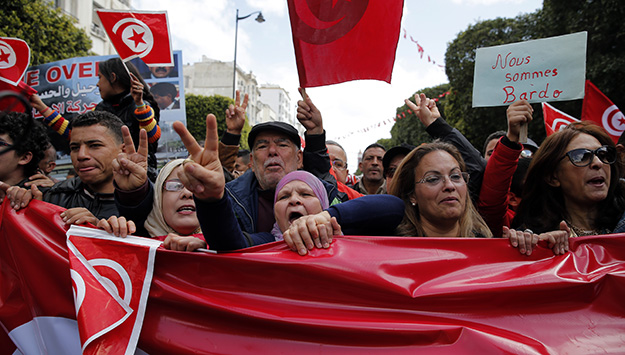
At face value, the targets of the Bardo Museum attack on March 18 in Tunis were Tunisia and the West, the former as the sole survivor of the “Arab Spring,” a country that has been successful in bridging the transition toward a democratic order, and the latter as the foe that radical Islamism seeks to defeat and supplant. A more extreme secular reading of the event may even see in it a punishment for Tunisia for having denied Islamist parties the coveted electoral victory and a reminder that, even from the margins, Islamism will dictate the course of the nation.
Sovereignty, the Hezbollah Model, or Dissolution: Managing Factional Forces in Iraq
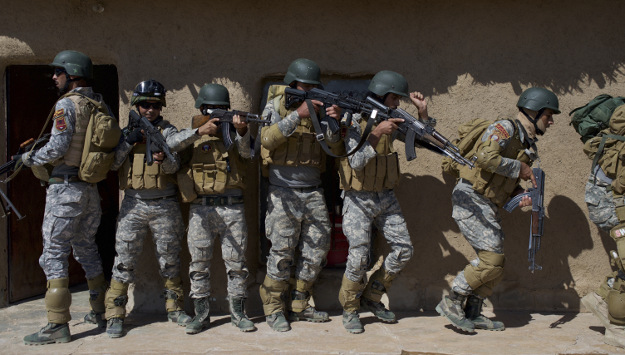
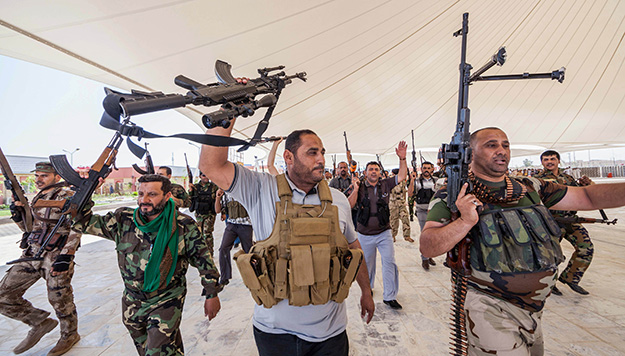
When the Islamic State of Iraq and Syria (ISIS) overran Mosul last June, Grand Ayatollah Ali al-Sistani, the preeminent Shi‘i cleric in Iraq, called for voluntary jihad. The outlook for the central government was bleak. Reports from the battlefronts, as well as threatening statements by ISIS leaders, suggested that the capital Baghdad could also fall to ISIS. The group repeatedly massacred its captives and systematically destroyed important religious and cultural sites.