This text has been translated by AI and may contain errors.
Skip to Content

Salam Kawakibi

This individual is a guest contributor. MEI is not able to assist with contact requests.

The Latest from Salam Kawakibi

Filter by
9993 Results
Hezbollah and Amal change tactics and ratchet up violence amid ongoing protests
Supporters of Lebanese Shiite groups Hezbollah and Amal wave flags and chant in front of army soldiers in the capital Beirut, on November 25, 2019.
  • Analysis
  • Hezbollah and Amal change tactics and ratchet up violence amid ongoing protests

    While Hezbollah has largely remained immune to criticism, owing to its widely perceived role as an effective resistance movement against Israeli aggression, the powerful Iran-backed Shi’a militia and political party is now viewed by many demonstrators as part of the corrupt and morally bankrupt political establishment that must be replaced. Against this backdrop, supporters of Hezbollah and its Shi’a ally the Amal Movement have been quick to resort to violence.

    December 5, 2019

    Bringing Social Class into Humanitarian Debates: The Case of Northern Lebanon
    (Photo by Vincent LECOMTE / Gamma-Rapho via Getty Images)
  • Analysis
  • Bringing Social Class into Humanitarian Debates: The Case of Northern Lebanon

    Cities are commonly regarded as the primary places where class economies become layered and articulated; however, the debates on “urban humanitarianism” have neglected social class as a key factor that significantly marks the relationship between aid providers and recipients in settings of aid provision. The small city of Halba, in northern Lebanon, vividly illustrates how the class economy has tacitly been shaping humanitarian programming and how the very presence of humanitarian actors on the ground reinforced the pre-existing class-based inequality.

    December 4, 2019

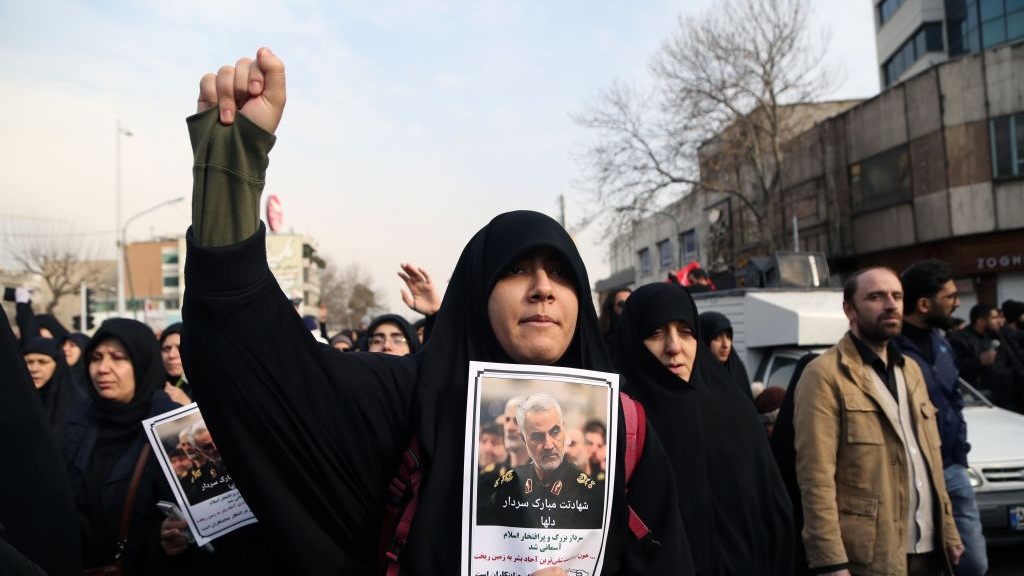
    Will protests in Iran lead to negotiations with the US?
    Iranian protesters gather around a fire during a demonstration against an increase in gasoline prices in the capital Tehran, on November 16, 2019. - One person was killed and others injured in protests across Iran, hours after a surprise decision to increase petrol prices by 50 percent for the first 60 litres and 300 percent for anything above that each month, and impose rationing. Authorities said the move was aimed at helping needy citizens, and expected to generate 300 trillion rials ($2.55 billion) per
  • Analysis
  • Will protests in Iran lead to negotiations with the US?

    The protests that began in Iran in mid-November may well have a direct impact on Tehran’s relations with Washington. Initially sparked by the Iranian government’s sudden decision to raise fuel prices, the demonstrations have made clear the country’s fragile socio-economic and political situation.

    Gen. Votel on US Policy in Afghanistan
    Middle East Institute
  • Video
  • Gen. Votel on US Policy in Afghanistan

    Gen. (Ret.) Joseph Votel discusses the role of Afghanistan in US regional strategic interests, whether a peace deal is possible with the Taliban, and how important Pakistan is to achieving a sustainable political settlement.

    December 3, 2019

    Iraq: No clear path out of the crisis
    Iraqi Prime Minister Adel Abdul-Mahdi speaks during extraordinary cabinet meeting after he handed his resignation letter to the parliament, in Baghdad, Iraq on November 30, 2019.
  • Commentary
  • Iraq: No clear path out of the crisis

    There is no end in sight to Iraq’s political crisis even though Parliament unanimously voted to remove Prime Minister Adel Abdul-Mahdi on Sunday. Abdul-Mahdi now tends a caretaker government while Iraq’s political leaders are interpreting the country’s constitution to give President Barham Salih 15 days starting from Nov. 30 to name a new prime minister.

    The Caucasus and the Middle East
    Georgian soldiers run during a farewell ceremony before their departure to Afghanistan in Tbilisi, June 27, 2013.
  • Analysis
  • The Caucasus and the Middle East

    For years, politics and conflicts in the Middle East have spilled over into many other regions of the world. Refugee crises, terrorism, and political instability in the Middle East have impacted foreign and domestic policy and politics in North America and Europe, but the Caucasus is much closer and, therefore, a particularly important case for policymakers in Washington and Brussels.

    December 2, 2019

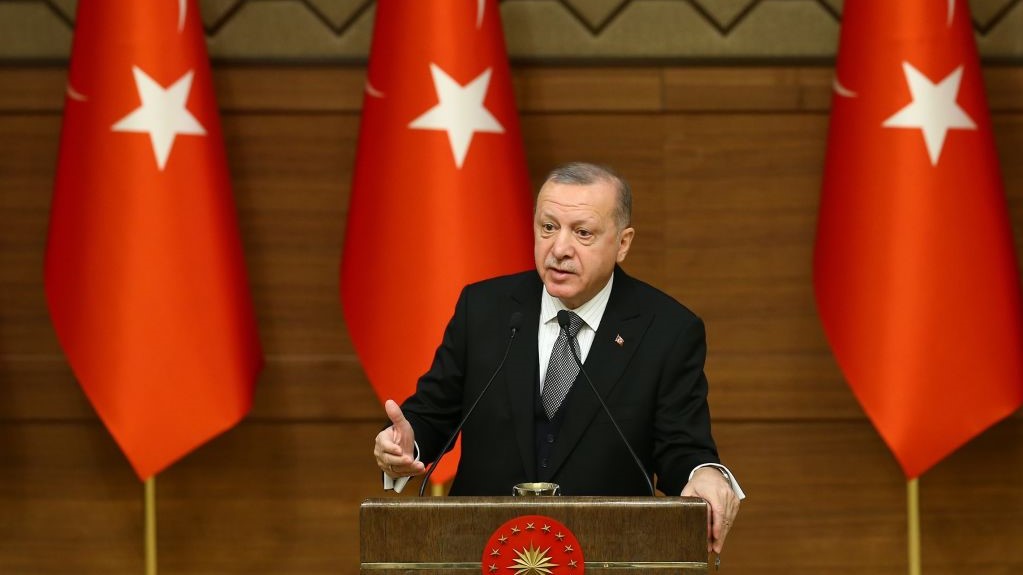
    Turkey’s collision course with NATO
    President of Turkey, Recep Tayyip Erdogan (R) receives North Atlantic Treaty Organization (NATO) Secretary General, Jens Stoltenberg (L) in Istanbul, Turkey on October 11, 2019.
  • Commentary
  • Turkey’s collision course with NATO

    NATO leaders will celebrate the 70th anniversary of their alliance in London on Dec. 3 and 4. Despite soft words from NATO Secretary-General Jens Stoltenberg, however, the alliance and Turkey are on a collision course.

    US-Taliban talks are back on but little has changed
    US President Donald Trump holds a bilateral meeting with Afghan's President Ashraf Ghani at Bagram Air Field during a surprise Thanksgiving day visit, on November 28, 2019 in Afghanistan.
  • Commentary
  • US-Taliban talks are back on but little has changed

    President Donald Trump’s lightning fast roundtrip to Bagram airbase north of Kabul had its share of surprises. In addressing troops, he confirmed previous reports that talks are once again underway with the Taliban, but then went on to inject a ceasefire as a condition for a new agreement.

    The role of women in shaping Syria’s future
    Middle East Institute
  • Podcast
  • The role of women in shaping Syria’s future

    Syrian activists Sarah Hunaidi, Rafif Jouejati, and Jomana Qaddour join host Alistair Taylor to discuss the involvement and role of women in civil society and efforts to shape the country’s political future.

    November 26, 2019

    Resilience amid turmoil: Russia and Sudan maintain strong ties despite political upheaval
    Russias President Vladimir Putin and the Chairman of the Sovereignty Council of Sudan, Abdel Fattah al-Burhan shake hands during a meeting on sidelines of the 2019 Russia-Africa Economic Forum at the Sirius Park of Science and Art.
  • Analysis
  • Resilience amid turmoil: Russia and Sudan maintain strong ties despite political upheaval

    On Oct. 23, Russian President Vladimir Putin met with Chairman of Sudan’s Sovereign Council Abdel Fattah al-Burhan in Sochi. After their meeting, Putin praised Sudan’s reliability as a Russian ally and said that the formation of the council was a critical step toward a path of “sustainable development” in Sudan. The cordial meeting between Putin and Burhan came less than one month after Russian Foreign Minister Sergey Lavrov met with Prime Minister Abdalla Hamdok on the sidelines of the UN General Assembly and underscored the resilience of the Russia-Sudan bilateral relationship.

    November 26, 2019

    The constitutional committee must be part of a holistic Syrian peace process
    Syrian Constitutional Committe, made up of opposition, civil society and regime members gather in Geneva, Switzerland on October 30, 2019 with the UN's facilitation.
  • Analysis
  • The constitutional committee must be part of a holistic Syrian peace process

    This week marks the second round of constitutional committee negotiations in Geneva, Switzerland convened by UN Special Envoy to Syria Geir Pedersen. The committee is convened under the auspices of UNSCR 2254, which requires the drafting of a new constitution among many other important obligations. The fact that only one of those requirements is being pursued seriously by the international community is — understandably — beyond frustrating for Syrians. Attempting to solve the Syrian conflict by addressing only one of so many outstanding issues is not only a mistake, but will also do little to bring any lasting peace to this war-torn country.

    November 26, 2019