Within weeks of the Strait of Hormuz closure, fertilizer prices began to rise sharply. Tanker traffic through the strait, which handles one-third of the global fertilizer trade, fell by 90%. As of April 30, 44 ships carrying fertilizer were stuck in the Gulf. More than half of the Middle East’s urea production, a nitrogen-based compound used to boost crop yields, has been lost since the start of the conflict. The price of urea FOB Egypt, a global benchmark, has nearly doubled. Contracts are being cancelled under force majeure just as planting season begins.
Across North Africa the impacts are multiplying. Morocco faces disruptions to its own sulfur imports. OCP Group, the world’s largest phosphate exporter, imports 3.7 million metric tons of sulfur annually from the Gulf to convert phosphate into complex fertilizers like DAP and MAP. These imports are now blocked, putting pressure on Morocco’s ability to act as a regional fertilizer supplier when its output is needed most. Algeria and Egypt’s nitrogen fertilizer production faces competing domestic and export commitments. Tunisia and Libya struggle with foreign exchange constraints that raise import costs and limit purchasing power, even before factoring in supply problems.
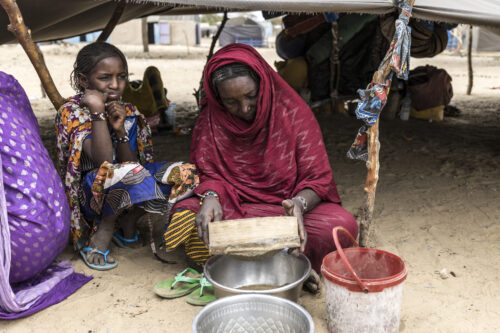
The crisis extends beyond North Africa. The Maghreb and Sahel — the semi-arid region stretching from Senegal and Mauritania in the west to Sudan and Eritrea in the east — share overlapping vulnerabilities to instability, governance fragility, and external shocks that governments are ill-equipped to absorb. The impact extends south through food price inflation, migration pressures, and the erosion of state legitimacy. More than 41 million people in the Sahel and West Africa, a region of roughly 90 million, are acutely food insecure. Terrorism and instability are on the rise. The threat posed by jihadi group JNIM to Mali’s capital underscores the intersection of security and governance. Food security is a governance issue compounded by geopolitical crisis. Mali and Niger depend on Gulf-linked fertilizer supply. The Sahel’s agricultural cycle is unforgiving: crops are rain fed, the planting season is short, and fertilizer has to be available and applied at a specific point in the planting cycle to boost yields.
Why It Matters for the US
Stability, counterterrorism, and Russia’s role in the Sahel. Food insecurity is a driver of instability. The collapse of civilian governance in Mali, Burkina Faso, and Niger has displaced US and French counter-terrorism partnerships, replaced by Russian mercenary groups. Russia has simultaneously expanded its food and fertilizer exports to the region, building dependencies. A food crisis could deepen popular desperation that fuels instability and weakens US counter-terrorism interests.
Commercial and strategic competition. China and Russia are using food supply agreements, agricultural infrastructure investment, and aid flows to build long-term commercial and political ties. China has been able to lock in port deals, trade routes, and access to critical minerals that displace US and European interests for years. Morocco, a US ally, is positioned to play a stabilizing regional role through existing infrastructural networks. Supporting that role reinforces its bilateral relationship with the US, which the Trump administration values. Ceding that space to Russia and China has commercial consequences beyond the current crisis.
Migration, leverage, and the cost of disengagement. Food insecurity is one of the most reliable drivers of migration, as the 2022 Russia-generated food crisis and resulting spike in migration to Europe made clear. The group most at risk in the Sahel are young, displaced, and lack jobs and basic services. They are the most likely to join criminal and radical networks or migrate to Europe. An administration focused on illegal immigration has a direct interest in its drivers. Disengagement merely limits available leverage.
Policy Considerations
Support Maghreb partners’ emergency response capability. Working bilaterally, the US can support Morocco and Algeria to redirect some of their fertilizer supply and food stocks toward Sahel countries.
Reengage in US food security programing as a CT tool. Emergency agricultural support to Mali, Niger, Burkina Faso, and Mauritania should be framed as counter-terrorism stabilization assistance. Populations with food security are less likely to align with armed groups.
Counter Russian and Chinese food diplomacy. Russian fertilizer supply deals and Chinese agricultural investment should be labeled as strategic competition. The US can offer credible alternatives through Development Finance Corporation financing, US Department of Agriculture programming, and trade support.
Intissar Fakir is a Senior Fellow at the Middle East Institute.