The United States commemorates the 250th anniversary of its founding on the Fourth of July, a time when Americans typically engage in introspection about the health and welfare of their country’s democratic system. For a few days, US foreign policy will likely recede temporarily from public attention as some Americans celebrate and others lament the current course, even as significant events around the world continue to unfold.
This is especially true in the Middle East, which has dominated headlines for the past four months since America and Israel launched a war against Iran, setting off a complicated cycle of strikes without strategy, diplomacy, or a clear end in sight. That conflict now looms over not just Iran but also the broader Gulf region, Lebanon, and Palestine.
Another story emerged this week that will have an impact on America’s standing and credibility across the Middle East and the world: reports that US President Donald Trump has used his first year back in office to accrue wealth for himself and his family’s companies in ways that are highly unusual in America’s democratic system.
A Wartime President Enriches Himself While Failing to Achieve Durable Peace in the Middle East
President Trump’s latest financial disclosure showed that his businesses generated $2 billion in income in 2025, more than triple what they earned the year before he returned to office. Trump’s family businesses struck real estate, media, and cryptocurrency deals, many of which are connected to foreign entities, including in the Middle East.
According to the information available in the disclosure, Middle Eastern countries and businesses have directly contributed to the bottom line of Trump’s family businesses — more so than any other region of the world. Gulf entities paid around $300 million to the president’s businesses in 2025, with much of that money coming from the sale of half of Trump’s stake in cryptocurrency company World Liberty Financial to an entity backed by Sheikh Tahnoon bin Zayed Al Nahyan, a top Emirati official and brother to the country’s president.
Trump’s tendency to mix business with governing is exceptional when measured against every other US president in America’s 250-year history — and some scholars and observers say it creates unprecedented conflicts of interest and violates the US Constitution, in particular Article I, Section 9, Clause 8:
“No Title of Nobility shall be granted by the United States: And no Person holding any Office of Profit or Trust under them, shall, without the Consent of the Congress, accept of any present, Emolument, Office, or Title, of any kind whatever, from any King, Prince, or foreign State.”
For its part, the White House denies there are any conflicts of interest and rejects the notion that Trump has used the presidency for his own benefit.
During Trump’s first term in office, several court cases alleged that his retention of certain business and financial interests violated the Emoluments Clause, but the Supreme Court denied review of these cases without addressing their merits, instructing federal appellate courts to vacate their judgments and dismiss the other two cases as moot. These cases took place long before 2025, and it remains to be seen whether this latest disclosure of the way Trump family businesses financially benefited from transactions with foreign entities might produce new legal challenges.
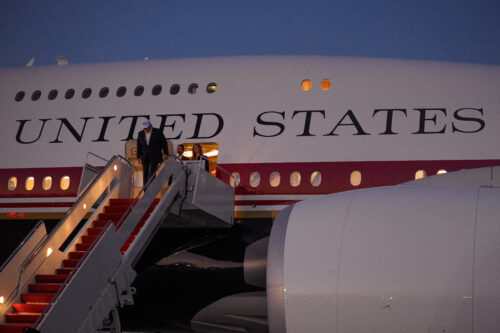
This dynamic, already the cause of political controversy, could have a negative impact on perceptions about the credibility and legitimacy of Trump 2.0’s policy approach to the Middle East, all the more so as the president flaunts the luxury jetliner given to him as a gift by Qatar and retrofitted with US taxpayer dollars. It also risks undercutting the durability and steadiness of US partnerships in key Middle East countries, particularly as the pendulum swings once again in US domestic politics with the impending 2026 midterms and Trump’s likely departure from the American political scene after the 2028 presidential elections. Although the president and his representatives insist there is a firewall between his official actions and his business entities, those claims might not stand up under scrutiny.
How Perceptions of Corruption Could Further Undercut US Policy in the Middle East
The unusual situation America finds itself in right now — being headed by a president whose businesses have profited immensely during his first year in office — could have two significant impacts on US foreign policy in the Middle East.
The first and most immediate effect could come as early as next year when the 120th Congress takes office after the 2026 midterm elections. It remains unclear nearly four months before the vote which party will control the House and Senate in the US Congress, but if Democrats win a majority in either or both houses, they are almost certain to make Trump’s foreign business deals a major issue of inquiry and debate. The fact that nearly all elected Republicans have sat in passive silence and some Trump supporters have peddled specious, optimistic arguments in favor of Trump’s bold but unpredictable Middle East policies exposes a major vulnerability for a US president who is at his weakest point politically since coming to office. The Middle East remains fundamentally unstable as Trump 2.0 appears incapable of securing lasting diplomatic deals, even as the president’s businesses gain financial benefit from relationships with the same political interlocutors. Unless conditions improve, the Middle East will likely remain in the spotlight, and members of Congress will have incentives to highlight allegations of foreign corrupt practices and mixing government business with private interests.
Secondly, some countries in the Middle East are increasingly seeing the United States through a narrow, transactional lens, including those that have done deals with Trump family businesses. This creates a less stable foundation for bilateral relations overall, and it also incentivizes US partners in the Middle East to diversify their relationships globally and de-risk away from Washington.
At the start of Trump’s first term in 2017, a senior Gulf official told me that they saw President Trump as a man who was easily flattered, and they would seek to gain influence by making deals that profited him and his family members. Most notably, Jared Kushner, Trump’s son-in-law, continues to functionally serve as a Middle East envoy for the administration while also seeking to raise billions of dollars from Middle East governments for his private equity firm. This is just the tip of the iceberg when it comes to the intersection between the second Trump administration’s policy engagement with the Middle East and efforts to enrich private businesses owned and controlled by individuals linked to Trump 2.0.
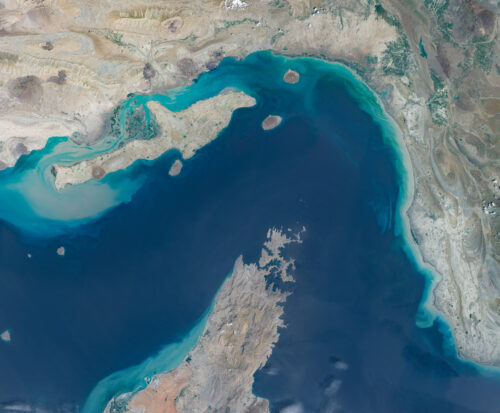
That Trump’s results on key Middle East files — most notably Iran and Israel-Palestine — are incomplete at best and mediocre at worst is producing some buyer’s remorse across the region. Importantly, key US partners like Saudi Arabia have reportedly taken steps to distance and insulate themselves from the risks of Trump’s policy approach during the 2026 Iran war — as in the case of the short-lived “Project Freedom” operation aimed at reopening the Strait of Hormuz.
This dual crisis of credibility and efficacy in US foreign policy in the Middle East is not new. This predicament has afflicted Republican and Democratic presidents alike over the past quarter-century, from the 2003 Iraq war of the George W. Bush administration to Barack Obama’s mixed responses to the 2011 Arab uprisings and the 2013 “red line” in Syria. The fact that the US-led 2015 Iran nuclear deal was achieved without sufficient coordination and buy-in from key regional partners also undercut America’s credibility in the Middle East — as has the lack of sufficient consultation from Trump 2.0 on the 2026 Iran war.
US foreign policy in the Middle East has lost its moral compass in recent years, and growing perceptions about corruption and misuse of public office will likely further undercut America’s power, legitimacy, and ability to achieve its stated goals.
Brian Katulis is a Senior Fellow at the Middle East Institute.
Photo by Andrew Harnik/Getty Images
The Middle East Institute (MEI) is an independent, non-partisan, not-for-profit, educational organization. It does not engage in advocacy and its scholars’ opinions are their own. MEI welcomes financial donations, but retains sole editorial control over its work and its publications reflect only the authors’ views. For a listing of MEI donors, please click here.


The Americans Are Gone. Will Iraq’s Militias Disarm?