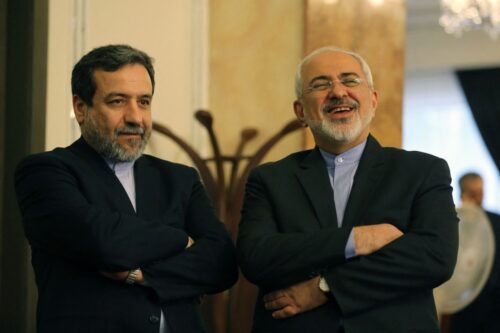
What made Mohammad Javad Zarif’s recent Foreign Affairs article so explosive was not simply what he proposed, but when and where he proposed it. Zarif argued that Iran should use what he presented as its wartime resilience not to prolong the fight, but to convert it into a lasting settlement with the United States: limits on the nuclear file in exchange for the lifting of sanctions, the reopening of the Strait of Hormuz, a nonaggression pact, and even the possibility of future economic interaction with US companies.
In Tehran, that was immediately read by hardline critics not as strategic flexibility but as an opening to compromise with an enemy still at war. In some corners, the response was ferocious. He was denounced as weak, accused of offering Donald Trump an escape hatch, and, in some cases, subjected to outright death threats. One prominent critic warned that Zarif had days to retract his words or face an angry crowd at his home.
At first glance, that uproar seemed to confirm a familiar story about Tehran: a regime split between pragmatic diplomats who still think in the language of statecraft and hardliner ideologues who know only the language of resistance. But the composition of the Iranian team sent to Islamabad for talks with Vice President JD Vance suggests something more complicated.
Photo by ATTA KENARE / AFP via Getty Images
The Middle East Institute (MEI) is an independent, non-partisan, not-for-profit, educational organization. It does not engage in advocacy and its scholars’ opinions are their own. MEI welcomes financial donations, but retains sole editorial control over its work and its publications reflect only the authors’ views. For a listing of MEI donors, please click here.
The Mecca Alliance Meets the Red Sea – Saudi Arabia’s New Defense Pact Faces Its First Major Test