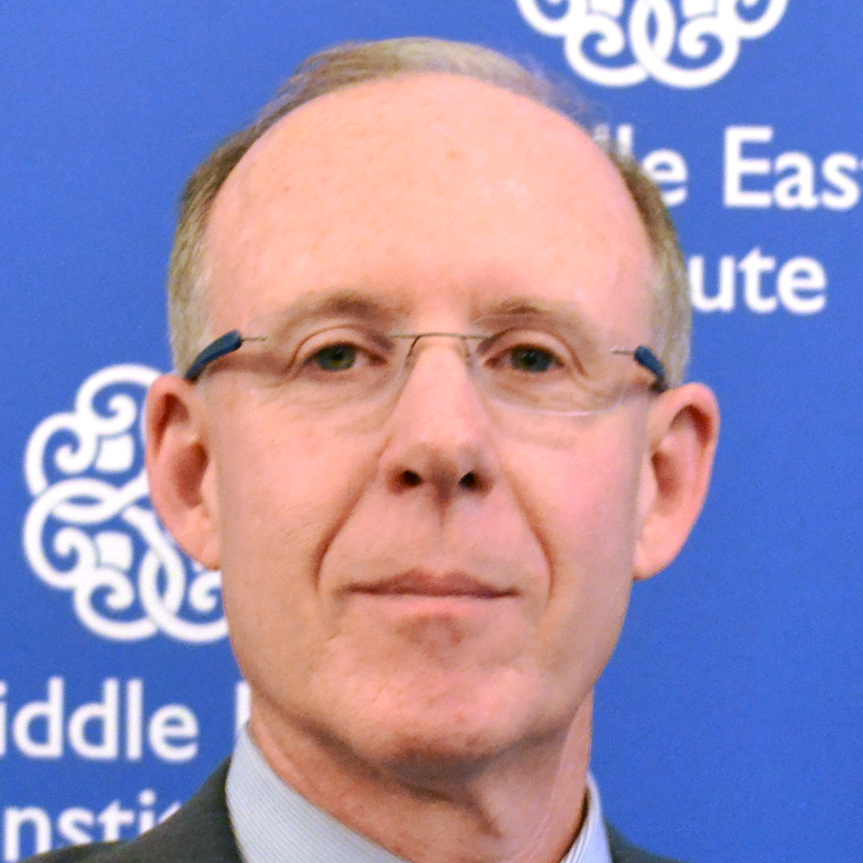
Washington says it doesn’t know who runs Iran. Tehran insists its leadership is united. MEI Senior Fellow Alex Vatanka joins hosts Alistair Taylor and Matthew Czekaj to sort out where the truth lies. They look at the small circle of political and military figures now steering the war effort in Tehran: who they are, how they make decisions, and how unified they really are. They also discuss the current state of US-Iran negotiations, the role of the upcoming midterm elections in the United States, and how the Islamic Republic is preparing for a potential renewal of conflict afterward.
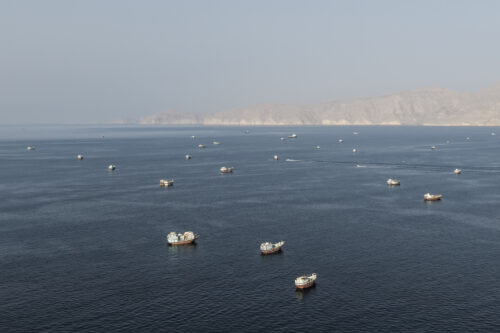
Crude oil is flowing out of the Gulf again, but the market is no better prepared for another disruption in the Strait of Hormuz. It has assembled a temporary system for managing one. Crude exports from the Gulf, excluding Iran, returned to pre-war levels in September, while total Gulf shipments reached 15.5 million barrels a day, more than 80% of the pre-conflict volume.
Many of the immediate consequences of the Israeli-American war with Iran are already clear. The further emergence of drones and missiles as dominant weapons of war; the danger to the global economy from the threats to vital chokepoints such as the Strait of Hormuz and the Bab el-Mandeb; and the inadequacy of US weapons procurement, among other issues, have garnered widespread and entirely merited attention.
Is Turkey the New Iran — Or Is that the Wrong Question?
The balance of power in the Middle East is shifting. Iran is on the defensive — its military capabilities were badly degraded by last year’s 12 days of Israeli and US strikes, and growing protests at home have made the regime look more vulnerable than it has in years.
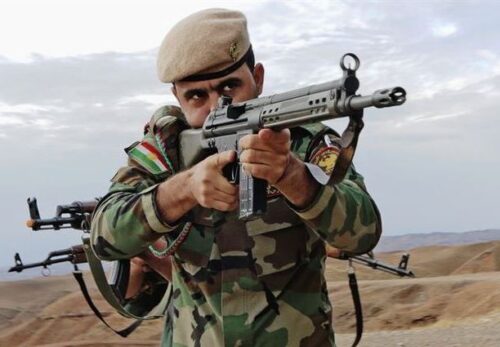
Arming a Kurdish insurgency would be a risky endeavor – for both the US and Iran’s minority Kurds
With the Iranian regime weakened by relentless American and Israeli missiles, Washington is eyeing a familiar U.S. ally in the Middle East to help push the Islamic Republic over the edge: the Kurds.
After the Iran War: What Is America’s Long Game in the Middle East?
Brian is joined by Dana Stroul, Director of Research and Shelly and Michael Kassen Senior Fellow at the Washington Institute for Near East Policy, to examine US objectives in the Middle East in the midst of the ongoing war between the US, Israel, and Iran. Drawing on her extensive experience in US policymaking, most notably as the Pentagon’s top civilian official responsible for the Middle East from 2021 to 2023, Dana offers an insider’s perspective on this strategic moment. Together, Dana and Brian unpack the rapidly developing situation in Iran, the fragility of the ceasefires in Gaza and Lebanon, the shifting landscape in Syria after Assad, and the United States’ role in a region that may be on the cusp of transformation.
After Khamenei: Iran enters its most uncertain transition since 1979
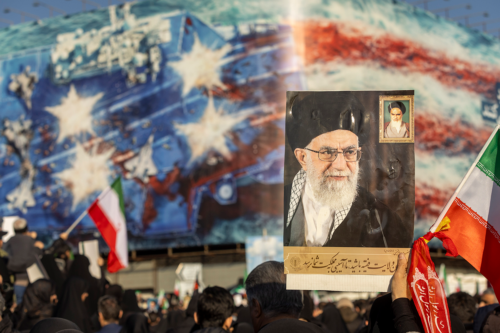
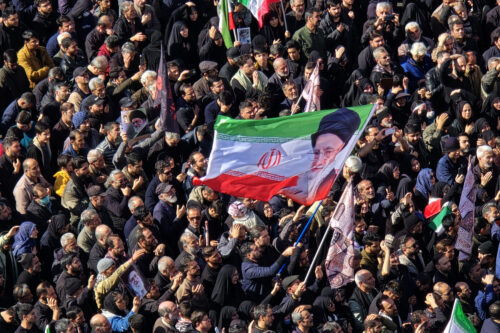
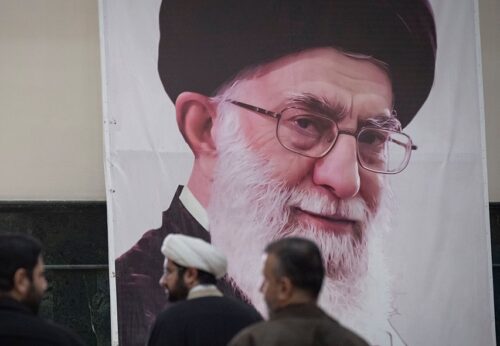
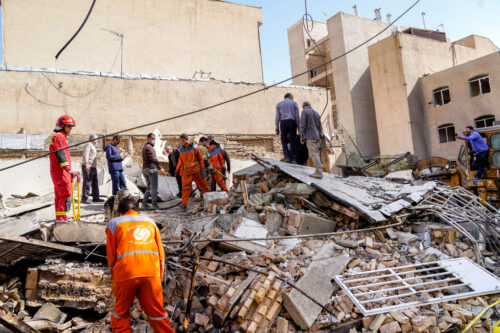
For nearly four decades, Ayatollah Ali Khamenei embodied the Islamic Republic’s certainty: a singular authority who shaped every major decision on war and peace, repression and reform, economics and ideology. His death, in a coordinated US-Israeli strike on his Tehran command compound on February 28, has ripped that certainty away in the most violent fashion imaginable.
On February 28, the US and Israel launched coordinated military strikes on Iran. MEI defense experts weigh in on the military and regional consequences.
As the third and seemingly decisive round of talks in Geneva concluded, the Trump administration had avoided diplomatic deadlock — but only by narrowing negotiations to the nuclear file.
Tehran Has Discovered Moscow Is a Fair-Weather Friend
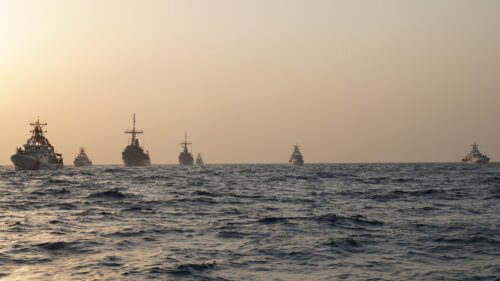
The latest cycle of U.S.-Iran escalation has followed a familiar script: sharpened rhetoric from the United States, calibrated military signaling by Iran in the Persian Gulf, indirect diplomacy through Oman, and Israeli warnings that remain deliberately ambiguous but unmistakably real. Yet beneath this choreography lies a more consequential development inside Tehran. The current crisis is forcing Iran’s political class to reassess its central foreign-policy wager of the past decade: that deepening alignment with Russia and China would provide strategic insulation against Western coercion.
Against the backdrop of one of the largest US military deployments to the Middle East since 2003, MEI Senior Fellow Alex Vatanka joins hosts Alistair Taylor and Matthew Czekaj to assess the situation inside Iran on the eve of potential war. Weeks after the Islamic Republic’s brutal crackdown on anti-government protesters and as negotiations with the US fail to find common ground, Donald Trump is reportedly weighing options for military action against Iran. Vatanka breaks down the regime’s strategic calculus, the current dynamics of Iran’s opposition movement, and the likely domestic political consequences of a military strike.
The oldest peer-reviewed publication dedicated to the study of the modern Middle East, MEI’s flagship journal covers politics, society, and culture in the region.