Israel/Palestine: What the Iran War Broke and What May Yet Be Salvaged
The 20-point plan for Gaza introduced before the war with Iran began has languished, with no meaningful recovery, reconstruction, Hamas disarmament, governance transition, or Israeli withdrawal. The diplomatic pivot back to Gaza in late July and early August suggests that the Iran war’s stubborn persistence may be causing the US and regional actors to seek wins on other fronts.
Israel: Strategic Divergence and Weakened Deterrence
The American-Israeli campaign against Iran that began in February 2026 resulted in a regional conflict its authors never intended. The war’s chief product is not what the United States and Israel destroyed, though that was significant, but what Iran proved: that it holds a strategic lever over its neighbors, the world economy, and the US.
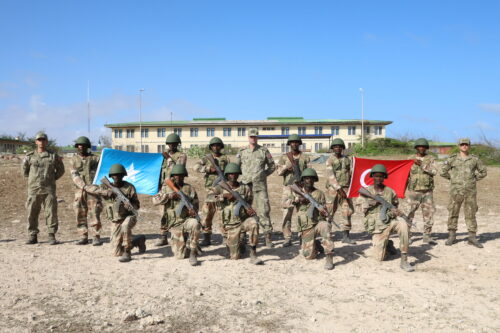
Turkey has become a major player in Africa, with a particularly strong footprint in the Horn. While economic and energy interests’ matter, one sector now stands at the center of Ankara’s regional activism: defense.
Much has been made, particularly by Israelis, of the expanding horizons for collaboration between the Jewish state and Arab Gulf states. Israeli ministers and business people lose no opportunity to tout Israel’s interest in expanding ties of all sorts in a region viewed as a valuable market for Israeli industry and an intelligence gold mine.
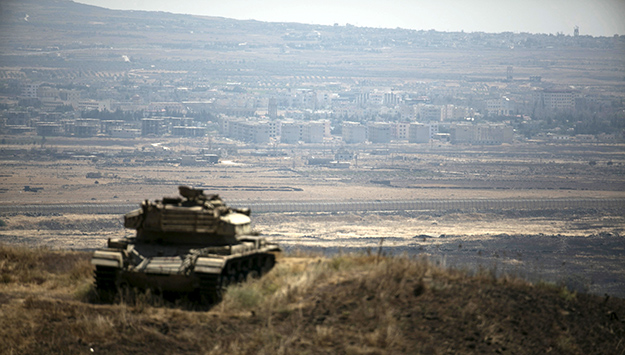
For successive Israeli governments and the defense establishment, the Syrian arena has traditionally been considered Israel’s “front yard” in terms of threat analysis, early warning and force readiness. The defense budget, comprising 7.7 percent of Israel’s G.N.P. in 2011 (latest available data), included considerable allocations designed to meet the Syrian army’s threat.
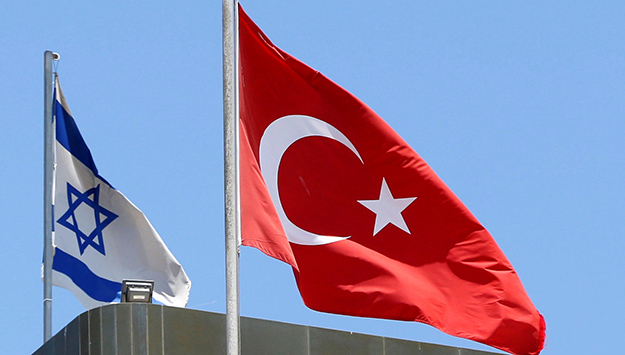
After years of negotiations that produced sporadic headlines but few results, Israel and Turkey finally reached terms for reconciliation on June 27. While relations will not return to the “love affair” of the 1990s, there is reason for cautious optimism. Rapprochement will serve to create the foundation for a stronger dialogue between two of the Middle East’s most important actors.
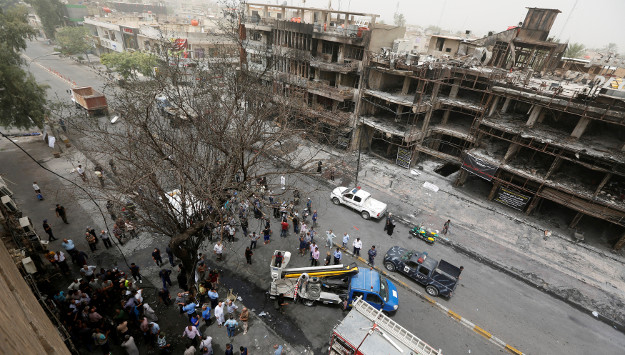
Weekly Briefing: Baghdad Bombing, NATO Summit, Israel’s Africa Outreach, and Saudi Embassy Trial in Iran
In this week’s briefing, MEI experts Hassan Mneimneh, Daniel Serwer, Paul Scham, and Alex Vatanka provide analysis on recent and upcoming events including the ISIS bombing in Baghdad, this week’s NATO summit in Warsaw, Israel’s outreach to Africa, and the trial in Iran over the ransacking of the Saudi embassy.
Monday Briefing: Brexit’s Impact on the Middle East; Syria File Changes Hands in Iran
In this week’s Monday Briefing, MEI experts Daniel Serwer, Paul Scham, and Alex Vatanka provide analysis on recent and upcoming events including Brexit’s impact on the Middle East, how Brexit is distracting the E.U. from Israel-Palestine issues, and Iran’s more moderate reshuffling of officials focusing on Syria.
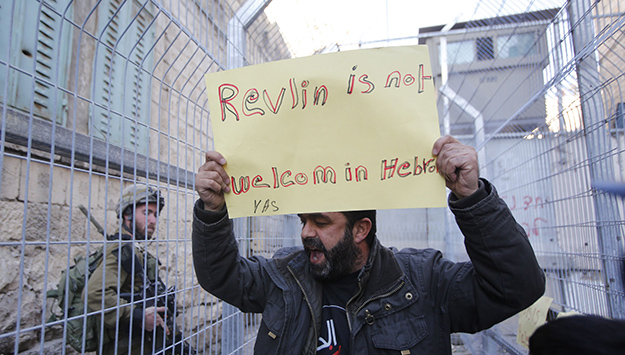
Israeli President Reuven “Ruby” Rivlin was recently asked about the prospects for a two-state solution to Israel’s long conflict with the Palestinians. He described this concept for building a future between Israel and its neighbor as “irrelevant.” Indeed, he claims to have said as much to President Barack Obama when they last met.
What does “irrelevant” mean in this context? The dictionary lists as its synonyms “immaterial” or “beside the point.”
Monday Briefing: ISIS to Lose Fallujah; Pakistan to Join S.C.O.
In this week’s Monday Briefing, MEI experts Robert S. Ford, Paul Scham, and Marvin G. Weinbaum provide analysis on recent events including the battle against ISIS for Fallujah, Israel’s upcoming address to the EU Parliament, and Pakistan’s upcoming accession to the Shanghai Cooperation Organization.
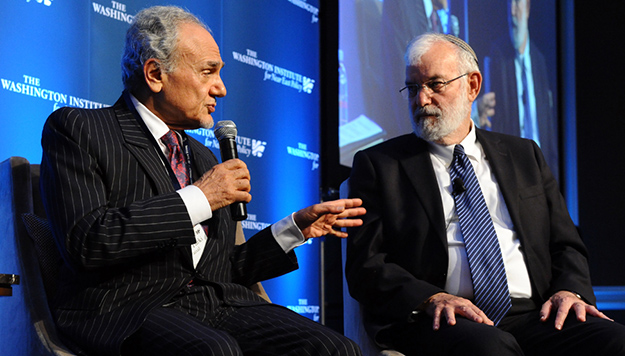
For several years, Israeli-Saudi collaboration over regional geostrategy to check Iranian influence has been the worst kept secret in the Middle East since the advent of Israel’s robust nuclear arsenal. Still, public coordination has been taboo, and while indirect, and even direct, coordination may be taking place behind closed doors, no official relationships can develop. This, of course, is due to the history between the state of Israel and the Arab world.
These days even the hint of a renewal of diplomacy on Palestine is enough to set tongues wagging. In recent months, France has led what remains an inchoate effort to fill the diplomatic vacuum created by the Obama administration’s decision two years ago to close its book on Palestine.
Netanyahu’s Risky Politics and the French Initiative
The so-called ‘French initiative’—a boost-plan for the moribund ‘Middle East Peace Process’ designed to bring Israel and the P.L.O. back to the negotiating table under an international umbrella through a series of multilateral summits—was born in classic French diplomatic opulence. Not nearly half-baked, the initiative was presented ceremoniously in a grandiose manner by a foreign minister who was replaced shortly after, prompting knee-jerk reactions from all parties.
Monday Briefing: Manbij Offensive, Yemen Talks, Turkey-Israel, Tunisia Unity Government
In this week’s Monday Briefing, MEI experts Robert S. Ford, Charles Schmitz, Gonul Tol, and Mabrouka M’Barek provide analysis on recent events including Manbij offensive, Yemen talks, Israel-Turkey rapprochement, and Tunisia national unity government.
Presidential Race Shifts Discourse on Israel-Palestine
The 2016 presidential primaries have upended a wide variety of assumptions about the rules of American politics, and what the traffic will bear. One of these areas is the Israeli-Palestinian conflict.
New Gaza War Inevitable without International Action
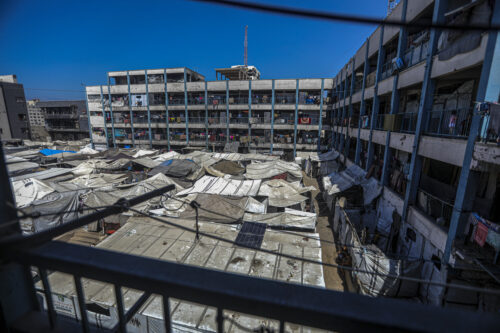
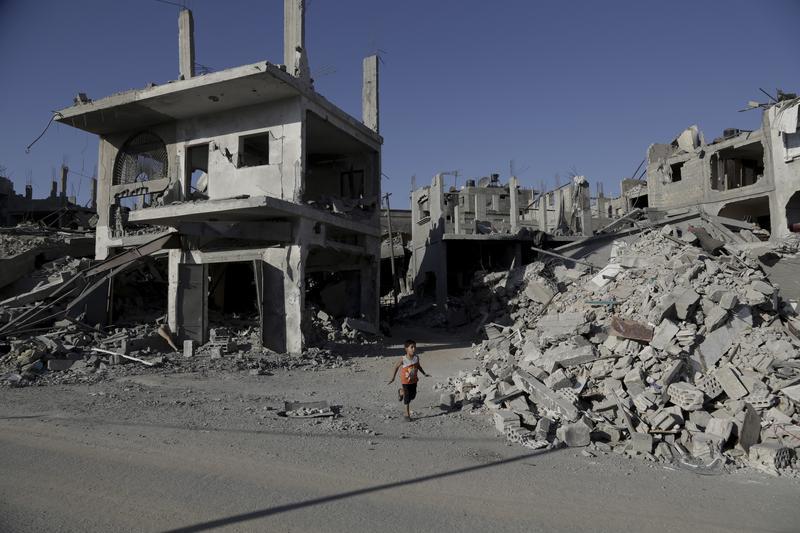
With the exception of the extremely slow reconstruction process of what was destroyed during the last Israel-Gaza war in the summer of 2014, the conditions that preceded that war remain in place. The Palestinian reconciliation process remains cosmetic, negotiations for a truce between Israel and Hamas that were supposed to resume under Egyptian auspices have stalled, and humanitarian conditions in Gaza are becoming increasingly dire. Without improvement on any of these issues, the risks for a new round of fighting remain high.