This article is part of a collection of short essays written by the Fellows of the Middle East Institute to explore aspects of the ongoing war with Iran. The intent of the collection is to help readers see new and unexpected elements of the dynamics and impact of the ongoing hostilities and to think harder, deeper, and broader about the implications of the conflict.
Egypt: How the Iran War Has Affected Egypt’s Calculations
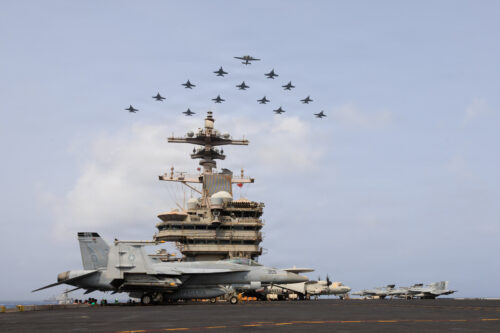
Egypt, which is not party to the war on Iran, has become a target as well as an intermediary in the conflict. As a result, the war has affected Egypt’s future calculations, particularly in three major areas: its economy, its security, and its regional alliances.
Algeria and Morocco have long been at odds, but recent diplomatic moves may signal a widening geopolitical split in North Africa. Hosts Alistair Taylor and Matthew Czekaj are joined by MEI Senior Fellow Intissar Fakir to unpack Algeria’s decision to sever diplomatic ties with the United Arab Emirates and Morocco’s warming relations with both the UAE and Israel. They also explore linkages between these diplomatic shifts and the Western Sahara conflict, Moroccan domestic concerns, particularly in light of this week’s elections, as well as broader regional stability.
Excerpted from article first published on LobeLog.
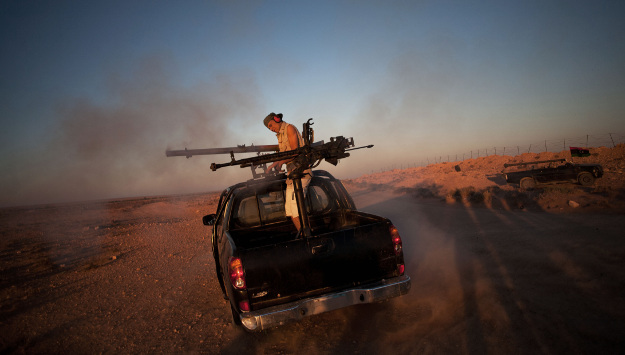
Libya remains broken and violent. Secular forces made gains against Muslim extremists in Benghazi recently, but the advantage has shifted from side to side since early this year. And two rival governments vying for power amidst a near lawless country with open borders is an ideal setting for the outflow of everything from heightened concerns to munitions and fighters. Yet Libya keeps boiling away on the global back burner.
Despite Elections, Transitional Justice Still Elusive in Tunisia
This essay is part of the Middle East-Asia Project (MAP) series on “Pathways to Transitional Justice in the Arab World — Reflections on the Asia Pacific Experience.” The series explores the pursuit of transitional justice in the post-Arab Spring Middle East, and how such efforts could be informed by past and ongoing justice processes in Asia-Pacific countries. See Resources …
The Tunisian Elections: Toward an Arab Democratic Transition
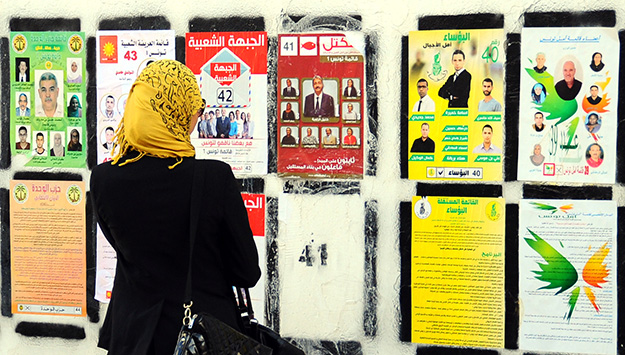
Tunisia, the birthplace of the 2011 Arab uprisings, is on the cusp of a defining moment. The parliamentary election of October 26 is about pivoting toward democratization. Presidential elections will follow on November 23. The focus of this piece is on how the elections are likely to reshape Tunisia’s polity and society.
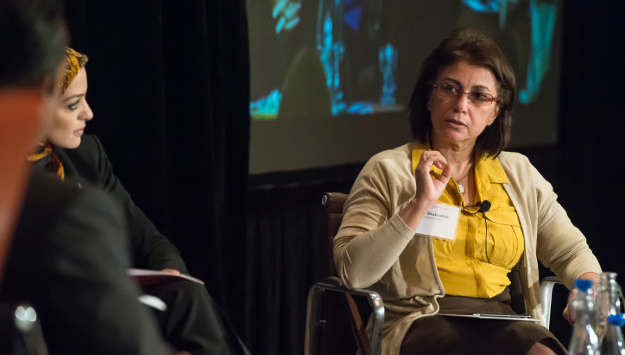
Q&A with Hala Shukrallah, President of Egypt's Al-Dostour Party
Hala Shukrallah, president of Egypt’s Al Dostour (Constitution) Party, spoke with MEI about the party’s preparations for upcoming parliamentary elections, its legislative agenda, and the challenges it will face in Parliament.See more of her comments at this year’s Egypt Conference.
Q: How has the Dostour party been preparing for the upcoming parliamentary elections?
Most of Egypt’s newly created secular political parties have complained bitterly about the Parliament Election Law, which former Interim President Adly Mansour rushed to approve in his last day in office, before handing over power to newly-elected President Abdel Fattah el-Sissi.
Egyptian Economic Challenges and Policy Exigencies
In the last three years, Egypt’s economic position has deteriorated dramatically. Domestic and external deficits have increased, causing public debt to grow sharply, external reserves to fall, investment to shrink, and inflation to increase. In the process, growth decelerated, unemployment rose, income distribution worsened, and the medium term economic outlook became clouded.
Although power cuts are hardly new in Egypt, no Egyptian government has tackled the problem seriously and transparently. After the January 25, 2011 uprising, Egyptians had less patience with the failures of state services and demanded change.
Egypt’s Muslim Brotherhood: Politically Down and Out?
On August 9, 2014, the Muslim Brotherhood in Egypt began another chapter in its besieged political life. The highest administrative court in Egypt, the Supreme Administrative Court, dissolved the Freedom and Justice Party (FJP), the political arm of the Muslim Brotherhood. The Court also liquidated all of the FJP’s assets in an effort to quash any further political ambitions and activities that the Brotherhood might have in Egypt. The ruling—a calculated move conducted prior to upcoming parliamentary elections, scheduled for later this year—was an attempt
Within four months of the military’s ouster of Mohamed Morsi, one of the icons of liberalism serving in the new cabinet, Ziad Bahaa-Eldin, admitted to CNN that those who called for political reconciliation, like himself, were alienated by the political mood, where the very concept of reconciliation has become “a dirty word” in Egypt.
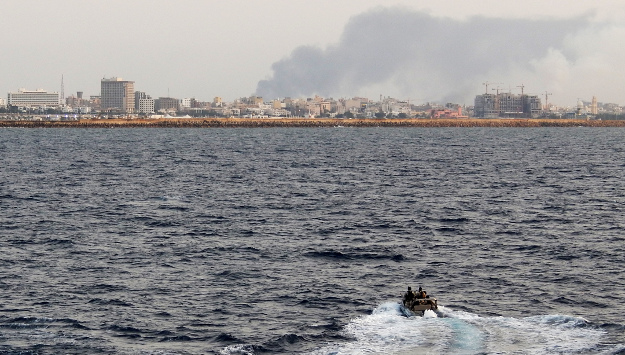
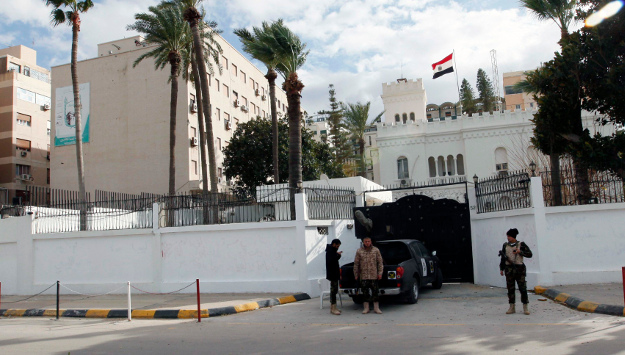
Several weeks ago an Islamist and jihadist alliance led by Ansar al-Sharia–a group with ties to Islamic State (formerly ISIS)–took control of Benghazi and declared an “Islamic Emirate.” A few days ago, an Islamist alliance took control of Tripoli’s main airport. These developments have come as a shock to the Egyptian government, which considers an Islamic state on Egypt’s 720-mile long western border an immediate threat to Egypt’s national security. This helps explain Egypt’s alleged role in recent airstrikes inside Libya coordinated with the United Arab Emirates.
Alexandria, like Cairo, is a mismanaged city with little to offer by way of basic services, much less cultural activities. But unlike Egypt’s insular, desert capital, it is a Mediterranean city, cooler, less polluted or crowded than Cairo (with just six million inhabitants), no longer a cosmopolitan hub but open to the world in material and other ways. There are signs here of a trend toward “social transformation”—a focus on the immediate surroundings, the city itself, to explore and expand its possibilities.
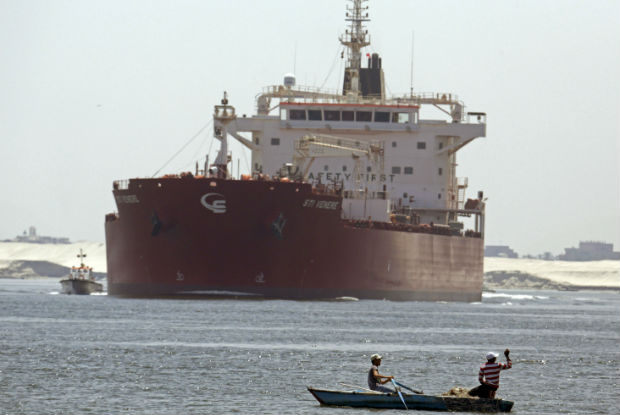
If it manages to overcome some rather formidable obstacles, Egypt’s much touted “mega project of the century”—the Suez Canal Corridor Project (SCCP)—has the potential to transform the country into a world-class center for trade and industry.
As voters headed for the polling stations in late May to elect a president for the second time since Hosni Mubarak’s 2011 ouster, the interim authority announced the state budget for the 2014 financial year. The budget included austerity measures that were sure to be painful for ordinary Egyptians, and the timing of the announcement suggests that the interim authority wanted to shield the new president from responsibility.
تُعد المجلة الرئيسية لمعهد الشرق الأوسط أقدم مطبوعة محكّمة مكرّسة لدراسة الشرق الأوسط الحديث، وتغطي المجلة الرئيسية في المعهد السياسة والمجتمع والثقافة في المنطقة.