This article is part of a collection of short essays written by the Fellows of the Middle East Institute to explore aspects of the ongoing war with Iran. The intent of the collection is to help readers see new and unexpected elements of the dynamics and impact of the ongoing hostilities and to think harder, deeper, and broader about the implications of the conflict.
Egypt: How the Iran War Has Affected Egypt’s Calculations
Egypt, which is not party to the war on Iran, has become a target as well as an intermediary in the conflict. As a result, the war has affected Egypt’s future calculations, particularly in three major areas: its economy, its security, and its regional alliances.
Algeria and Morocco have long been at odds, but recent diplomatic moves may signal a widening geopolitical split in North Africa. Hosts Alistair Taylor and Matthew Czekaj are joined by MEI Senior Fellow Intissar Fakir to unpack Algeria’s decision to sever diplomatic ties with the United Arab Emirates and Morocco’s warming relations with both the UAE and Israel. They also explore linkages between these diplomatic shifts and the Western Sahara conflict, Moroccan domestic concerns, particularly in light of this week’s elections, as well as broader regional stability.
Incorporating Cultural and Religious Practices into Transitional Justice: Lessons Related to Islam in Tunisia and Aceh, Indonesia
The Tunisian transitional justice has not drawn upon the Islamic tradition and would almost certainly not have been able to do so in a way that contributes to the ultimate success of transitional justice there. Why? This article will answer that question by focusing upon the circumstances of Tunisian transitional justice and by comparing them to the transitional justice process in Aceh, Indonesia, where Islamic practices were to some degree drawn upon. These case studies demonstrate that local cultural or religious practices must have widespread legitimacy and popular acceptance if they are to effectively contribute to transitional justice.
The enormous costs exacted on Palestinians in Gaza by Israel’s Operation Protective Edge have sparked a rocky rehabilitation of Egyptian attitudes toward Palestinians among Egypt’s political class and the public at large. Consequently, the Sisi government may see the merits of moderating the hardline approach to Gaza that has characterized Egypt’s polices since the ousting of President Mohammad Morsi one year ago.
Discussions between Egypt and Other Concerned Parties
Egypt Braces for Anniversary of Rabaa and Nahda Bloodshed
Days before the first anniversary of the August 14 violent police crackdown on the Rabaa and Nahda squares in Cairo, Egypt’s High Administrative Court ordered the dissolution of the Muslim Brotherhood’s Freedom and Justice Party and the liquefaction of its assets.[1] Since the ouster of Mohamed Morsi in July 2013, the Muslim Brotherhood and its supporters have faced a state crackdown. Thousands are currently in prison and hundreds have been killed in clashes with security.
The current crisis in Gaza represents the first real foreign policy test for Egyptian president Abdel Fattah el-Sisi. Hamas’s rejection of the Egyptian initiative to end hostilities calls into question Egypt’s ability to maintain its decades-long special status as mediator, a role it assumed by virtue of its relations with all parties – Israel and the United States on one hand, and the PLO and Hamas on the other.
When the Nidaa Tounes (“Call for Tunisia”) party was formally licensed in July 2012, it positioned itself as a “modern” alternative to the Islamist Ennahda party. Led by former interim prime minister Béji Caid Essebsi, Nidaa Tounes drew a wide range of people, including supporters of Tunisia’s Destourian (“Constitution”) movement, trade unionists, leftists, and independents, as well as former members of Zine el-Abidine Ben Ali’s Constitutional Democratic Rally (RCD) party.
Egypt’s Least Bad Option for Addressing Energy Troubles
A proposed deal to export Israeli natural gas through Egypt has the potential to enable Israel’s entry into its first major export markets, help Egypt escape a deepening energy crisis, and welcome the first European players into Israel’s natural gas industry. However, the deal is complicated by political realities and a history of deeply rooted grievances between the two countries, made worse by the recent violence between Israel and Hamas in Gaza.
Egypt’s Sexual Harassment Law: An Insufficient Measure to End Sexual Violence
A few days ago, heavy court sentences were imposed on seven men who were convicted of attempted rape, attempted murder, and torture, in a ruling seen by many as unprecedented in Egypt. In the words of one activist, the verdict was “a strong message to all harassers that their actions are no longer tolerated or accepted.”[1] This comes in the wake of the government’s vows to combat the problem of sexual harassment; a new law passed last month criminalized sexual harassment for the first time.
Egypt’s New Parliamentary Election Law: Back to the Future
Just 48 hours before handing over the reigns to now President Abdel Fattah al-Sisi, Egypt’s interim President Adly Mansour signed into law a controversial piece of legislation that regulates elections for Egypt’s new House of Representatives.[1] Since the law was announced in early June, it has generated conflicting analysis regarding its impact on the nature of the electoral system, the character of the legislature that will be elected as a result, and the extent to which it might further empower the president.
One year after the massive June 30 demonstrations against the Muslim Brotherhood (MB) and the July 3 ouster of President Mohammad Morsi by the military, the Egyptian MB is facing grave challenges that will shape the group’s future and that of political Islam.
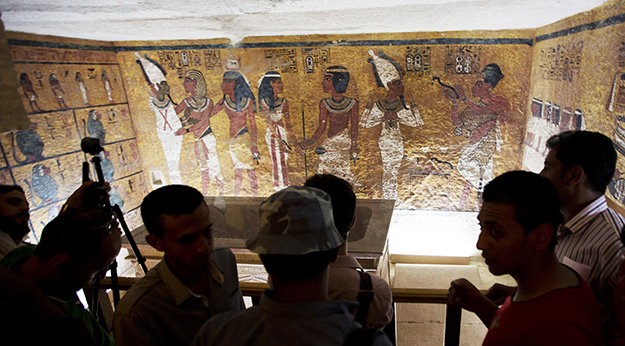
The Science of Preserving Egypt’s Cultural Heritage
Around the world, priceless monuments and artifacts are disintegrating due to exposure to pollution and hordes of visitors coupled with the sheer weight of age. The inexorable loss of cultural heritage concerns us all, but is especially troubling for decision-makers in places like Egypt that rely on cultural tourism-generated income to stay afloat. How to reconcile the need to make decaying treasures available to the public with the fact that public display is ruining them?
تُعد المجلة الرئيسية لمعهد الشرق الأوسط أقدم مطبوعة محكّمة مكرّسة لدراسة الشرق الأوسط الحديث، وتغطي المجلة الرئيسية في المعهد السياسة والمجتمع والثقافة في المنطقة.