تمت ترجمة هذا النص بواسطة الذكاء الاصطناعي وقد يحتوي على أخطاء.
تخطي إلى المحتوى
Can the Latest US Plan Bridge Libya’s Divide?
  • Podcast
  • Can the Latest US Plan Bridge Libya’s Divide?

    After over a decade of division between rival factions in eastern and western Libya, the Trump administration has put forward a plan to unite the two sides through a power-sharing agreement. Hosts Alistair Taylor and Matthew Czekaj are joined by MEI Distinguished Diplomatic Fellow Jonathan M. Winer to unpack the details of this proposal and its potential consequences for the Libyan people. Winer, who served as United States Special Envoy for Libya, offers analysis of the plan’s viability, the response of various actors on the ground, and whether it can stabilize the country and help resolve its deep-seated challenges.

    June 4, 2026

    The Far Reach of the Iran War: Food Insecurity from North Africa to the Sahel
  • Policy Memo
  • The Far Reach of the Iran War: Food Insecurity from North Africa to the Sahel

    Within weeks of the Strait of Hormuz closure, fertilizer prices began to rise sharply. Tanker traffic through the strait, which handles one-third of the global fertilizer trade, fell by 90%. Across North Africa the impacts are multiplying, and this is having ripple effects for the Sahel in the south, adding to food price inflation, migration pressures, and the erosion of state legitimacy. The situation underscores how food security is a governance issue compounded by geopolitical crisis.

    Battered but Still Standing, Egypt Tries to Weather the Economic Ravages of the Iran War
  • التحليل
  • Battered but Still Standing, Egypt Tries to Weather the Economic Ravages of the Iran War

    While Egypt is not in the direct line of fire in the US-Israeli war with Iran, its economy is acutely vulnerable to the conflict. In addition to the rising energy prices and shortages that have affected much of the world, it also struggled with issues that reflected its economy’s own underlying structural vulnerabilities.

    الخبراء البارزون

    المشاريع

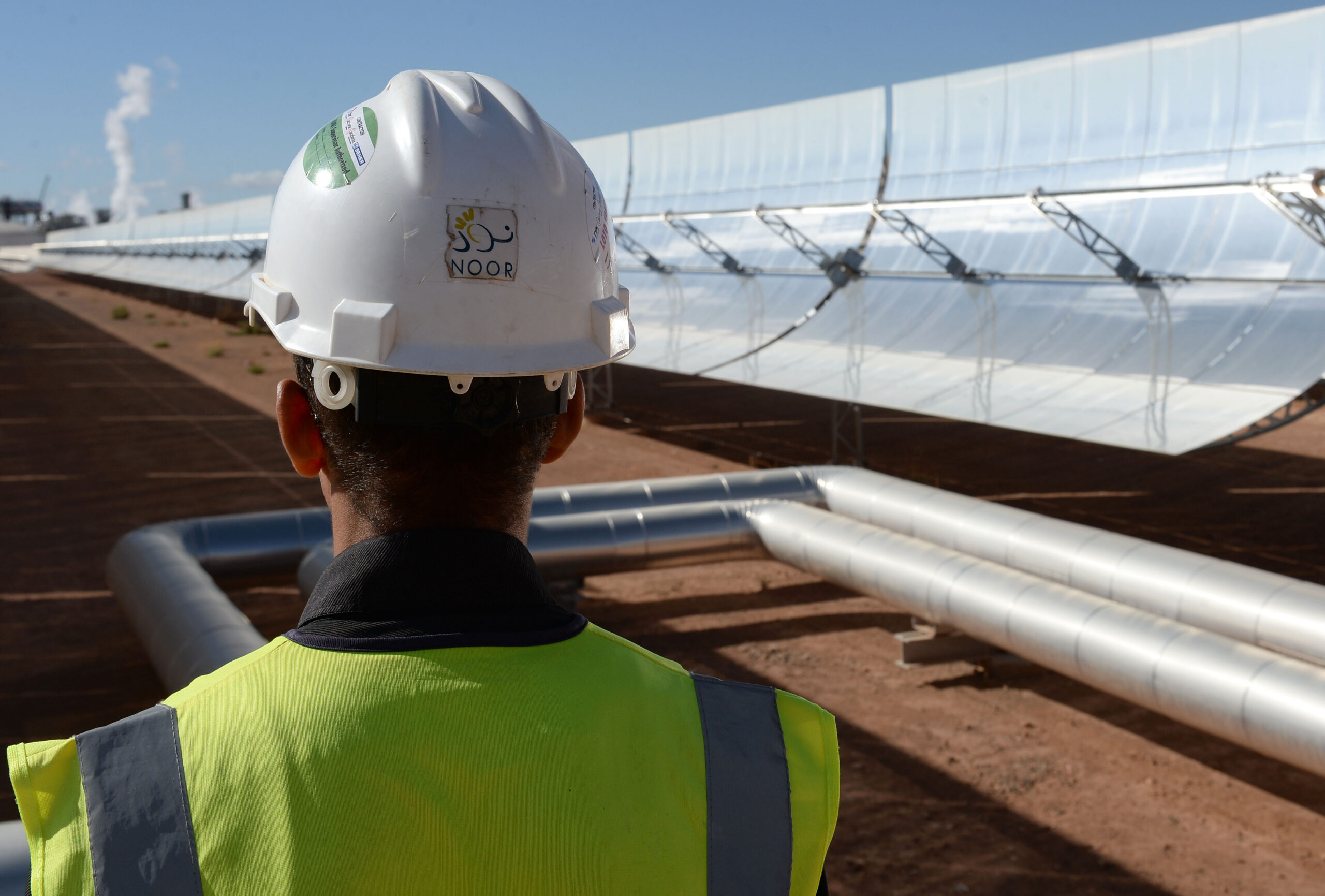
    تحول القوة في شمال أفريقيا: تطوير الطاقة المتجددة وأمن الطاقة

    دور الشركات المتوسطة الحجم في تعزيز النمو في عملية التحول إلى الطاقة النظيفة في منطقة الشرق الأوسط وشمال أفريقيا

    تصفية حسب
    1560 Results
    Libya's Political Isolation Law: Politics and Justice or the Politics of Justice?
  • التحليل
  • Libya's Political Isolation Law: Politics and Justice or the Politics of Justice?

    In May 2013, Libya’s General National Congress (GNC) overwhelmingly passed the Political Isolation Law (PIL). The PIL’s enactment represented a far-reaching attempt to prevent members of the regime of Muammar Qaddafi from holding public office during the country’s transition. But the decision also appeared to fit a precarious pattern of post-conflict accountability in Libya, which has been characterized by acts of vengeance and one-sided justice aimed at anyone associated with the defeated regime. The passage of the law also reflects the current state of political instability in Libya wherein decisions are politically motivated and often forced at the barrel of the gun rather than agreed upon through public consultation and democratic decision-making.

    February 5, 2014

    Copts in Egyptian Civil Society: Challenge and Hope in Transition
  • التحليل
  • Copts in Egyptian Civil Society: Challenge and Hope in Transition

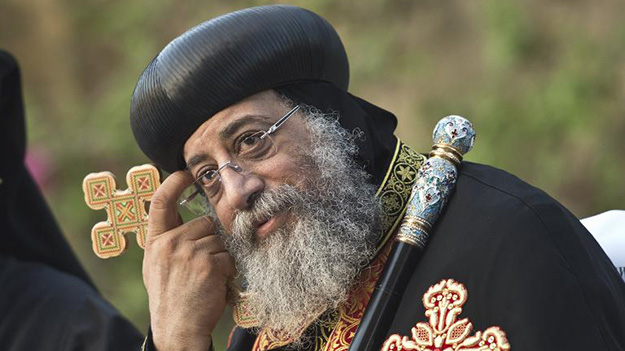
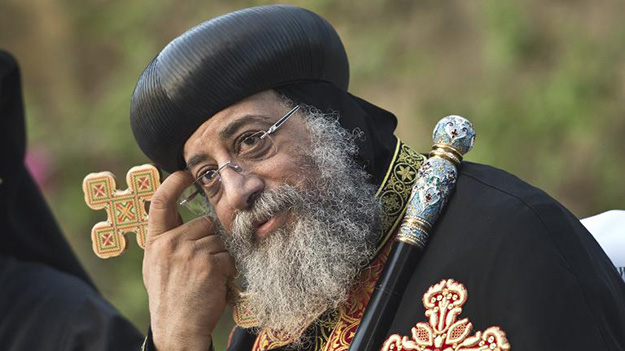
    “Through wisdom a house is built, and by understanding it is established.” Pope Tawadros II, the Pope of the Coptic Orthodox Church, tweeted this verse of scripture in December 2012. He wrote it as one of a series of daily reflections on the book of Proverbs. This phrase, however, also provides an entry point into the Coptic Orthodox Church and its place in Egyptian civil society. Egypt is in the midst of rebuilding its government and society following an 18-day revolution in 2011, 18 months of military rule that ended with the election of Mohamed Morsi, and the removal of President Morsi one year later by the Egyptian military in July 2013. Egyptian Christians now have the opportunity and challenge to renegotiate their place in Egyptian civil society during this time of unrest and transition. What wisdom, understanding, and vision will Christian clergy and lay leaders put forth in order to co-labor with their neighbors, the state, and other stakeholders to build a new house for Egyptian society? This new vision must be rooted in Copts’ historical experience and include the possibility for new models of engagement and representation.


    February 3, 2014

    "Going Grassroots:" Transitional Justice in Egypt
    معهد الشرق الأوسط
  • التحليل
  • "Going Grassroots:" Transitional Justice in Egypt

    Since the inception of its transitional justice and accountability program in November 2012, the Egyptian Initiative for Personal Rights (EIPR) has faced a number of challenges related to its work. Of these, one of the most arduous has been operating in a context of ongoing political and social upheaval. The period since November 2012 can generally be divided into three distinct phases, each marking a change in EIPR’s organizational and conceptual approaches to transitional justice. Though EIPR sees its work in Egypt less in phases and more as a long and complicated struggle against injustice and impunity that will likely continue for the foreseeable future, the three phases are helpful for documenting its approach to transitional justice since 2012.

    January 27, 2014

    The Role of Entrepreneurship in Building a Better Egypt

    The Role of Entrepreneurship in Building a Better Egypt

    January 22 – January 1, 1970, January 22 - 12:30 PM – 12:00 AM
    January 1 - 12:30 PM – 12:00 AM

    Carnegie Endowment, 1779 Massachusetts Ave NW, Washington, District of Columbia 20036

    Tunisia’s New Constitution
    معهد الشرق الأوسط
  • التحليل
  • Tunisia’s New Constitution

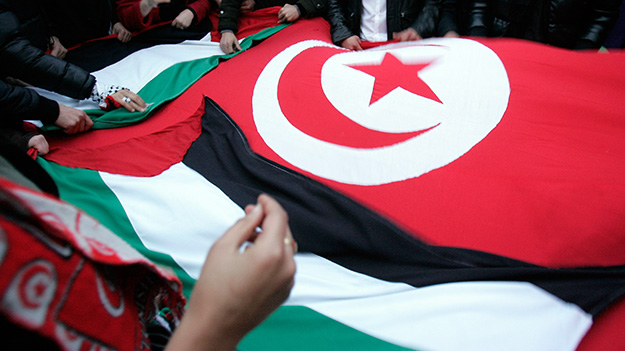
    Whereas many observers are lamenting the failure of the “Arab Spring,” Tunisia has proven once again that it is on a march toward democracy. On January 3, the National Constituent Assembly (NCA) began voting on the country’s new constitution. Lawmakers have approved many of the chapters and articles, and the final vote on the entire document should take place within a few days. Surprisingly, many of the controversial articles on state identity, the relationship between religion and politics, and gender equality have passed with a clear majority.

    January 14, 2014

    Whither Political Islam?
  • التحليل
  • Whither Political Islam?

    This article was first published on Al Jazeera on December 24, 2013.

    The downfall of Egypt’s Muslim Brotherhood (MB) has put political Islam at a crossroads. Not only has it shown that ideology per se is not a guarantor of political success, but also that Islamists need to rethink their strategy and tactics in order to deal with the new environment following the Arab Spring.

    January 7, 2014

    Egypt’s Informal Economy
  • التحليل
  • Egypt’s Informal Economy

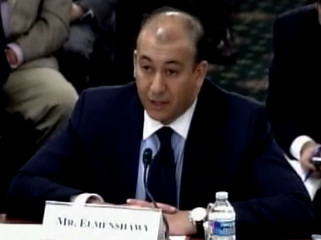
    Samy M. has been providing currency exchange services on the black market in Cairo’s hectic neighborhood of Nasr City for nearly a decade. He does this from the crammed office of his other, formal business, which offers real estate services.

    “Money exchange has always been lucrative, but it was even busier last year,” he says. With the Egyptian pound weak, hovering at around 6.9 pounds to the dollar on the official market for the past few months, people are drawn to black market rates, which are sometimes as high as 7.20 pounds to the dollar. 

    January 6, 2014

    Transitional Justice and the Politics of Lustration in Tunisia
    معهد الشرق الأوسط
  • التحليل
  • Transitional Justice and the Politics of Lustration in Tunisia

    No transitional justice dilemma is more contested in Tunisia than that of lustration and vetting. While trials of former ruling elites, either in absentia or in the courtroom, grab international headlines, the question of how to deal with the tens of thousands of former Ben Ali regime functionaries who were complicit in past abuses yet are not likely to be brought to trial has proven even more politically charged. To be sure, the question over the fate of these potential targets of lustration and vetting continues to contribute to Tunisia’s prolonged post-revolutionary political crisis, as draft laws on lustration and ad hoc leaks from state archives solidify cleavages among Tunisia’s diverse array of transitional political actors.

    December 26, 2013

    Luxor’s Chance for Smart Development
  • التحليل
  • Luxor’s Chance for Smart Development

    In the eyes of the world, Egypt is Cairo, where political unrest leads the news. With around a quarter of the nation’s 90 million inhabitants concentrated around the capital, in addition to the bulk of wealth and industry, it’s easy to forget the rest of the country, which is what state officialdom has done for decades.  For administrative purposes, Egypt is divided into 29 governorates, each with a capital city.

    December 19, 2013

    Unrequited Desire: Egyptians' Passion for Justice and Accountability
  • التحليل
  • Unrequited Desire: Egyptians' Passion for Justice and Accountability

    Egyptians who believed that the removal of President Hosni Mubarak in February 2011 would lead to the establishment of a democratic government have faced many setbacks. Youthful revolutionary activists unsuccessfully challenged the power of the Supreme Council of the Armed Forces (SCAF) transitional government and the autonomy of the military. The electoral triumph of Islamist parties and candidates in parliamentary and presidential elections in 2011 and 2012 eclipsed weak and inexperienced secular parties and brought to power leaders who failed to ensure adequate representation of political opponents, women, and Copts in key aspects of governing, or to protect Copts from rising attacks. Continuing divisions among opposition forces, along with the roundup of Islamists and other opponents by the military, which engineered the July 2013 removal of President Mohamed Morsi, suggest that the struggle to achieve justice and create an accountable government will be prolonged.

    December 17, 2013

    Libya, the ICC, and Securing Post-Conflict Justice
  • التحليل
  • Libya, the ICC, and Securing Post-Conflict Justice

    Since questions of post-atrocity accountability began to surface in regard to the “Arab Spring,” there has been interest in the pursuit of international-led justice in countries that have experienced uprisings, such as Bahrain, Libya, Syria, and Yemen. There were calls for the involvement of the International Criminal Court (ICC) in both Libya and Syria. The ICC has become involved only in Libya. However, this involvement has become mired in struggles that expose the challenges of a system that some regard as simply another expression of a profoundly undemocratic international order.

    December 16, 2013

    Cairo and Moscow: Limits of Alliance
  • التحليل
  • Cairo and Moscow: Limits of Alliance

    Egyptian-Russian relations have recently been marked by a substantial increase in diplomatic activity amid a media frenzy over a potential arms deal. These developments have given rise to suggestions that Egypt’s foreign policy is shifting away from the United States and toward Russia—a major realignment given Egypt’s extensive political and military ties with the United States since the 1970s.   

    December 16, 2013

    Salafyo Costa: Egyptian Inclusivity
  • التحليل
  • Salafyo Costa: Egyptian Inclusivity

    Salafyo Costa were once the darlings of the media. Featured both in Egyptian outlets[1] and foreign publications such as CNN, the Los Angeles Times, and the Huffington Post,[2] the groundbreaking youth movement founded in April 2011 brought together ultraconservative Salafis, Muslim Brotherhood supporters, political liberals and leftists, and Coptic Christians.

    December 9, 2013

    A Q&A on Egypt's New Draft Constitution
  • التحليل
  • A Q&A on Egypt's New Draft Constitution

    On December 1, a 50-member panel given the task of amending Egypt’s constitution approved a draft of the document. It now goes to Interim President Adly Mansour for his approval and will then go to the public in a referendum. MEI spoke with its Senior Fellow, Khalil al-Anani, about the draft, how it differs from the 2012 constitution passed under Mohamed Morsi, and how the Muslim Brotherhood has reacted to it.

    In general, what has changed in this new draft?

    December 4, 2013

    اقرأ مجلة الشرق الأوسط

    تُعد المجلة الرئيسية لمعهد الشرق الأوسط أقدم مطبوعة محكّمة مكرّسة لدراسة الشرق الأوسط الحديث، وتغطي المجلة الرئيسية في المعهد السياسة والمجتمع والثقافة في المنطقة.